
[Moderator's note: We have been a bit remiss at splitting this off into a new thread for 2012, but here it is, finally!
Lori]
A mix of things flowering or looking interesting in the garden at the moment. The garden is waking up with hellebores and many bulbs soon to come.
Narcissus panizzianus grown from Archibald seed. The flowers are small but always very early.
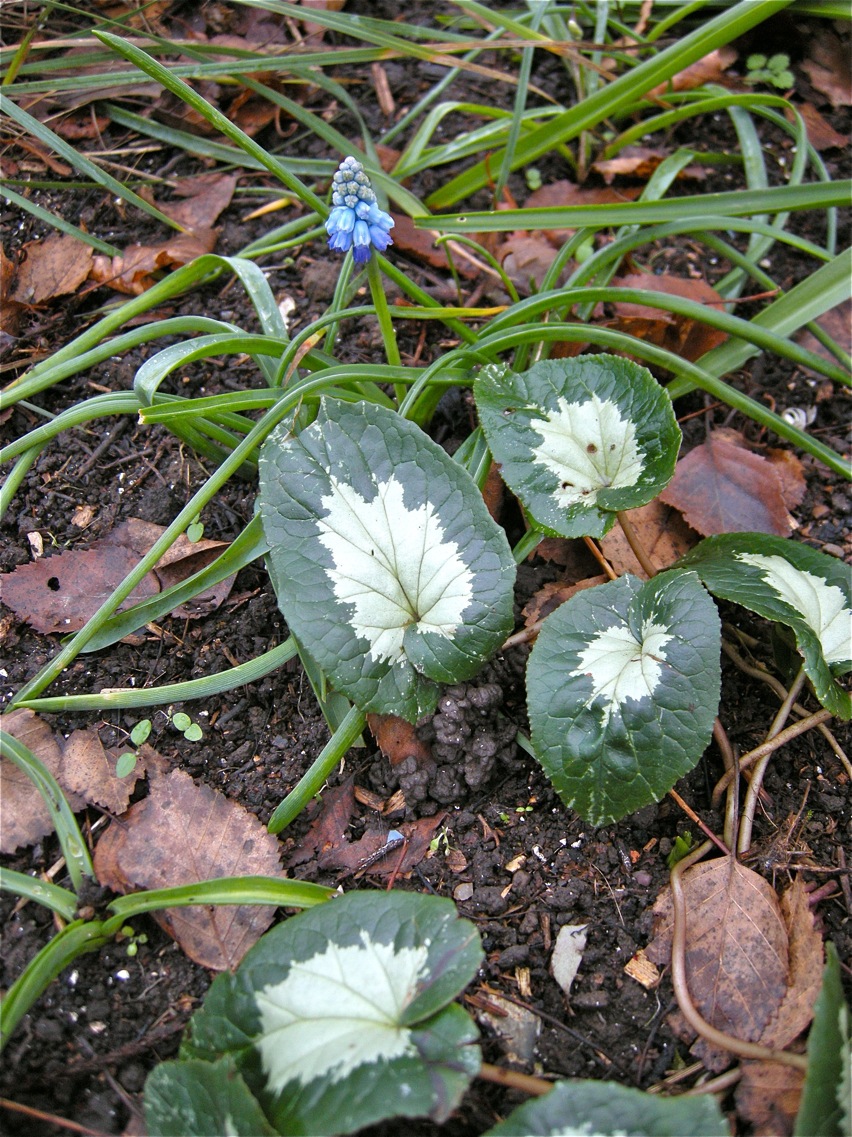
Muscari pseudomuscari, ditto. This is a lovely tidy species, growing here with a selection of Cyclamen hederifolium.
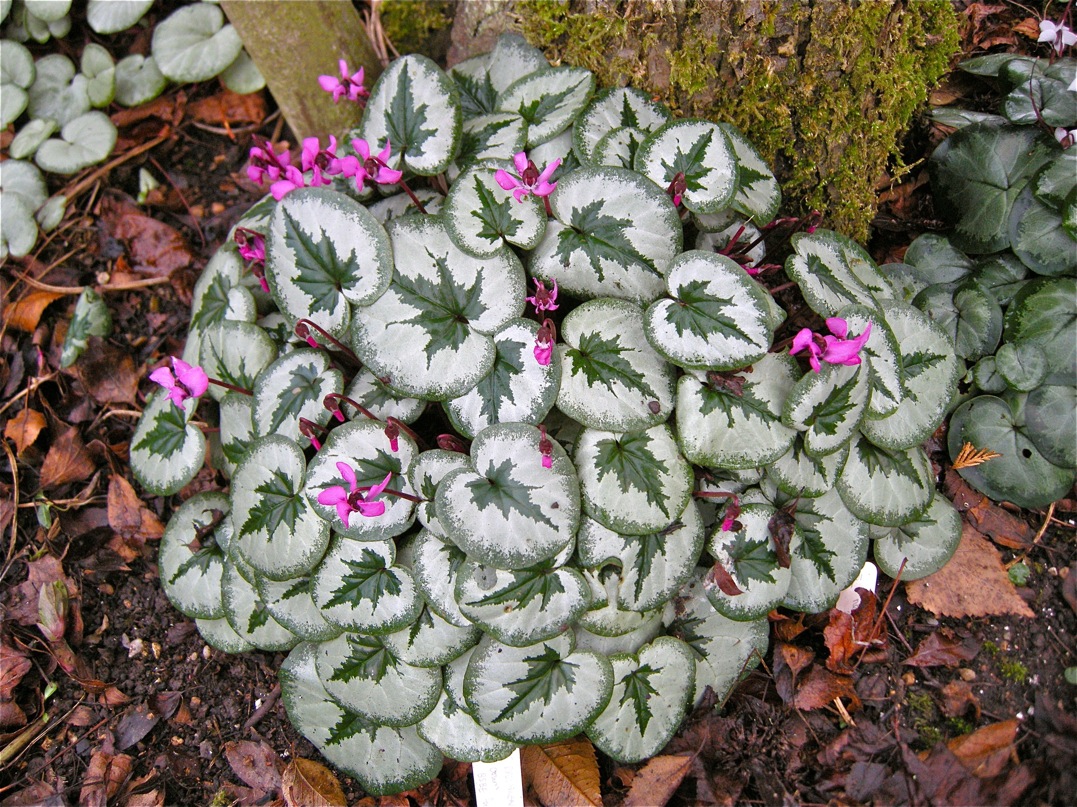
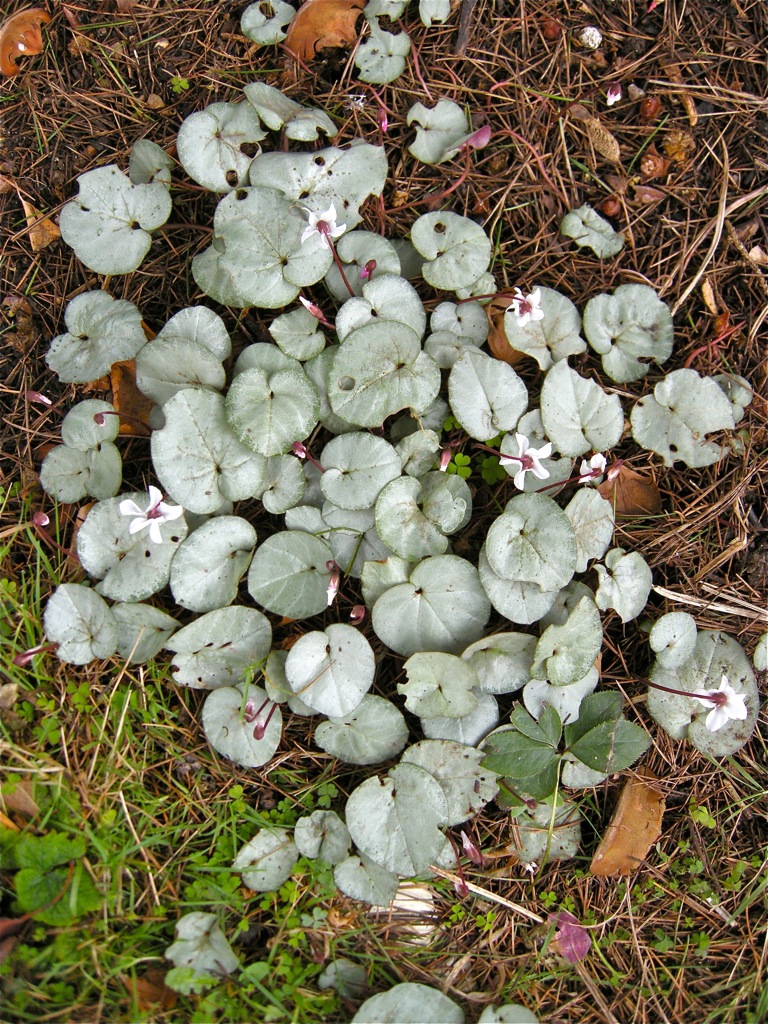
Cyclamen coum. Two forms with very silvered leaves from Tilebarn Nursery.
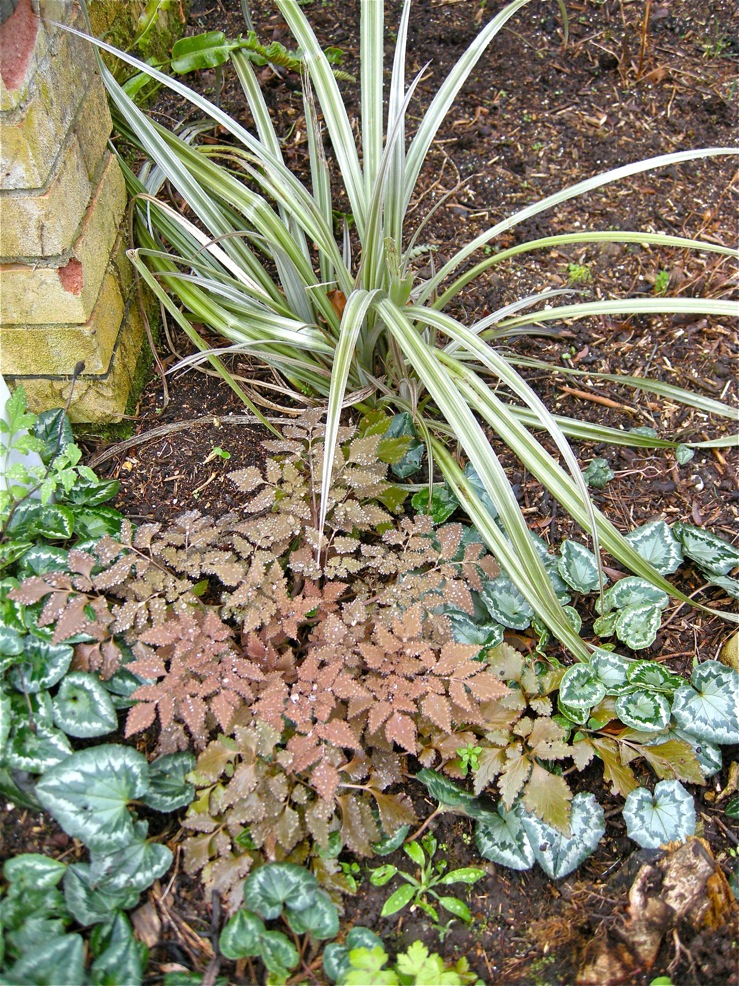
Corydalis quantmeyeriana 'Chocolate Stars' growing with cyclamen and Astelia nervosa. The corydalis is new to me and I haven't yet seen the flowers, but what foliage! I rather like this combination.
Sarcococca confusa. An unassuming shrub but one of the most delightful and scented winter flowers, and usefully tolerant of dry shade.


Comments
Anne Spiegel
Re: What do you see on your garden walks? 2012
Fri, 07/20/2012 - 2:37pmLori, you really grow a wide range of plants, amazing.
Pictures below taken on a new trail we took this year.
Richard T. Rodich
Re: What do you see on your garden walks? 2012
Fri, 07/20/2012 - 3:14pmIt's all eye candy, every photo....
Or as my friend likes to say: horticultural porn :D
As a comparison to Lori's native Spiraea betulifolia in Alberta, this one, grown from wild seed collected in western Russia (but grown in Minnesota).
Spiraea betulifolia
Lori, does yours spread much? Since 1997, mine grows about 2ft high and has spread to 5ft. in heavy clay soil.
Anne Spiegel
Re: What do you see on your garden walks? 2012
Fri, 07/20/2012 - 4:32pmContinuing along our trail in the Dolomites.
Anne Spiegel
Re: What do you see on your garden walks? 2012
Fri, 07/20/2012 - 5:17pmAnd farther along the trail
Anne Spiegel
Re: What do you see on your garden walks? 2012
Fri, 07/20/2012 - 5:22pmAnd farther up the trail more great plants, and finally, on the way down, a great rest stop.
Anne Spiegel
Re: What do you see on your garden walks? 2012
Fri, 07/20/2012 - 5:27pmAnother pedicularis and then the rest stop
Lori S. (not verified)
Re: What do you see on your garden walks? 2012
Fri, 07/20/2012 - 8:56pmWow, what beautiful sights, Anne! Thank you for posting them! We were too late for Silene acaulis on our first (lower elevation) hike yesterday, so it was wonderful to see such a great specimen in bloom there, along with all the other beauties. Thlaspi rotundifolium is such a fabulous plant! (I hope the couple I managed to raise this winter survive to bloom next year.) That poppy is stunning.
Rick, my Spiraea betulifolia (thanks for the correct spelling - I couldn't remember offhand if it was "folium" or "folia", and I am not well versed in Latin gender rules ???) was planted in 2003 and has remained very contained; it has not expanded out beyond a radius of about 1 1/2 feet. I haven't seen any in the wild that are a lot larger than that either. As a Spiraea, one would probably expect suckering but it has been very slow.
cohan (not verified)
Re: What do you see on your garden walks? 2012
Sat, 07/21/2012 - 12:10amAnne- every plant is wonderful, as are the views, and the amenities most enviable! Ah to be able to pause for a hot chocolate in mid-hike!
Lori, the Verbascums are quite charming, as is the grass? behind V nigrum
The native Spiraea is nice, I've seen it once, I think, in the foothills, but wasn't able to get seed... should see if I can find a photo..
Anne Spiegel
Re: What do you see on your garden walks? 2012
Sat, 07/21/2012 - 6:29amLori, as an absolute novice rock gardener years ago, I grew Papaver rhaeticum and Gentiana verna from seed and planted the seedlings together. I thought they would make a great primary color combination. And boy did they! It was a sensational show for two years and then they died out. I was horrified at the time because they were growing well and my assumption was that it was a permanent planting. The real tragedy was that they were never photographed. I don't recall seeing this combination in the wild although nature certainly loves strong color combinations. The poppy grows in steep limestone rubble. If it's steep enough and rough enough to make you slide around, the poppy is sure to be there.
Michael Peden
Re: What do you see on your garden walks? 2012
Sat, 07/21/2012 - 7:54amHosta the morn'n to ya! In 'My Little Shade Garden': Hostas (clockwise from top left): 'Sum and Substance', Fluctuans 'variagata', 'Lakeside Dragonfly' and 'Thunderbolt': Second photo: 'Eternal Flame' in front of 'Blue Mammoth' and last; a longer view of the daylily sparkler.
Up on the froggy depths of Yacky Pond!: Eriogonum umbellatum from the Rockies reblooming: and the takeover Teucrium on a tear.
Anne: Great stuff. I'd like to make sense of that confounding Rhodothamnus!
Lori S. (not verified)
Re: What do you see on your garden walks? 2012
Sat, 07/21/2012 - 8:20amLovely, Michael... nice to see those big leaves not ravaged by hail!
Lori S. (not verified)
Re: What do you see on your garden walks? 2012
Sat, 07/21/2012 - 11:57amThanks, Cohan. I love verbascums, though they do necessitate a lot of weeding... but then, what doesn't, with time? (Aside, I mean, from that inverse relationship thing between self-seeding and plant desirability that kicks in above a certain level... ;D) The grass is blue oat grass, Helictotrichon sempervirens, a very nice one indeed.
cohan (not verified)
Re: What do you see on your garden walks? 2012
Sat, 07/21/2012 - 6:21pmDave, I forgot to comment on the great Cyclamen- nice leaves too :)
Michael- good to see the heat and drought in so many places isn't slowing down your garden :)
Lori- I wonder if there is any plant choice enough to not lose a little gloss if it re-seeds too readily?
Speaking of hail ravaged, we haven't fared badly compared to many, but a few things have some minor cosmetic damage- a couple of Saussurea have some holes in leaves- not entirely sure whether hail or critters or both...
Lori S. (not verified)
Re: What do you see on your garden walks? 2012
Sat, 07/21/2012 - 7:03pmAh, you missed my reference to Gardening Axiom #104b, which, restated, says, "Beyond a defined point on the plant desirability index, the propensity to self-seed starts to vary inversely with the lusciousness of the species." (And from there, of course, it's easy to see how this relates to the the Principle of Non-propagatability... which is self-explanatory.) ;D ;D
But seriously, to exclude plants that will cause weeding with time (as most of them will), would be to seriously restrict your choices and miss out on an awful lot of very fine plants. I figure 90%, if not more, of gardening is weeding, and I'd rather be weeding out self-seeded perennials, than to be weeding out weeds... which will gladly fill that space if not already occupied by something that was at least originally intended to be in the garden. :)
cohan (not verified)
Re: What do you see on your garden walks? 2012
Sat, 07/21/2012 - 7:34pmYeah, self seeding doesn't bother me (though having only garden plants as weeds is nearly beyond my comprehension...lol) its when they seed into the natural environment that I get nervous- or rather, seed around my yard, which is never more than a few metres from the 'natural' environment!
Though I was thinking today, bit ironic I worry about it, when I'm surrounded by agriculture which has filled the region with invasive exotics (and where they have the nerve to call natives that are toxic to livestock problem plants!) ...would seem kind of fair to introduce something that would spread into fields (joking)! Of course, again, that's not my worry, it's things that would spread into woodland or wetland...
Anne Spiegel
Re: What do you see on your garden walks? 2012
Sat, 07/21/2012 - 7:51pmMichael, where I usually see the finest Rhodothamnus chamaecistus is on limestone, often cliffs or huge boulders. Companion plants might be Papaver rhaeticum, Paederota bonorata and Anthyllis alpestris. Have you tried this one from seed yet? You seem to be able to grow a huge range of plants successfully, including many plants which have chosen not to stay in my garden.
cohan (not verified)
Re: What do you see on your garden walks? 2012
Sat, 07/21/2012 - 9:00pmOf those, I have some tiny seedlings of Paederota bonarota- a couple years old, but only planted in the ground last year.. very slow to start this spring, but looking healthy enough!
Panayoti Kelaidis
Re: What do you see on your garden walks? 2012
Sun, 07/22/2012 - 3:58pmLooking at Anne's glorious pictures from the Dolomites, and Michael's lush garden in New York, I hesitate to trot out some of the toughies that are still managing to survive our very hot summer. It amazes me than when temps have hovered over 90 (and quite a few days in the 100's) that anything survives at all. A few strategic rainy days have saved us from despair, but nonetheless, it's been a trying summer in the garden and in the mountains. The rains have been timely (every ten days or so--and some substantial) so that lawns around Denver are emerald green (thanks to irrigation of course) that despite drought warnings from the utility, things appear normal...
I have been too busy dragging hoses to take many pictures in my own garden, but I have snapped a few in the last week on some of my garden visits, and these I shall post (they qualify as walks even if I drive to them?--I do walk around once I am there!)
1) The first is a really dazzling dwarf South African forget-me-not that I photographed at the test garden of a local seed company: they are about to produce the seed commercially in China: typical Anchusa capensis (introduced through Plant Select last year) gets 18" or more tall, but this one is under 10" and should be a winner for the larger rock garden. It is a short lived perennial for us (2-4 years) but self sows abundantly and blooms all summer!
2) I had to include a picture of Delosperma FIRESPINNER, our Plant Select blockbuster of the year. This one is reblooming for us in my garden. Is it bright enough for you?
3) These are flats of Delosperma karooicum ("Ouberg"), a plant I collected in the East Cape on my wonderful expedition funded by NARGS in 1998. It is a perfect size for the rock garden and blooms heavily through the summer. These are for sale at Timberline Gardens, our best local nursery.
4) Here is a shot in the sales area where there are a great variety of Delospermas blooming their hearts out in Mid July!
5) Sorry I did not put the proper name under the picture: this is Phlox nana, which most serious plant nuts in Denver have big patches blooming all summer. Paul Maslin, my mentor and first president of the local rock garden club, loved this plant and wrote about it for the English AGS journal. A few local gardeners find it weedy, but tolerate it because it looks like this for 5 months: this is at the home garden of Mike Bone, propagator at DBG.
6) Mike has propagated and promoted this hybrid between the wonderful, but somewhat fussy Heterotheca jonesii (a rare plant from Utah) and our ubiquitous and weedy Heterotheca villosa (possibly the commonest plant in the Great Plains and Rockies!). The hybrid is almost sterile and blooms for months in the heat. Best of all, it's easy to grow!
7) Inula verbascifolia from Mt. Olympus is a highlight of my summer rock garden
8) Opuntia erinacea (very near to the Grizzly Bear--O. trichophora) at Timberline: even non cactus lovers fall for this.
9) This is a poppy we are growing locally that is from Central Asia and allied to P. nudicaule: unlike the "Iceland" poppy, this is soundly perennial in our heat, and even blooms through this infernal heat: we love this plant!
10) The last show is the same Heterotheca I mentioned above next to a wonderful mat of Pterocephalus perennis (parnasii) at Mike Kintgen's private garden, which is a treasure trove of gems....
So there! There is hope for us, even on this hopelessly hot year on the windy, parched plains of America!
Anne Spiegel
Re: What do you see on your garden walks? 2012
Sun, 07/22/2012 - 4:44pmWonderful poppy. Panayoti. A Papaver nudicaule that doesn't perish in heat, wow. Seed of that would be worth having.
This year we hiked with Sue and Cliff Booker and found a "first" - a white-flowered Papaver rhaeticum and also a pale
creamy yellow form. I'll post pictures soon.
Richard T. Rodich
Re: What do you see on your garden walks? 2012
Sun, 07/22/2012 - 8:49pmGee, I could spend all day commenting on how wonderful EVERY pic is here.
So one big WOW and THANK YOU to everyone must suffice! :o
Fire Spinner has made it all the way to Home Depot in Minnesota. Wonder if it is really hardy here. ???
cohan (not verified)
Re: What do you see on your garden walks? 2012
Sun, 07/22/2012 - 9:57pmI wonder if firespinner is the Delo I got, I keep forgetting to look at the tag..
That Inula is extra special!
Michael Peden
Re: What do you see on your garden walks? 2012
Mon, 07/23/2012 - 8:34amAnne, I have not. I have 'Anthyllis montana' ? for many years from seed and a 'good' pink form I purchased. I did try the poppy and failed but I am quite a bit keener these days!
I swear that Rhodothamnus is whispering: "grow me".
Trond Hoy
Re: What do you see on your garden walks? 2012
Tue, 07/24/2012 - 12:12amI'm sitting at my cabin waiting for the sun to drive away the clouds and the temperature to increase.
What's better then to admire your garden walks whether at home or abroad ;)
Anne Spiegel
Re: What do you see on your garden walks? 2012
Tue, 07/24/2012 - 5:04amMichael, if the plant is whispering to you, listen.
Lori S. (not verified)
Re: What do you see on your garden walks? 2012
Tue, 07/24/2012 - 9:20pmWonderful plants, Panayoti! Phlox nana looks like a great plant - I wouldn't mind having a groundcover phlox that blooms all summmer. The poppy looks interesting - a little different bud shape than P. nudicaule (which does bloom here all summer), and lacking the black hairs? Can't wait for my little Inula verbascifolia to start performing, after wintering over successfully - it's really nice to see your mature plant.
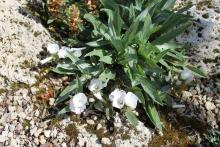
Convolvulus lineatus v. angustifolius - I was warned by a couple of experts that this one is invasive, and indeed, saw a shoot pop up about a foot away this year... so I have since turfed it, regretfully:
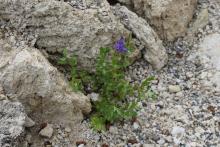
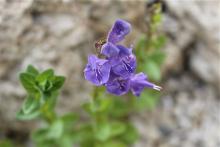
Scutellaria hypericifolia, from seed in 2011:
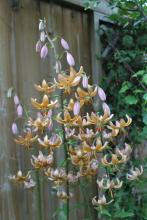
Lilium martagon cultivar; Eryngium bourgatii; Sanguisorba dodecandra; Tanacetum macrophyllum:
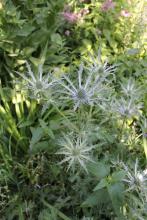
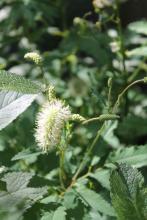
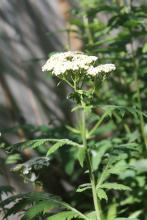
Thymus 'Pink Chintz'; mid-July peonies:
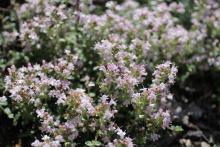
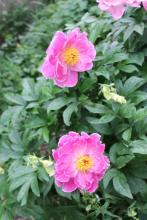
Edit: Sorry, can't get the last photo to attach - will have to try later.
Panayoti Kelaidis
Re: What do you see on your garden walks? 2012
Thu, 07/26/2012 - 10:18amLove you pix, Lori! Imagine, Peonies in mid July (our's are popping seeds already)...
Love the Thymus 'Pink Chintz' shot: thymes are so easily overlooked. I seem to have more and more over time (along with lots of unsolicited hybrids)...
I posted many of these pix in Facebook, but realize most of you don't belong, so I am reposting them: plants from this past week in my garden.
1) Bulbine abyssinica which has made it through the last few winters.
2) Campanula fragilis var. cavalinii and Orostachys japonica
3) Eriogonum allenii
4) Jovibarba heuffellii ('Silver Ingot'? any help on cultivar name?)
5) Lantana horrida (a form hardy in Oklahoma, which I hope will make it here--only its first year)
6) Muhlenbergia torreyi (the wondeful ring muhly of the Great Plains--one of the best miniature grasses)
7) Pinellia pedatisecta: a tad weedy, but manageable in our climate. I saw this on Confucius' grave in China
8) Seseli gummiferum (a large, but very worthwhile umbel from Greece)
9) Talinum rugospermum: quite local from the Midwest. More delicate than the commoner T. calycinum.
10) Trachelium rumelianum: a pale specimen, but good view of details.
Tim Ingram (not verified)
Re: What do you see on your garden walks? 2012
Thu, 07/26/2012 - 12:23pmPanayoti - great to see that Seseli. This is a plant that caught gardening attention here some years ago but because it is biennial and needs really hot and dry conditions is not so much grown now. I imagine in Denver it could seed around? I used to grow several other species, all nice for their blue-silver foliage but mostly with much looser and more typical umbels.
cohan (not verified)
Re: What do you see on your garden walks? 2012
Thu, 07/26/2012 - 2:12pmGreat stuff as always, Panayoti!
Love the Orostachys- still have not found a source for seed of japonica or other more exotic species..
Peonies are still in flower here too, and daylilies have just started..
Interesting the Bulbine is hardy..I have a couple of tiny South African spp indoors.. do you grow Asphodeline also?
Panayoti Kelaidis
Re: What do you see on your garden walks? 2012
Thu, 07/26/2012 - 3:30pmTim: the Seseli is widefly available hereabouts, and in almost every "serious" gardeners garden. It does self sow, although never to the point to annoy. I am told there is a dwarf race in Sweden (which we must obtain!): you are right, it loves Colorado. And Colorado loves it!
My Orostachys japonica is not blooming this year, but I may have old seed, Cohan..As you can see, I have lots of offsets: some could """"accidentally""" fall into an envelope, if you know what I mean ;) (finally found a use for the emoticons).
cohan (not verified)
Re: What do you see on your garden walks? 2012
Thu, 07/26/2012 - 5:54pmEmoticons are great fun- my favourite is the 'lips sealed' not sure if its exactly the same here as on SRGC- but to me it always looked more like 'holding back the vomit!'
old Oro seed brings up a good question- does old Crassulaceae seed in general tend to be any good? I think I sowed some old Semp and Jovi seed this year with no result I've noticed yet :(
Panayoti Kelaidis
Re: What do you see on your garden walks? 2012
Thu, 07/26/2012 - 8:30pmIf Crassula seed is viable, it comes up right away: I know that old Rosularia seed can be very viable (I gave my friend Bill Adams seed of several Rosularias stored at room temperature for ten or fifteen years and they came up like cress). The seed is very tiny, and subject to lots of pathogens--and grows slowly. So lots of things can happen in transit, so to speak.
Richard T. Rodich
Re: What do you see on your garden walks? 2012
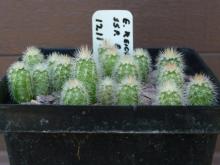
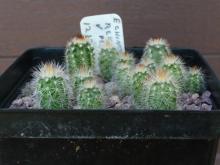
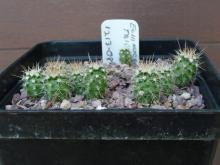
Fri, 07/27/2012 - 7:46pmI can't help it, these are just way too cute to not post some more pics:
Echinocereus reichenbachii ssp. baileyi and ssp. rigidissima
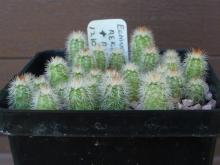
Echinocereus reichenbachii var. perbellus, E. triglochidiatus and E. viridiflorus
cohan (not verified)
Re: What do you see on your garden walks? 2012
Fri, 07/27/2012 - 10:25pmThanks, Panayoti, good to know! I do have some Rosularia seed to sow also!
Rick cute indeed :) I have a pot of E triglochidiatus, as well as one of E reichenbachii perbellus which spent their first winter outside last year- a few survivors in each pot, by no means all of them.. time will tell if they will survive here- still siting experimenting to be done.. the lone E viridiflorus did not survive- whether it was the winter or the spring that did it in is hard to say..
Trond Hoy
Re: What do you see on your garden walks? 2012
Fri, 07/27/2012 - 11:56pmAgree! But small and cute - they seem to be able to defend themselves ;)
Trond Hoy
Re: What do you see on your garden walks? 2012
Sat, 07/28/2012 - 12:06amWe have no ordinary garden here but it is always some plants to admire - and other colorful accessories!
1, 2 Campanula barbata. Although native in Norway I have introduced it here.
3, 4 Gentiana purpurea, also native and introduced in the meadow here.
5 Xanthorhoe montanata. Rather common but easily overlooked.
6 Erebia ligea (the Arran Brown). Very common here.
Panayoti Kelaidis
Re: What do you see on your garden walks? 2012
Sat, 07/28/2012 - 3:38amCampanula barbata is one of my favorites of a huge wonderful genus: I grew it quite well for a long time (even self sowed!), but notice it's now long gone. And always a treat to see European lepidoptera--very different from ours mostly.
Trond Hoy
Re: What do you see on your garden walks? 2012
Sat, 07/28/2012 - 4:25amPanayoti, if you want to renew Campanula barbata, please tell me!
Michael Peden
Re: What do you see on your garden walks? 2012
Sat, 07/28/2012 - 7:57amYoga Yoga Yoga frog and Sedum debile.
The best lilies of the year in my garden. Strength and, perhaps, culture has saved them from complete beatle anhiliation; 'Black Beauty' and 'Stargazer'
Allium cyaneum and a Phlox that looks like the Phlox nana that Panayoti recently posted. This was found growing on Rowe Mesa in New Mexico. It's woody and probably short lived but seems everblooming.
Ceratostigma plumbaginoides blooms for a long time and last; a Talinum on Cactus Park.
Anne Spiegel
Re: What do you see on your garden walks? 2012
Sat, 07/28/2012 - 10:09amSome more images from my "other garden" in the Dolomites.
cohan (not verified)
Re: What do you see on your garden walks? 2012
Sat, 07/28/2012 - 10:43amTrond- some of the views with the Campanula are very similar to views here, though it would be rotundifolia, with Solidago around, and the most abundant Stellaria/Cerastium are weeds (though we have some natives I'm fond of).. Great colour on the Gentiana..
Anne- great to see the vast flower meadows, and interesting to see the colour variants on R glacialis- would these grow near one another or in separate colour populations?
Anne Spiegel
Re: What do you see on your garden walks? 2012
Sat, 07/28/2012 - 11:26amThey all grew together at the same place. The darkest pink one, almost red, hadn't fully opened. The others were fully opened and the range between sparkling white to pale pink to mixed pink and white to deep pink and red was really wonderful. Of course the best ones were below on a steep sliding scree with nothing between you and the bottom if you started to slide. It's my favorite trail but each year more of it slides down the mountain. I suppose one of these years it will be gone.
cohan (not verified)
Re: What do you see on your garden walks? 2012
Sun, 07/29/2012 - 12:08amThat would be nice seed to get :)
The disappearing scree/trail reminds me of an article I just read in Alberta Views magazine by the outgoing director of Banff National Park- he commented that alpine flower meadows are disappearing as higher CO2 levels are favouring the growth of woody plants which are crowding them out, and while they might move upslope, they need soil to be built up first, which can't happen that fast....
Trond Hoy
Re: What do you see on your garden walks? 2012
Sun, 07/29/2012 - 4:56amRotundifolia is the common species here too. Barbata is very rare in Norway, however it has started to spread a little around our cabin. It sets seeds (and so does the gentian) if you would like some ;)
Anne, nice to see your other garden! The flora is obviously richer then here.
Cohan, I think the red colour of glacialis is due to age. When fertilized the flowers redden to increase the heath absorbency to quicken the ripening of the seed.
Anne Spiegel
Re: What do you see on your garden walks? 2012
Sun, 07/29/2012 - 2:37pmTrond, from my experience this does not appear to be true. All of my pictures were taken at the same site and the colors varied from a pure white to almost red. There were white ones going over without a hint of pink, and there were red ones, some of which were still in bud and obviously not yet fertilized. At this site there just seemed to be a wide color range. I have been visiting this trail for almost twenty years and this has always been true here.
Trond Hoy
Re: What do you see on your garden walks? 2012
Sun, 07/29/2012 - 2:49pmAnne, that's interesting! I've learnt that it is like I said. However, I don't doubt your observations. In fact I did a similar observation some years ago:
in Norway when I found a redflowered colony with flowers of all ages.
cohan (not verified)
Re: What do you see on your garden walks? 2012
Sun, 07/29/2012 - 3:26pmTrond, seed of either/both would be nice, though I fear I am woefully behind in the seed exchange :-[ I've hardly even been out to botanise in ages, since I am spending all my outdoor time building rock gardens! I am on a short break now, I've mostly finished the dry/North American beds, though there will be some finishing and I have some low/wet areas in it to work on.. (nothing planted yet) and now I am working on another one in front of the house which will be (mostly) European- named Semps and others...
I really love those pink/red R glacialis, though all the colours are nice :)
Trond Hoy
Re: What do you see on your garden walks? 2012
Tue, 07/31/2012 - 12:18amCohan, if I am at the right spot when they seed, I'll collect some ;)
Trond Hoy
Re: What do you see on your garden walks? 2012
Tue, 07/31/2012 - 1:13pmWhen the thunderstorm ended (it lasted almost all the day) I took a stroll in the garden. Had to use wellingtons though, it was very sodden.
The Actinidia deliciosus vine almost swamp the house. The new shoots are several meters long already. The Campanula lactiflora (actually a seedling in a wrong place) has been flattened by the heavy rain. Clematis vitalba threatens to swamp my greenhouse. Phygelius capensis seems to like some rain.
Alstroemeria aurea has spread to cover several square feet. Tropaeolum speciosus doesn't seem to mind growing in deep shade.
cohan (not verified)
Re: What do you see on your garden walks? 2012
Tue, 07/31/2012 - 9:44pmLooking very lush-- all that rain is good for something! (perennial) Tropaeolum and Alstroemeria I think are genera that will not be growing outside here- great colours :)
Lori S. (not verified)
Re: What do you see on your garden walks? 2012
Wed, 08/01/2012 - 10:51amBeautiful summer scenes, everyone! Do your kiwis produce fruit, Trond?
Dalea purpurea:
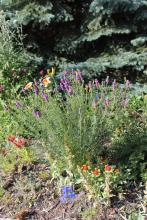
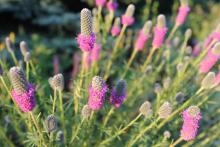
Dianthus knappii:

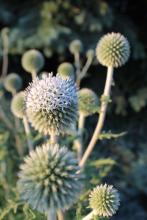
Echinops sphaerocephalus 'Arctic Glow':
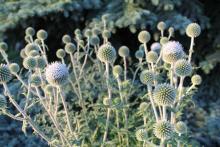
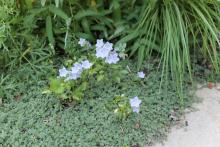
Campanula x tymsonii:
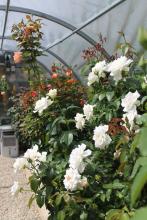
Greenhouse roses:
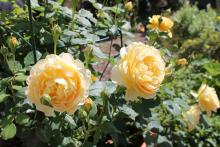
One of the best Austin roses, 'Golden Celebration':
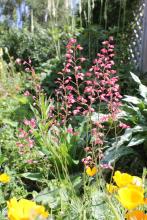
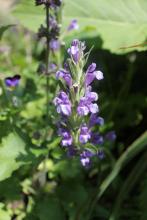
Heuchera 'Sherry Kiss' and others; Lallemantia canescens:
Pages