
[Moderator's note: We have been a bit remiss at splitting this off into a new thread for 2012, but here it is, finally!
Lori]
A mix of things flowering or looking interesting in the garden at the moment. The garden is waking up with hellebores and many bulbs soon to come.
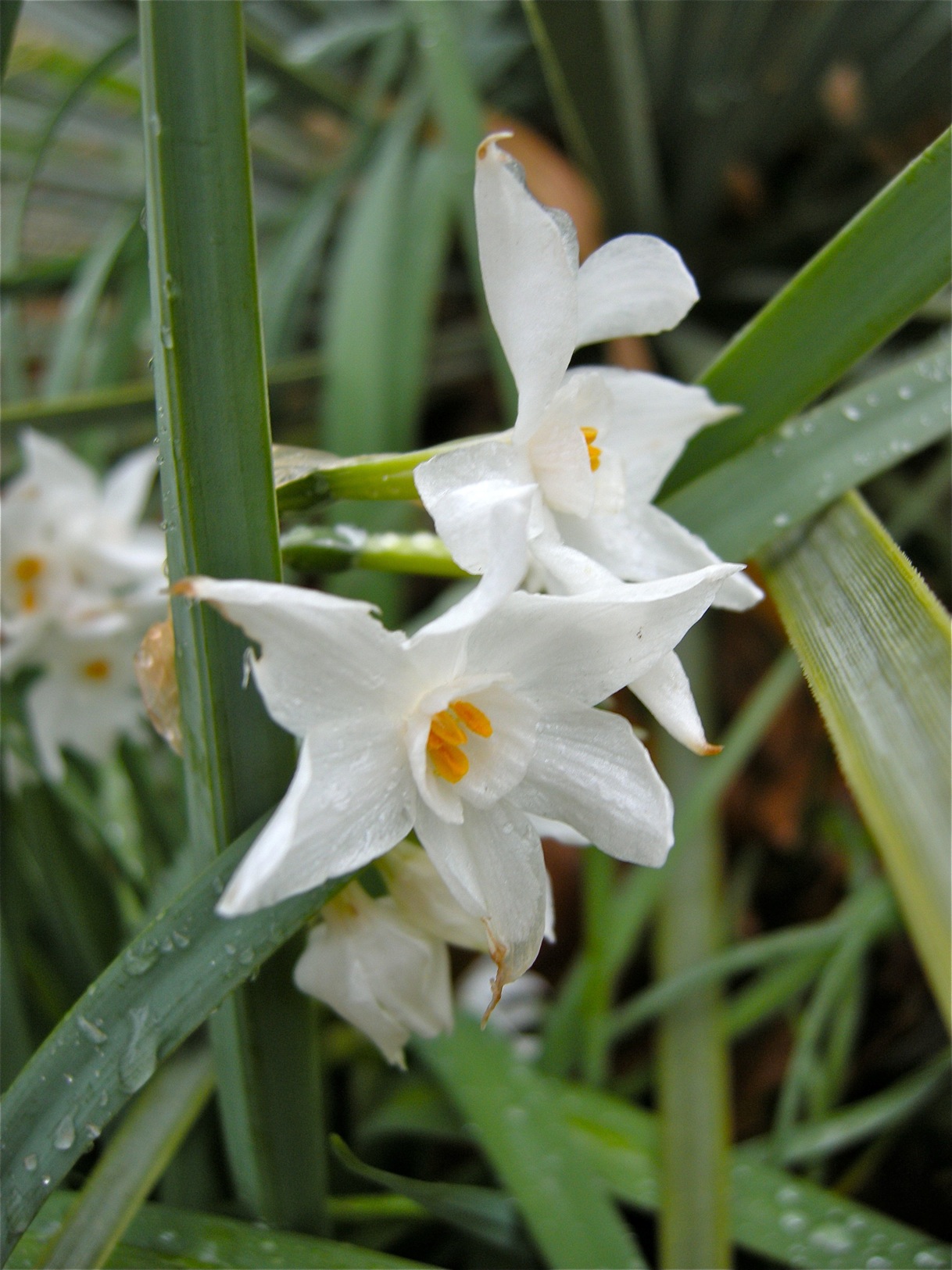
Narcissus panizzianus grown from Archibald seed. The flowers are small but always very early.
Muscari pseudomuscari, ditto. This is a lovely tidy species, growing here with a selection of Cyclamen hederifolium.
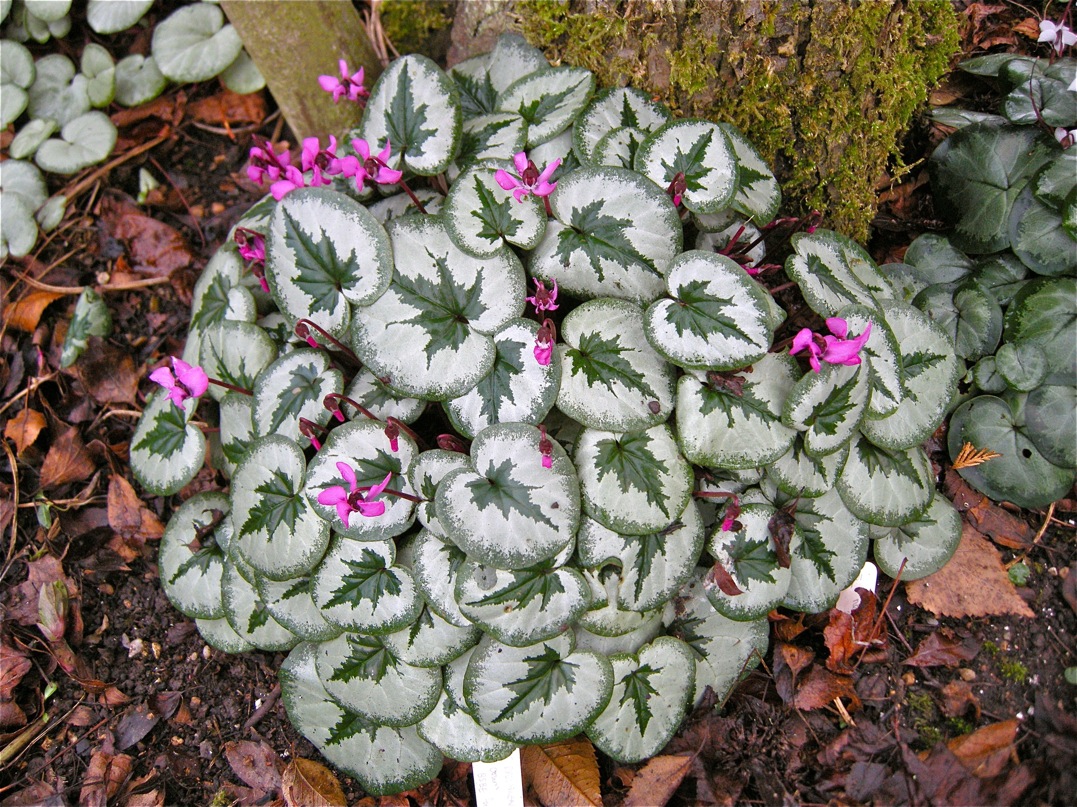
Cyclamen coum. Two forms with very silvered leaves from Tilebarn Nursery.
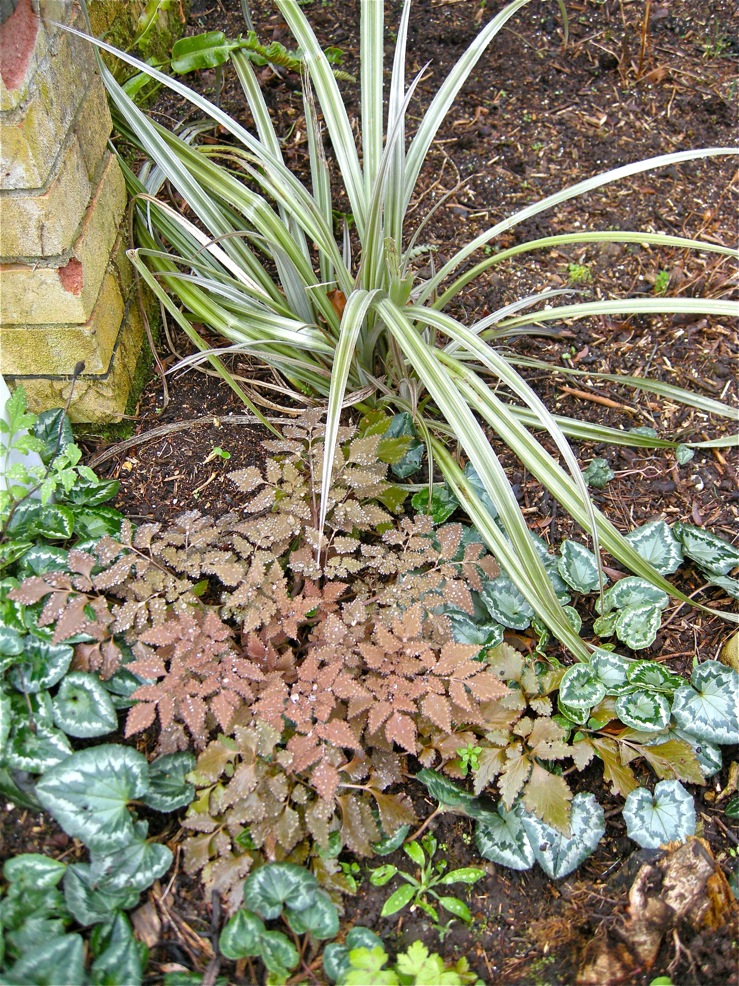
Corydalis quantmeyeriana 'Chocolate Stars' growing with cyclamen and Astelia nervosa. The corydalis is new to me and I haven't yet seen the flowers, but what foliage! I rather like this combination.
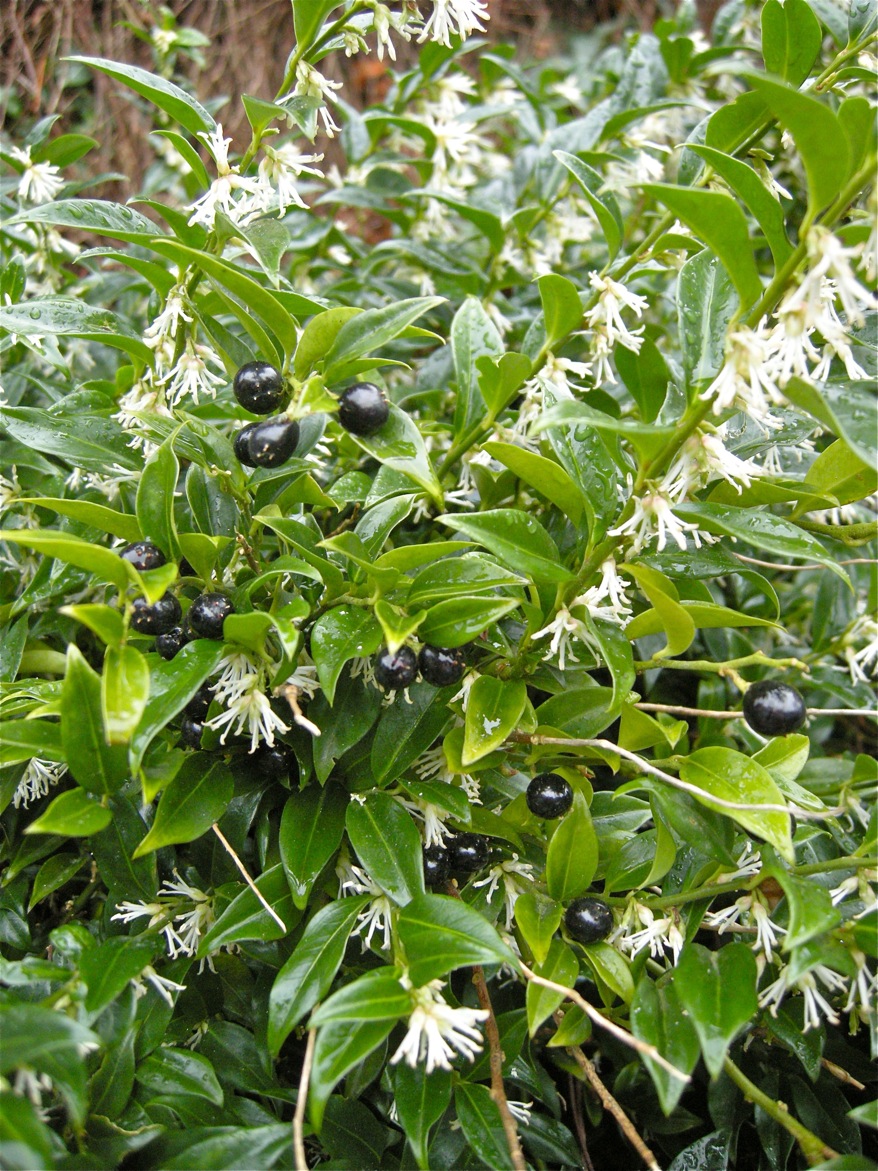
Sarcococca confusa. An unassuming shrub but one of the most delightful and scented winter flowers, and usefully tolerant of dry shade.


Comments
Todd Boland
Re: What do you see on your garden walks? 2012
Tue, 05/22/2012 - 5:14pmThe last ones from todays walk.
Lori S. (not verified)
Re: What do you see on your garden walks? 2012
Tue, 05/22/2012 - 7:47pmEverything is looking very green and lush, Todd!
tropicalgirl251... (not verified)
Re: What do you see on your garden walks? 2012
Tue, 05/22/2012 - 8:13pmThank you Rick.
Tim Ingram (not verified)
Re: What do you see on your garden walks? 2012
Wed, 05/23/2012 - 1:42amSome great plants Todd - oh that we could grow primulas like that! I particularly like the ranunculus and pulsatillas.
Trond I've never heard of making rhubarb soup? Rhubarb crumble is excellent though!
Trond Hoy
Re: What do you see on your garden walks? 2012
Wed, 05/23/2012 - 2:35amAt home my mother made crumble, soup or mesh (is it the right word? - soup thickened with flour -). Now we use rhubarb as dessert soup with sugar and milk or as juice. Very nice in hot weather ;)
Trond Hoy
Re: What do you see on your garden walks? 2012
Wed, 05/23/2012 - 2:39amTodd, seems summer has arrived at your place - some plants of yours are more advanced than here!
Does the Ranunculus survive outdoors?
Howey (not verified)
Re: What do you see on your garden walks? 2012
Wed, 05/23/2012 - 3:47amAttractive, to me, though a bit of a thug, is this Claytonia californica - Mine's Lettuce. Not sure how it got into my garden. Fran
Frances Howey
London, Ontario, Canada
Zone 5b
Michael Peden
Re: What do you see on your garden walks? 2012
Wed, 05/23/2012 - 6:22amKrish, I should have noted that your introduction mentions your location. Frances; I found something like that miner's lettuce in my front garden this morning; an odd thing. This won't be the first time that some strange little weed has occurred in my garden. I sometimes think that variety spurs yet more variety; or, maybe it's something the birds want there? They watch, you know. We plant; they plant. We pull weeds; they root about too.
cohan (not verified)
Re: What do you see on your garden walks? 2012
Thu, 05/24/2012 - 10:58amBoy, miss a few days with busy-ness, then no internet friday thru monday night, and there is no cactching up ;D
I can hardly find time to look at the pics, nevermind getting around to mine...lol
If I'm still in the right thread, there was a lovely Ranunculus (Todd), something I liked in Trond's walk, though I can't remember what...lol.. and I'm amazed Lori's Androsace septentrionalis are already flowering! Bundraba, Krish, et all-- so many lovelies :)
Richard T. Rodich
Re: What do you see on your garden walks? 2012
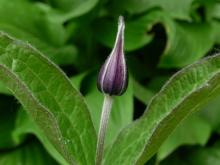
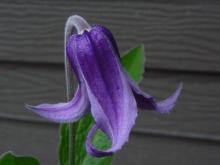
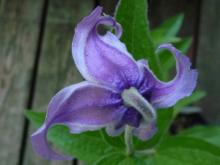
Thu, 05/24/2012 - 8:47pmAn advantage of heading up our Chapter plant sales committee: at the end of the sale, I decide what remaining plants are "worthy" of holding over to the next sale. Often I will take the orphans home and grow them on through the summer or another year. Like this Clematis integrifolia:
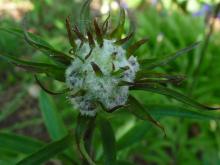
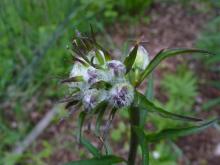
Any guesses as to what this is?
Bless its little heart, blooming in a little styrofoam cup!
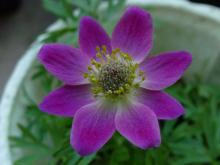
Anemone multifida 'Annabella Deep Rose'
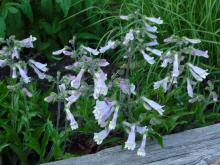
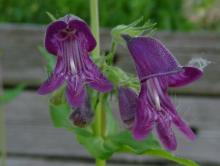
Penstemon hirsutus var. pygmaea
cohan (not verified)
Re: What do you see on your garden walks? 2012
Thu, 05/24/2012 - 11:10pmNice orphans, Rick- the Clematis is especially elegant, and nice colour on the Anemone :) I think I got seed of a similar, hope its still good :-[
Stephen Barstow
Re: What do you see on your garden walks? 2012
Fri, 05/25/2012 - 3:25amIs this a distinct species? It looks like Claytonia perfoliata.
Stephen Barstow
Re: What do you see on your garden walks? 2012
Fri, 05/25/2012 - 3:40amDon't see it in the USDA Plants Database, but I've learned that there are different subspecies of C. perfoliata:
http://plants.usda.gov/java/profile?symbol=CLPE
...and in FOA: http://www.efloras.org/florataxon.aspx?flora_id=1&taxon_id=242415745
I grow a variegated form (picture).
But, why are there so few of the North American Claytonias which are in cultivation/ available as seed? The only ones I've managed to get are C. virginica and C. megarhiza.
Anne Spiegel
Re: What do you see on your garden walks? 2012
Fri, 05/25/2012 - 4:55amIt's a nice time in the gartden which is about to go blue with Moltkia petraea. Some eriogonums in the crevice gardens are in bloom now.
I like the foliage as much as the flowers
Michael Peden
Re: What do you see on your garden walks? 2012
Fri, 05/25/2012 - 6:34amNow that's talk'n to me! Dianthus alpinus from SPARQ/QARGS seed (photo1). The other is Potentilla thurberi, a rather large
plant for the alpine garden but the flower color has heart.
Photo2 is the Blue Mist Penstemon (P. virens).
Photo3; looks like a Chocolate Lily (Fritillaria Camschatensis); but I've planted everything else.
Photo4: Mr. Toad has made himself a nice, cozy toad-hole in the rather prickly 'Pic-Carlit' Fescue: smart toad!
Photo5: Saxifraga; There is Heuchera sanguinea in here and once there was a daisy (one of the Townsendias) that really made
this scene magic.
Photo6 is Geranium richardsonii; a native to North America.
Photo7: This is cute. It doesn't bloom much but cute when it does.
Photo8: Claret Cup.
Photo9: Saponaria rubra.
Keep walk'n!
Tim Ingram (not verified)
Re: What do you see on your garden walks? 2012
Fri, 05/25/2012 - 11:09amI like that garden scene in photo 5 very much - so nice to see plants growing together like this. The penstemon reminds me how striking some of these blue species are - 'Blue Mist Penstemon' has a real ring to it. We used to try a lot of these from seed but our warm and sometimes wet summers were not always to their liking. I really should try again.
My experience of loniceras is very vigorous climbers and huge shrubs! That little plant in Anne's garden looks a real delight by comparison.
Trond Hoy
Re: What do you see on your garden walks? 2012
Fri, 05/25/2012 - 2:03pmRick, can't understand that nobody wants these?? They hadn't been leftovers at our arrangement!
The unknown one reminds me of something I've seen - a Campanula?
Trond Hoy
Re: What do you see on your garden walks? 2012
Fri, 05/25/2012 - 2:05pm...and alot of gems from Anne and Bundraba!
Richard T. Rodich
Re: What do you see on your garden walks? 2012
Fri, 05/25/2012 - 6:49pmActually, it was only the clematis pictured here that was a leftover, not the others. A couple people brought several each, so there was quite a few to choose from.
You're the only brave guesser, Trond.
Its a fuzzy bunch of young Martagon lily buds! (seed grown, of course. ;D)
Trond Hoy
Re: What do you see on your garden walks? 2012
Fri, 05/25/2012 - 10:22pmRick, how many people attend such Chapter plant sals?
A lily! You fooled me there, Rick! But I have seen some campanula with similar leaves ;D And actually I have martagon lilies in my garden but can't remember that they are so hairy! - or should I say hoary ;) Do you know the flower colour?
cohan (not verified)
Re: What do you see on your garden walks? 2012
Fri, 05/25/2012 - 11:18pmNice to see the Geranium richardsonii, Bundraba, a common and beloved (by me) native here.. yours doesn't look quite typical of local forms, though I can't quite put my finger on it, and it could be just lighting and angles...most here, though, are not pure white like yours (I am watching one little colony though, and will try to propagate it), usually have subtle or not subtle pink/purple veining on the petals
John P. Weiser
Re: What do you see on your garden walks? 2012
Sat, 05/26/2012 - 6:11amSo I was took a walk in the garden and caught a flash of color out of the corner of my eye. ;)
Richard T. Rodich
Re: What do you see on your garden walks? 2012
Sat, 05/26/2012 - 6:46amOh My, John! There is a whole LOT going on there! :o :o :o
A "spot" of color is way too modest. You could start a new thread on just that garden scene alone! So the striking red-orange is... what?
Ya know, I know we have kept count (or tried to) in the past, but I can't put my finger on it. For the spring sale, I am thinking about 50 from the Chapter members plus whatever we can pull in from the public. We hold it in a public park, but the shelter can't be seen from the connecting road or parking lot.
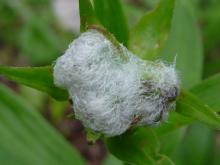
Most martagon buds are not that fuzzy, although some are even more so. Flower color on that one is a darker mauve-pink. Here is the same one, four days later:
It will be first bloom for this martagon seedling this year:
John P. Weiser
Re: What do you see on your garden walks? 2012
Sat, 05/26/2012 - 7:18amRick I assume you are asking about the orange in the bottom, center of the first picture. The two orange spots of color.
If so, that is an orange red Echinocereus triglochidiatus. Here is a close up from a couple of years ago.
Michael Peden
Re: What do you see on your garden walks? 2012
Sat, 05/26/2012 - 8:44amCohan, the Geranium comes from the Bighorn Mountains quite a bit south of your area. So far all of the seedlings that pop up have been white and I'm wondering if it will cross with any of the other Geraniums in the garden.
John, Great stuff. I'm still trying to do that here!
Mark McDonough
Re: What do you see on your garden walks? 2012
Sat, 05/26/2012 - 2:28pmMy goodness, I am hopelessly behind... been wanting to respond to this topic numeropus times, and I do enjoy seeing everyone's fine plants and garden views (I like the toad pic). After nearly 3 weeks of traveling and cramming for various"events" at work, I have a breather here on a holiday weekend (Memorial Day here in the USA).
Here are three view of a trough at the end of my driveway, backed up by a garden shed. The winter-tiny foliage of Alyssum oxycarpum gives away to a small billowing cloud of yellow flower. I didn't notice last year, but today I noticed an unusual characteristic of this species, the flowers stink. When I kneeled down to take photographs, I detected the smell of skunk, and I thought to myself "oh no, there might be a skunk moved in under my garden shed", but then realized it was the Alyssum! What an unusual mal-aroma for an Alyssum to have! Next to it, in the neighboring trough, is Delosperma 'Tiffindell', now in its third year (seems perfectly hardy). In the last photo, I show a close-up of two plants near the Alyssum, Globularia repens 'Nana' on the left (from Wrightman's Alpines ), the most minute and concise leaves which are near shiny black all winter, but no flowers this year (only 2 flowers last year), although I would grow it just for the foliage, and Erigeron scopulinus in the center (from Peter George), making a dense mat, but also no flowers this year, only a smattering of flowers last year.
Tim Ingram (not verified)
Re: What do you see on your garden walks? 2012
Sat, 05/26/2012 - 2:45pmDo skunks really smell as bad as people say? I am not sure if I dare approach a little Alyssum I have in the front garden! Apparently some teucriums are pretty malodorous too. Curious how once someone tells you then you are tempted to test it for yourself - most people go for roses!
I am interested by the comments about Globularia repens 'Nana'. I have this too and it is a super foliage plant, but like the normal form seems very shy flowering. I rather like this genus even so and also grow G. spinosa and probably my favourite incanescens, which I have just managed to find again from seed.
Lori S. (not verified)
Re: What do you see on your garden walks? 2012
Sun, 05/27/2012 - 8:57pmCatching up, yet again...
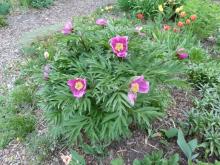
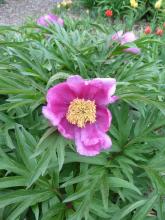
Paeonia anomala, the first to bloom this year:
The little bulbs are done (except for muscari), and the narcissus are having their time:
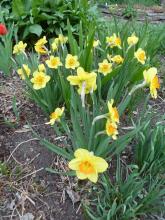
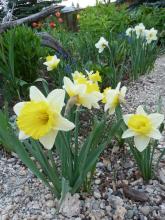
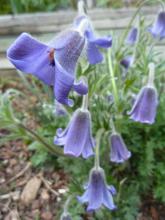
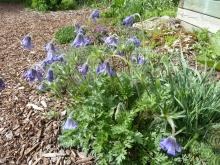
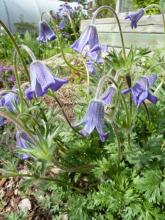
More Pulsatilla turczaninovii - I know I keep showing this one but it is fabulous! Thank you for the seeds years ago, Rick!
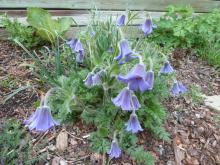
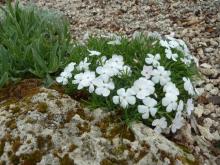
Phlox multiflora, again... but this time, it's more "multiflora". ;D
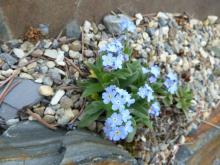
Myosotis decumbens:
Lori S. (not verified)
Re: What do you see on your garden walks? 2012
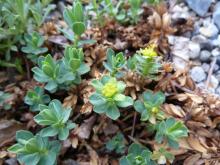
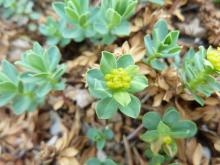
Sun, 05/27/2012 - 9:14pmEuphorbia capitulata... showing somewhat more evidence than usual of a rough winter:
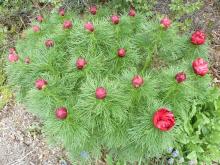
Paeonia tenuifolia 'Flore Pleno', ready to roll:
I think this is Arnica cordifolia... I hope it's not so invasive as another Arnica I'm currently trying to eradicate, that just romps around and never blooms. (Will I ever learn? :rolleyes:)
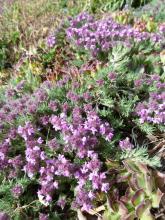
Thymus neiceffii:
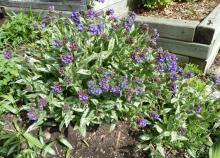
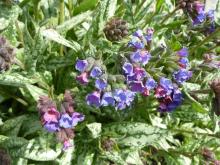
Pulmonaria vallarsae 'Marjerie Fish':
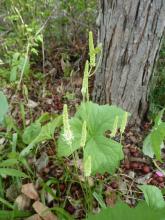
Vanilla-leaf, Achlys triphylla, just leafed out and starting to bloom:
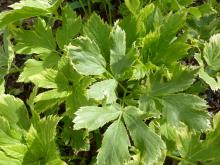
Lush fresh leaves of Peucedanum ostruthium 'Daphnis':
Lori S. (not verified)
Re: What do you see on your garden walks? 2012
Sun, 05/27/2012 - 9:26pmPrimula polyneura... or so the seed packet from years ago said anyway:
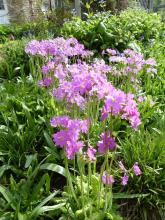
Primula x juliana 'Jay Jay', battling for space among the bulb foliage:
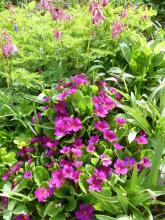
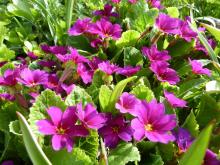
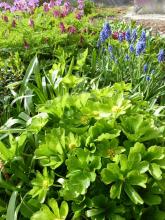
Hacquetia epipactis with Dicentra eximia (? - I always mix this up with D. formosa?):
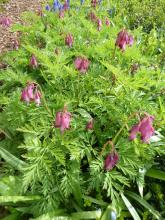
Mertensia ciliata:
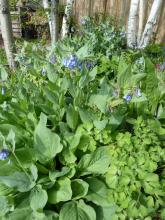
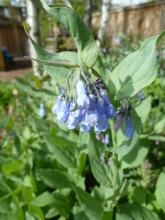
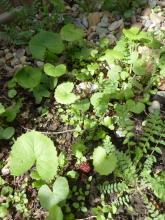
I never imagined I'd be having to weed out Ligularia seedlings but look at this!
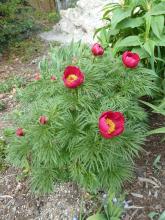
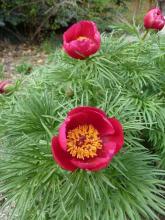
Paeonia intermedia:
Lori S. (not verified)
Re: What do you see on your garden walks? 2012
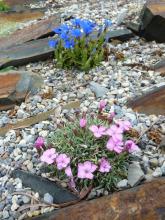
Sun, 05/27/2012 - 9:41pmDianthus microlepis and Gentiana verna:
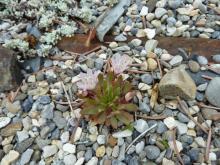
Lewisia longipetala, starting to bloom:
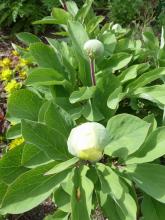
Paeonia mlokosewitschii will have 6 flowers this year!
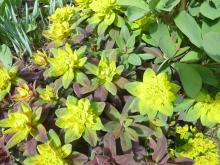
Euphorbia polychroma 'Bonfire':
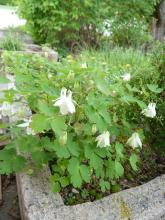
Aquilegia laramiensis:
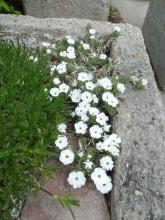
Phlox hendersonii:
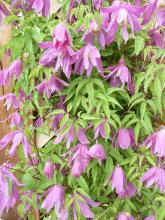
Clematis alpina 'Constance':
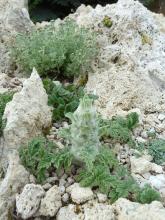
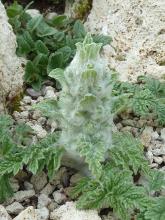
Update on Eremostachys speciosa, looking more and more intriguing:
Lori S. (not verified)
Re: What do you see on your garden walks? 2012
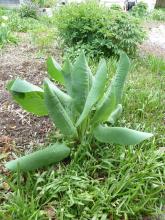
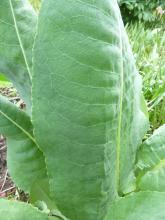
Sun, 05/27/2012 - 9:55pmStuart has been referring to this as horseradish ( >:() but it's actually Ligularia macrophylla:
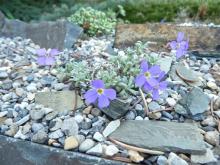
Aubrieta canescens:
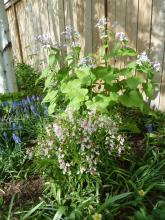
Lunaria perennis and Lathyrus vernus gracilis:
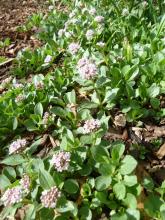
Valeriana montana, starting to bloom:
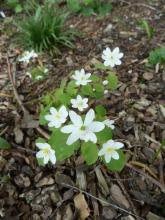
Thalictrum thalictroides:
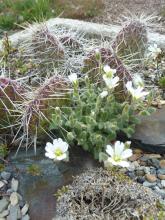
Cerastium alpinum ssp. lanatum, that managed to seed itself up in to a trough with some very prickly company:
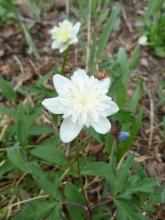
Anemone nemorosa 'Vestal':
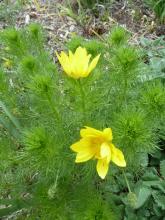
The last of Adonis vernalis:
Alchemilla
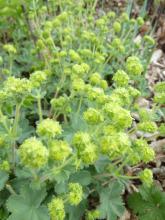
alpinaerythropoda:Michael Peden
Re: What do you see on your garden walks? 2012
Mon, 05/28/2012 - 12:26amMonday morning greetings of Soapworts and Golden Heathers! The same Golden Heather; Hudsonia ericoides was photographed two days in a row. It will flame out quickly; new flowers each day falling apart before tea time.
I had this thought about the birds, and this one in particular as it is so elegantly colored, that they come to this garden to die (to breed, to steal berries, and to generally pester me); but; perhaps, simply, a cat got it.
Richard T. Rodich
Re: What do you see on your garden walks? 2012
Mon, 05/28/2012 - 3:42amIt's kinda funny how the wind can whip around the Pulsatilla turczaninovii flowers and rearrange them permanently, until the next group of gales from a different direction rearranges them again. Almost like an Obedient plant's flowers, except they don't obey me! Your specimen, Lori, if the coloring is right on my screen, looks intermediary between my most blue flowered plant and a steel gray-blue that I used to have. (That one mysteriously died.)
Are you sure that is Alchemilla alpina?
Usually with a silver edge, aren't the leaves supposed to be palmately compound and not so heavily toothed?
Lori S. (not verified)
Re: What do you see on your garden walks? 2012
Mon, 05/28/2012 - 5:15amOh right, it's Alchemilla erythropoda. Thank you!
Anne Spiegel
Re: What do you see on your garden walks? 2012
Mon, 05/28/2012 - 7:26amWonderful pictures, Lori. Does the Myosotis decumbens stay small for you?
cohan (not verified)
Re: What do you see on your garden walks? 2012
Mon, 05/28/2012 - 11:41amLori, esp love the Euph capitulata and Achlys :)
I was surprised some bits of Haquetia I planted last fall just emerged in the last week/few days- so far behind some of the other things (Cory, Anemones, Dentaria)I thought they weren't coming at all, so I was very pleased to see them!
Bundraba- love the Hudsonia! I don't remember if I have seed from Kristl, or just thought about it...
Colourful bird!
Trond Hoy
Re: What do you see on your garden walks? 2012
Mon, 05/28/2012 - 2:07pmLori, you have loads of gems and interesting plants! But I agree, P turczaninovii certainly is fabulous! Is it possible to ask for seed if you have some to offer later?
Lori S. (not verified)
Re: What do you see on your garden walks? 2012
Mon, 05/28/2012 - 8:02pmYes, the elongated flower stems get to about 5cm max.
Great news, Cohan!
Yes, I always do collect seed from whatever pulsatillas bloom for me, and I'll send you some P. turczaninovii when they are ready, Trond.
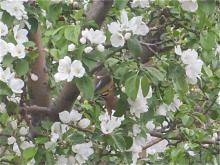
Too bad about the dead cedar waxwing, Bundraba... but at least it allows us a close-up view of the beauty. Cedar waxwings have been busy eating apple petals in our trees, and trilling their songs. Stuart managed to get a photo of some out the window... (fuzzy but better than any of my bird pics!)
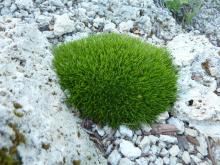
Arenaria kansuensis, with a few buds; this one is looking pristine but another specimen is half brown.
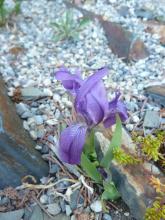
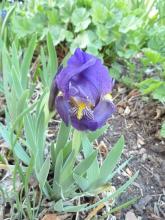
Iris timofejewii and Iris chamaeiris:
Scopiola carniolica:
cohan (not verified)
Re: What do you see on your garden walks? 2012
Mon, 05/28/2012 - 11:09pmTwo more nice irises :)
Interesting about the waxwings eating petals- that I haven't noticed, though our crabs/apples draw all sorts of other predatory attention- grouse eating fruit then buds in later fall, moose eating all tender stems in winter, etc.... I suppose if they just pull petals it wouldn't affect fruiting?
However, the waxwings do make a strong appearance as soon as any berries are ripe- I went out to harvest some Shepherdia canadensis on the acreage last year, only to hear the waxwings in the bush ahead of me, where they'd nearly stripped every bush to be found (and there are many, in numerous spots); they routinely clear saskatoons (Amelanchier) and Sorbus as well, usually almost immediately..
Tim Ingram (not verified)
Re: What do you see on your garden walks? 2012
Tue, 05/29/2012 - 12:32amI'm with everyone else on the wonderful variety of plants pictured. The pulsatilla is especially nice; I have grown this in the past on the nursery but never had the chance to establish it in the garden - it is very distinctive and elegant.
I couldn't resist putting a picture of the daisies in our lawn - ever since we visited a friend whose lawn was almost all daisies in early summer we have tried to encourage them too. In the sand bed a new range of plants are flowering:-
Penstemon rupicola 'Conwy Rose' (a selection from Aberconwy Nursery in North Wales)
Onosma echioides. These I have always found short lived but hope the sand bed will be more to their liking
Hypericum cerastoides. A reliable and cheerful species. There are many very good alpine species in the genus
Triteleia ixioides. After the spring bulbs have done their thing this really comes into it's own in early summer
Thymus 'Peter Davis'. A striking thyme named for the renowned botanist. It flowers so freely we have trouble getting any propagating material from it!
Astragalus angustifolius. The only one of this huge and diverse genus that we grow at present, although I have young plants of many others coming on from seed. This one though (from Greece) is a good doer in the garden. Others I have found a lot more tricky.
Lori S. (not verified)
Re: What do you see on your garden walks? 2012
Tue, 05/29/2012 - 5:27amNo, it doesn't seem to affect fruit production (wouldn't mind if it did, as we always have far too many apples anyway). They just pluck and eat the petals, not the whole flowers or the stamens/pistils.
Richard T. Rodich
Re: What do you see on your garden walks? 2012
Tue, 05/29/2012 - 8:29amSurprisingly not flattened by the 3+ inches of rain we have had in the last few days, Allium moly:
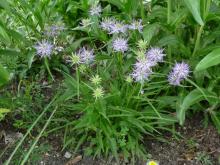
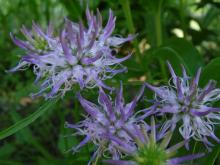
Phyteuma orbiculare. Each flower is always subtended by one very long single bract.
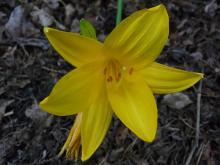
A species Hemerocallis.I hadn't noticed before the small white protuberances at the end of the sepals that point forward. How odd...
Not a photo worthy of discussion, but I thought I had gotten rid of Penstemon pinifolius 'Mersea Yellow'. It is growing better now than when I tried to grow it! Second Pic: Pentemon whippleanus (thanks for the seed, Lori!)
Clematis integrifolia
cohan (not verified)
Re: What do you see on your garden walks? 2012
Tue, 05/29/2012 - 10:44amNice lawn Tim! One thing I like about our large mowed area (necessary to keep the forest from closing in), while it does have many weeds I'd rather be without- dandelions and clovers etc, I am very happy that its also full of wildflowers- right now lots of Viola adunca, fewer V renifolia, a couple of different Antennarias, some in flower, and Maianthemum canadense in bud..
The Onosma is very charming!
Tim Ingram (not verified)
Re: What do you see on your garden walks? 2012
Tue, 05/29/2012 - 11:53amThanks Cohan - I'd be happy to establish such a range of wildflowers in the grass. In part of the garden I am doing this with bulbs but it is quite a long term project (also saves on the mowing!).
Rick - is there much variation in Penstemon pinifolius grown in the US? We had a very robust form called 'Wisley Flame'. Here it is one of the most reliable penstemons in the garden but I have had the same poor experience as you with 'Mersea Yellow'.
Richard T. Rodich
Re: What do you see on your garden walks? 2012
Tue, 05/29/2012 - 7:54pmI nave no idea.
I have the species, too, growing right next to Mersea Yellow, and it does better, but not by a lot.
cohan (not verified)
Re: What do you see on your garden walks? 2012
Tue, 05/29/2012 - 9:35pmTim, I can't take any credit for our 'flower lawn' --our yard was never really true lawn- before our first house here was built in the early '70's, this property was just a mostly wooded pasture area on one corner of the family farm- the native vegetation was never removed, though of course it was affected by the grazing livestock (which just passed through this small part of the native wooded pasture on the farm) and the later building and installation etc; over the decades since, the native plants on the acreage have spread to most of the acreage, mixed with grasses ( I confess to mostly not knowing which grasses are native and which are forage escapes or from my mom's early seeding efforts here) and common agricultural weeds..
Since taking over mowing when I moved back (I don't do all the mowing, but I'm the one who says- don't mow there!) I've encouraged the wildflowers more by leaving some areas around trees, shrubs and stumps to become little islands with more full grown plants, and try to enjoy the flowers more by mowing around flowering plants when possible, even if they will be mowed at other times...
Right now, of course, dandelions are hitting their peak, so there is more yellow than anything!
Trond Hoy
Re: What do you see on your garden walks? 2012
Wed, 05/30/2012 - 3:00amTim, I like your flowering lawn too! I have just mowed mine - first time this season ;)
I also like the Onosma! If it is short lived, does it produce seed?
Rick, surprisingly I could do with some rain! It has been very dry here for some weeks - a dry (cold) wind from north suck the moisture out of everything and the layer of soil is thin.
Both Penstemons are nice. I have started trying new species now :)
Here are some of my peonies flowering now.
P rockii, delavayi and delavayi lutea, all from seed.
Trond Hoy
Re: What do you see on your garden walks? 2012
Wed, 05/30/2012 - 3:02amA few more: lactiflora(?), mlokosewitschii and obovata(?).
Michael Peden
Re: What do you see on your garden walks? 2012
Wed, 05/30/2012 - 7:05amA walk in 'Cactus Park': Photo1: the green leafy thing just above Cerastium tomentosum is Campanula glomerata (which will bloom) growing through Phlox subulata which is past blooming. By now you may be thinking: thugs! But, this; bottom and right planting (The gravel area is newer); has looked pretty much just like this for ten years or more. The Plants are kept in check by furrowing between the mats. Apparently, The Campanula just runs around in there without too much malicious intent. At left is Stephanandra, which could be a problem soon if the scene is not to go much scaled upward!
And, at right there is a Teucrium (not yet blooming) which is dangerously welded into place. Can I trust it to be as nice as the Campanula as it swiftly eats ground?
At the bottom of photo2 is Sphaeralcea coccinea.
At the bottom of photo3 is Artemisia stelleriana; at the top is a bridal veil Spirea, the only plant in the photo that came with the house when I bought it many years ago.
In photo4 is Erigeron flagellaris and one of those rather fast Artemisias. The Colchicum will senesce in a not unpleasant way.
John; your "little spot of color" noted here. But the palette will be different and there won't be any Chollas.
At bottom of photo6 are the remnants of an ancient and formerly huge Astragalus angustifolius. Just up is a good Eriogonum from Abajo Peak in Utah; they don't all bloom like this and winter burn is an issue in the Northeast; but big bearded Iris do great in my garden not withstanding that these were photographed just before the storm!
To make short the story, this Iris was being extirpated from its former home as ugly. So here lives ugly (photo7).
Photo8 is an old planting of Allium moly, 'Tiny Rubies' Dianthus, Sedum aizoon (?), and Polypodium vulgare.
Here's a couple from 'The Rock': Soapworts and Allysum oxycarpum. Mark; you may want to check your shed (carefully) these A. o. don't smell like skunk!
Photo10; Convolvulus boissieri blossoms only last for a day, but I've seen this plant fairly covered with them. It will even set seeds here.
Pages