
[Moderator's note: We have been a bit remiss at splitting this off into a new thread for 2012, but here it is, finally!
Lori]
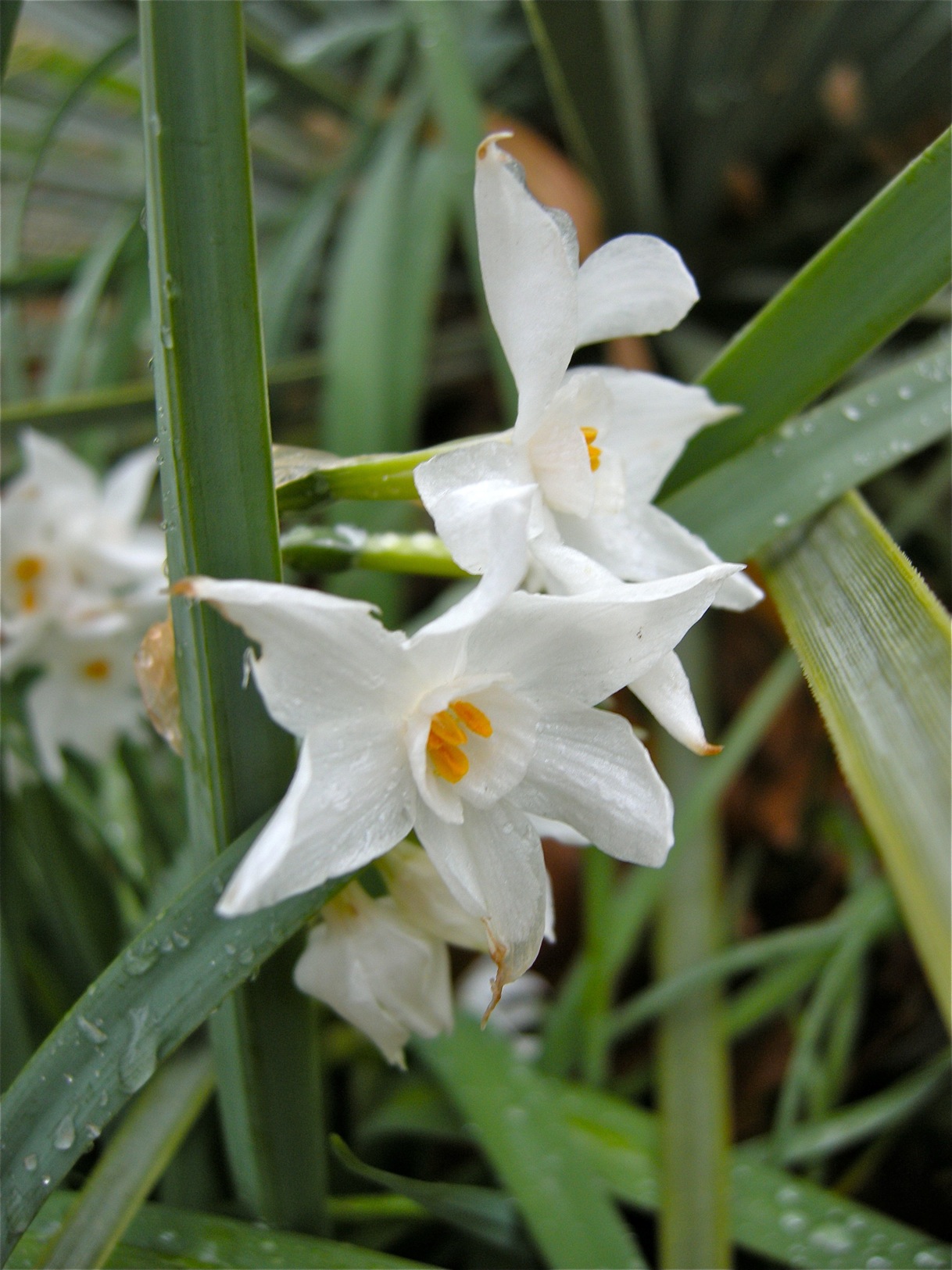
A mix of things flowering or looking interesting in the garden at the moment. The garden is waking up with hellebores and many bulbs soon to come.
Narcissus panizzianus grown from Archibald seed. The flowers are small but always very early.
Muscari pseudomuscari, ditto. This is a lovely tidy species, growing here with a selection of Cyclamen hederifolium.
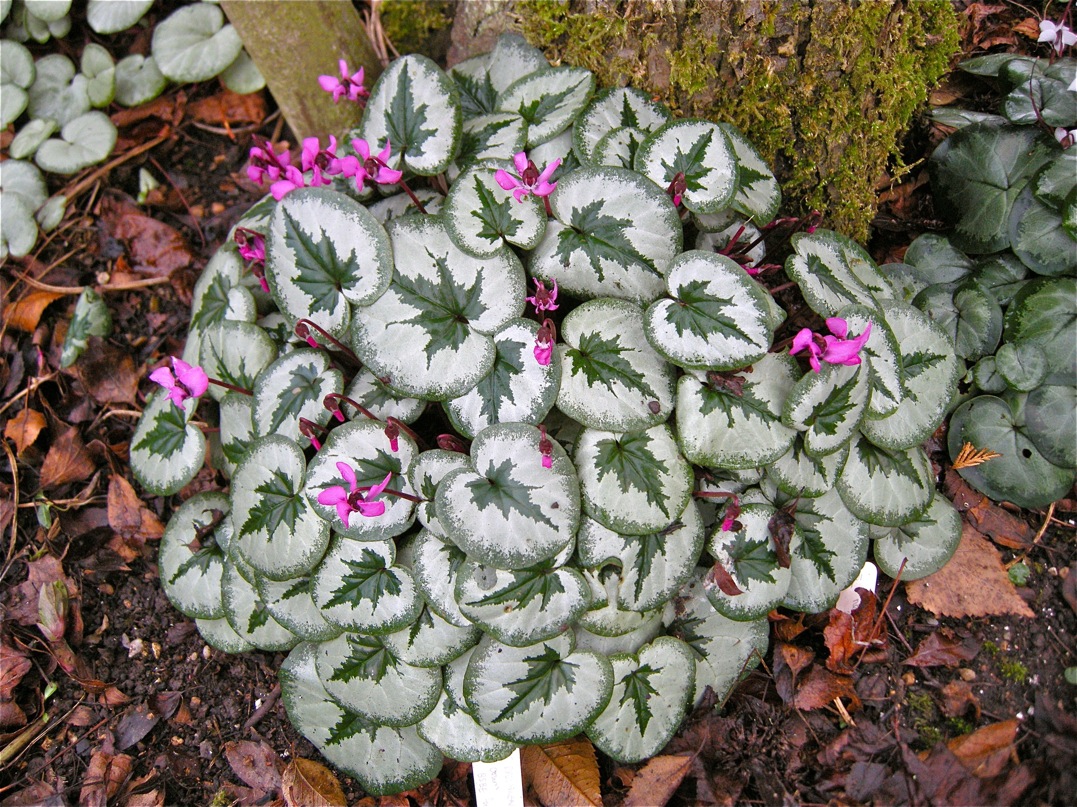
Cyclamen coum. Two forms with very silvered leaves from Tilebarn Nursery.
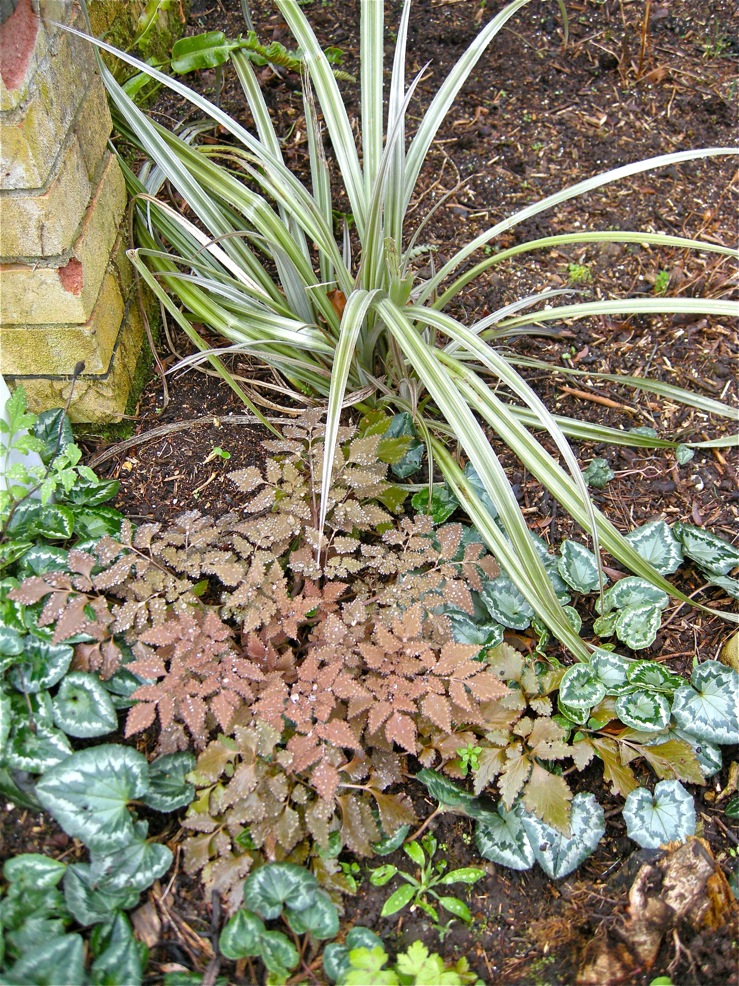
Corydalis quantmeyeriana 'Chocolate Stars' growing with cyclamen and Astelia nervosa. The corydalis is new to me and I haven't yet seen the flowers, but what foliage! I rather like this combination.
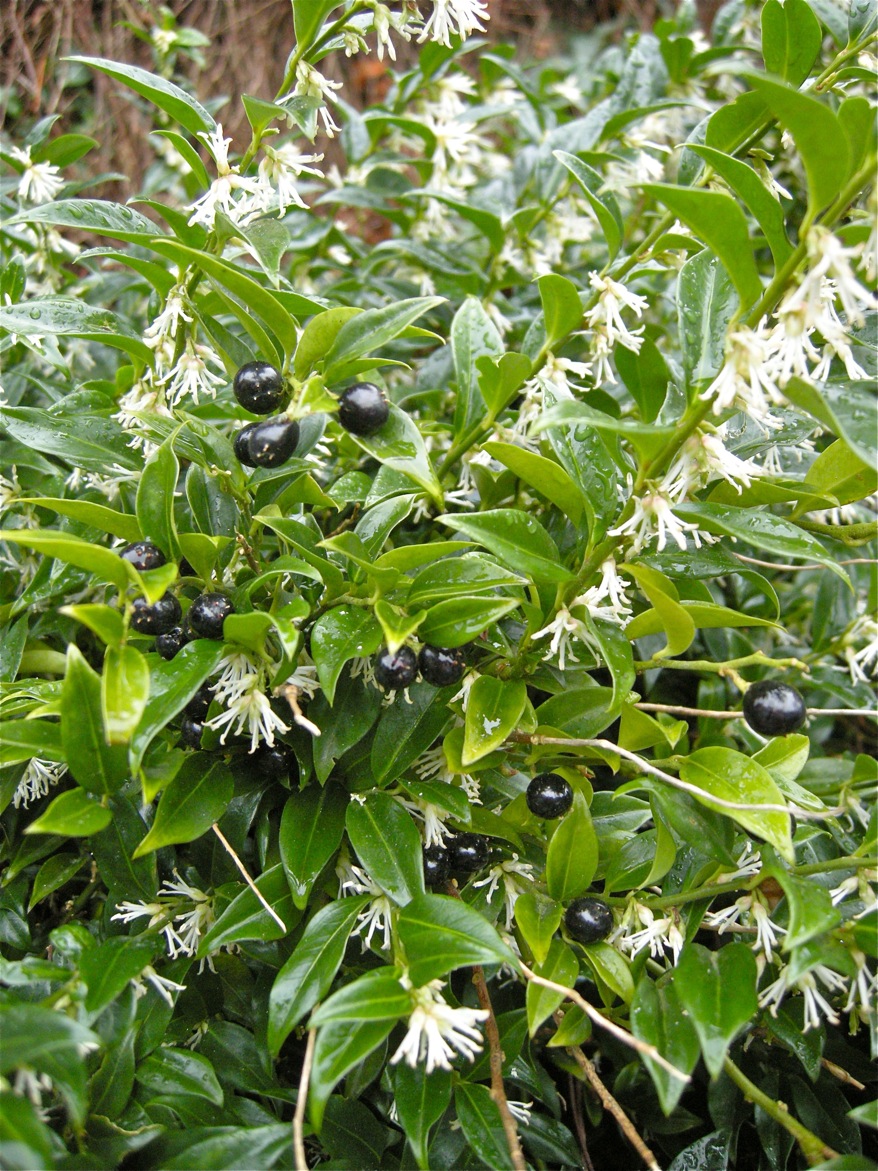
Sarcococca confusa. An unassuming shrub but one of the most delightful and scented winter flowers, and usefully tolerant of dry shade.


Comments
tropicalgirl251... (not verified)
Re: What do you see on your garden walks? 2012
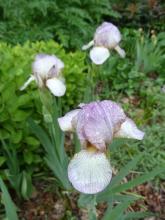
Wed, 06/13/2012 - 6:54pmRight now my garden is kind of dull. not many flowers. These two Iris are from friends. I like both of them
Michael Peden
Re: What do you see on your garden walks? 2012
Thu, 06/14/2012 - 8:15amHa Tim! No cowboy in cactus garden but there was a pretty nice cow skull there for a while. Its that "something" about cactuses that inspires silliness. Recently I've taken to a more subdued approach.
Krish; those look like pretty happy plants: No lily beetle yet? That scourge showed up here for the first time last spring, adding insult to injury. The Dianthus was grown from SPARQ/QARGS seed labeled as D. haematocalyx subspecies pindicola.
As further comment on the "season" here: "Alpines" greatly expand the gardening season. I'm out in the garden two months before "normal" gardeners wake up and still at it more than a month after they pack up. I expect this season to be unprecedented (to my knowledge). It began before mid March with snowdrops etc. and should go into November with bloom/seed on the Ozawa onion (A. thunbergii).
Howey (not verified)
Re: What do you see on your garden walks? 2012
Fri, 06/15/2012 - 3:40amMichael, you speak of the Lily Beetle. I no longer see it on my morning garden walk, nor do I see any lilies except one white Martagon that seemed to escape them. At first I just squished them on sight but now have a bottle containing a few of them to take up to an entomologist at the University for research. Initially, I noticed they were eating each other, so I tossed in a mutilated lily bud and they are still moving around in there. What buds the bugs didn't get, the robins in the bird bath nearby finished off to get at the bugs. So, regarding lilies, it's been a disappointing year. A friend suggested using Neem to get rid of them? Fran
Frances Howey
London, Ontario, Canada
Zone 5b
Toole (not verified)
Re: What do you see on your garden walks? 2012
Sat, 06/16/2012 - 4:24amSounds like the Lily bettle is a real pain --i hope it never makes it's way 'down under'.
Spotted this bit of colour in one of the pots today --way too early i'm thinking as the plants of this in the ground here don't normally appear for another month or so.......
Adonis amuriensis.
Cheers Dave.
Michael Peden
Re: What do you see on your garden walks? 2012
Sat, 06/16/2012 - 7:58am"All come to look for America".
At one point I took preference over Sedum sexangular as being, perhaps, less invasive than Sedum acre but as particularities fade I'm not sure there's much difference. Sedums can provide (big) color not oft seen in planned ground covers; check 'em out. The blue is Campanula muralis.
Probably not too many advanced gardeners; rock or otherwise; would disagree that foliage and form are the better part of the exercise. Here Areneria tetraquetra meets Areneria 'Wallowa' and a Sempervivum ('Silver Thaw' -purchased on a trip to Maine) is wondering what's next.
A. franchetianum likes America.
Pert and perky just look'n the joint over: Arisaema flavum.
Here on The Rock; Moltkia petraea blue; certainly among the choicest of rock garden plants. I shuddered when this one seeded in on top of a trial Gypsophila aretioides; but I let it be: a fair trade. These are willing, and deeply beautiful plants. Grown from NARGS seed.
Saxifraga cochlearifolia in splendid light.
Iris 'Good Omen' on camera. May all of your gardens sparkle, and so inspire wandering.
Richard T. Rodich
Re: What do you see on your garden walks? 2012
Sat, 06/16/2012 - 3:43pmKrish, is that Echium russicum that I see? Mine was done blooming a week ago.
Edit: Nevermind. I see you identified it as E. amoenum in another thread.
Michael, I really like your Arisaema flavum. Years ago, our Chapter went on a summer roadtrip that took us into Iowa. We stopped at a really out-of-the-way nursery that specialized in alpines amidst miles and miles of only farmland. It had a whole greenhouse of Arisaema species, too. After we had made our purchases, the Chapter was given a dozen or so each of A. flavum, fargesii and candidum. (He had way too many.) "See if you can get these to grow up there" he said. They were very healthy, 1 foot tall plants. All succumb, but A. flavum lasted he longest, limping through four summers and three winters.
I don't think your photo is Arisaema franchetianum. http://efloras.org/florataxon.aspx?flora_id=2&taxon_id=200027201
But it does look just like the "A. franchetianum" that I received from Chen Yi many years ago. don't have a clue what it really is...
Sedum sexangulare is a weed at our Rock garden at the MN Arboretum. The staff there grows it as a ground cover right across the walk path from our rock garden. :rolleyes: It does set off nicely the potted bonsai displayed there, though. Fortunately, the path is asphalt, so the sedum is not a terrible problem. I think I'd "choose" S. sexangulare over S. acre any day of the year.
Mark McDonough
Re: What do you see on your garden walks? 2012
Sat, 06/16/2012 - 7:16pmI agree Rick, on both accounts... love Arisaema flavum, tried it a couple times, but have not succeeded yet, and the first Arisaema isn't franchetianum, but a really lovely narrow and elegant dissected leaf Arisaema... I too wonder what it is. Here's a photo of A. franchetianum from the International Aroid Society; a species with 3 bold and wide leaflets, and a distinctive flower.
http://www.aroid.org/genera/arisaema/franchetianum/15.php
Richard T. Rodich
Re: What do you see on your garden walks? 2012
Sat, 06/16/2012 - 9:02pmIt just so happened that a botany friend of mine from Hayward, Wisconsin visited me today. He grows lots of things I never would think had a prayer: Meconopsis grows like weeds, Stewartia from seed just planted in the woods(!), a vining polyganatum, Iris wattii, etc. We got to talking about arisaema and he mentioned that he has had A. flavum for at least ten years! He is in zone 3, and about 50 miles south of Lake Superior. Often he benefits from lake effect snowfall, but not all years. From my point of view, this guy can grow anything, and he is a master at rooting cuttings, too!
Lori S. (not verified)
Re: What do you see on your garden walks? 2012
Sat, 06/16/2012 - 10:29pmArisaema flavum does indeed seem very hardy. Mine seemed to have gone AWOL last year, though, after 7 years in the garden.
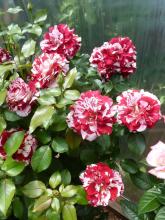
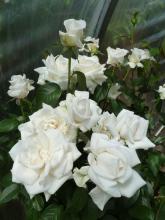
Now for something completely different... a few of the roses in Stuart's greenhouse. All are specifically selected for fragrance (as well as for form and disease resistance) - and the fragrance is, indeed, intoxicating!
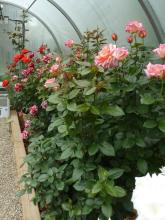
'Double Delight'; 'Dolly Parton'; 'Sheila's Perfume'; 'Rock'n'Roll'; 'Full Sail':
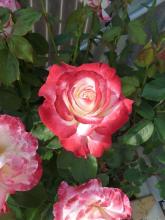
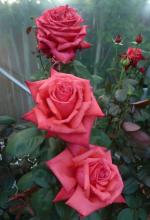
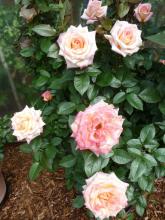
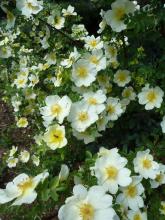
And Rosa primula, outdoors - no coddling needed for that one!
Gene Mirro (not verified)
Re: What do you see on your garden walks? 2012
Sun, 06/17/2012 - 9:46amMichael, I think your A. franchetianum is really A. ciliatum. I have a few that I grew from seed labelled as ciliatum, and they look just like yours. Also, the photos on Google look the same.
externmed (not verified)
Re: What do you see on your garden walks? 2012
Sun, 06/17/2012 - 1:14pmMassachusetts sandy bed still holds some interest. Acantholimon, Sempervivum, and Lewisia rediviva Sold as v. minor. This is first year for the latter, but 2 made it through last year and flowered, earlier.
Charles Swanson NE Massachusetts USA z6a "mildish" sunny winter, recently cloudy and cool, 90s F this week.
externmed (not verified)
Re: What do you see on your garden walks? 2012
Sun, 06/17/2012 - 1:26pmHere on The Rock; Moltkia petraea blue; certainly among the choicest of rock garden plants. I shuddered when this one seeded in on top of a trial Gypsophila aretioides; but I let it be: a fair trade. These are willing, and deeply beautiful plants. Grown from NARGS seed.
Michael, those "on the rock" garden scenes are outstanding. Hope you'll post to the Gallery: Rock Garden Scenes.
Charles Swanson
Michael Peden
Re: What do you see on your garden walks? 2012
Mon, 06/18/2012 - 7:47amThanks for the feed back; particularly for the Arisaemas. I'm pretty sure both came from Potterton and Martin many years ago. Both have been in the garden for over ten years. A. flavum has seeded quite a bit and there's lots of wee ones. The other spreads widely by stolons but has also produced fruit. If the seeds mature before cold weather; I haven't seen any seedlings yet. It's a genus I really have yet to explore. As for Stewartia; It took two seasons before seeds germinated.
Mark McDonough
Re: What do you see on your garden walks? 2012
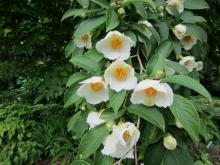
Mon, 06/18/2012 - 7:33pmI believe many Stewartia are hardy, a number of species can be grown in New England without the slightest winterkill over many years. If I had to pick only two trees to grow, Stewartia pseudocamellia is one of the two (Sourwoord, or Oxydendron arboreum is the other). It used to be that my tree never started blooming until the very end of June or beginning of July. But in the past decade, flowering start date has consistently moved up, earlier and earlier, the first few blooms started here on June 8th. This past week, the maturing tree is heavily laden with large flowers, quite a spectacle in the garden, the ground white from the flowers that drop just after one day, replaced by ever more opening buds.
This tree is an all-season winner, trim, concise deep green leaves never bothered by buds, smart red leaf petioles, upright conical growth with willowy slightly pendulous branch ends, incredible profusion of late-season bloom, spectacular red-orange-pink autumn color, and beautiful smooth multi-color peeling bark for winter interest. The only thing this tree lacks, is flowers with a fragrance (they're unscented, although the bulblebees love the tree). This tree has never seeded around in 18 or so years, whereas other ornamental such as Magnolia, Stryax, and recently Chionanthus, seed around with ease.
Stewartia pseudocamellia
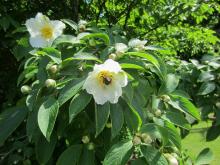
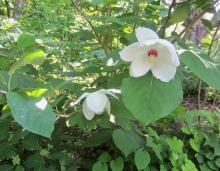
Another late bloomer is Magnolia sieboldii (mine is a Korean form grown from Magnolia Society seed). I mentioned in another topic about Winners and Losers, that when we were hit with a deep freeze to 18 F after several weeks of summer-like warm to hot weather back in March, one of my two M. sieboldii trees completely blackened. It never recovered and has indeed died, whereas the second tree growing 2' away, didn't bat an eye at the sudden deep freeze, and is growing lustily and producing lots of flowers. The flowers, besides being exquisite, have a rich perfume, an enticing sweet lemony scent. Nearby grows Corydalis elata, 18"-24" tall with deep blue flowers that waft an intoxicating sweet coconut aroma, mmmMMMMmmmm good!
Magnolia sieboldii "Korean form"
Lori S. (not verified)
Re: What do you see on your garden walks? 2012
Mon, 06/18/2012 - 10:07pmLots of beautiful things there, Charles and Mark!
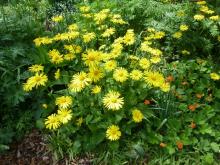
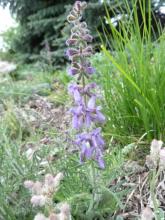
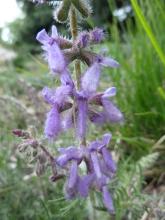
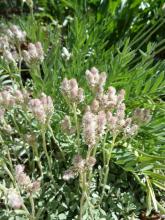
Doronicum orientale; Salvia juriscii, with its upside-down flowers; Antennaria along the sidewalk:
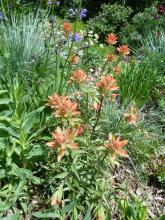
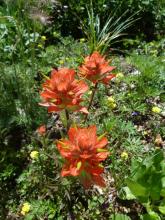
Castilleja miniata in the front yard; there is one particularly vivid plant that I'm glad to see has seeded itself:
I grew this from seed long ago as Anemone x lesseri:
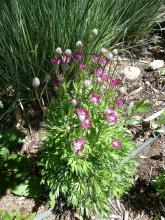
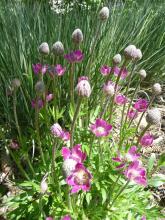
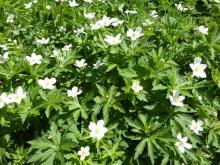
Anemone canadensis - pretty in bloom but very invasive:
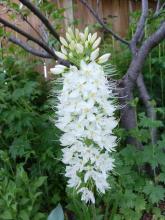
Eremurus himalaicus - I broke this one off last year under the soil surface while weeding and assumed I'd killed it - not so:
Lori S. (not verified)
Re: What do you see on your garden walks? 2012
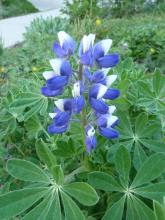
Mon, 06/18/2012 - 10:12pmLupinus nootkatensis, looking more blue in the photo than it really is:
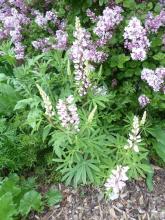
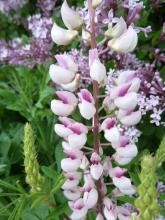
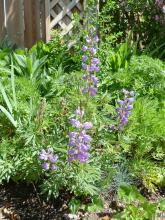
A sucker or seedling of Lupinus argenteus has turned out to have pink flowers, as opposed to the usual lavender (on the right):
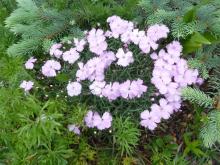
Dianthus sp. in front yard:
cohan (not verified)
Re: What do you see on your garden walks? 2012
Mon, 06/18/2012 - 11:23pmLori, interesting how your season starts so much sooner than mine, but in our short summer things become compressed and we are not as far behind on some things now- Anemone canadensis and Castilleja miniata have just started flowering in the wild here..
Your Rosa primula is interesting, this seems to be the same as many massive old plants that were flowering all over in the nearby town of Sylvan Lake when we were there last week- I commented that some local nursery years ago must have promoted these heavily many decades ago since there are so many -grown as 'hedges' (I use hedges a bit ironically since it suggests something much more tame than what I actually saw) and over archways etc- clearly very very hardy and splendid in flower.. I think I've seen some in Rocky Mountain house as well... I collected a hip from one at my mother's doctor's office some time ago, but have not sown...
Lori S. (not verified)
Re: What do you see on your garden walks? 2012
Tue, 06/19/2012 - 9:58pmCohan, if you get a closer look at those white roses sometime, try to note the thorns. Rosa primula has winged thorns (left), while another possibility, Rosa spinosissima (another very hardy, early, once-blooming white rose) has straight, fine thorns (two photos to the right):
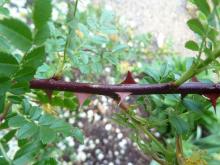
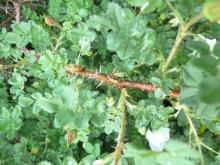
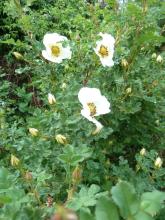
It would be interesting to know if it's one of these, or something else again.
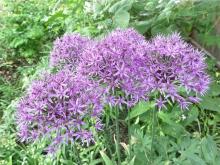
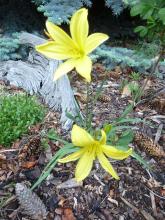
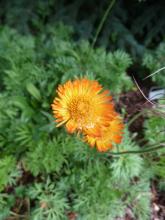
Alliums; a rather cute little Hemerocallis that I moved from elsewhere in the yard... no name springs to mind, unfortunately; Erigeron aurantiacus:
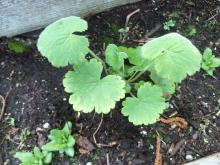
An odd little Delphinum with most unusual felty leaves and aconitum-like flowers - Delphinum vestitum; I rescued this from the border last year, where it was being overwhelmed, and stuck it in one of the acid beds, where it is recovering:
Irises:
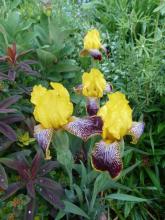
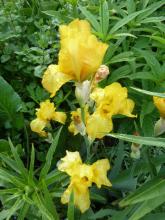
Lori S. (not verified)
Re: What do you see on your garden walks? 2012
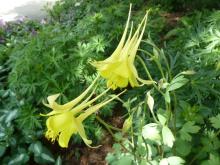
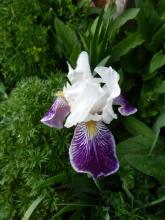
Tue, 06/19/2012 - 10:05pmA very dark 'Nora Barlow'-type columbine that has sprung up; Aquilegia chrysantha 'Yellow Queen'; a very old iris:
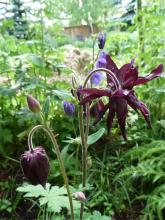
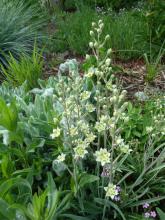
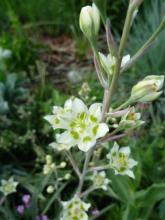
Zigadenus elegans in the front yard:
Only the odd flower left on any Pulsatilla vulgaris now (though P. ambigua
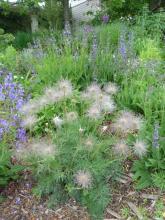
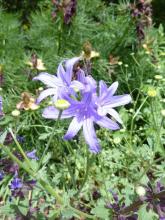
P. turczaninoviiis still producing fresh flowers):Oh, and I noticed the other day that I have finally had an Ixiolirion tataricum survive in the garden! :)
Howey (not verified)
Re: What do you see on your garden walks? 2012
Wed, 06/20/2012 - 4:39amHi Lori: Love your pictures - I have Zigadenus elegans too but not so photogenic as yours. You mention an "acid bed". I don't seem to be able to grow the acid loving plants I covet and wonder if there is any way one can create such a bed and grow things like Kalmia, Bunchberries, etc. Fran
Frances Howey
London, Ontario, Canada
Zone 5b
John85 (not verified)
Re: What do you see on your garden walks? 2012
Wed, 06/20/2012 - 5:28amTo make a acid raised bed over limy soil:shape the soil in a upside down V shape to allow drainage and cover with a plastic sheet(protected on both side with clean sand or a membrane as used to make pounds)
Put rocks,logs or planks to retain the acid rooting medium on the edges of the bed.You can fill with what is available:peat, composted bark,garden compost even acid soil from another location.
Compost made from conifer needles is very acid.
A lot of ericaceae have thin shallow roots so a depth of 1'1/2 will allow several species but not big rhodos of course.
Michael Peden
Re: What do you see on your garden walks? 2012
Wed, 06/20/2012 - 7:38amGetting small for a moment. Sedum hispanicum 'minus' in front of Vaccinium uliginosum.
Lady's Mantle, Sundrops, 'Good Omen'...... yada yada (OK -getting into the perennials a bit much but this is a garden walk and I'm just the reporter).
Small Cobweb in Selaginella densa.
Small Cobweb flower avant Draba rigida imbricata in seed. The plants are showing stress because of heat (this is normal). We can get fifteen hours of daylight at this time of year and this is followed by summer. It is warm for June here but the weather is finally (by 2 or 3 years) "normal" - just some thermal degrees elevated and with a tropical twist.
Small Cobweb in Arabis bryoides with Selaginella rupestre.
Vaccinium 'Hamilton' is another extremely choice ground cover; but, like my previously displayed V. oxycoccus -start now if you like it and expect it to cover ground; these things are really pokey.
Michael Peden
Re: What do you see on your garden walks? 2012
Fri, 06/22/2012 - 6:59amWhen the thermometer hit eighty plus in mid March I swapped the wooden planter frogs, totally appropriate to last spring, that had been in a south window for a couple of years, with a toaster.
Summer enters with a blaze of fury. I knew these were threatened on the south face of The Rock but, after a day of record heat, they now appear to be toast; A tiny Saponaria and two buns of Gypsophila aretioides. That could be eight years down the drain on those Gypsophilas. I'm glad I have back ups, for now, at least. There are seven species of Acantholimon here that seem more resistant; and, of course, cacti. If the Gypsophila lives it's set to be moved from this area. The Saponaria has kindly made lots of seeds.
Cacti couldn't be happier; The weather has been perfect for them. I'm doing some remodelling on Cactus Park; making it more cactusy. This Opuntia macrorhiza(?) has value beyond simply being fun to look at so this is what I've done: taken several lengths of un-blooming growth from beneath an existing plant and layed them atop the ground in the radial pattern they will naturally take on as they grow. There are few roots now but that will change quickly.
I always enjoy this little scene: Campanula glomerata in Cerastium tomentosum.
Potentilla thurberi enjoys the afternoon shade of tall trees to the west.
I noticed this morning the flowers on Lonicera crassifolia. Vaccinium uliginosum is at bottom of photo.
Moltkia petraea, Sedum dasyphyllum, and Allysum oxycarpum.
Lori S. (not verified)
Re: What do you see on your garden walks? 2012
Sat, 06/23/2012 - 9:02pmHi, Fran,
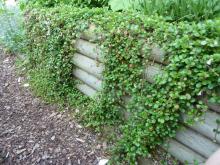
Our acid beds are basically what John described, with the structures being raised beds made of landscape ties (one bed) or planks (the other bed). The beds started out as pure peat, but have had soil incorporated in through time. I can't say they have been raging successes for me, but they have given me a place to grow Linnaea borealis, Cornus canadensis, Vaccinium vitis-idaea 'Wabasca', a few alpine willows and mitrewort... plus some other things that don't necessarily require acid soil, but have been reasonably happy in there.
I have tried various heaths and heathers and Phyllodoce in the acid beds but our winter conditions (the dryness particularly, perhaps) don't seem to favour them.
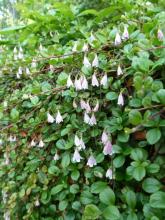
Linnaea borealis was beautiful in the acid bed (photos from last year) but all the draping parts were killed this winter... arrghh! The rooted portions in the acid bed and the draping parts that rooted into the soil below survived, at least.
Howey (not verified)
Re: What do you see on your garden walks? 2012
Sun, 06/24/2012 - 4:54amJohn and Lori: Many thanks for your info about creating an acid bed and your inspiring photographs - never saw Linnea borealis growing like that - reminds me of Fuchsia procumbens I have growing in a pot - leaves look similar but no flowers. A case of unrequited love on my part. Fran
Frances Howey
London, Ontario, Canada
Zone 5b
Lori S. (not verified)
Re: What do you see on your garden walks? 2012
Sun, 06/24/2012 - 11:17amWow, fabulous, Michael!
Let's see, where did I leave off?
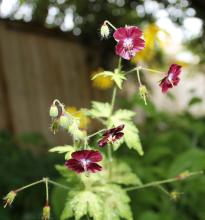
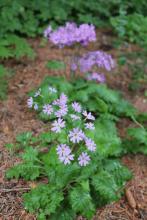
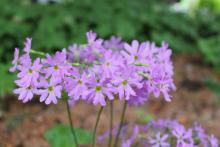
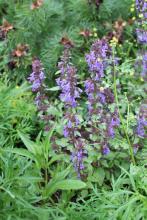
Geranium phaeum 'Springtime'; Primula cortusoides(?) x2; Dracocephalum nutans:
Front yard; more Zigadenus elegans x2; Salvia pratensis;
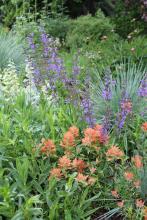
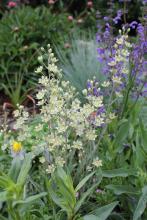
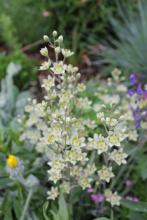
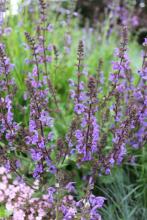
Rain, rain and more rain lately, and the perennials are growing like gangbusters... Persicaria polymorpha is taller than I am:
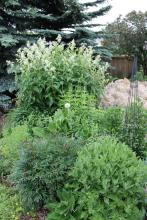
Silene zawadskii:
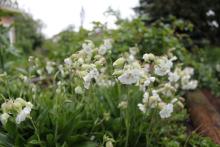
Richard T. Rodich
Re: What do you see on your garden walks? 2012
Sun, 06/24/2012 - 2:51pmWill my plant envy ever cease? Doubtful. But even just enjoying these wonderful photos enough.
I must agree, Lori, that that Zigadenus is a very nice form. I've never seen it growing here, even though it is suppose to be native. I'm probably just not out at the right time. Wouldn't mind some seed of that one though...
Michael Peden
Re: What do you see on your garden walks? 2012
Mon, 06/25/2012 - 9:44amI've often wondered about this. So, John, you've essentially created a low mound of material, covered it with an impermeable membrane, surrounded the whole thing with a low retaining wall, and topped it all up with an ericaceous compost? This would leave a shallow spot in the middle of the bed and the deepest soil on the edges. I'd think an issue with this would be keeping it moist enough. I might direct run-off from the roof, or something, into the bed.
why not sink the center instead (or just leave it level)? The edge of the membrane could still be finessed above the offending alkaline ground level. so long as the water going in is not alkaline I would think that a lack of drainage deeper in the bed would be unimportant. Another potential stumbling block might be the compactness of what is put in: from my experience, it takes a deal of effort to get light ericaceous composts compact enough for good plant growth. This is good stuff but not something that will provide much return to a guy who already gardens on pickling sand. In fact I'm running a test on Louiselueria procumbens pretty much just plopped right in. It's still alive, and seems healthy, after more than a year. Some of my dabblings were published in the Spring 2005 Quarterly (I'm still dabbling!). Lets hear more, if there is more, from folks in alkaline areas.
Michael Peden
Re: What do you see on your garden walks? 2012
Tue, 06/26/2012 - 8:50amOpuntia macrorhiza on Cactus Park
Asclepias tuberosa starting up.
My weedy vegetable garden: The poppies have been coming up in it for years and I like to eat the mustard which was long ago planted for that very purpose.
Security, in part, on my half acre of paradise, is a shed full of wood. The plant is Hydrangea petiolaris: In rough translation; He who gobbles sheds. There's a Vitis on the other side of this shed just to make sure the job gets done.
In the foreground is a truely gargantuan Daphne 'Carol Mackie'. Above is a Box Elder. Hey, it made a nice place for a shade garden in just ten years; never mind the fact that it sheds its leaves in June as well as the more-than-occasional branch or limb, and it seeds everywhere. I do so consider the chain saw. A conundrum indeed.
My crispy ash tree (Fraxinus exebitius? 'crispa'). If I knew what I do now about the best of gardens I may have sought out more things like this fifteen years ago; again conundrum; time and place and, of course, initial investment. Where does the sense to "just go" on this kind of thing come from -if there is such.
Yacky Pond; among the most contrived things I've ever done; but oh so much fun.
Big hostas, as well as shrubs and trees, being used to carve a garden into the rough.
A couple of photos of my latest crevice garden. I filled it with "compost" last fall and after a winter's settling have begun to plant it. I'll use seedlings, enforced patience, and selected stuff I can propagate from the garden to start it. It was done in the parallel style popular today though you will notice a slight curve in this one (second photo). From this angle it appears a low mesa thrillingly juxtaposed against the backdrop of the shining mountains in the grand distance beyond.
Trond Hoy
Re: What do you see on your garden walks? 2012
Wed, 06/27/2012 - 2:39pmMichael, your place looks terrific! And your new rockery looks very promising ;)
Tim Ingram (not verified)
Re: What do you see on your garden walks? 2012
Sat, 06/30/2012 - 4:29amI agree - and what a great description of carving a garden into the rough! How many see a garden like this and are actually exhilarated by it?
Tim Ingram (not verified)
Re: What do you see on your garden walks? 2012
Mon, 07/02/2012 - 12:49amThis has got to be the most dramatic 'thistle' - Berkheya multijuga from the Drakensberg Mountains of South Africa. Its flowers are yellow and not especially striking, but the foliage gets more remarkable every year. Unlike B. purpurea, which I also grow, this doesn't send out running shoots, and neither does it set viable seed for me - I should probably excavate some roots and try root cuttings.
The second plant, Symphytum x uplandicum 'Axminster Yellow', is equally hard to propagate as root cuttings lose any variegation and it hardly produces enough growth to divide easily. A nice feature with Phlomis russeliana.
Michael Peden
Re: What do you see on your garden walks? 2012
Mon, 07/02/2012 - 8:10amGardeners in Essex New York have given effort in fits and starts for some years. But I'm sensing a new paradigm. Today these guys 'get it'. Great use of the 'defendable borders' principal in these: 8 or so feet between sidewalk and street put under staunch perennials and again between sidewalk and building.
The garden display is easy; there has been scant care of landscape over the years yet it has succeeded to a relative degree. The back side of this daylily highlight, et al. has been allowed to roam into the lawn; The owner/caretaker ever avoiding the spreading mass. I call this 'the fear of plants' or; thou shalt never damage a priceless perennial! Bah! Discuss broadly and set limits or ye shall be eaten!
The 'ditchlily' taking on its proper roll? There probably arent any other 'weeds' in that ditch. Nice work. In the second photo it's a little outta hand, but I think these guys 'get it'.
I've always liked alleyways. This really isn't one but it's nice to see the backside of buildings blossom anyways.
The village sits on greystone and shale. Some of the first structures built here were made of the grey stone. What fun it must have been to build these things!
A "boat house" overlooking Vermont shore on July 1.
I doubt there's a town anywhere that couldn't be made more beautiful by the considered use of plants.
cohan (not verified)
Re: What do you see on your garden walks? 2012
Tue, 07/03/2012 - 11:27pmMichael and Lori- many wonders :)
Lori, love the colour of the Geranium phaeum 'Springtime'!- oh to have 20 square metres of that instead of the fluorescent purple/blue himalayense we have :(
I'll have to look at those rose stems when I get a chance... I may have photos somewhere, but would have to really dig...
Michael- love the Potentilla thurberi, will have to try it sometime.. |I was looking at seed of Hydrangea petiolaris (I think, or a similar sp) last year, that would be another fun one to try... Did you say your property is a half acre? How long have you been gardening on it and what state was it in when you started? do you have native vegetation?
Re: acid plantings-- Lori, do you count Cornus canadensis and Linnaea among the things you find need/prefer the acid bed, or are they in the other category of things you just put in there? just curious, both grow everywhere here, where there is even part shade, and some of the soils are quite clayey ('grey wooded' soil which does not have a huge humus content)... though spruce needles can and do reach any part of my acreage when the wind blows.. really need to use the ph testing papers Trond so kindly sent..lol
Michael again- I enjoy the (sub?) urban scenes- I spent many happy hours wandering the streets of Toronto enjoying and photographing the plants and flowers- the 'outta hand' yards were often my favourites- assuming some nice things were put there to get out of hand!
I have a ton of common daylilies I dug up a year or two back (and another patch to dig) where they've spread over many years, and too close to my rock garden.. I haven't yet figured out what to do with them (the ones already dug, along with the Irises they have grown with -german? SDB, MDB, CBS, ABC, PPP-- can't say I have yet grasped the complex letter codes of garden Irises-- were plopped as chunks of 'sod' nearby the dig and are happily growing there two winters later.. but that is not where I want them either!)-- I think I will move them all to a grassy/forby native area at the edge of the property, and let them do their thing among the other vegetation between spruce trees and mower.. nothing short of chemicals would ever give such a pure display as your ditchlilies here! I will not spend every waking minute weeding daylilies!...lol
Tim- the Berkheya is indeed striking :)
Howey (not verified)
Re: What do you see on your garden walks? 2012
Wed, 07/04/2012 - 12:38pmMichael: Love your "ditchlily" idea. My neighbors, in order to get rid of grass at their curb -it was usually weedy and was and still is a mountain of snow pushed up on top of it by the snowplow in winter. However, they dug it up and planted some really tough but actually quite attractive plants there that provide nice color throughout the growing season, beginning with yellow Heliopsis, red Shirley poppies, Datura (not exactly my cup of tea, nor that of the local Ministry of Agriculture) and ending up with some nice colored Autumn Glow Sedums. This is a spot where nothing much will grow but they want to keep it looking nice - and they do. I shall mention to them about the "ditchlily" which is flowering right now. Fran
Frances Howey
London, Ontario, Canada
zone 5b
Panayoti Kelaidis
Re: What do you see on your garden walks? 2012
Thu, 07/05/2012 - 8:16amI'm sorry I have been in absentia for several months: trips to Europe and all over the US compounded with springtime and work responsibilities kept me from posting (and I was stymied for a while when my logon lapsed)...but a very long spell of hot weather has allowed me to catch up a bit, and driven me to the computer. I shall perhaps do a garden walk this time of year (lots still happening), but I thought this would be a good place to post some of the highlights of the past few months in my garden and a few of my friends: it may take two postings to get them all!
1) Penstemon x barbatus hybrid ('Coral Baby' Horrible name!) at the Gardens at Kendrick Lake
2) Convolvulus assyricus at Sandy Snyder's rock garden late last April
3) Closeup of same
4) Escobaria sneedii var. leei in a trough in Gwen Moore's garden
5) Astragalus angustifolius in my garden
6) An overview of a part of my rock garden in late May (ice plant season!)
7) My favorite form of Daphne oleioides (either buxifolia or kurdica: lost track which)
8) Erodium absinthoides ssp. amanum in Mike Kintgen's gem of a garden
9) Delosperma FIRESPINNER in my private garden
10) Alkanna aucherana in a trough at Mike Kintgen's garden
Panayoti Kelaidis
Re: What do you see on your garden walks? 2012
Thu, 07/05/2012 - 8:23amAnd MORE highlights of the last few months...
11) Monardella macrantha 'Marion Sampson' at the Garden at Kendrick Lake in May (still blooming some)
12) Closeup of same
13) Arctotis adpressa in the Watersmart Garden at Denver Botanic Gardens late April
14) Trillium luteum at Sandy Snyder's wonderful garden in Littleton
15) Sandy's crevice garden in late spring
16) Echinocereus dasyacanthus in Dryland Mesa garden at DBG
17) Escobaria sneedii var. leei at Denver Botanic Gardens
18) The crevice garden at the Colorado Springs Water Conservation Demonstration Garden in late April...
19) Osteospermum AVALANCHE in the Children's Garden at Denver Botanic Gardens
20) Salvia pholomoides blossom at Mike Kintgen's garden--his collection from Morocco.
Michael Peden
Re: What do you see on your garden walks? 2012
Thu, 07/05/2012 - 11:24amCohan; That's the point of the exercise. Once these are weeded and strongly established; they like never need weeding again! Furthermore, if you know where the weeds are or may be lurking; which is, of course, not in the daylilies; you should be able to keep them at bay. To give brief answer to your other question about native flora on my small town lot (.8 acre): roughly; NO there is no "important" such. Fifteen years ago when I began the garden, I found a variegated hosta, a blue Iris, and a cut leaf form of Viola; all still here. However; in the mixed (white pine dominant) woods behind the house (recently destroyed for logs) there are extensive colonies of Mitchella repens, a variety of large ferns, and Montiopsis? sp. It supports plants that like a light sandy soil but does not seem to support things like Trillium and Arisaema. Mitchella has formed a patch way out in the corner of my lot under a big white pine. It, like the big hostas in my former post, draws my attention and thus may be used by me to, as I say, carve a garden into the rough. I've got a lot of work to do yet and June-July really makes that apparent. In total fear, I have not dained to time-lapse photo things like Oxalis corniculata, Glechoma hederacaea, spotted spurge, and numerous species of crab grass all of which may attain absurd dimensions in a very short period of time! Now I need another full time gardener plus one part time.
Panayoti. Thanks for those. Looks like I gotta get back to the drawing board as they say. That's Convolvulus assyricus? Wow!
Tim Ingram (not verified)
Re: What do you see on your garden walks? 2012
Thu, 07/05/2012 - 12:52pmPanayoti - what fantastic plants! The Monardella set against that red stone is inspired - a plant I have tried several times and failed with. I am also beginning to see the great following there is for cacti in American alpine gardens - the Echinocereus dasyacanthus is such an extraordinary colour and highly appealing. I am sure others have asked before but are there any prospects of a book based on the experiences of alpine gardening at Denver and around about? I enjoyed Bob Nold's book immensely and despite our long tradition of alpine gardening in the UK we are starved of writing like this, and a sense of such a distinctive range of plants.
Panayoti Kelaidis
Re: What do you see on your garden walks? 2012
Thu, 07/05/2012 - 7:21pmDear Tim,
You are very kind indeed: glad you liked the pix! The Monardella macrantha is apparently a selection that is much more gardenworthy than the typical species: the picture I showed is taken at a public park after all! We have it all over Denver Botanic Gardens--if you need a start let me know once it cools off; there's lots of it hereabouts!
I have helped produce a number of books that have quite a bit of content deriving from me over the decades....although not specifically alpine in content, they do have interest beyond our region: Durable Plants for the Garden is the history of the first 10 years of Plant Select, and a really great book that hardly had distribution outside the Denver metro area--a great injustice! Flourish was edited by me: a tribute to the first 50 years of horticulture at Denver Botanic Gardens, and finally "Gardening with Altitutude" wherein I wrote two chapters and generated the overarching vision: this, alas, is out of print. I have two book projects that should come to fruition in the next year or so...and I suspect I shall one day do a "rock garden" book--I am not in any rush!
You are right that there's not enough in the way of rock garden books lately: you would seem to be a first rate candidate to produce one!
cohan (not verified)
Re: What do you see on your garden walks? 2012
Fri, 07/06/2012 - 1:01amMichael- I suppose the key is getting the daylilies absolutely weed free in the first place, but I am sceptical whether that's achievable here (without paid help) in the first place, and even more sceptical whether it would remain so afterwards- I suppose in semi/urban environments there are fewer incoming seeds etc but here (on my acreage I mean) natives and weeds rapidly establish on my woodash pile, piles of rocks, wood, concrete etc- so I can't see the daylilies keeping them out! We do have some very dense growth of chives and Geranium himalyense here, but even those are not weed free- just really hard to weed...
We did have a large area where daylilies and iris had established, and still a good sized patch of days, but far from free of other plants..
Panayoti, many beauties in there- the Escobaria sneedii is wonderful, and Echinocereus dasyacanthus is among my faves in the genus- sadly no hope of hardiness here and rather large for my indoor space...
Michael Peden
Re: What do you see on your garden walks? 2012
Fri, 07/06/2012 - 7:57amA considerable fight with the little point-and-shoot to get some of these. One day I'll get the confusing maze of settings figured out! This required some distance and cropping. Allium sibthorpianum has to be the perfect trough onion.
Phlox bryoides (muscoides) from calcareous Wyoming steppe (planted 2009). The secret to growing this is obvious in the photo: it's the old pennies!
I've never seen Minuartia caroliniana growing in this region (with the exception of this garden). It's native further south and is associated with pine barrens. I think it not a bad display for a sandwort.
Yeh, I wish it were all bright glowing orangey-red too. But I like it anyway: Monardella odoratissima, very widespread in the western third of the USA. I've tried others but so far this one from the Mogollon Mountains is the only one that's taken here. Come to think of it: there's plenty of red Beebalm in the back yard. Maybe the Hummingbirds can help me get something going.
A magnificent display of Yucca filamentosa.
Some garden shots taken in Willsboro where I live. The Methodist Church here had this big deal put in last year. It's pretty spectacular when it's all up in roses, Hydrangeas, daylilies, Hosta, and scads of other perennials; maybe just a bit "over the top" but: two thumbs up here! -and, at the same location Irma Halen's rock garden. These 'Adirondack Chairs' are at a B&B south of the village.
And finally; the Rock Garden Gods have comment on 2012. This big old stone trough was excavated just a couple houses up the road from me. Around here; stone hitching posts and step-ups aren't so rare as this. This almost never happens!
Michael Peden
Re: What do you see on your garden walks? 2012
Sat, 07/07/2012 - 8:02amTwo fantastic little North American plants withstanding heat and drought well are Douglasia montana from Bighorn Mt. seed collected in 2009 and Eriogonum caespitosum.
An Acantholimon in morning light and another. These were both grown from AGS seed. AA kotschyi and venustum come to mind.
Allium caucasicum subspecies albidum and Sideoats by the side of the road.
This Opuntia did not come directly from J. Spain but that was said its provenence. I think it might be a hardy O. phaeacantha. The pads are big but it does burn in winter.
And a summer Gentian to cool things down.
Lori S. (not verified)
Re: What do you see on your garden walks? 2012
Sat, 07/07/2012 - 8:17amGreat to see you back, Panayoti, and with fantastic photos! Your Delosperma 'Firespinner' is really taking the gardening world by storm, most deservedly!
And speaking of fantastic photos, Michael, your garden is wonderful, and what a pretty town you live in. Will the stone trough be put to its proper use (that is, alpines ;D), do you think?
Lori S. (not verified)
Re: What do you see on your garden walks? 2012
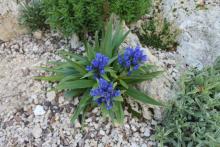
Sat, 07/07/2012 - 2:44pmFinally, a photo of Gentiana siphonantha with flowers opened:
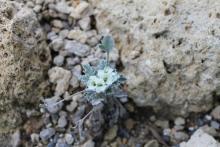
Several of the Smelowskia calycina that I grew from local seed this winter are blooming in a very anomalous fashion, not at all how one sees them in the wild:
In the wild, for example:
http://nargs.org/smf/index.php?topic=384.msg3761#msg3761
Edraianthus dalmaticus:
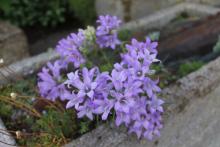
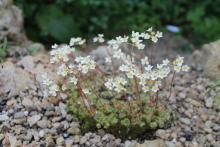
Another of Saxifraga paniculata v. minutifolia 'Red-backed Spider':
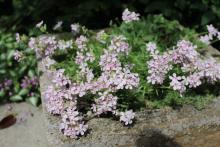
Saponaria x(?) suendermannii (Hmm, I see that this name is not shown in The Plant List):
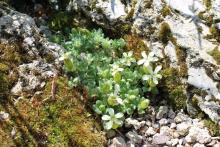
Cyananthus macrocalyx:
Richard T. Rodich
Re: What do you see on your garden walks? 2012
Sat, 07/07/2012 - 7:50pmWhether you believe it or not, Lori, I still say your plants are never ending... :o and very cool 8).
A question for you and everyone: which Edrianthus sp. would you guess is easiest for lowlanders?
------------------------------
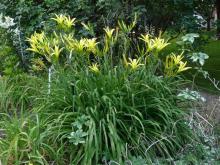
The night blooming Hemerocallis altissima has significantly shorter scapes this year, due to the early hot weather, I think. Fortunately the flower size and quantity is unaffected.
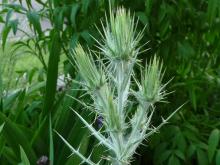
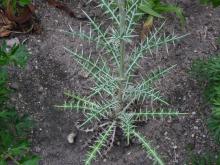
I had been waiting for the flowers of Ptilostemon afer to open, but now I find out that this is as open as they get!
Tim Ingram (not verified)
Re: What do you see on your garden walks? 2012
Sun, 07/08/2012 - 12:54amRick - Edraianthus are superb on our sand bed and I think I would go for pumilio anytime; it is compact, well flowered, and tidy in and out of flower.
Mark McDonough
Re: What do you see on your garden walks? 2012
Sun, 07/08/2012 - 7:29amHard to keep up with this favorite topic, which such a refreshing variety of plants and scenes. I can't begin to express my thoughts on so many great plants shown here, but I'll mention a few that particularly come to mind.
Lori: I'm totally impressed with Gentiana siphonantha, such a distinctive display of flowers above neat foliage. Michael, I like your summer Gentiana too, do you know what species it is?
For foliage alone, both Tim's Berkheya multijuga and Rick's Ptilostemon afer are eye-catching, the Ptilostemon with such architectural structure, although dangerously spiny to be sure.
Rick: I wonder if your Hemerocallis might actually be H. citrina or a hybrid; both citrina and altissima are night blooming. Hemerocallis altissima is a favorite of some daylily hybrids here in New England, and from what I know of this species, the flower shape and disposition look a bit different.
PK: regardless of the name, Penstemon 'Coral Baby' looks terrific! Seeing the splendid specimen of Alkanna aucherana reminds me that I once grew this, from MacPhail & Watson seed expedition to Turkey, and while mine never bloomed, I was able to strike some cuttings and give rooted plants to Howard Porter in Connecticut, which he grew them on to flower in his outdoor "dryland scree" protected from rain with an overhead open-air translucent roof.
And what can one say seeing clumps of Escobaria sneedi v. leei growing larger than an ancient clump of Sempervivum arachnoideum and undulating waves of an impossibly huge Convolvulus assyriacus, OMG! But it is Monardella macrantha 'Marion Sampson' that has my head spinning once again; every time you show us this awesome little western mint it makes me crazy with plant envy.
Michael: Minuartia caroliniana is indeed a nice surprise, a respectable floral display, good to learn of that species. Congratulations on your Phlox bryoides (with penny cultivation), and the many other wonderful plants you show.
Lori S. (not verified)
Re: What do you see on your garden walks? 2012
Sun, 07/08/2012 - 10:59amWell, thanks, Rick! I do like that Ptilostemon afer, though it looks like a wicked thing to weed around!
Mark, Gentiana siphonantha is a good size too - 7" tall in flower.
A few things from the garden...
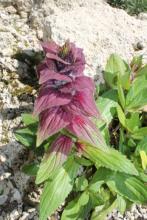
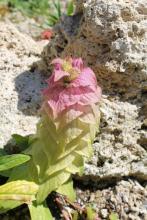
The colourful bracts that precede the flowers on Ajuga lupulina; the second photo hints at the perfectly geometric shape of the flower stems as seen from above:
Leontopodium alpinum:
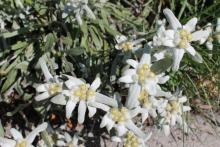
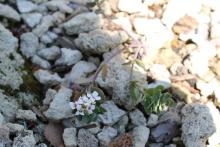
Tiny flowers on Aethionema saxatilis ssp. oreophila, from seed this winter:
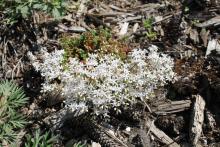
Sedum album:
Eriogonum flavum:
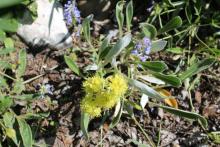
Sideritis glacialis - subtle but quite pretty:
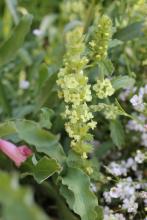
A froth of blossoms on Clematis recta:
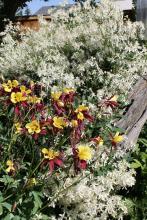
Heuchera richardsonii, a native plant; the flowers are insignificant (though much loved by bees) but the foliage is quite attractive (though currently concealed in the underbrush in this overgrown bed!):
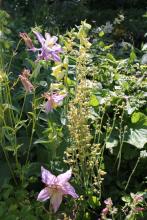
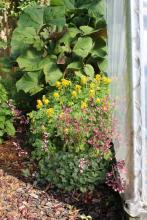
Heuchera 'Canyon Duet' with hail-ravaged ligularias in the background (2 hail storms in the last week - uggghh!):
cohan (not verified)
Re: What do you see on your garden walks? 2012
Sun, 07/08/2012 - 1:40pmSpeaking of which, a few weeks back I picked up a Delosperma something-or-other 'Kelaidis' at Home Depot- funny to see that while shopping way up here...lol no idea if it will actually survive here- those stores seem to be stocked nationally, with no regard for local climate... any tips from anyone on ideal siting and soil for best chance of survival? Mid-winter wet is not an issue, but spring and fall can certainly have cold wet spells.. I don't have a spot for it just now, as I am in the midst of bed-building, but I think I should get it out of the nursery junk into real soil anyway..
Pages