
[Moderator's note: We have been a bit remiss at splitting this off into a new thread for 2012, but here it is, finally!
Lori]
A mix of things flowering or looking interesting in the garden at the moment. The garden is waking up with hellebores and many bulbs soon to come.
Narcissus panizzianus grown from Archibald seed. The flowers are small but always very early.
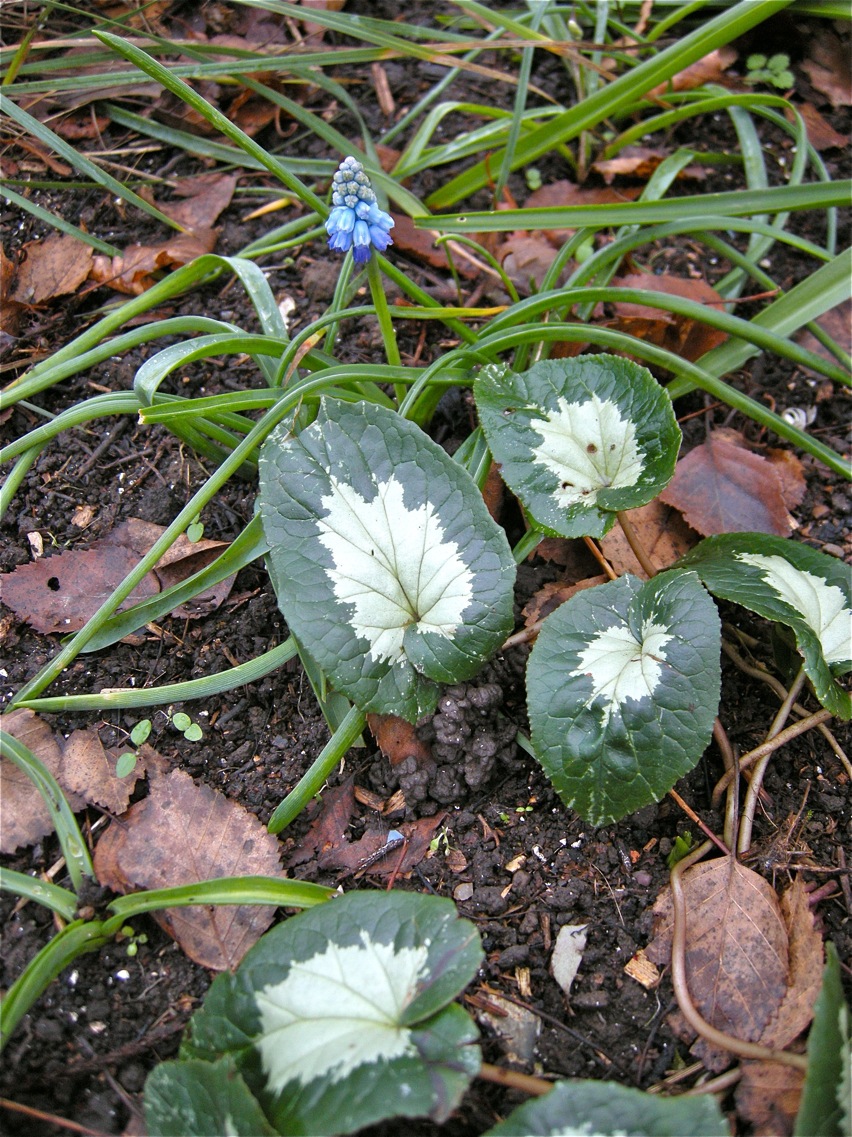
Muscari pseudomuscari, ditto. This is a lovely tidy species, growing here with a selection of Cyclamen hederifolium.
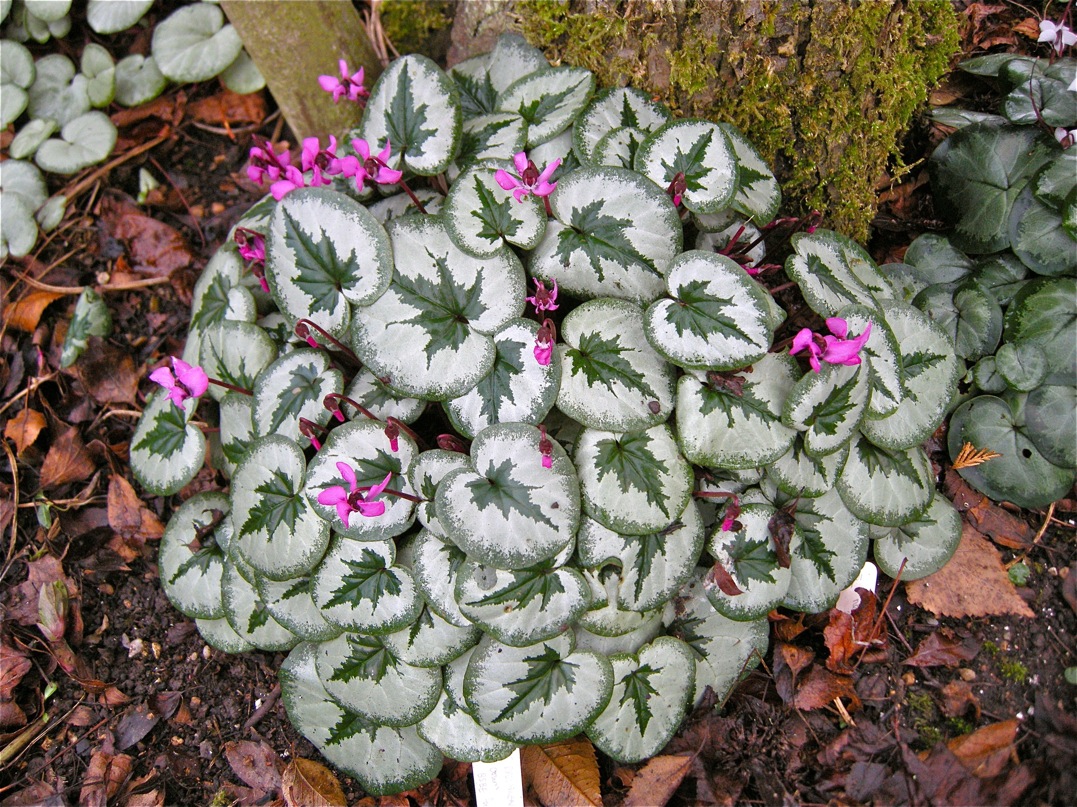
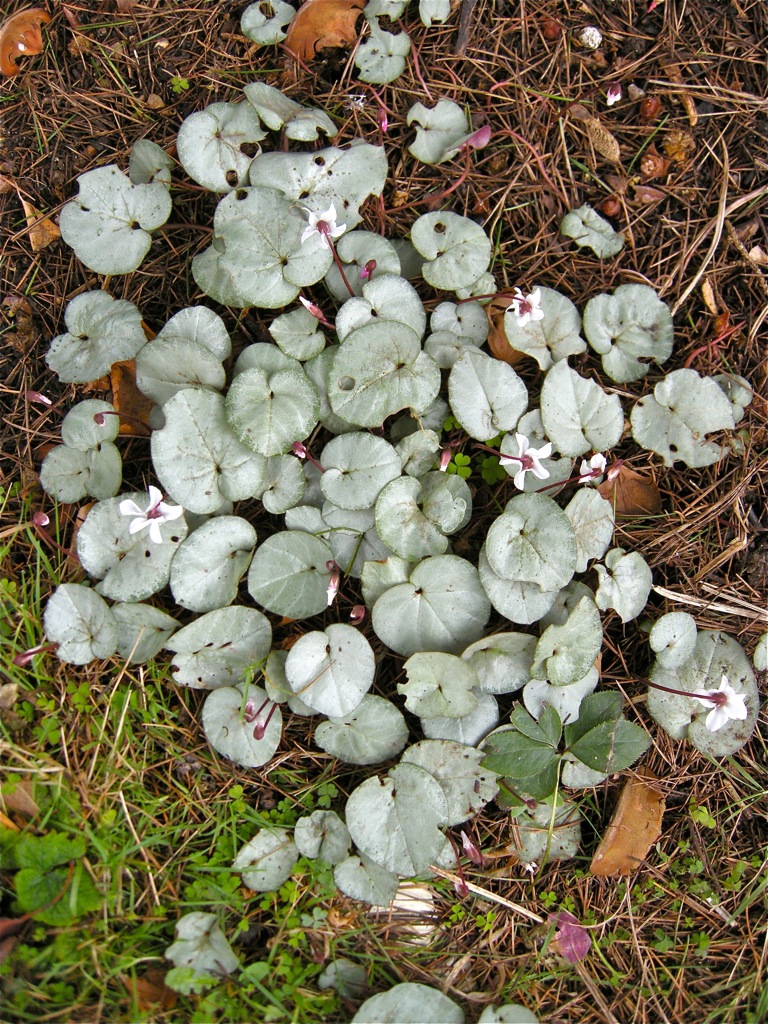
Cyclamen coum. Two forms with very silvered leaves from Tilebarn Nursery.
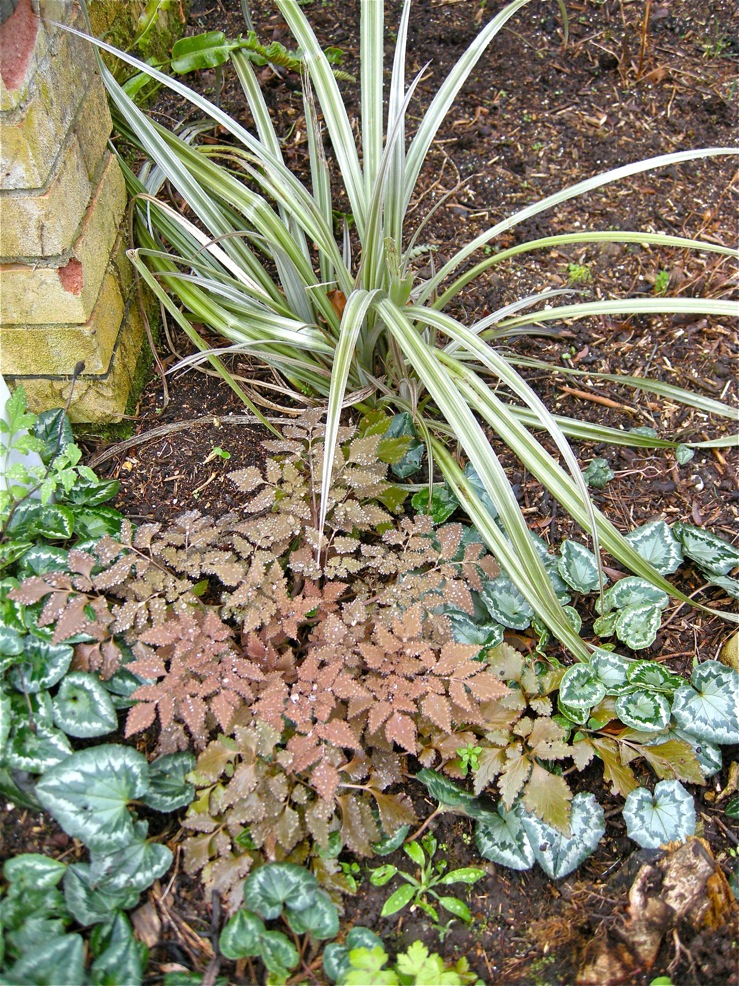
Corydalis quantmeyeriana 'Chocolate Stars' growing with cyclamen and Astelia nervosa. The corydalis is new to me and I haven't yet seen the flowers, but what foliage! I rather like this combination.
Sarcococca confusa. An unassuming shrub but one of the most delightful and scented winter flowers, and usefully tolerant of dry shade.


Comments
Anne Spiegel
Re: What do you see on your garden walks? 2012
Thu, 12/13/2012 - 12:18pmFinally got out and photographed the irish trough, or stone sink. It was delivered by a pickup truck and 4 football players (using a coouple of 2x6s), moved it into position. It is in this position to stay. Not a good time of year to photograph it and it's only half planted still.
Anne Spiegel
Re: What do you see on your garden walks? 2012
Thu, 12/13/2012 - 12:21pmSorry, I don't know what happened to the photos. I'll try again. Computers are a mystery to me.
Richard T. Rodich
Re: What do you see on your garden walks? 2012
Thu, 12/13/2012 - 2:05pmMasterfully done, Anne, and befitting of your awesome garden as a whole.
Kinda peaceful and Zen like, too.
cohan (not verified)
Re: What do you see on your garden walks? 2012
Thu, 12/13/2012 - 6:05pmBeautiful trough, Anne! the planting is looking good so far- I do like the outcropping, it is rather zen at this stage as Rick says..
Anne Spiegel
Re: What do you see on your garden walks? 2012
Thu, 12/13/2012 - 8:53pmI really l;ike the outcropping,too. It's necessary since this is a shallow trough. I'm convinced that the deeper the trough, the better, like a mini raised bed. In my climate everything freezes solid. The irish trough has such thick walls but that's still not enough protection from freezing. I use rain covers on some of the troughs, designed by Mark Mazer of NARGS. They are open on the ends and arched over the trough. They get lots of sun and wind but no drenching rain. You do have to brush the snow off the top or it will bow down. The top is made of plexiglas (I think). I wish Mark would weigh in. They are so marvelously designed and I'll put a picture on soon. I haven't installed them yet for the winter.
Michael Peden
Re: What do you see on your garden walks? 2012
Fri, 12/14/2012 - 7:53amRick; I recall the leaves and petioles do not fall from the stem. As I said, I clip all back so what remains is the (older seasons growth) stems. This is doable because all top growth dies, only buds on the caudex remain. The ice wings seem to emanate from the dead stem itself which really is weird as I cannot figure where all the water comes from. It must be coming from the earth below; a sort-of "frost finger" effect. I had a picture of the plant but computer ate most photos (that weren't posted to NARGS!) prior to June. I was out this morning shooting frost formation on a few other plants so may post those. If my goat-plant survives winter; I'll strive to get a photo up. It is interesting, I think, botanically and that it thrives here being from such a southern area.
cohan (not verified)
Re: What do you see on your garden walks? 2012
Fri, 12/14/2012 - 2:39pmThe redundant hardiness of some plants is quite fascinating- hinting at interesting pasts!
Speaking of interesting pasts, I was looking at Dasynotus daubenmirei in the Alplains catalogue,
Dasynotus daubenmirei (Boraginaceae) (40x40,Z4,P,L,3:8w) ......................................... 15 seeds / $6.00 15083.12 (W) Idaho Co., ID, 4920ft,1500m. A superb member of the Borage family producing multiple stems clothed in sparsely-hairy, oblanceolate leaves and beautiful clusters of snow-white, inch-wide flowers
photo:
http://www.alplains.com/images/DasyDauben.jpg
This plant is discussed in the Jan 2012 issue of the International Rock Gardener online magazine, where it is mentioned that it is believed to be a relic of Cenozoic forests, a 'paleoendemic'
Quite fascinating, though from a little google searching, I did not find out too much about what sort of ancient forests those would have been- the Cenozoic is a long period! and I don't imagine the reference is to the sub-tropical forests that would have covered the area early on.. still, very interesting, and enough to make me want to grow this forest opening plant :).. maybe there should be an 'armchair botanising for Boraginaceae' thread ;)
Lori S. (not verified)
Re: What do you see on your garden walks? 2012
Fri, 12/14/2012 - 5:29pmWell, you could start one. :)
cohan (not verified)
Re: What do you see on your garden walks? 2012
Fri, 12/14/2012 - 11:33pmlol-- not sure I'd have any further entries, though...
Trond Hoy
Re: What do you see on your garden walks? 2012
Sat, 12/15/2012 - 12:56pmHas to be armchair botanising for me the next days. Although it is mild now (+7C) we have a lot of snow. Farther south they were hit hard by the gale and a train and several hundred cars were caught in the snowdrives. Hundreds of people had to stay all night in the cars. If this had happened in the mountains nobody had rised an eyebrow but this is in the lowland and in the mildest part of the country :o When I was out driving last night it reminded me more of a mountain crossing than a trip to the airport!
Richard T. Rodich
Re: What do you see on your garden walks? 2012
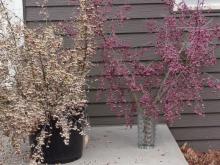
Sat, 12/15/2012 - 9:09pmEuonymus hamiltonianus var. sieboldianus fruit. All harvested on 3 October.
15 days later:
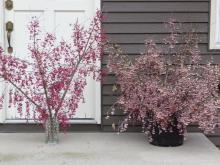
The left, dried in relative darkness in the garage, the right is an outdoor dried bouquet remaining at my south facing doorstep.
26 days later:
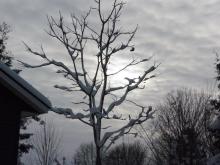
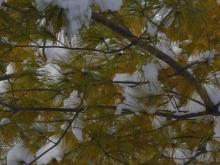
Picea asperata and Liriodendron tuliperifera seed heads.
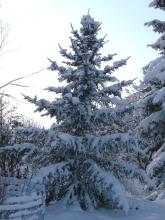
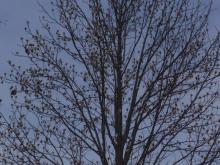
Gymnocladus dioicus and Pinus strous 'Wintergold'
Pinus ponderosa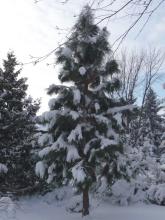
Fibigia clypeata
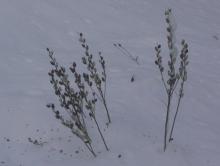
Trond Hoy
Re: What do you see on your garden walks? 2012
Sat, 12/15/2012 - 11:12pmSo, you do have snow too, Rick! Nice trees ;) Think I still have to wait some years for my specimen to flower!
I hadn't time to picture my snowclad trees - no daylight when I had time and no snow left on them when I had daylight :-\
Michael Peden
Re: What do you see on your garden walks? 2012
Wed, 12/19/2012 - 1:40pmSome more frost action; still no snow :( still no cold :) Saxifrages; 'Hamilton' Cranberry; Androsace sempervivioides -special because it came from seed set here; and Shortia. The drawing is three (four) sided pyramid rock crevice garden concept: I know -way over the top. May I build you one? LOL!
Trond Hoy
Re: What do you see on your garden walks? 2012
Thu, 12/20/2012 - 8:52amHi Michael, how come you have frost action without cold? :o
Now the cold is back here after a few mild days. The hellebore is later than usual but has managed to free itself from much of the snow. The Farrer viburnum is late too but has flowered and new buds are forming. It is still snow patches in front of my house.
Anne Spiegel
Re: What do you see on your garden walks? 2012
Thu, 12/20/2012 - 11:01amHere, the frost comes at night, then disappears when the temperatures rise during the day. So far, we are having a non-winter. Joe had to cancel a ski trip to Vail in early December because of lack of snow. I check the garden every day speaking sternly to plants showing signs of ignoring the shutting down for winter process. Last week I found a Gentiana dinarica bloom (measely and not fully open, but still...).
cohan (not verified)
Re: What do you see on your garden walks? 2012
Thu, 12/20/2012 - 11:17amNice views, Rick and Michael, Rick- do you have lasting snow?
Anne- you just need to book those ski trips a bit farther north- the ski season started weeks early at many places in Alberta! And the next few days the mountain parks will be some of the warmest places in the province (apart from hot spots like Lethbridge and Calgary!). Our normal daytime this time of year is -6C, today we are forecast to be -7/8 and then -15/-19C daytimes for the rest of the week; still, nights only -19 to -23C, and we could have -30/-40 this time of year..
Richard T. Rodich
Re: What do you see on your garden walks? 2012
Thu, 12/20/2012 - 9:52pmBefore climate change, we always had continuous snow through the winter. Now, who knows? Last season, the severe drought lasted right through the winter, and I think we had more winter days without snowcover than with. Now the bulk of the snow seems to pass just to the south of me. So, southern Minnesota and Iowa get the snow I would usually get. They are getting a blizzard right now.
I feel sorry for the children here, when I think of the loads of fun we had as kids sliding down hills, grooming the runs, building snow forts, etc. On the other hand, nowadays they probably would much rather play with there video games, anyway.
Bombax (not verified)
Re: What do you see on your garden walks? 2012
Sat, 12/22/2012 - 2:01pmRick,
Your garden looks great. That ponderosa really is narrow at this point. Your tulip tree flowered very heavily.
John
cohan (not verified)
Re: What do you see on your garden walks? 2012
Sat, 12/22/2012 - 3:17pmMy mother talks about really large amounts of snow when she was younger (snowdrifts nearly to the top of power poles! But I wonder if it was a matter of less forest cover so more severe drifting), but in my lifetime we've never had that- we usually have reasonable cover in mid winter but it can vary from nearly bare in parts of mostly coniferous woods to closer to a couple of feet in low/wetlands.
Fortunately in recent years with so much wild weather around, we have not been far from 'normal' summer or winter...
Richard T. Rodich
Re: What do you see on your garden walks? 2012
Sat, 12/22/2012 - 5:20pmHi John!
Glad to see you've made your debut here. Welcome!
When the leaves drop in the fall, I always find that the Liriodendron bloomed more heavily then I had thought. ....this season especially.
Michael Peden
Re: What do you see on your garden walks? 2012
Thu, 12/27/2012 - 5:55amNo more doting on the little plants in this garden this year.
Michael Peden
Re: What do you see on your garden walks? 2012
Mon, 12/31/2012 - 7:24amBut still a few hours left in this year to dote on the big plants in this garden!
Veiw of back yard after snow; Rhodopolis; Sage Brush by lamp post and ladenus Taxus
Trond Hoy
Re: What do you see on your garden walks? 2012
Mon, 12/31/2012 - 7:33amMichael, seems you still have full winter over there!
The winter did leave us last week here but we will have it back later for sure :-\ Today I managed to get outside between the showers. Not much to see though and everything is completely soaked. The Cyclamen (hederifolium) is still in leaf despite the cold we had and the hellebores try to flower as soon as they can (H. niger hybrid and foetidus).
Michael Peden
Re: What do you see on your garden walks? 2012
Mon, 12/31/2012 - 7:51amTrond, I enjoy news of happenings in your tropical (comparatively) garden. There are stories of success with Cyclamen in the region though I'm apt to start an argument with those story tellers :rolleyes: Cyclamen in my garden so far have departed along with the most tender of the avian set around the time the first snowflake falls. The Helleborus foetidus types may burn to death if we get a real winter with little snow though I find H. orientalis, having a strong below ground component, quite tough. The weather folks here are saying the snow we have now (15 inches) is apt to stick around a while. A gentle mass of arctic air, deemed "modified" is to send a few ripples over us and temperatures at night are expected to drop to below zero F. Totally different than last winter so far!
Trond Hoy
Re: What do you see on your garden walks? 2012
Wed, 01/02/2013 - 1:40pmThanks Michael, it's vice versa too - I believe you have much warmer summers than I have ;)
We had rather nice weather today but working I couldn't enjoy it. At this time of the year I leave home before sunrise and get home about sunset but I had 3/4 moon shining when driving this morning ;D Now it is back to rain again :-\
Anne Spiegel
Re: What do you see on your garden walks? 2012
Thu, 01/03/2013 - 6:42amMichael, the only cyclamen that makes it here is C. fatrense, which came from Dick Redfield many years ago. I've tried C. coum (didn't even make it through a single winter), and C. hederifolium. Cyclamen fatrense blooms in August (if memory serves), and is long lasting in the garden.
cohan (not verified)
Re: What do you see on your garden walks? 2012
Thu, 01/03/2013 - 10:34amHow does purpurascens do in eastern NA gardens? It certainly has no issues with cold- I think Lori has had it for some years, and I've had a number of seedlings outside for a couple of winters (not a long term endorsement yet, I know) though of course we have very different climate issues from you folks down east..
Lori S. (not verified)
Re: What do you see on your garden walks? 2012
Thu, 01/03/2013 - 5:53pmYes, my two old plants of Cyclamen purpurascens (from Gardens North seed in 2004) are still doing OK here. Last summer, I finally moved some of the seedlings around, out from underneath other plants, to where they are visible at the front of the border. The size of the corm underneath the one old plant is quite surprising (it was exposed at the ground surface).
This account suggests that C. fatrense is a plain-leaved form of C. purpurascens:
http://www.cyclamen.org/purp_set.html
I'd also recommend giving this species a try, if you're interested, Michael. I haven't had any overwintering success with C. coum or C. hederifolium.
Amy Olmsted
Re: What do you see on your garden walks? 2012
Thu, 01/03/2013 - 6:25pmI've had great luck with C. purpurescens, coum & hederifolium here in Vermont with no extra winter protection, but in very well drained soil. The coum is self-sowing too!
Anne Spiegel
Re: What do you see on your garden walks? 2012
Fri, 01/04/2013 - 6:00amAfter visiting with Nina and Jack Lambert many years ago, Nina gave over 50 Cyclamen coums in all sizes. I tried them in many different areas in the garden, in varying soils, exposures etc. Not one made it through the winter. She gave me many more the following year with the same result.
I was told by a Czech grower that C. fatrense was not a form of C. purpurascens. The leaf is not absolutely plain, it does have some [no-lexicon]minor[/no-lexicon] marbling. At any rate, it has been hardy here for many years, the others (hederifolium, coum) have not. C. hederifolium actually made it through a few winters but gradually dwindled.
Mark McDonough
Spiegel wrote:
Fri, 06/14/2013 - 10:40am[quote=Spiegel]
After visiting with Nina and Jack Lambert many years ago, Nina gave over 50 Cyclamen coums in all sizes. I tried them in many different areas in the garden, in varying soils, exposures etc. Not one made it through the winter. She gave me many more the following year with the same result.
I was told by a Czech grower that C. fatrense was not a form of C. purpurascens. The leaf is not absolutely plain, it does have some minor marbling. At any rate, it has been hardy here for many years, the others (hederifolium, coum) have not. C. hederifolium actually made it through a few winters but gradually dwindled.
[/quote]
This is a test of the new NARGS Forum interface.
Mark McDonough
Re: What do you see on your garden walks? 2012
Fri, 01/04/2013 - 7:09amAnne, do you grow Cyclamen purpurascens? I find it iron-clad hardy here, and as well, forgiving of hot dry weather too, reliably flowering starting mid summer and lasting into early autumn. Some of the marbled and silver leaf forms are outstanding. I scratch in the seed, and they come up by the hundreds.
Michael Peden
Re: What do you see on your garden walks? 2012
Fri, 01/04/2013 - 8:25amWell, there you have it! If it will grow for Amy, Anne and Mark then it will certainly grow for me! This could be a case of trying too hard; killing plants. No arguments: I'm looking for peace in 2013 as well as for exciting gardening adventures :)
Tim Ingram (not verified)
Re: What do you see on your garden walks? 2012
Fri, 01/04/2013 - 11:54amInteresting to hear how well Cyclamen purpurascens does in Mark's and other gardens. Here it is a very choice and not so reliable plant, and doesn't generally seed around, though very lovely. We do exceptionally well with C. hederifolium, which I always thought one of the hardiest of species, but even graecum will grow outside whilst rarely flowering well. The most beautiful species (I've always thought) is repandum, but this doesn't like our hot dry summers.
deesen (not verified)
Re: What do you see on your garden walks? 2012
Fri, 01/04/2013 - 12:31pmA few points here taken from Chris Grey-Wilson's "Cyclamen: A Guide for gardener's, Horticulturalists and Botanists" (Batsford 2002) in respect of Cyclamen purpurascens.
In respect of C. fatrense = C. purpurascens he says:-
"In my monograph "The Genus Cyclamen" 1988 I was very dismissive of the related C fratense described in 1971...... from the Fatra region of Slovakia. ASt that time I had not had the chance to observe either the dried type specimen nor better still, any living material. However, I have since been able to observe live collections from several sources and I have now come to the conclusion that this plant cannot be distinguished on botanical grounds; it's prime distinguishing feature is the plain unmarked leaves but such forms exist elsewhere in the species range. However the plant in question behaves rather differently in cultivation and is, for that reason, best identified as the Fatra Form. The earlier confusion results mainly from the claim of the original authors that C fatrense differed from C purpurascens in having plain not marbled leaves. However the Fatra Form is a far more uniform plant in the wild, all the individuals in the limited region in which it is found with plain leaves. The leaves are noticeably more matt rather than shiny green and with a more scalloped margin, and the flowers are often somewhat larger on average, though they fit within the overall dimensions of C purpurascens. As these variants are in many ways rather minor ones, I am unable to accord the plant even with varietal status"
He goes on to say "that the Fatra Form is a rather better garden plant than the more widespread forms of C purpurascens, being both more prolific in flower and, in favoured sites, seeding around. In the eastern USA, where Cyclamen grow rather poorly compared to many places in Britain, the great exception proves to be the Fatra Form which thrives in healthy colonies in several of the gardens that I visited in 1994. The only conclusion I could draw was that it favoured the acid soils of the region.........."
In his own British garden Grey-Wilson does not appear to find C purpurascens easy and suggests tubers should be deeply planted (6-8 inches) "and capped with a generous mulch of bark chippings or pine needles". Of American growers he mentions Gerald Fisk "who clearly enjoys great success with this species in his Chicago, Illinois garden"
Anne Spiegel
Re: What do you see on your garden walks? 2012
Fri, 01/04/2013 - 2:27pmMark, the only cyclamen that has survived for me is what I know as Cyclamen fatrense from Dick Redfield. Dick was very insistent that it was different from C. purpurascens (which I don't have), and since his knowledge was really encyclopedic. I've always accepted it as such. It's a lovely plant whatever the name. I tend to become very fond of plants that do well for me and I'm very fond of this one.
Mark McDonough
Re: What do you see on your garden walks? 2012
Fri, 01/04/2013 - 4:32pmTim, the Cyclamen hederifolium and coum leaf forms are pure delight!
David, I find it surprising about Grey-Wilson advice to deeply plant C. purpurascens (6-8 inches), mine always rise to the surface with 1/2 of the tuber above ground level! It's somewhat unnerving observing that behavior, as I worry they will dessicate in our summer heat, and if no snow cover, could be winter killed, but it seems to be what they want. Mine are also growing on a steep hillside, so moisture never lingers there, the area becomes quite dry.
Anne, given that I'm a couple hundred miles to the north of you, I have to imagine C. purpurascens should be hardy and grow for you. I can save seed this summer.
Some views of Cyclamen purpurascens planted under Magnolia 'Forrest Pink', in one view there was a bumper crop of Magnolia seed littering up the cyclamen and trillium bed beneath ;), a view of self-sown seedlings (all green ones). I started out with all-green leaf ones, then got some silver and marble leaf types, and now get all kinds of seedlings.
Richard T. Rodich
Re: What do you see on your garden walks? 2012
Fri, 01/04/2013 - 6:31pmThat was very helpful, David. Thanks.
but on cultural grounds...
-------------------------------
C. purpurascens growing in Minnesota gardens have their crown at or just below the soil surface, for the most part. I've always imagined that those "above grade" simply heaved up with frosts, but they do equally well. A few grow C. hederifolium, and they look very healthy, although I've not seen them in flower.
Anne Spiegel
Re: What do you see on your garden walks? 2012
Fri, 01/04/2013 - 6:56pmThanks, Mark. I'll look forward to trying the seed.
Howey (not verified)
Re: What do you see on your garden walks? 2012
Sat, 01/05/2013 - 9:57amHope you all had a Happy Christmas and New Year. Thought you would like to see what I saw while walking around the neighborhood. The snow fell on Boxing Day and, with gatherings from all over the neighorhood, provided just enough snow for this 18 ft. high fellow. Cars are stopping day and night for picture taking causing quite a traffic jam on the street. A real delight. Oh, Oh, I forgot to resize so will send it to you separately. Fran
Frances Howey
London, Ontario, Canada
Zone 5b
Howey (not verified)
Re: What do you see on your garden walks? 2012
Sat, 01/05/2013 - 10:00amAnd here he is - I hope. Fran
Frances Howey
London, Ontario, Canada
Zone 5b
Richard T. Rodich
Re: What do you see on your garden walks? 2012
Sat, 01/05/2013 - 3:08pmNot sure if I'd like that in my "garden" :D, but it's pretty impressive.
--- Excellent branch work, too!
tropicalgirl251... (not verified)
Re: What do you see on your garden walks? 2012
Sat, 01/05/2013 - 4:28pmI had two Cyclamen purpuracens which i bought from a nursery for the last 4years. they grew into large plants. in fact one year there was no snow cover but they still survived. year before last both the corns started to show above the ground.One of that rotted .I think it is because of the drainage issue.the other one is fine. I got seeds from the NARGS seed exchange and from green ice nursery 2 years ago and now i have about 6 more plants .
Trond Hoy
Re: What do you see on your garden walks? 2012
Sat, 01/05/2013 - 11:50pmOh, do you think he is out walking in the night? Not sure if he is still there ;D
Tim Ingram (not verified)
Re: What do you see on your garden walks? 2012
Sun, 01/06/2013 - 8:21amThat is an incredible snowman Frances - how an earth did they get the midrif and head on top of the base? One very cold year here we used icicles hanging from the greenhouse for arms - quite effective!
This is the most remarkable specimen of Garrya elliptica that I've ever seen, growing in the mild south-west at Dunster, near Minehead in Somerset (this is also close to Porlock where several famous gardeners including E. B. Anderson had or have gardens). John Richards relates how Wayne Roderick was surprised how hardy this Californian shrub is in British gardens, and Robert Nold in his book 'High and Dry' speaks of several other species, especially flavescens. I've never heard of these grown in the UK, I wonder if they are much in the US?
Trond Hoy
Re: What do you see on your garden walks? 2012
Sun, 01/06/2013 - 12:42pmTim, that is a nice specimen! I've seen Garrya in England and have wanted to try it at home. Once I got the chance but then we got the worst winter in decades and it died :-\
Howey (not verified)
Re: What do you see on your garden walks? 2012
Mon, 01/07/2013 - 3:45amTim - don't know about Garrya elliptica being grown in the US. However, back in 2000AD, inland from Los Angeles and high up where there were still patches of snow on the ground, we discovered one growing in the wild - I have always been intrigued by this plant/tree with the stunning catkins and really should have taken some seeds from it. Fran
Frances Howey
London, Ontario, Canada
Zone 5b
cohan (not verified)
Re: What do you see on your garden walks? 2012
Mon, 01/07/2013 - 11:37amMark, some nice leaf forms on the C purpurascens!
I have some from garden seed from John W in Nova Scotia, some from regular and some from 'white' leaf plants, still small though I had some flowers last year; I also have a lot of seedlings from wild Austrian seed from Johannes Hoeller (hope I got that right without looking it up) some of those have been in the ground for a winter and a half and there was some flowering this year.. I planted out some more this year in various spots so we'll see how they go.
Fran-I think that's probably the same snowman we saw on tv- they used a framework of plywood boxes filled with snow and of course a ladder..
Tim- love the Garrya.. I think I've seen seed at Alplains- oops, no, that's flavescens...
Pages