
[Moderator's note: We have been a bit remiss at splitting this off into a new thread for 2012, but here it is, finally!
Lori]
A mix of things flowering or looking interesting in the garden at the moment. The garden is waking up with hellebores and many bulbs soon to come.
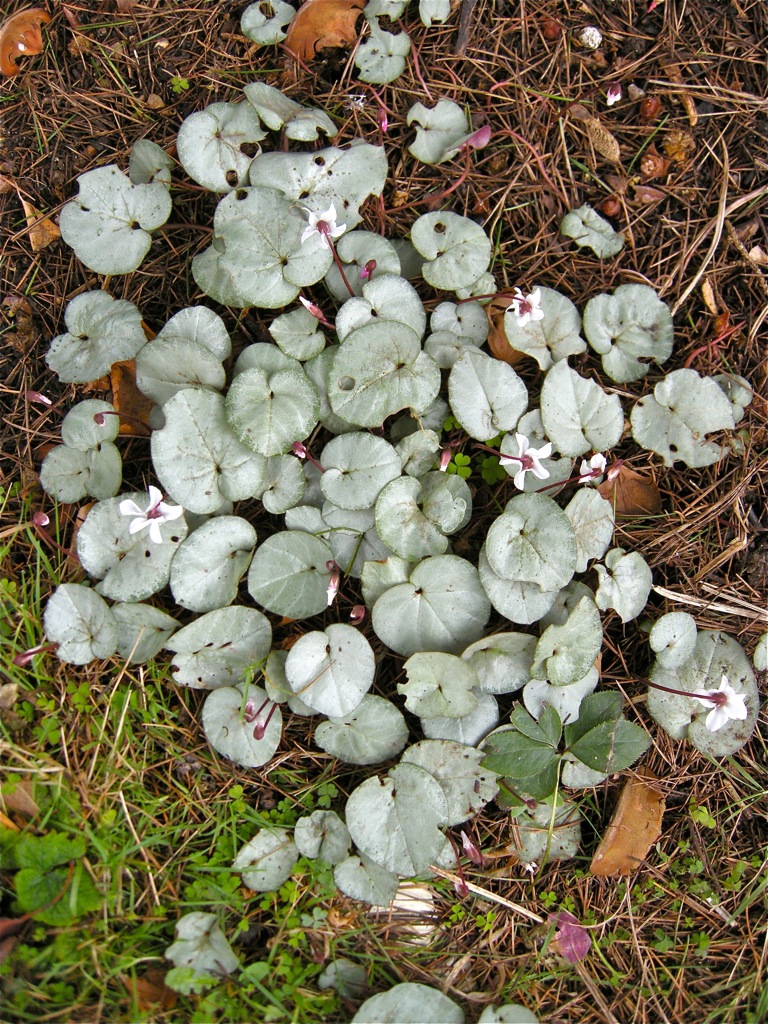
Narcissus panizzianus grown from Archibald seed. The flowers are small but always very early.
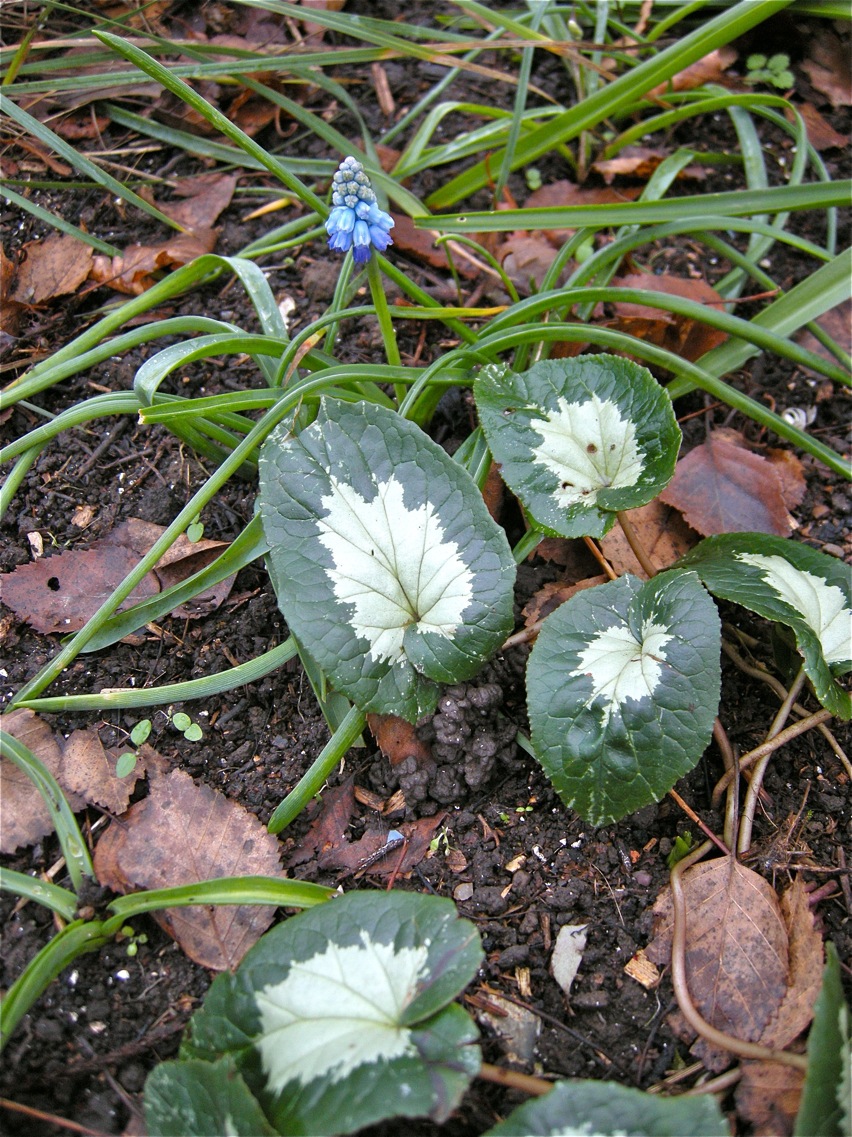
Muscari pseudomuscari, ditto. This is a lovely tidy species, growing here with a selection of Cyclamen hederifolium.
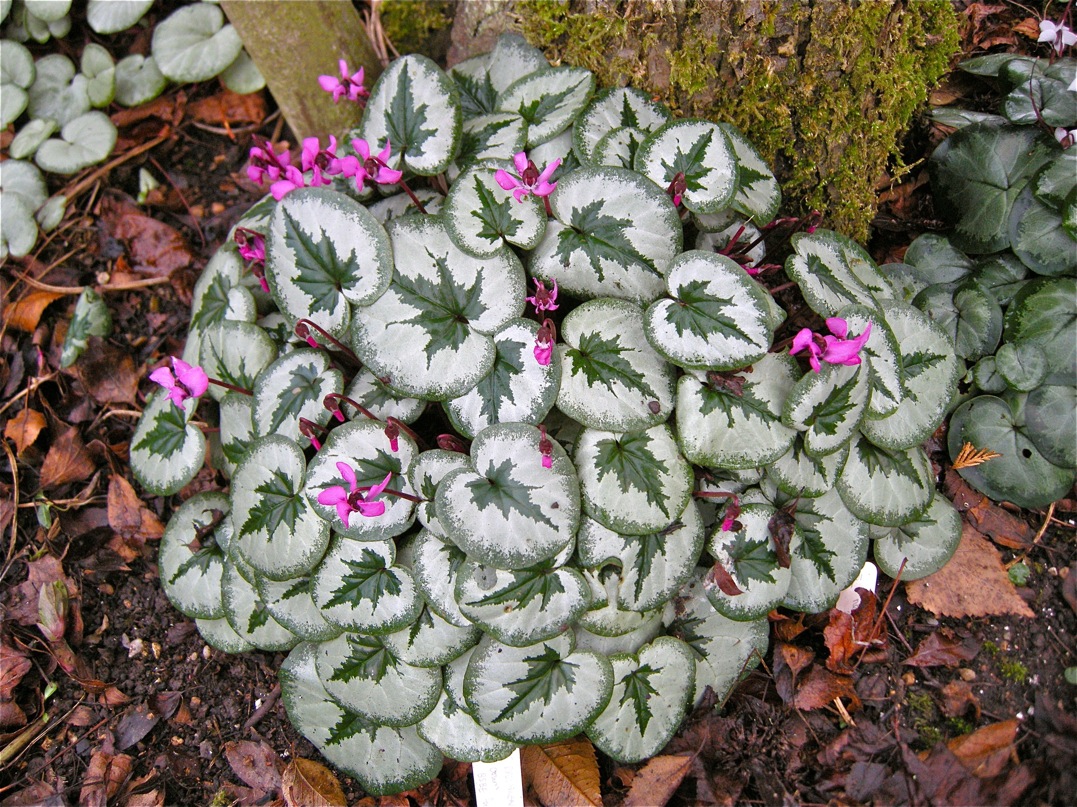
Cyclamen coum. Two forms with very silvered leaves from Tilebarn Nursery.
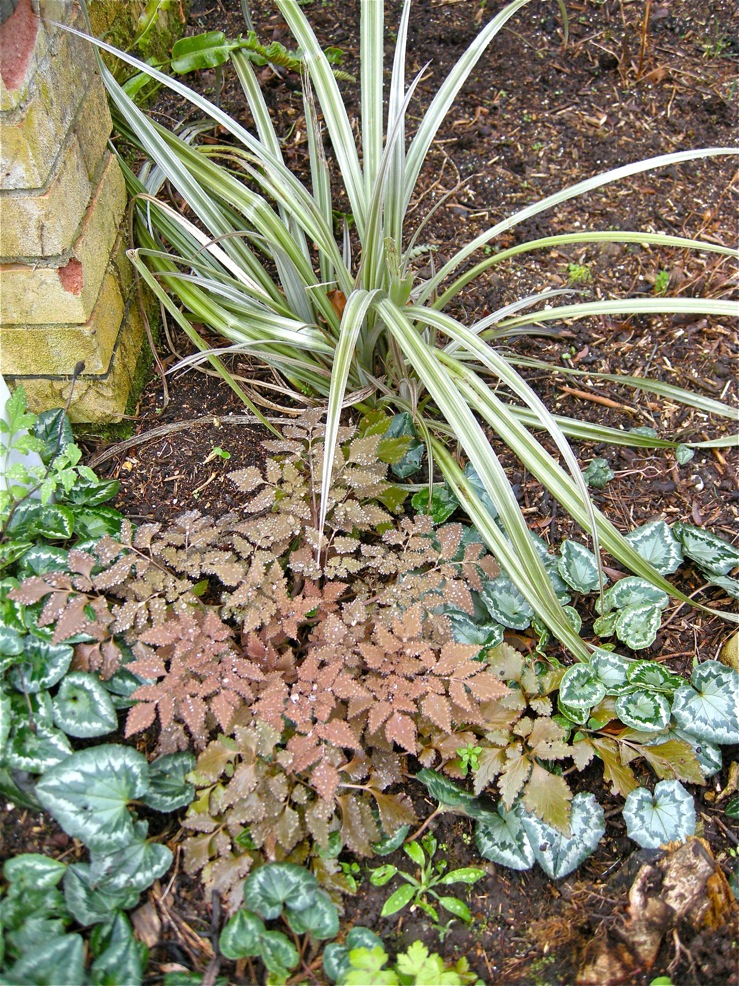
Corydalis quantmeyeriana 'Chocolate Stars' growing with cyclamen and Astelia nervosa. The corydalis is new to me and I haven't yet seen the flowers, but what foliage! I rather like this combination.
Sarcococca confusa. An unassuming shrub but one of the most delightful and scented winter flowers, and usefully tolerant of dry shade.


Comments
Steve Newall (not verified)
Re: What do you see on your garden walks? 2012
Sat, 11/17/2012 - 11:56amHowdy Trond - they might do well at your place . I first grew them when we lived in the mountains and there they had to put up with -15C during the winter which wasn't a problem for them . I'm currently chatting to Rosa in the Orkneys where she is building a garden as a memorial to the Orkney Island people who the NZ government gave a chance to settle on the Auckland Islands . They figured same latitudes different hemisphere . Rosa is already growing some plants from the Auckland Islands and I will send her a few more seeds
Hi Rick - The smaller plants in the foreground are progeny of the larger plants in the background . The larger are going to flower too but seem to be 2 weeks behind the younger ones . The larger plants are 10 years and the newbies are 4 years from seed
When I pick the seed in late summer I don't just cut the stalks off because I worry about the center of the plant filling up with water . I just cut the smaller branches off and leave the stem to gradually rot . So they do look a little bedraggled . In late winter I can remove old seedheads , old leaves and renew their compost . Hopefully I've given a link to the Campbell Island weather info . Brief rain on 325 days a year and a little cool and breezy
http://en.wikipedia.org/wiki/Campbell_Island,_New_Zealand
Thanks Lori . I love them too , they are a bit coarse - just like me . The older plants are nearly 4 ft tall . ( yeah , I know , just like me Mr.Toole - Don't say it )
There are 2 more species about to flower and I will post them when ready . Years ago I tried growing almost all the species from the islands and alhtough I germinated all the Pleurophyllum species they were not happy and none flowered which was a real shame
http://www.google.co.nz/search?q=pleurophyllum+speciosum&hl=en&prmd=imvn...
Tim Ingram (not verified)
Re: What do you see on your garden walks? 2012
Sat, 11/17/2012 - 2:34pmI've seen pictures of Anisotome latifolia before but never really got a proper feel for it - those are great photos. It would be quite easy to imagine it growing on Orkney in company with Myositidium and Pleurophyllum maybe?! Campbell Island must be a sort of botanists nirvana!
Trond Hoy
Re: What do you see on your garden walks? 2012
Sat, 11/17/2012 - 3:00pmHei Jandals!
Thank you for the info and the links.
Campbell Island seems to be nice place as the the climate is a little drier than here! However we have more sun . . . .
I have never been to Orknøyene (Orkney) (although I have visited Færøyene (Faroe Islands)) but I presume the climate is not very different from here.
A question, where is it possible to get hold of seeds from these plants - both Anisotome and Pleurophyllum - I have seldom seen them in any seedlists?
Michael Peden
Re: What do you see on your garden walks? 2012
Sat, 11/17/2012 - 4:54pmFantastic! I suspect those islands but that plant looks pretty big. I might have some trouble feeding it here. So; what is it; bird duff?
Toole (not verified)
Re: What do you see on your garden walks? 2012
Sat, 11/17/2012 - 7:51pm:-X
Steve Newall (not verified)
Re: What do you see on your garden walks? 2012
Sun, 11/18/2012 - 12:48amThe islands are a botanists nirvana Tim and expensive to get to . Lots of flower colour . Some of the gentians have red flowers . The other umbelliferae I grew was Anisotome antipoda (pink flowers) but in 15 years they never flowered and eventually died off .
I think I still have your address Trond and will send you some seeds in February so that you can sow them fresh . If anyone else wants some seeds just let me know .
Michael , I find that regular additions of a good organic compost really help but they don't like summer heat coupled with high humidity
Trond Hoy
Re: What do you see on your garden walks? 2012
Sun, 11/18/2012 - 1:14pmThanks, a lot Steve! Think I owe you some beers already! BTW, the Clematis seeds germinated like cress ;D
cohan (not verified)
Re: What do you see on your garden walks? 2012
Sun, 11/18/2012 - 3:54pmCool plants, Steve! Those islands sound pretty interesting- to actually walk among those megaherbs would be very cool!
Michael Peden
Re: What do you see on your garden walks? 2012
Tue, 11/27/2012 - 8:31amA rocky garden moon.
[attach=1]
[attach=2]
[attach=3]
November 25
cohan (not verified)
Re: What do you see on your garden walks? 2012
Tue, 11/27/2012 - 10:22amNice shots, and beautiful rocks!
Trond Hoy
Re: What do you see on your garden walks? 2012
Tue, 11/27/2012 - 1:23pmYes! When does the next boat go? 8)
Trond Hoy
Re: What do you see on your garden walks? 2012
Tue, 11/27/2012 - 1:25pmDo you mean you try to create a moonscape? My first thought was icebergs ;) Very cool :o
Michael Peden
Re: What do you see on your garden walks? 2012
Wed, 11/28/2012 - 7:37amNo, completely incidental; back late from duties to the ever refreshing garden and I saw this so I had to run for the camera -which worked great on flash and focus until it got cold! :(
Richard T. Rodich
Re: What do you see on your garden walks? 2012
Thu, 11/29/2012 - 11:35pmAn interesting observation regarding Zephyranthes spp.
I am laughing right along with you when you see how puny these seedlings are... they were an afterthought, and obviously didn't receive the care they deserved, but...
They have served a purpose, at least, when I neglected to rescue them from my pot menagerie before temperatures plummeted outside. These small 1.5 inch pots endured two successive nights of 17F (-8C). Photos taken eight days after. Arranged from the least damaged to the most affected:
Z. minima
z. drummondii
Z. citrina
Z. primulina
Z. rosea
Toole (not verified)
Re: What do you see on your garden walks? 2012
Fri, 11/30/2012 - 10:55pmManaged a walk around the garden very early this morning before the rain set in for the rest of the day. :( and while a number of the Meconopsis are over this Meconopsis baileyi alba still has a number of buds to come.
Cheers Dave.
cohan (not verified)
Re: What do you see on your garden walks? 2012
Sat, 12/01/2012 - 10:48amRick- I wonder if any of those affected have enough below ground to recover? I have some SA bulb seedlings I let get a bit too dry recently, watching to see how some of those will recover- or not..
Dave- nice Mec! Rain is a distant memory here...
Trond Hoy
Re: What do you see on your garden walks? 2012
Sat, 12/01/2012 - 1:03pmMemory of rain isn't that faint although now the colour of the precipitation has changed to the same colour as the meconopsis! I prefere the meconopsis though ;)
Trond Hoy
Re: What do you see on your garden walks? 2012
Sun, 12/02/2012 - 5:30amToday, 2 December 2012: Two inches of snow and -2C. A very late flowering ling strive to flower still while the Saxifrage rests and spares it strength till a spring display!
Michael Peden
Re: What do you see on your garden walks? 2012
Sun, 12/02/2012 - 8:30amCactus Park on Friday; Cotoneaster apiculatus seedling; 'Color Guard' Yucca and Satureja.
Cactus Park on Sunday (today); Geranium dalmaticum and Sage Brush. It looks like another Champlain Valley winter in progress. Next might be severe dry frost on bare ground -after 50+ balmy degrees expected on Tuesday, of course, but I hope not for the sake of the living things here.
cohan (not verified)
Re: What do you see on your garden walks? 2012
Sun, 12/02/2012 - 3:09pmNice Geranium, Michael! Now you and Trond are only about a month and a half behind us ;D
Toole (not verified)
Re: What do you see on your garden walks? 2012
Sun, 12/02/2012 - 11:25pmGuess that means i'm 6 months ahead or is it behind ? you Cohan ........ Grin
Anyway here's a pic looking up into a Codonopsis flower --It would be interesting to see this under ultraviolet light, revealing an insect's eye view .
Cheers Dave.
Michael J Campbell (not verified)
Re: What do you see on your garden walks? 2012
Mon, 12/03/2012 - 1:57amExcellent picture Dave.
Trond Hoy
Re: What do you see on your garden walks? 2012
Mon, 12/03/2012 - 7:36amWell Cohan, I hope I'm not that much behind you when the spring arrives ;)
Dave, which one is it? Here is Codonopsis clematidea from 2011:
Mark McDonough
Re: What do you see on your garden walks? 2012
Mon, 12/03/2012 - 4:30pmQuite the coincidence guys (Dave and Trond), that you each have taken remarkably similar photos of a Codonopsis flower, they look like the same species, both very nicely photographed and showing off the intricate detail of the flowers. :)
cohan (not verified)
Re: What do you see on your garden walks? 2012
Tue, 12/04/2012 - 11:05amBeautiful Codonopsis, Tond and Dave! Realistically, I will always be behind all current members (until we get members in the arctic or antarctic!) when it comes to climate- so the only thing I can be ahead in is advancing winter...lol
Here are a couple of views from my 'garden'- though all the trees are native, and self sown; Then a view of one of the new rock gardens; I built these up quite a bit (though the underbase is mostly soil, so it will sink for sure) for drainage for plants that like to stay rather dry. The side effect of that is that they will get much less snow cover- especially this particular planting, which is in a drier part of the yard which gets less snow cover to start with. I know snow isn't vital or even good for all plants, but I think some insulation can't hurt when those -30/-40C winds blow, and this site is fairly exposed in one direction, though I'm working on closing that gap and other exposures around this planting with shrubs and berms!
To the left of the photo, which is north, is a non-rock berm for natives that like it dry (the planting is between two large spruces) but it's somewhat more organic soil than in the rock beds... My hope is that the berm will slow winds and catch snow; The more exposed direction is the opposite way- our driveway comes in from the south-east, and that is the only real gap in our windbreak of trees and/or forest all the way around the acreage.
cohan (not verified)
Re: What do you see on your garden walks? 2012
Tue, 12/04/2012 - 11:22amA couple more rock garden views- these taken at night a couple of nights ago, showing the two rock gardens in front of the house- these get much deeper snow cover, since they get some of the snow shovelled off paths as well, especially the first one, which has paths on 3 sides, and a winter woodpile on the 4th!...
Toole (not verified)
Re: What do you see on your garden walks? 2012
Tue, 12/04/2012 - 11:30pmThanks Michael ,Trond, Mark and Cohan :)
I raised it from seed as Codonopsis clematidea --it has a sprawling growth habit.
Cheers Dave.
Michael Peden
Re: What do you see on your garden walks? 2012
Wed, 12/05/2012 - 6:52amSaxifrages gussied up for the season etc. December fourth 2012 was a fine day to be out in the garden. The last photo is a Sclerocactus glaucus seedling good through two winters so far.
And these: Dianthus simulans, a wooly thyme and Goldthread: And a tiny Iberis from friends in Quebec that always sets buds in the fall.
Anne Spiegel
Re: What do you see on your garden walks? 2012
Wed, 12/05/2012 - 7:06amVery colorful, Michael
cohan (not verified)
Re: What do you see on your garden walks? 2012
Wed, 12/05/2012 - 10:31amBesides the excellent plants, your vistas are always very well chosen, Michael- expansive views that make your property seem endless! The stone paths are lovely too :)
Anne Spiegel
Re: What do you see on your garden walks? 2012
Wed, 12/05/2012 - 11:44amOne of the problems with troughs in a very exposed garden is that they don't seem to have a very long lifetime. The first pictures show what's happening with a trough (hypertufa) that I've had many years. The plants of note are the white form of Astragalus spatulatus, Phlox pulvinata (ice blue form) and Hymenoxys acaulis caespitosa. They perform beautifully every year so this is a trough I want to keep. I moved it and damaged a corner in doing so. Replaced the corner by cementing a stone that looks like the head of a wolf, depending on how much imagination you have. Now the side of the trough is also wearing down.
The last two pictures are of a trough that Maichael Peden made which is all cement, I think. It is incredibly heavy, but is sailing through the winters with no problems.
Mark McDonough
Re: What do you see on your garden walks? 2012
Wed, 12/05/2012 - 4:16pmMichael, festive color on those Saxes, nice, but it's the late senescence of Allium thunbergii that always amuses me, with that charmingly gauche color combination of pinkish-purple drying florets and orange stems. The Eriogonum color is awesome as well, truly all-season plants.
Anne, beautiful troughs, I can imagine how impressive these are in full growth and flower.
Richard T. Rodich
Re: What do you see on your garden walks? 2012
Wed, 12/05/2012 - 6:10pmCharming and gauche... you don't hear those words conjunctively used very often. ;D But I have to agree, it's quite accurate in this case.
Fall/early winter brings out the colors in lots of the cool plants. While a "normal" person sees this time of year as drab and colorless, there is a good deal of vibrant examples here.
Ann, I had no idea there was a propensity for multiple flushes of western phlox spp. I just thought the few times that I have seen such examples were anomalies. The troughs are wonderful.
Micheal, was the Schlerocactus from seed? And at what point did you plant it out?
Such exquisite work on those troughs of yours that Ann showed. As a companion to this topic:
Styrofoam Trough Innovations
would you consider starting a new topic with those troughs, perhaps labeled "Hypertufa and Cement Trough Innovations", and explain your method?
Michael Peden
Re: What do you see on your garden walks? 2012
Thu, 12/06/2012 - 7:40amCohan, Anne et. al. thanks for nice comments. One of my aims here has been to display my "common man's" garden and a garden that is not intensely managed; ie. tons of compost, fertilizer, and mass plantings involving the constant addition and removal of material. I wish it to be a partnership with nature with ME as an ACCEPTED partner! The blue spruces in the photos are quite popular around here -those are on the neighboring properties ;) The path photo was chosen to hide the house across street -Ah! tricky! -although it is not a bad looking little house.
Anne, IMO that is fantastic material you grow in those troughs! I often wonder how a solid concrete vs. a hypertufa trough might differ in cultivation, the solid trough presumably being less amenable to the immediate loss of water (water tables etc.?); less permeable; less "airy". That, and all my troughs have a single drain hole. You may be on front line of any testing along these lines. Sorry the troughs aren't a bit more mobile ;D but well conceived concrete is extremely durable; that's why I did it the way I did. Is the coin still there? (BTW -love your repair job.)
The Sclerocactus was grown from Mesa Garden seeds (I also planted S. parviflorus). A general (developing) "philosophy" here is: get it out of the pot and into the garden as soon as possible or it is toast! That plant must have been quite a bit smaller when it was first put out. Planting seedlings seems to work well for a lot of things here including cacti -but one must remember to keep watch over them.
Michael Peden
Re: What do you see on your garden walks? 2012
Thu, 12/06/2012 - 8:03amAnd here's another quick endorsement of fall planting/propagating; It works really quite well. It's a little late here because ground can freeze and heave in some situations, but , being reminded by the "International Rock Gardener" that I had Potentilla nitida -though never bloomed in a dozen years- wanting to stretch its toes in new conditions, I went out and ripped up a couple of small "Irishman's cuttings" from my waning plants yesterday to plant in my new limestone rockery. I still think I may see a blossom some day :-\
cohan (not verified)
Re: What do you see on your garden walks? 2012
Thu, 12/06/2012 - 10:55amWith Michael's comments added to Tim's about P nitida being shy to flower, I am now a bit anxious to know what if anything my young plants will do... will be watching keenly this year...
Michael Peden
Re: What do you see on your garden walks? 2012
Fri, 12/07/2012 - 7:41amA few more treasures in winter garb: Areneria hookeri from 2009 seed; A favorite little thing -Sphaeromeria capitata; Potentilla nitida; Eriogonum caespitosum spare blooms for many weeks!; An old Minuartia from the high screes NE of Cortez, Colorado (Paronychia, Dianthus, etc. too); Acantholimon litwinovii color progression and A. ulicinum -still just green -(Moltkia too) interesting to note the difference in winter strategies of not just these, but of other evergreen plants as well.
And, of course, moss which finds this time of year most delightful.
cohan (not verified)
Re: What do you see on your garden walks? 2012
Fri, 12/07/2012 - 11:07amThese all look great, Michael! I agree, it is very interesting to see the different strategies plants use to solve similar problems..
I have a couple of tiny bits of Arenaria, which I think is hookeri also.. they grew rather fast in the pots, then once in ground slowed down/compacted very dramatically- I thought it was lost at first, but they are still there (or were- who knows what is under the snow? ;D )
Lori S. (not verified)
Re: What do you see on your garden walks? 2012
Sun, 12/09/2012 - 9:02amI have a couple of hypertufa troughs that are spalling at the top - when they were made, some additional mix had to be added to top them up, apparently (so the cause of the structural weakness seems clear). The other troughs made at the same time have been fine. We also had one trough, since dismantled, that was made from a hypertufa recipe that DH found on the internet and used very much against his better judgement - it was soft and crumbly almost from the start; from the texture and from the excess of brown concrete dye we added, we referred to it as "the chocolate brownie trough". ;D We've had our oldest troughs for 17 years now without damage - the oldest are finally starting grow lichen on them. :)
Anyway, just wondering how long did it take for your troughs to start showing damage, Anne?
Anne Spiegel
Re: What do you see on your garden walks? 2012
Sun, 12/09/2012 - 11:39amRoughly in the 10 to 15 year range, Lori. The concrete troughs I got from Michael Peden remain absolutely perfect. They are very rough on the outside as you can see from the pictures and that makes them look very nice. My favorite troughs are 1) a real stone sink from Ireland and 2) troughs I got at Berkshire when Sally Cummings was bringing them from a company in England. They are not real, light enough to pick up and twirl around with one hand before planting and so far indestructible. Naturally, the company is no longer making them. Attaching a picture of one of them.
Anne Spiegel
Re: What do you see on your garden walks? 2012
Sun, 12/09/2012 - 11:40amDon't know why it didn't attach, sorry.
Lori S. (not verified)
Re: What do you see on your garden walks? 2012
Sun, 12/09/2012 - 11:57amIt would be wonderful to have real stone sinks! I imagine shipping it home was a bit of a feat, or did you find it locally?
Wow, the Berkshire troughs sound amazing - even empty, ours weigh a ton.
Hey, you can't post a photo of a beautiful trough without telling us what's planted in it! :o :D
Anne Spiegel
Re: What do you see on your garden walks? 2012
Sun, 12/09/2012 - 2:42pmThe stone sink (will try to remember to photograph it tomorrow) was part of a display the year the Philadelphia Flower Show had Ireland as a theme. I talked to the fellow who made the display and we had a meeting of the mind and the trough became mine. It was a birthday, Christmas and everything gift to myself for a few years!
The plants in the trough pictured include: Daphne x hendersonii 'Ernst Hauser', Astragalus purshii, Oxytropis sp (grown from seed as an astragalus and never could identify it), Aquilegia jonesii, Penstemon thompsoniae desperatus, Douglasia nivalis, Phlox pungens, Phlox sp, Lewisia brachycalyx, Paronychia sessiliflora, et al. The trough is almost 4' long and it's 18" deep in the interior. Everything loves this trough and I'm convinced it's the depth. It full sun until late in the afternoon.
cohan (not verified)
Re: What do you see on your garden walks? 2012
Sun, 12/09/2012 - 4:06pmInteresting to see and hear about the various troughs, looking forward to the pic of the stone one!
Trond Hoy
Re: What do you see on your garden walks? 2012
Mon, 12/10/2012 - 1:21amSomebody has to start a separate trough thread :o Or does it exist already? Then make two: What does my trough look like now! and How I make my troughs ;)
I am collecting ideas for my own trough(s) ;D
Tim Ingram (not verified)
Re: What do you see on your garden walks? 2012
Mon, 12/10/2012 - 3:19amThat's a great idea - we are only just getting more seriously into growing plants in troughs, and Anne's example (and the plants in it) is wonderful. I am especially interested in trying more ericaceous species this way, which don't do well in the garden but could be much better located and looked after in troughs. There are interesting examples in old AGS Bulletins, including edging paving slabs with rocks and actually cementing rocks together to make containers!
Anne Spiegel
Re: What do you see on your garden walks? 2012
Mon, 12/10/2012 - 6:10amTim, that's the great thing about troughs. You can make a specialized mix that will keep certain plants happy. That's really difficult to do in the garden if what the plant needs is contrary to your natural soil conditions. I like to group plants that need similar soil, water, and exposure. The only other qualification is that they are plants that really please me and that I want to grow. It's rare that I'm able to water troughs so most of mine feature dryland plants.
Michael Peden
Re: What do you see on your garden walks? 2012
Thu, 12/13/2012 - 7:58amGoat Plant! I found this Prenanthes-like plant in the Magdellena Mountains but it varies widely in the Southwest. Its foliage smells decidedly like billy-goat, so; Goat Plant it is. I clip the 25 cm stems back in fall and each time there is hard frost this interesting winged pattern appears on the stems. The next photo is a view from east to west along the spine of the Great Cordillera. from a recent spreading of shale back to the white garden is some 70 feet or so.
R. 'Ken Janek' and 'Springwood White' Erica are two plants that will be fantastic come spring but only if the winter is kind.
Richard T. Rodich
Re: What do you see on your garden walks? 2012
Thu, 12/13/2012 - 9:17amFunny how even a dead looking prenanthes like plant can be interesting - and not even in relation to the aforementioned winged patterned frost (which is fascinating): I assume the leaf blades senesced, fell off and blew away, while the petioles dried and remained...
I don't think I have ever seen that on a herbaceous plant before.
cohan (not verified)
Re: What do you see on your garden walks? 2012
Thu, 12/13/2012 - 11:31amNice views, Michael! As a bit of a composite aficionado, I'd love to see a photo of the goat plant in growth/flower if you have one..
This time of year, its just exciting to see bare earth/rock, so the cordilleran view is nice too ;D When you mention spreading shale- do you regularly re-top the area?
Pages