
[Moderator's note: We have been a bit remiss at splitting this off into a new thread for 2012, but here it is, finally!
Lori]
A mix of things flowering or looking interesting in the garden at the moment. The garden is waking up with hellebores and many bulbs soon to come.
Narcissus panizzianus grown from Archibald seed. The flowers are small but always very early.
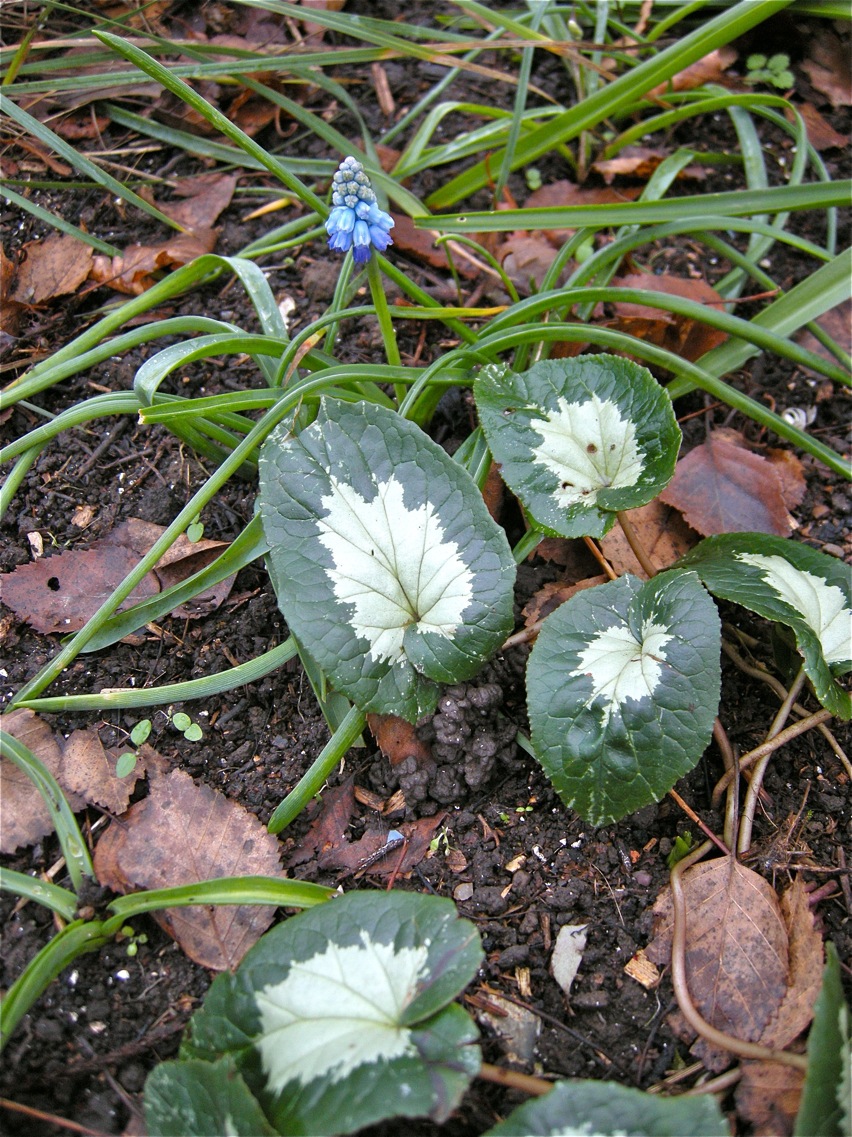
Muscari pseudomuscari, ditto. This is a lovely tidy species, growing here with a selection of Cyclamen hederifolium.
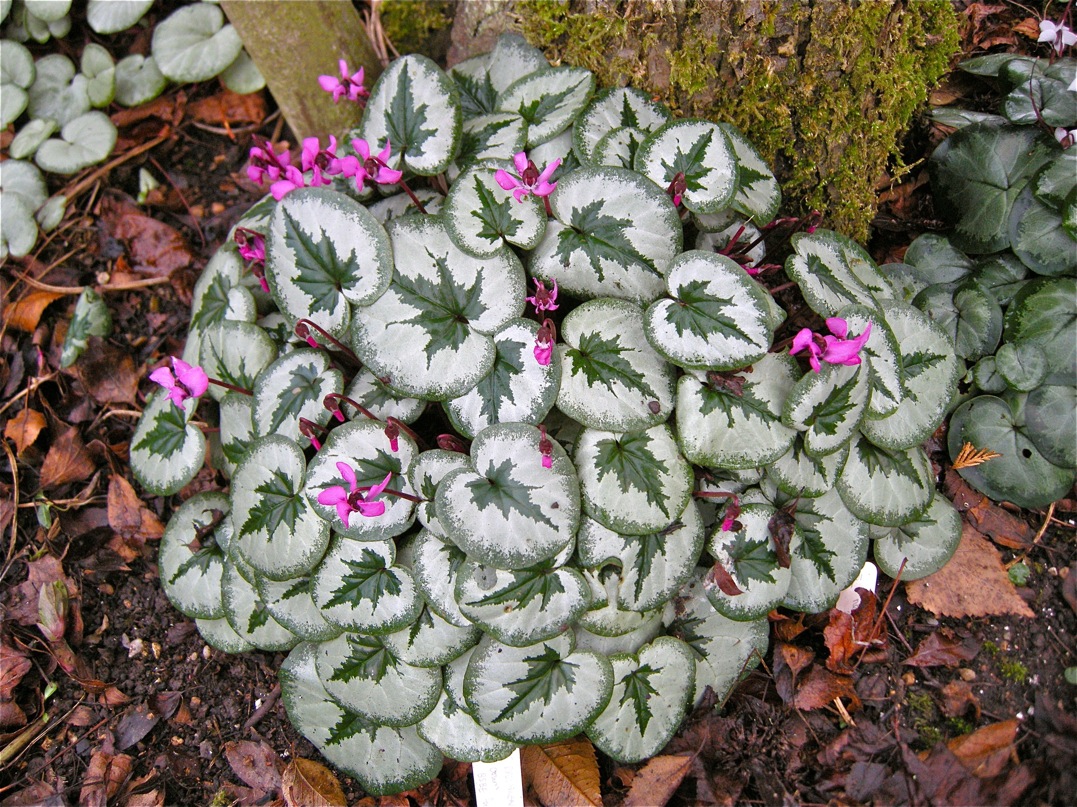
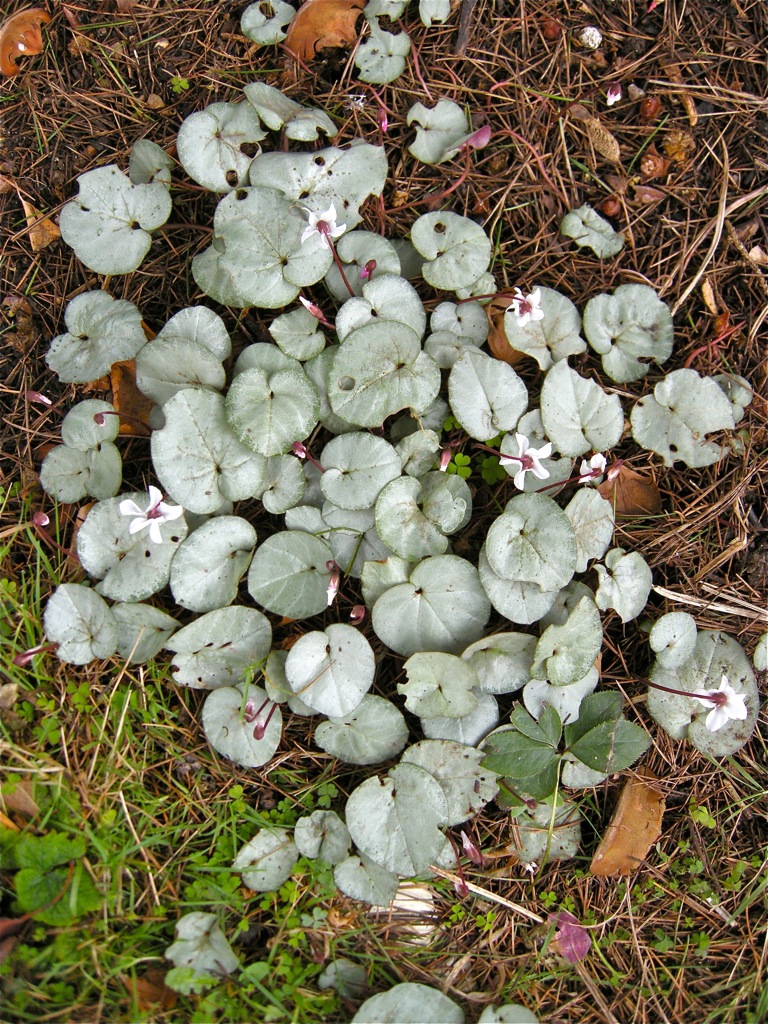
Cyclamen coum. Two forms with very silvered leaves from Tilebarn Nursery.
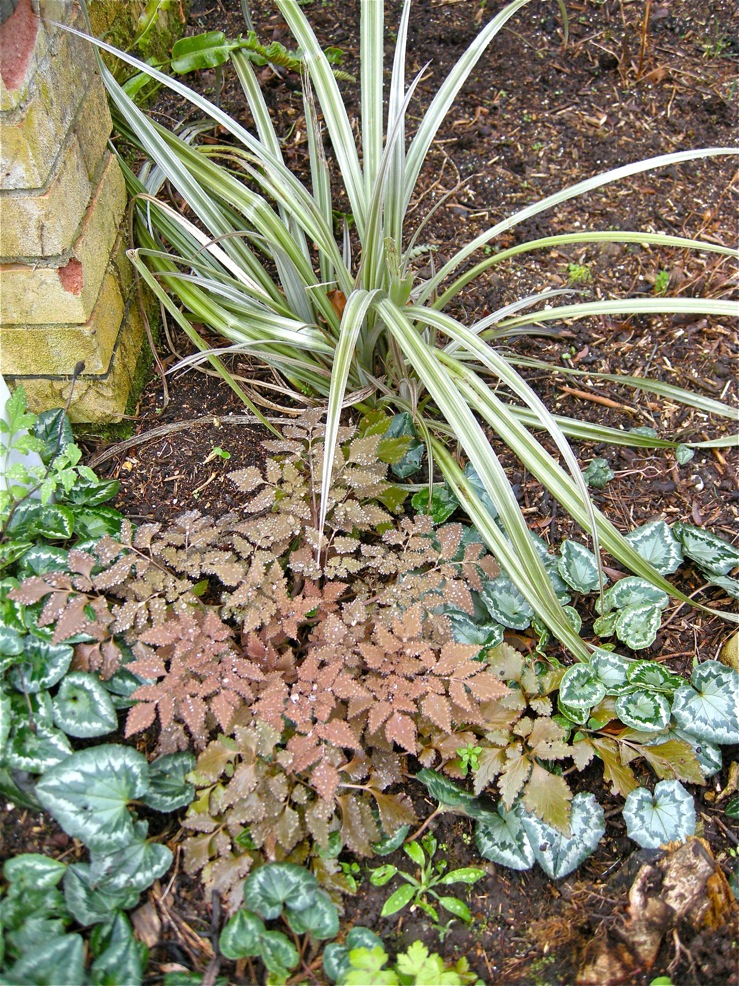
Corydalis quantmeyeriana 'Chocolate Stars' growing with cyclamen and Astelia nervosa. The corydalis is new to me and I haven't yet seen the flowers, but what foliage! I rather like this combination.
Sarcococca confusa. An unassuming shrub but one of the most delightful and scented winter flowers, and usefully tolerant of dry shade.


Comments
Lori S. (not verified)
Re: What do you see on your garden walks? 2012
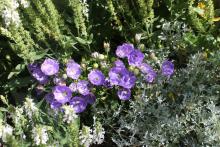
Wed, 08/01/2012 - 11:12amCampanula x carpatica 'Thor Pedo':
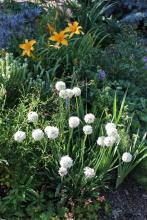
Allium nutans:
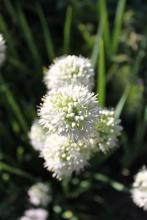
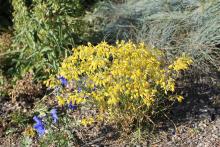
Allium flavum:
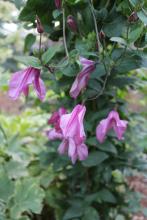
Clematis 'Pamiat Serdtsa':
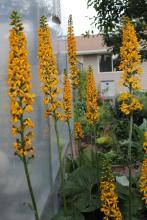
Assorted ligularias along the greenhouse:
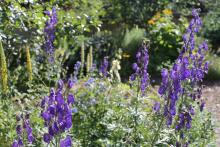
Aconitum, including one white self-seeded individual:
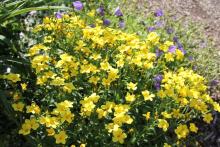
Linum flavum 'Compactum':
Sidalcea malviflora:
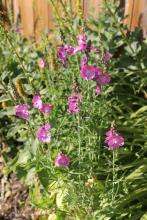
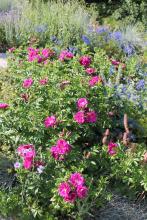
'Purple Pavement' roses out in "Palliser's Triangle" (the boulevard - http://en.wikipedia.org/wiki/Palliser's_Triangle):
Tim Ingram (not verified)
Re: What do you see on your garden walks? 2012
Wed, 08/01/2012 - 9:48pmI am fascinated by the Dalea. I am trying a few of these from seed. The picture of purpurea looks a most distinctive legume which I have never seen cultivated in the UK.
Trond - we have had the same experience with the alstroemeria and unfortunately it seeded into an alpine bed nearby and I am forever pulling out shoots. The tubers go down a mile!
cohan (not verified)
Re: What do you see on your garden walks? 2012
Wed, 08/01/2012 - 10:50pmYour garden doesn't stop, Lori :) Dalea is great among so many others! Have you ever grown the white Dalea?- saw it on Alplains, he said basically a white flower on D purpurea type plant, I forget the species name...
Lori S. (not verified)
Re: What do you see on your garden walks? 2012
Thu, 08/02/2012 - 10:20amI would like to have Dalea candida - and the various other species that are available from Alplains, for example, too! - but Dalea purpurea is the only one I've managed to grow successfully so far. It is a much more impressive plant in cultivation than I've ever seen it in the grasslands around here. Even in the very poor, dry clay along our fence, a plant will have hundreds of stems and form a full vase-shape, whereas in the wild, I see plants with three or four stems and often very small, button-like flowers.
cohan (not verified)
Re: What do you see on your garden walks? 2012
Thu, 08/02/2012 - 11:28amIt certainly looks to be in full bloom in your photo :)
I was just wondering if this could be a mystery plant I've seen a couple places in ditches as we whizz past on the highway- taller than everything around it with pink flowers on tall bare stems- they're not super far away, between here and Eckville, but not a place you could stop, and I've never seen anything like it on my backroad botanising... Probably not this though, as I think the sites are probably damp, and I saw flowers several weeks ago..
Lori S. (not verified)
Re: What do you see on your garden walks? 2012
Thu, 08/02/2012 - 11:38amMaybe you're seeing Geranium viscosissimum?
Richard T. Rodich
Re: What do you see on your garden walks? 2012
Thu, 08/02/2012 - 4:36pmI'll save seed of D. candida for you both. In the wild here in Minnesota, both Dalea purpurea and D. candida remain at the general height of nearby plants. I wonder if what you are seeing, Cohan, might be a species of verbena. Typically in the Minnesota wild, V. hastata and V. stricta flower above surrounding plants and most often with just one or two stalks.
Ditto for both D. purpurea and D. candida in the wild here.
Trond Hoy
Re: What do you see on your garden walks? 2012
Thu, 08/02/2012 - 11:59pmTim, I'm not unhappy with the spreading Alstroemeria! It keeps other weeds away and where it grows it can't swamp anything special.
I have some Dalea seedlings going - hope they are still alive when I get home - it has been a tremendous slug summer I've heard >:(
Anne Spiegel
Re: What do you see on your garden walks? 2012
Fri, 08/03/2012 - 8:54amDalea purpurea came through the winter and flowered for the first time. I look forward to its continued success in the garden.
It is, after all, a pea!
Lori S. (not verified)
Re: What do you see on your garden walks? 2012
Fri, 08/03/2012 - 9:25amThanks, Rick! I'll be looking forward to trying Dalea candida. I was given seeds once before but had no luck at germinating them for some reason. Our observations about plant habit for Dalea are the same.
The only verbena we have here is V. bracteata which is a prostrate plant. Geranium viscosissimum would fit for bloom time, colour and for holding its flowering stems high above the surrounding grasses - it is very showy in the roadsides.
Great to hear that your D. purpurea plants have succeeded so far, Trond and Anne! Trond, as seedlings, I imagine they might be vulnerable to slugs but as adults, with very tough (even woody at the base) stems and small, skinny leaves, surely the slugs could find more succulent things to eat? ??? I hope you can get them past what would seem to be the most vulnerable stage.
cohan (not verified)
Re: What do you see on your garden walks? 2012
Fri, 08/03/2012 - 11:16amThanks, Rick, seeds of candida would be cool, I haven't tried any Daleas yet..
As Lori mentioned, our only Verbena seems to be prostrate, its not a plant I know, probably not in my area though I didn't check the map..
Lori- viscosissimum would be interesting, map doesn't quite show it in my area, but that has not stopped a number of other species! but I wonder if it would really have such long bare stems as I'm seeing- of course just looking from highway speed I could be off by a bit, but it seems to me the plant I see has at least a good 20-30cm or more of bare stem with flowers at the tips (if there were tiny reduced leaves I might not see them, but nothing much)..
I've really hoped to run into the plant in another place on bicycle, but no luck so far, and only one outing this year to date...lol
I just flipped through Alberta Wayside Wildflowers (Kershaw) with no further clues- the only thing that caught my eye was Monarda- about right for colour, flower head shape and possible height, though I'm pretty sure it's too leafy..
Lori S. (not verified)
Re: What do you see on your garden walks? 2012
Fri, 08/03/2012 - 11:53amI wouldn't describe Monarda fistulosa (our only monarda) as the same colour as Geranium viscosissimum and Dalea purpurea (it's a lavender-ish rather than the hot pink of the latter two), and I've never seen it so tall as what I imagine you're describing... it seems to be another one that doesn't really extend itself above the surrounding vegetation, from what I've seen.
Guess you're just gonna have to stop the car some time!! ???
Lori S. (not verified)
Re: What do you see on your garden walks? 2012
Fri, 08/03/2012 - 9:54pmThis was supposed to be Erysimum humillinum but it's shaping up to be a orange-flowered Mimulus, from what I can tell so far. I do reuse potting soil from year to year, so who knows where it came from? Poor thing is rather pallid (I have given it fertilizer) though the flower will be quite vivid:
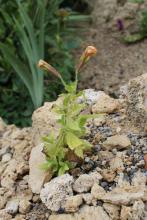
Talinum sediforme, not looking as well as in previous years (and it has never looked extremely vigorous):
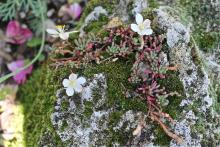
Agoseris glauca; to answer your question from a while back, Cohan, I wouldn't say the flowers are ever so variable as to make them uncharacteristic, though there is variation. Well, I like seeing this in the wild, but I don't really think it needs a place in the rock garden - too big, too dandelion-ish, IMO.
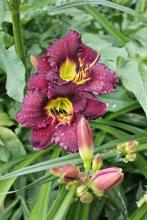
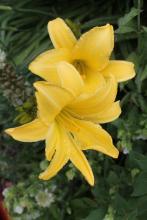
Hemerocallis 'Bela Lugosi' (with its usual "off" colour in my conditions - should be very deep purple) and 'Yellow Pinwheel'; strangely enough, many of the daylilies didn't even bloom last year but there is a more normal showing this year:
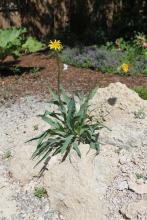
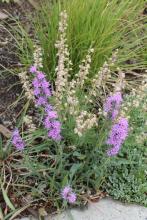
Liatris punctata(?), with Salvia juriscii in seed in the background. I'll have to check that ID - please let me know if you recognize it:
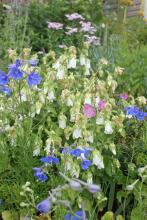
Campanula hofmannii, blooming heavily:
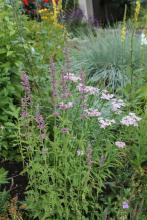
Agastache pringlei, an alpine native to the mountain ranges of New Mexico and Mexico, starting to bloom - despite the usual zone 6 rating, it is much hardier - with Achillea sibirica in the background:
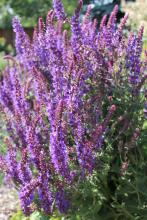
Salvia nemorosa ssp. tequicola is spectacular, colourful, and very long-blooming (but needs staking up in my conditions... oh well):
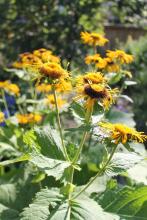
Telekia speciosa; the huge leaves that took a battering from hail earlier on have been replaced:
Lori S. (not verified)
Re: What do you see on your garden walks? 2012
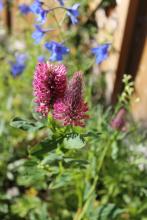
Fri, 08/03/2012 - 10:03pmTrifolium rubens... much reduced in the last couple of years from its former glory since the jackrabbits have discovered it - apparently, it's very tasty!; a couple of seedlings have turned up this year, which I will move inside the fence to safety:
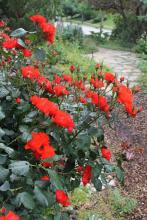
Rosa 'Amsterdam' is putting on its second big flush; I think it's a really spectacular rose with gorgeous foliage and blooms (notwithstanding that it was shipped as something else, that was supposed to be double and fragrant!):
Trond Hoy
Re: What do you see on your garden walks? 2012
Sat, 08/04/2012 - 12:34amYes, thanks, Lori ;) I hope too that they will survive the summer and the severe slug onslaught! I was home a couple of days ago and found several nasty slimey creeps around the pots although I have tried to place the pots out of reach.
Michael Peden
Re: What do you see on your garden walks? 2012
Sun, 08/05/2012 - 1:39pmDark night of the rock gardeners soul. Tell me we aren't on target for a summer heat record in the northeast. Sunshine every day does make for a gorgeous summer however. I'm quite stingy with the hose but it is the only thing between these bright Phlox cultivars and severe dessication.
The south face of The Rock in high summer. The dark bun at upper left (north face) is a Daphne arbuscula much, much larger than a man's head. It may, indeed, qualify as gargantuan for the species! The white patches are lime dabbing. The second photo shows my most proud trough with Sedum pluricaule, a welcome August blooming alpine. I think that's a 'Jaqueline Verkade' spruce in there too, Selaginella densa covers the ground, a silver Saxifrage has seeded into the central chunk of Bighorn dolomite. It is a trough upon which all has been well for well over a decade.
One of a small number of choice small ferns currently here is this Chielanthes from the Rockies. The fronds are generally faced to the east and perpendicular to the north side of the adjacent rock. It seems a thinking fern.
Panayoti Kelaidis
Re: What do you see on your garden walks? 2012
Sun, 08/05/2012 - 3:50pmYour rock work, Michael, is really awesome! Looks so good even this time of year.
I just got back from 4 days in Spokane, Washington...an awesome destination for rock gardeners. It is situated between the Palouse prairie (now pretty much wall to wall wheat and lentils, alas!) and the Idaho panhandle mountains. That prairie had to be one of America's natural wonders: in addition to dozens of rare endemics, it harbored some exotic fauna including a giant earthwork (up to a meter long!) which was thought to be extinct, but was recently rediscovered in a protected prairie remnant. And there is even some restoration going on...
But I digress! I shall post just a few pix I have also put on my blog: if you want more extensive commentary, check the blog: http://www.prairiebreak.blogspot.com/2012/08/spokane-visit.html
The first two pictures were taken in the garden Maralee Kowalsky and her husband John--here Maralee is next to her giant Salvia pachyphylla. The second picture is of a champion Origanum libanoticum in her garden as well. Although not technically "rock gardeners" they grow many rock plants very well.
3) Origanum laevigatum 'Pilgrim' at Manito Park in Spokane: I saw this in several gardens there, by far the showiest oregano for color effect. I had never seen it before. Now to get a start!
4) I was hosted two days by Alan Tower, a superb plantsman and nurseryman in Spokane who took me to Steptoe Butte, a remnant of wild vegetation surrounded by wheatfields. (you can see these in the background). Alan's nursery has a wealth of rare plants of all kinds (conifers and shrubs to all kinds of xeric, woodland and alpine plants).
5) Calochortus macrocarpus still blooming there
6) Gentiana oregana is a large flowered steppe cousin of the subalpine G. calycosa: I would love to grow this!
7) Heuchera cylindrica was still blooming prolifically on the Quartzite cliffs of Steptoe,
8) Eriogonum heracleoides was still in fresh bloom, although some were going over enough to get seed!
9) Alan had a magnificent specimen of Gypsophila aretioides on her rock garden: I have never seen a better grown specimen.
10) He has grown a number of unusual gentians from various Czech collectors, and he had many Gentiana striata in bloom--a plant I am not familiar with--from Gansu. Also lots of Gentiana szechenyi, several of which found their way back to Colorado, as well as what he called "Gentiana siphonantha" only it appeared to be compact and attractive. We shall see!
Richard T. Rodich
Re: What do you see on your garden walks? 2012
Sun, 08/05/2012 - 4:43pmWhat a treat, PK!
Love the Oreganum and the calochortus, especially.
--------------
Dark Night of the Soul is among my favorite poems, in Spanish or any translation I've read. I liked your play on the words, Michael, though not at all the original meaning of the phrase! ;) As usual, your gardens leave me envious, and I would love to see a close up of that trough...
Trond Hoy
Re: What do you see on your garden walks? 2012
Sun, 08/05/2012 - 11:23pmMy points go to the gentians . . and of course the Sagebrush Mariposa lily but not for food ;)
Bundraba, I can use some of the heat here, please! The weather forecast says warmer weather the next week - when I have to start working again :-\
Impressive Daphne, and a pretty fern!
Trond Hoy
Re: What do you see on your garden walks? 2012
Mon, 08/06/2012 - 12:10amEvery day I take a stroll in the "garden" here in the subalpine zone. The meadow is a former pasture used when the farmers (or rather small boys) herded their livestock (mostly milking cows) to graze in summer. My father-in-law used to be a "cowboy" in summer when he was young. At that time the landscape was open with very few trees. Now birch and spruce march in and cover the previous pastures, only a few sheep try to keep the shrubs down but don't suffice. I try to manage a small plot near our cabin by mowing once every year in late fall. I have also introduced some native plants that had disappeared or occur naturally in similar areas. The flowering meadow is attractive to insects too!
Arnica montana is endangered in Norway due to disappearing pastures. Leucanthemum vulgare is common but this montane form is more delicate than the lowland form. Rosa majalis grows in the low alpine zone some places.
Solidago virgaurea is also very common. The lowland forms become 1m tall but the alpine forms have only a few flowers. Here they are inbetween those. Vicia cracca do spread but gives a nice colour. Cirsium heterophyllum is coarse and dominating but the flowers are very attractive for insects and the seeds are bird food in the autumn.
The Scarce Copper isn't scarce here but common. Here are both the male and the female. Hopefully we get a new generation next summer!
Tim Ingram (not verified)
Re: What do you see on your garden walks? 2012
Mon, 08/06/2012 - 3:53amWonderful pictures Michael and Panayoti! Origanum laevigatum is a good plant here but 'Pilgrim' is a fine selection (we grow a robust form called 'Hopley's'). I would have to strip down the garden and start again to get that great rock planting of Michael's - lovely to see plants so beautifully displayed.
Silver and grey foliage plants are such a feature of dry landscapes and we aim to propagate more of these as the nursery gets going again. This one is Scabiosa cretica (from a friend's garden on the coast which is very mild). A small Mediterranean sub-shrub which I hope might do against a warm wall.
Lori S. (not verified)
Re: What do you see on your garden walks? 2012
Mon, 08/06/2012 - 8:36amLove those scenes, Michael, and the construction of that rock cliff, especially!
Nice to see what's happening in that part of the world, Panayoti, especially the nature scenes.
I'm curious about your comment about Gentiana siphonantha:
I get the impression there may be uncertainty about the identity or description of Gentiana siphonantha?
The ones I grew in 2010, with one flowering this year, were from seeds from Pavelka, with seeds collected from 4300m, Anyemaquen Shan, Quinghai, China (description: "densely tufted, narrow leaves to 10cm, dark blue flowers in heads 10-15cm, stoney slopes, very good; 2008 seed"), and they seem to fit the eflora description:
http://www.efloras.org/florataxon.aspx?flora_id=2&taxon_id=200018083
The basal foliage is 10cm tall, and the fully extended flower stalks (now in seed) are 16cm. Would you say this is actually Gentiana siphonantha?
Michael Peden
Re: What do you see on your garden walks? 2012
Mon, 08/06/2012 - 10:08amCareful what you ask for!
Panayoti Kelaidis
Re: What do you see on your garden walks? 2012
Mon, 08/06/2012 - 1:13pmIs there anything you don't grow, Lori? I bet it is the same plant as your's: I believe G. siphonantha should be much bigger than that. But I am glad I got this little one! Boy, would I love to visit your garden, Lori: you really need to write it up for a book (or at least some articles in NARGS!)...
I love the copper butterflies in your Subalpine walk, Hoy! It looks so cool and inviting there--we have had a beastly hot summer, but at least a bit of rain the last few weeks (more than most areas in continental USA)...
I think I posted a pic of my current pride and joy, Silene plankii: it has a few more flowers, so I am adding that as a final flourish...
Lori S. (not verified)
Re: What do you see on your garden walks? 2012
Mon, 08/06/2012 - 4:47pmPanayoti, to answer your question literally ( :)), yes, I don't grow almost everything. ;D ;D I do grow a few things, though, although sometimes only for brief periods. You would be most welcome to visit if you're ever in this neck of the woods. I would love to visit your garden and the Denver Botanic Garden too, it goes without saying! Thank you sincerely for the comments! Honestly, I wouldn't even know what to write about for even a short article... I really just mess around and experiment enthusiastically, but mostly rely on trial and error! It is fun though!
Love the Silene plankii - terrific colour! I picked one of these up last year but it didn't winter over... (actually I don't even recall if it survived the season. :-[)
Beautiful photos, Trond - lots of colour there, and even if it is too much rain, at least everything looks very fresh and lush!
Another wonder from you, Tim - Scabiosa cretica - without the flowers, I would have never taken it for a Scabiosa.
Richard T. Rodich
Re: What do you see on your garden walks? 2012
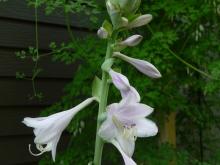
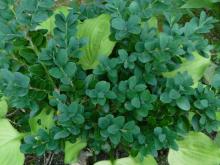
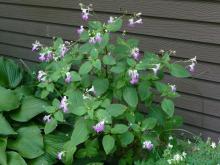
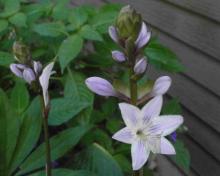
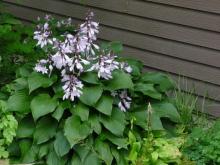
Mon, 08/06/2012 - 7:14pmHosta nigrescens, Buxus sempervirens 'Vardar Valley' amongst Hosta 'Vanilla Cream' and Hosta clausa var. clausa flowers. I need an "iredescence" button in my photo imaging program. The color is actually flat compared to real life.
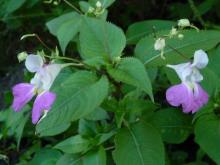
Impatiens balfourii and Impatiens glandulifera(or is it glandulosa?)
Ruellia humilis in the garden and, if you don't mow your grass for a few weeks, sometimes you get a nice surprise...
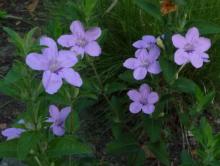
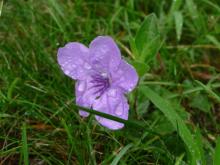
Trond Hoy
Re: What do you see on your garden walks? 2012
Tue, 08/07/2012 - 10:47pmLori, I second Panayoti - you should write an article or two! You have lots of possible headings I would say, even " My successes and failures" could be interesting!
Rick, I like the flowers of your Hostas! I have not been very interested in that Genus - a lot of similar big-leaved slug-baits! But some have nice flowers too ;) Ruellia is lovely!
Panayoti, the colour of Silene plankii is vibrant! One I would love to have at my summerhouse ;D
Trond Hoy
Re: What do you see on your garden walks? 2012
Tue, 08/07/2012 - 11:16pmTwo plants from the rockery at our summerhouse (it's all rocks here though): Orostachys iwarengi and Rosularia sedoides. They are very late this year.
Richard T. Rodich
Re: What do you see on your garden walks? 2012
Wed, 08/08/2012 - 2:05pmThis is what I have from seed labeled as Orostachys iwarenge from the NARGS seed ex. I don't know if it will ever look like yours, Trond. I wonder what it is...
[attachthumb]
I have to agree, I don't really understand the hosta mania, either. Although I do keep several around. In fact, another one of my favorites is all green leaved, too: Hosta 'Sparkling Beauty'. Fairly (but not completely) slug resistant.
Lori S. (not verified)
Re: What do you see on your garden walks? 2012
Wed, 08/08/2012 - 7:21pmI'm going to have to look out for more Rosularia - that one sure is attractive, Trond.
Despite the heat and drought, everything looks so fresh and pristine, Rick! A few hostas around here too, though I tend to think of them more and more as space-fillers (ones that are rather vulnerable to hail damage).
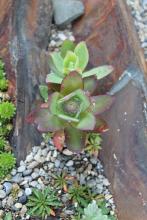
I dunno, I think your plant could very well be Orostachys iwarenge... it doesn't look too dissimilar to this one (except that mine's a little hail-bruised):
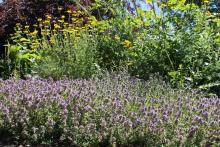
Stachys minima:
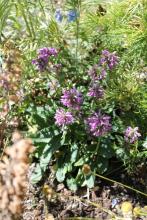
Mother-of-thyme, Thymus serpyllum - I love seeing the bees enjoying it!
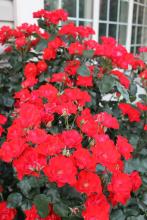
Showing, yet again, the rose 'Amsterdam' - what a knockout!
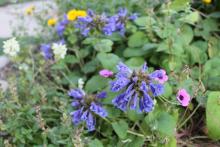
Dracocephalum grandiflorum:
Trond Hoy
Re: What do you see on your garden walks? 2012
Thu, 08/09/2012 - 12:06amHave your tried your Orostachys outside?
'Sparkling beauty' is a beauty, indeed! . . . . and somebody should start breeding Hostas for flowerpower, not leafpower!
Lori, I could send some pieces of R sedoides if you think it possible.
Here the thyme is done for the season - and almost all the bees disappeared. However bumblebees still hang around and visit everything in flower.
'Amsterdam' really is a stunner, Lori! My father would have loved to see it, he was a passionate rose grower in his elder days.
Tim Ingram (not verified)
Re: What do you see on your garden walks? 2012
Thu, 08/09/2012 - 12:27amAfter seeing that flowering clump of hosta from Rick I agree with Trond - there must be real scope to breed for hostas with good flowers. Some of the older varieties must be much better in this respect.
This year's wet summer has led to far better flowering of many later perennials - usually only the weeds grow well for us at this time - and Crocosmia 'Emily Mckenzie' is a good example. This has a looser and more elegant habit than some and has never been divided over the more than 20 years it has been in the garden.
Richard T. Rodich
Re: What do you see on your garden walks? 2012
Thu, 08/09/2012 - 7:38amTim, Emily McKenzie crocosmia is indeed elegant. And as with everything in your gardens, so well placed!
This is a first year seedling for me. one of three in the same pot. (The other two seemed to have disappeared.) Time will tell if it is true to name. Obviously, Lori grows Orostachys iwarenge outside, and I remember seeing a nice big patch of it in a pic on this forum from someone in Massachusetts (Peter, I think?). I have grown another species many years ago, but it never produced any offsets, so when it bloomed, it was gone.
A word to the wise:
Back then, when a species died or I removed it and no longer grew it, I deleted it from my list of plants I kept on the Excel program. And now I don't have a record of what it was. I've gotten smarter now. ;D First I just formatted a strkethrough the plant's name, but there got to be so many. :'( So I created another book in the same file and labeled it "Past Plants". So when a species dies or is removed, I simply transfer the data out of "Present Plants" to the new book: "Past plants". I refer back to this old plant list more than I ever thought I would.
Our severe drought here lasted from August 2011 through April 2012. Since then, my area has had an abundance of rain, and even our normal seasonal drought period was much reduced. Although, it has been very hot. Those hosta are on the north side of the house, too.
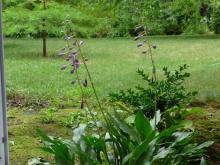
Space-fillers is an apropos name. Hostas have saved space in my garden for new and upcoming special plants several times. The Hosta clausa var. clausa grows where nothing else will (except weeds and woody plants) in compacted clay gumbo (hence the moss). Incidentally, The hosta is rhizomatous, with flowers that never open(clausa).
Michael Peden
Re: What do you see on your garden walks? 2012
Thu, 08/09/2012 - 7:47amAfter viewing the last few posts I realized I had to go out in the garden and hunt down a truly huge bun of Gypsophila aretioides. I found two! They aren't nearly as grand as that pictured from Alan Tower's garden (but I could always sneak them together) :o There's actually more here too; all from a start or two I acquired when I began seeking out alpine plants in the nineties. The second pictured had three flowers on it many years ago; a BIG event and it even, for a moment, became the mysterious Penstemonella aretioides which many Yahooed!, AOLed, and may have even Googled to no avail. Rock gardening is to be not all drudgery and dirge; laboring with heavy rocks and obstinate little plants, tirelessly under the hot sun. One must be light of heart! The first was posted previously but this is obviously the money shot.
Lewisia cotyledon beautifully set for summer and a hint of blue in Lycoris squamigera.
A low growing Phlox paniculata in hot pink/orange. It was a hand-me-down so I don't have a name. Is it 'Red Riding Hood'?
And here's another look at that trough. On the north side under the spruce is Saxifraga 'minutifolia' and little plastic piggies. Below is London Pride; just out of the photo is the tan line (ouch!). The second is a photo of a weird little Selaginella I found in the arid Uintah foothills growing among Ephedras and Echinocereus. I call it "cactus moss".
Bees like onions! -and the giant native Silphium perfoliatum.
tropicalgirl251... (not verified)
Re: What do you see on your garden walks? 2012
Thu, 08/09/2012 - 9:00pmSorry very late to reply. Today my gardening friend who has a beautiful garden told me about your problem of propagating this plant. I got flowering stalk from the nodes of her plants which rooted easily.
Tim Ingram (not verified)
Re: What do you see on your garden walks? 2012
Fri, 08/10/2012 - 12:35amKrish - thank you so much! Now why didn't I think of that; we will give it a go.
cohan (not verified)
Re: What do you see on your garden walks? 2012
Fri, 08/10/2012 - 11:39amGee, I didn't think I missed that many days, but too many posts to comment on!
Trond, love your meadow, and good you are able to preserve some of those plants.. here, the ration of open to wooded land constantly changes on different properties - forest and wetlands are bulldozed for grazing and shade plants have to be replaced by meadow plants, others become completely overgrown with shrubs and trees squeezing out all of the sun plants, and numbers of animals grazed on a plot vary over years as well, with some becoming mostly the d****d buttercup or yarrow etc; On my family's land, grazed fairly heavily (in the open areas) for a long time, then not so much for recent decades, there are some weedy areas but still a lot of native plants, with some plants I knew in my youth lost to cleared forest sections or loss of meadow to woodies; The last few summers, a neighbour had more cattle on the land again, and it was interesting to me to see more flowering on some wetland plants like Pedicularis and Menyanthes..
Fortunately, most of these plants are regionally fairly common and while particular patches are lost, regionally they are mostly doing fine with this continual habitat flux..
Tim, re: Crocosmia- a few weeks ago I was in a local big box store that was selling Crocs discounted in their garden centre.. I really doubt these are hardy here? but they were just sold as garden plants....
Trond Hoy
Re: What do you see on your garden walks? 2012
Fri, 08/10/2012 - 2:59pmThe Crocosmias in my garden have not started showing buds yet this year :-\
Bundraba, those Lycoris are beautiful!
We went for a boat trip yesterday in the nice weather. Thought we should enjoy a flowering island due to enough rain this summer. But they have introduced sheep there too >:( :-X
Previously a few calves have grazed there, but a bunch of sheep eat it all!
Part of the island Jomfruland named Skadden: From left 1 &2, view west, 3 view east (Rick, this is Skagerak!).
Only a few, common plants survive the hard grazing: Hieracium peleteranum and Scleranthus perennis on drier ground, Matricaria maritima, Potentilla anserina and Sagina nodosa on moister ground.
Also the tiny Spergularia salina survive. Only one species benefits from the hard grazing, Senecio viscosus. The animals doesn't like it!
Anne Spiegel
Re: What do you see on your garden walks? 2012
Sat, 08/11/2012 - 4:27amA few more pictures of "my other garden" in the Dolomites. Joe and I spent a day with Cliff and Sue Booker, introducing them to one of our favorite hikes. We came to an area of limestone rubble which was the habitat for hundreds of Papaver rhaeticum. The typical color is a brilliant yellow which fades towards orange as it goes over. This day we found some white ones and some pale yellow, definitely not typical, and an exciting find. If you see an area with many of the same plant, you can often find one or two that are different. I can remember a few years ago finding a white Linaria alpina when hiking with Elisabeth and Rod Zander, an exciting find that I've never been able to duplicate, and many years ago seeing a white Oxytropis podocarpa
when hiking with Panayoti. (Unfortunately, all those pictures are slides.) As you can see, we've been so lucky to have wonderful hiking companions.
Lori S. (not verified)
Re: What do you see on your garden walks? 2012
Sat, 08/11/2012 - 12:16pmA rhizomatous hosta - how interesting, Rick. I wasn't aware of these at all.
Great scenes, Michael - now yours is a garden that just won't quit! What an amazing variety of plants.
Trond, I'm enjoying your boat trip and island tour!
Love the crocosmia, Tim - just a summer plant here though, sadly.
Stunning poppies, Anne! Have you grown these? I have yet to see any of the 3 native alpine poppy species here yet... some day though...
Some pix from the garden - a lot of repeats, admittedly, but hey, summer is short!
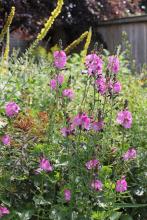
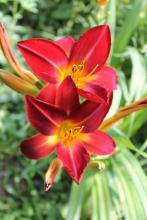
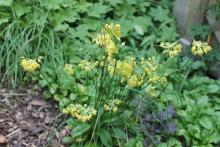
Sidalcea malviflora; daylily (the warm summer is favouring them - most didn't even bloom last summer); Allium flavum:
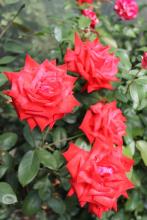
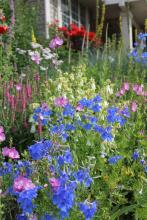
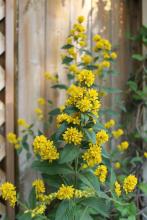
Rose 'Dolly Parton' - very fragrant; flower bed view; Lysimachia vulgaris:
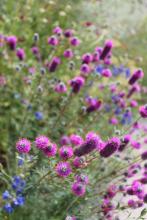
Clematis 'Pamiat Serdtsa'; Dalea purpurea; Linum flavum 'Compactum':
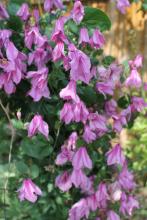
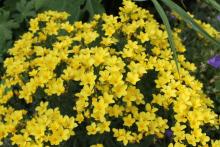
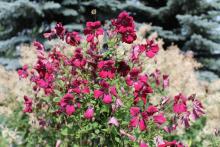
Clematis viticella 'Rubra':
Lori S. (not verified)
Re: What do you see on your garden walks? 2012
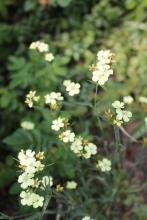
Sat, 08/11/2012 - 12:21pmDianthus knappii - probably notable only for being yellow!
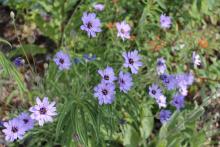
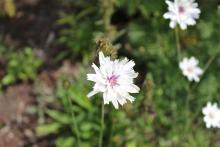
Catananche caerulea, normal colour and white that popped up from self-seeding:
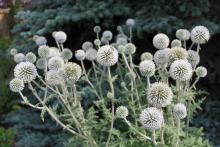
Eryngium sphaerocephalum:
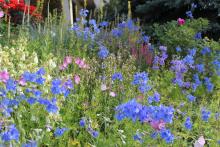
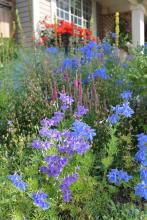
A couple more views - a colourful mess, to some perhaps, but I like it! ;D
Anne Spiegel
Re: What do you see on your garden walks? 2012
Sat, 08/11/2012 - 12:33pmLori, in my early rock gardening days I thought that Papaver rhaeticum and Gentiana verna would be a brilliant primary color combination. I would have had a red in there a well but couldn't think of one that would look well with the other two. So I grew them from seed and put several seedlings in the scree together. They came through the winter fine and in the spring they made a glorious combination, one that would probably make the lovers of subtlety in the garden shrink in horror. I enjoyed them immensely and in my rock gardening innocence was absolutely stunned when they did not reappear the next spring after a very cold and almost snowless winter. Isn't it amazing the things you will try as a newbie when you're not overburdened with much knowledge.
Trond Hoy
Re: What do you see on your garden walks? 2012
Sat, 08/11/2012 - 1:09pmI have always loved poppies and many, many years ago I had a very large patch with poppies. Only when the flowers were spent I realized they were opium poppies that are forbidden to grow here ;D
Unfortunately I have never managed to grow poppies from mountain areas more than a year or two :-\
Lori, your garden is like the Jar of Zarephat: It never ends producing!
I like your "colourful mess", mine is also a mess but not colourful!
Michael Peden
Re: What do you see on your garden walks? 2012
Sat, 08/11/2012 - 1:45pmThat's part the fun; it doesn't quit! Well there can be a period, and two winters ago was a good example, and because a lot of the "structure" is new, when it does quit. We had so much snow here that even the tallest of my Rhodies was completely buried. The garden was a white desert flat as a pancake for weeks!
Anne Spiegel
Re: What do you see on your garden walks? 2012
Sat, 08/11/2012 - 8:48pmI remember that winter with great fondness. The snow was so deep the deer couldn't manuever and the garden was trackless for a long time. Then last year we went to the other extreme and had no snow except for October.
Panayoti Kelaidis
Re: What do you see on your garden walks? 2012
Sun, 08/12/2012 - 7:38amLove your delphinium masses, Lori! Amazing how much bright color you have. We have more muted colors this time of year, but still, lots is blooming. Your Dianthus knappii is not nearly as bright a yellow as ours. I am very fond of this, and have it in several spots. There seems to be a more compact straing being sold recently. We mostly have pale clematis blooming this time of year--except for some re-bloom on the integrifolias. Our summer has not felt short at all: we have had 30 days over 90F, and no end in sight--interspersed mercifully with a few days in the 80's....
I had Matt Mattus, a great plantsman from Massachusetts visiting this week and we drove around looking at things: a few of the sites on our garden drives are posted here...
1) Cylindropuntia 'Golden Lion': a magnificent cholla growing at Timberline Gardens in Arvada
2) Opuntia 'Chocolate Princess'--and amazing everblooming cactus hybrid produced by Kelly Grummons, one of the owners of Timberline. Incredible dark color now, and even darker in winter!
3) Euphorbia clavarioides at Kelly's--a nice clump that has been through several subzero winters already...
4) -6) various shots of Salvia penstemonoides, one of the rarest (and hardest to photograph) native Salvias...with dark purple flowers...
7)-8) Gentiana paradoxa x septemfida, bringing a lot of color into my garden this time of year...
9) Veratrum formosanum, a wonderful miniature with black flowers that seems to settle down and last a while in the garden. Either you love this.....or you don't
10) Here's Matt Mattus behind the champion clump of Ipomoea leptophylla, spitefully blooming next door instead of MY garden...harrrumph.
Beautiful day outside: time to go garden!
cohan (not verified)
Re: What do you see on your garden walks? 2012
Sun, 08/12/2012 - 12:10pmLori- I think a colourful mess is a good thing to aim for, I have a tiny section with several plants commingling, and quite like it! Getting simultaneous flowering of course is the tricky part, let alone ongoing flowering, both of which I imagine take years of adjusting and luck!
Trond- hope nothing to precious was lost on that island? I've thought fondly of the idea of getting some sheep, goats or even miniature cows or horses to take the place of the lawnmower here, but it would involve a lot of fencing around garden areas and months of feeding when there's no grass...lol
Michael- my garden is a white desert for months at a time! ;D Though the snow isn't really deep enough to be flat/even
Anne very exciting to see the mixed colour population of poppies :) I suspect there are a few things in my garden or seed pots now that more experience might have made me more nervous to try, or more fussy with the soil! Still too soon to say much...lol
Panayoti- is this the same Veratrum offered by Alplains? I don't remember thinking it sounded miniature, but maybe that's all relative to other Veratrums?
Michael Peden
Re: What do you see on your garden walks? 2012
Sun, 08/12/2012 - 4:15pmLori, the light sky-blue Delphiniums are my favorite and to have them juxtaposed with a bright rose is wonderful! You go girl!
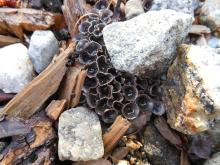
It's been raining a lot lately and myriad birds nest fungi have appeared in the garden!
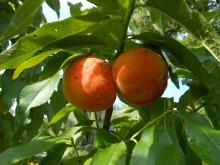
It worked! Peaches(Prunus persica 'Reliance') in zone 4!
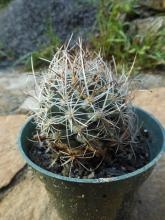
A Sclerocactus glaucus I recently purchased and Christmas in August.

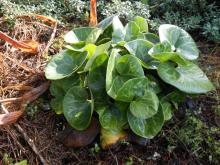
Hexastylis minor from the Southeast and Oxalis decaphylla (?) from the Southwest.
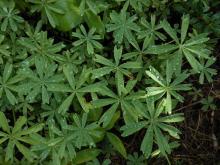
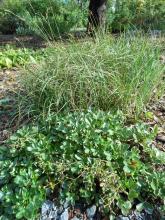
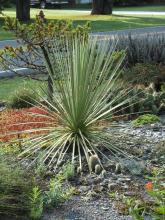
Potentilla tridentata and Bigelow sedge reminding me that I haven't been to the alpine in quite a while; and my portly Yucca glauca in morning light.
Tim Ingram (not verified)
Re: What do you see on your garden walks? 2012
Mon, 08/13/2012 - 12:57amWell - I sowed seed of that Ipomaea but they all damped off, should have kept them to the warmer days of summer to sow. What a plant! I shall definitely try this again. The Dalea is also a must, a fascinating and very 'different' legume. I have just planted D. formosa out on a raised bed and hope I can grow and flower it here.
This is a view of the re-development of our nursery here, intimately linked to the garden, with an old raised bed waiting to be developed as a tufa or crevice/sand bed planting. We aim to try and switch gardeners more on to growing alpines and 'different' plants in the dry south-east of the UK...
Trond Hoy
Re: What do you see on your garden walks? 2012
Mon, 08/13/2012 - 3:36amI don't think anything rare have disappeared due to grazing, not at this spot anyway. But I believe a rare plant (Trifolium fragiferum) has disappeared from another place on the island. Moreover, as it is a popular place for tourists at the sandy beaches on the leeward side, many interesting plants have disappeared or become rare. Eryngium maritimum for instance, I haven't seen it since childhood. People remove it from the beach as it is too thorny!
From Wikipedia:

Pages