
[Moderator's note: We have been a bit remiss at splitting this off into a new thread for 2012, but here it is, finally!
Lori]
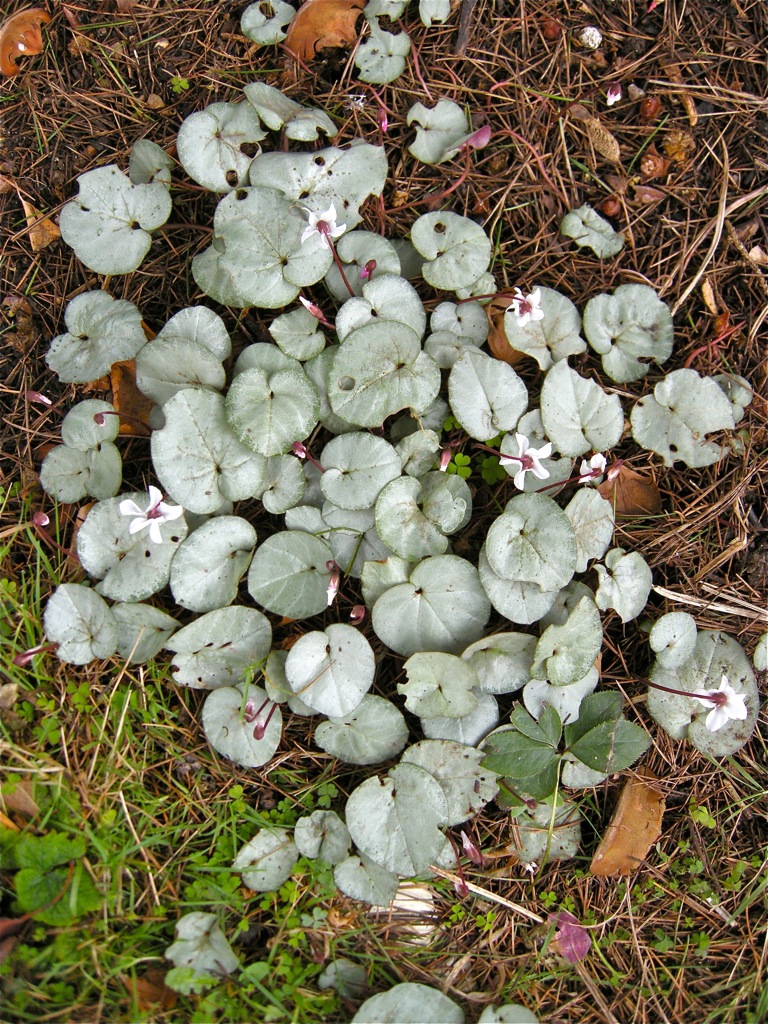
A mix of things flowering or looking interesting in the garden at the moment. The garden is waking up with hellebores and many bulbs soon to come.
Narcissus panizzianus grown from Archibald seed. The flowers are small but always very early.
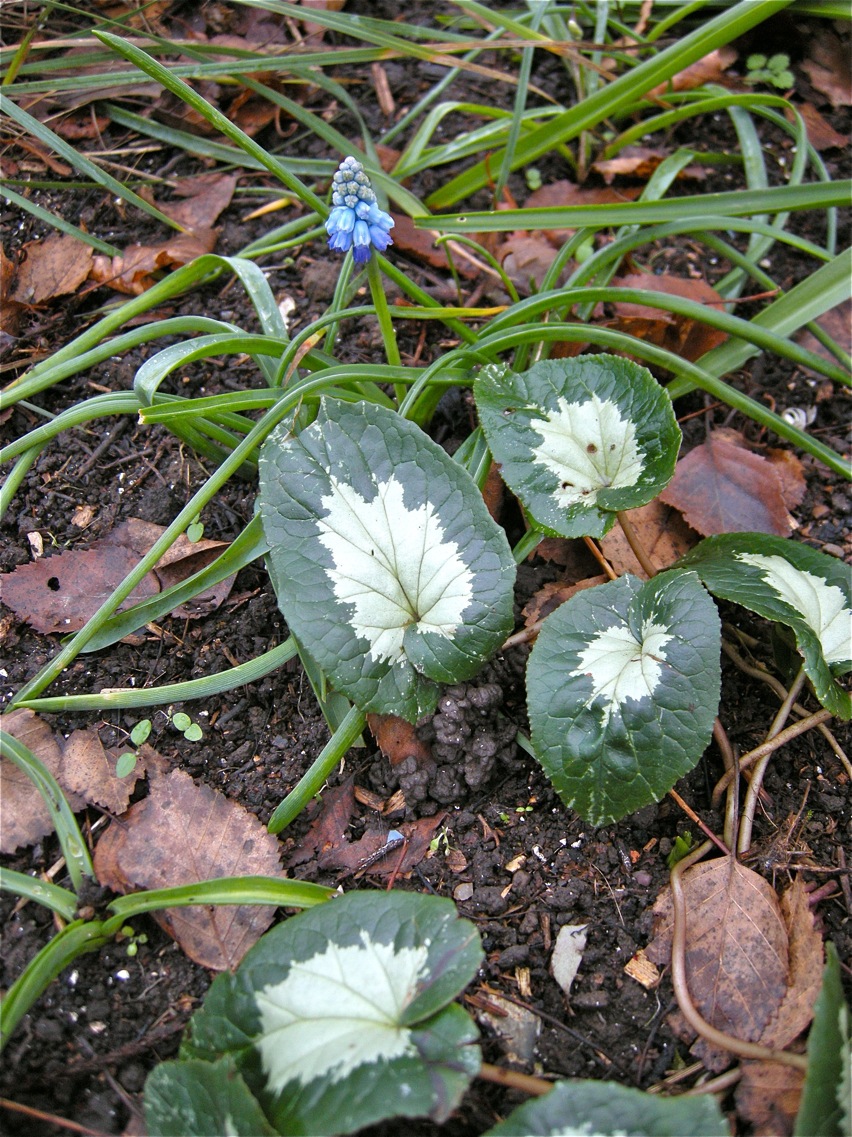
Muscari pseudomuscari, ditto. This is a lovely tidy species, growing here with a selection of Cyclamen hederifolium.
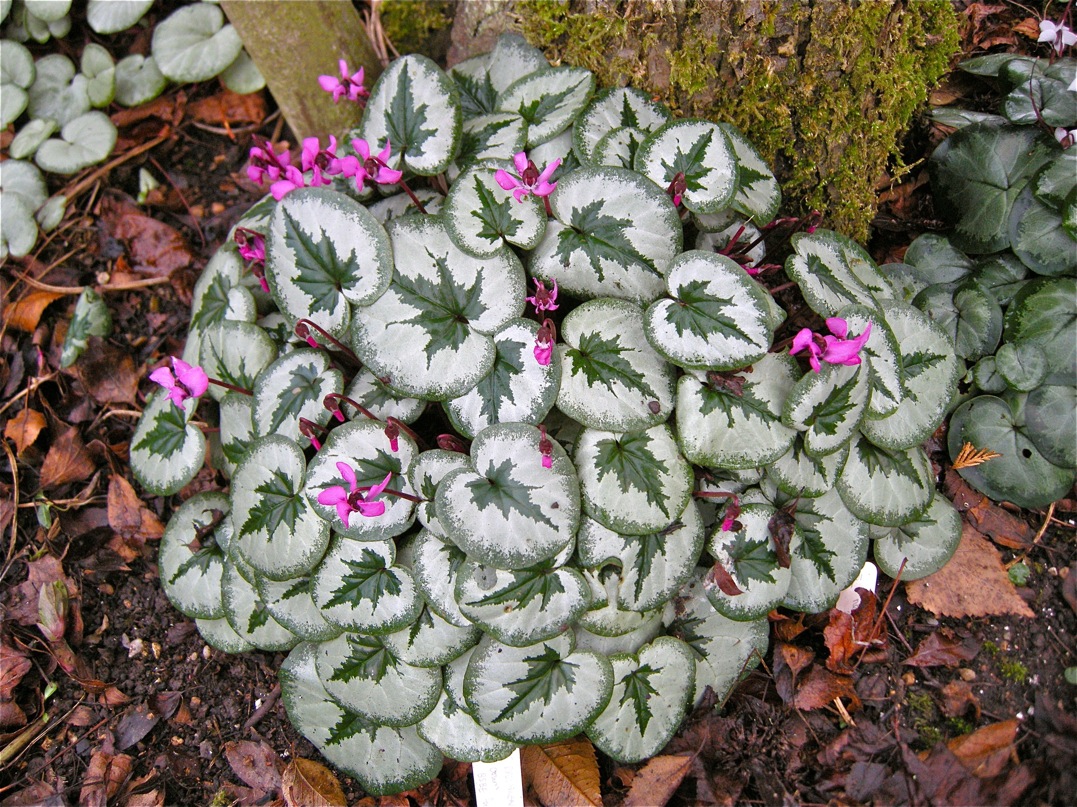
Cyclamen coum. Two forms with very silvered leaves from Tilebarn Nursery.
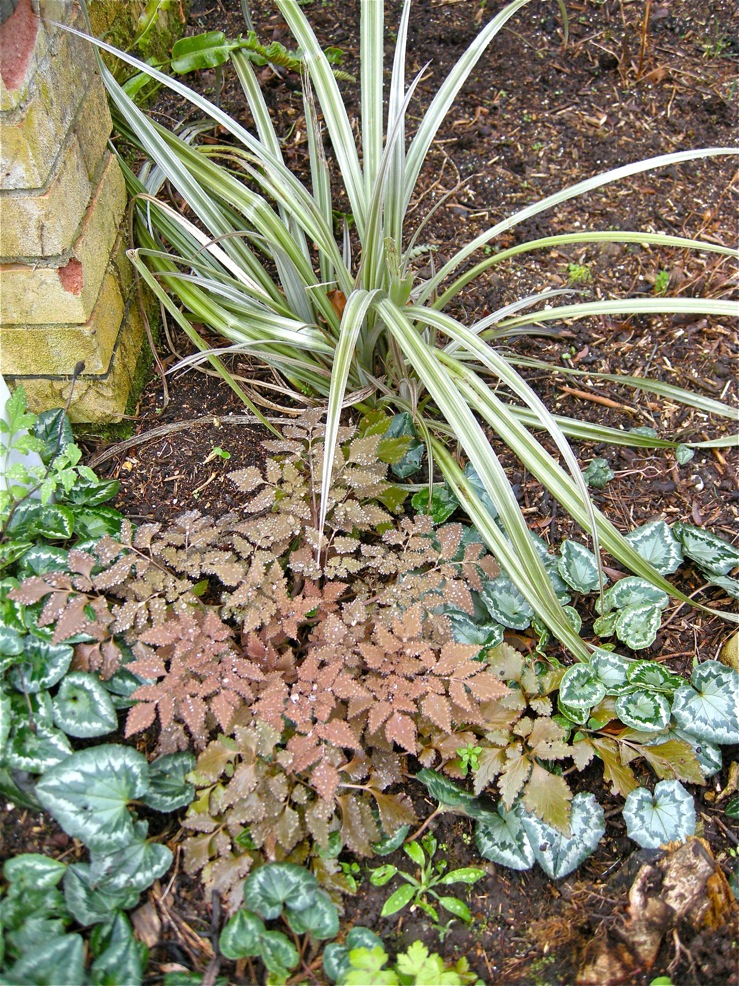
Corydalis quantmeyeriana 'Chocolate Stars' growing with cyclamen and Astelia nervosa. The corydalis is new to me and I haven't yet seen the flowers, but what foliage! I rather like this combination.
Sarcococca confusa. An unassuming shrub but one of the most delightful and scented winter flowers, and usefully tolerant of dry shade.


Comments
Richard T. Rodich
What do you see on your garden walks? 2012
Sun, 01/29/2012 - 10:25amEspecially vibrant cyclamen leaves, Tim!
I thought those were water droplets on the corydalis leaves, but googling shows my error: http://www.perennials.com/seeplant.html?item=1.167.580
Very impressive!
A friend showed me a corydalis with similarly shaped green leaves in an old botany professor's yard. (I don't remember it having that cool dotting, though.) The man doesn't remember what it is. I saw it out of bloom last year, and I remember saying to my friend: "You saw it blooming and you're sure it is a corydalis?" That corydalis (and the rest of the yard that includes one of the heavily divided leaf hellebores sp.) is on my slate for investigation this spring...
Mark McDonough
What do you see on your garden walks? 2012
Sun, 01/29/2012 - 1:11pmOMG, that superb clump of cyclamen coum, WOW, those leaves are drop-dead gorgeous.
And Rick, I'm glad you provided the link and called attention to the Corydalis leaves; I had come to the same conclusion that I was seeing dew droplets. What an unusual and attractive Corydalis. Tim: not fair you have all this going on now!
cohan (not verified)
What do you see on your garden walks? 2012
Sun, 01/29/2012 - 1:23pmnice to see the flowers, but especially like the Cyclamen leaves!
Trond Hoy
What do you see on your garden walks? 2012
Sun, 01/29/2012 - 2:22pmI like all those plants! But if I could get only one and had to choose, I had chosen the Corydalis, no doubt! I have a soft spot for that genus! However, love Cyclamen too - a hard choice :-\
I had hoped that our mild weather should continue but no luck. Today is our first day this winter with temperature below 0oC all day and night. And more is to come :( The forecast says down to -10oC during the week :o >:( and almost no snow :'(
Amy Olmsted
What do you see on your garden walks? 2012
Sun, 01/29/2012 - 4:52pmHoly crow!! Those Cyclamen are gorgeous!! :o :o :o
Would you consider trading Cyclamen seed for Primula seed?? Please oh please? ;D
Lockwood (not verified)
What do you see on your garden walks? 2012
Sun, 01/29/2012 - 6:17pm:o Tim - those are some very stunning cyclamen coum. Very unfortunate Tile Barn Nursery has closed.
Like Amy, I'd be willing to trade for some seed.
Julie
Lori S. (not verified)
What do you see on your garden walks? 2012
Sun, 01/29/2012 - 7:10pmBeautiful, Tim, and always a shock to see plants in bloom in the "middle of winter"! ;) ;D
I see that Corydalis quantmeyerana 'Chocolate Stars' is available again this year from Fraser's Thimble Farms. I bought it a couple of years ago from them but had no success with wintering over... actually, I'm not even sure if it survived the summer. Your photo is a powerful temptation to try it again!
cohan (not verified)
What do you see on your garden walks? 2012
Sun, 01/29/2012 - 7:47pmI missed the Cory first time round, till Trond mentioned it (with my dodgy internet connection, I don't always enlarge all the pics) but it is very cool-- always love non-green foliage :)
Doreen Mear
What do you see on your garden walks? 2012
Tue, 01/31/2012 - 12:01amA belated Happy New Year everyone as I catch up with posting some pre-Christmas pics.
First up, Erythronium 'Ruapuna Dawn', a revolutum hybrid raised by Joan Whillans in New Zealand, and thought to be the same parentage as Ian Young's 'Craigton Cover Girl'.
Next a clump of seed-raised Lilium mackliniae . One plant has flowers with a dark red eye so I'm hoping to get some seed from that.
I've always had a soft spot for buttercups, and Ranunculus parnassifolius does well for me in a polystyrene trough. It seems to need lots of sun and lots of water though to stop it getting long and leggy.
Then a plant I used to cossett in a pot in the UK but which grows and spreads happily outdoors here under a dogwood bush, the Canadian bloodroot Sanguinaria canadensis 'Multiplex'. Many years ago when I first got my hands on this plant, I was told not to be frightened of chopping it up and moving it around, even "arranging" nice little noses in a clean pot to take to a show a couple of weeks away. Just ignore it bleeding red sap, it's tougher than it looks, and the foliage is pretty too.
Tim Ingram (not verified)
What do you see on your garden walks? 2012
Tue, 01/31/2012 - 2:47amDoreen - that Sanguinaria is spectacular! We used to have a group nearly as good but I have not kept it going. I think regular division is the answer. i have the single version which seeds around but never makes clumps like this.
Amy Olmsted
What do you see on your garden walks? 2012
Tue, 01/31/2012 - 5:00amDoreen your photos are so wonderful to see on this cold and slightly snowy day! I woke up to just a dusting and we need so much more on the ground here!!
You're right about the Sanguinaria...I wacked up a patch at work last fall and potted the pieces for sale this spring! So easy!
Here is a photo of a patch of the single flowered form at the end of my road last spring! It's huge and interspersed with Trillium erectum although you can't see them. :P
Cliff Booker
What do you see on your garden walks? 2012
Tue, 01/31/2012 - 6:01amSuper images everyone ... Happy New Year Doreen.
Richard T. Rodich
What do you see on your garden walks? 2012
Tue, 01/31/2012 - 8:36amWonderful images of excellently grown plants, Doreen!
The way Amy shows wild Sanguinaria canadensis growing is the same way they colonize here in Minnesota. Larger single clonal clumping is not rare, but one to three noses per plant is the norm. However, these same plants grown in a garden setting would likely have a great propensity to form large clumps.
Trond Hoy
What do you see on your garden walks? 2012
Tue, 01/31/2012 - 8:51amDoreen, now I know what to aim for! My plants never grow like that :(
Amy, interesting to see how the bloodroot grows naturally. My second goal is to copy that in a patch in my woodland!
Does the bloodroot need another clone to set fertile seed?
cohan (not verified)
What do you see on your garden walks? 2012
Tue, 01/31/2012 - 11:30amGreat flowers, Doreen- the Ranunculus is lovely..
Amy- love the patch of Sanguinaria.. this is another one I'd love to establish here (its not native) I could give it a nice place to spread out like the patch you show .. haven't got any yet (on the list...lol)
Amy Olmsted
What do you see on your garden walks? 2012
Tue, 01/31/2012 - 1:53pmWhen these set the copious amounts of seed they always do....I'll let you know and perhaps we can do some swapping! ;)
I don't know if you need two clones for pollination...but everywhere I have planted them they always set lots of seed. I have to get in early to clip off the seed pods, otherwise they would take over large areas of my garden...and I don't have the space to let them go. But I love the look so I keep them in check and let smallish patches spread.
Here's a close-up of the Bloodroot and of the Trillium erectum growing in the same area.....
Sellars (not verified)
What do you see on your garden walks? 2012
Tue, 01/31/2012 - 2:34pmFantastic pictures Doreen. Thanks for posting.
In general garden alpines do not look as good as wild plants. However I have seen Ranunculus parnassifoliuis growing wild in the Pyrenees and it did not look as gorgeous as your garden plant.
Doreen Mear
What do you see on your garden walks? 2012
Tue, 01/31/2012 - 3:52pmGlad to have brightened up your wintry days up in the northern hemisphere! Thanks for all your kind comments.
Amy: lovely to see your pictures of the bloodroot growing wild. Glad I'm not the only one carving up my plants!
Did anyone see Hilary Birks' photo of a stunning ribbon of the single form growing in immaculate condition in her garden in Bergen, Norway, on the UK AGS on-line show that just ended in December? Well worth a look.
Trond: I had just one plant of the single form in my garden 3 or 4 years ago but
lostkilled it. But just this spring I noticed three or four little seedlings had popped up where the parent had been, so it looks as if it's self-fertile, at least to some degree.David: I agree with you about cultivated plants generally being poor imitations of the wild plant. Would love to see the ranunculus in the wild (especially the Nuria form) and if a few seeds might happen to drop into my pocket ... ;)
Lori S. (not verified)
What do you see on your garden walks? 2012
Tue, 01/31/2012 - 9:33pmWow! I'm just joining the chorus of admiration for your plants, Doreen! It seems that growing in rock garden conditions really brings out the best for Ranunculus parnassifolius... I must remember to move some seedlings into similar conditions!!
How wonderful to have a woodland full of bloodroot and trillium, Amy! It's lovely!
Richard T. Rodich
What do you see on your garden walks? 2012
Tue, 01/31/2012 - 11:28pmEight Candles - Sanguinaria canadensis
If it looks like an old photograph, it is! Scanned from 1980.
Trond Hoy
What do you see on your garden walks? 2012
Wed, 02/01/2012 - 12:18pmRick, same alluring attitude as 32 years ago!
Doreen Mear
What do you see on your garden walks? 2012
Wed, 02/01/2012 - 4:07pmRick, it just looks like you've intentionally done an artistic soft-focus sepia portrait! Love the clasping leaves.
Richard T. Rodich
What do you see on your garden walks? 2012
Sat, 02/04/2012 - 1:30pmWe've had a couple dreary winter foggy days in this snowless winter, and the frost is beginning to build. Leaving some of the perennials intact through the winter has proven to a wise decision this year.
Chasmanthium latifolium (Northern Sea Oats) has much of its seedheads still intact.
Allium thunbergii 'Ozawa' and Eryngium amethystinum (Amethyst Sea Holly)
Symphiotrichium(Aster) sericeum (Silky Aster) with Melica ciliata (Silky Spike Melic) and Silky Aster close up
Fargesia rufa (Rufa Bamboo) and a Senna sp.
Richard T. Rodich
What do you see on your garden walks? 2012
Sat, 02/04/2012 - 1:39pmNeedles of Pinus pondersosa (Ponderosa Pine) and Pinus strobus 'Wintergold' (Wintergold White Pine)
Our wild Juniperus virginiana (Eastern Red Cedar)
Picea asperata (Chinese Dragon Spruce)
Thujopsis dolbrata var. hondai (Hiba Arborvitae)
cohan (not verified)
What do you see on your garden walks? 2012
Sat, 02/04/2012 - 1:45pmLots of great winter texture and colour, Rick! We have had very little frost this winter compared to the last few- not an especially photogenic winter- the last few I took a lot more photos..
Lori S. (not verified)
What do you see on your garden walks? 2012
Sat, 02/04/2012 - 1:47pmVery nice, Rick! Does the foliage on the bamboo survive the winter?
Richard T. Rodich
What do you see on your garden walks? 2012
Sat, 02/04/2012 - 1:58pmIt survives the winter fine. It's the early spring that does them in. I usually remove about half of the foliage before serious growth commences. Since we are having such a mild winter, maybe the ground will thaw fast enough to not have this problem this season. (It has only dipped below zero (-18C) for three nights this season!).
Lori S. (not verified)
What do you see on your garden walks? 2012
Sat, 02/04/2012 - 2:42pmWell, I'm amazed enough that the bamboo survives the winter, let alone the above-ground parts! Must try that one someday, if I come across it.
Richard T. Rodich
What do you see on your garden walks? 2012
Sat, 02/04/2012 - 9:10pmThere was no cultivar name attached when I bought Fargesia rufa in Madison, WI as a large plant, bulging the #5 pot (about 4 gal. size). I divided it into three parts, two of them kept whole, and the third further divided. The two did great. Any division less than six culms, died. My advice: don't divide any less than ten culms.
Fargesia rufa seems to do far better than F. nitida for me. I had F. nitida for 5-6 years, and it poked along, never getting bigger or smaller. Then the year when all the F. nitidas in the world bloomed (mine tried to, too), it didn't last through the following winter.
Trond Hoy
What do you see on your garden walks? 2012
Sun, 02/05/2012 - 1:21amNice pics, Rick! Not much to picture here now except some colourful birds at the feeders.
I still get seedlings popping up from that F. nitida bloom! Seems to be seeds in the soil still where I had those shrubs. The first seedlings that germinated are still not as big as their parents were at blooming time but are cathing up fast.
Amy Olmsted
What do you see on your garden walks? 2012
Sun, 02/05/2012 - 5:58amSame here! It's 15*f this morning with no snow cover!
Here is a pic I took a couple days ago of what was a nice big Primula marginata 'Linda Pope'! :-[
The squirrels have been breeding like mad and we are overrun! So far this is the only one that has been
destroyed like this....keeping fingers crossed, but don't hold out much hope for the rest! :(
Mark McDonough
What do you see on your garden walks? 2012
Sun, 02/05/2012 - 6:35amOh Amy, that's heartbreaking, those dang squirrels :(. We're in a similar situation here, cold, the ground mostly open and without snowcover, and the squirrels are still having a field day with their infernal digging. For a couple items that I planted out last fall, for which I was worried about squirrel mischief because they seem attracted to freshly dug areas, I covered the resting plants with open wire mesh, just laid on the ground.
Trond Hoy
What do you see on your garden walks? 2012
Sun, 02/05/2012 - 7:03amSorry to hear aboutthe damage, Amy!
Fortunately no problems with squirrels here, and neither with the slugs at this time! -1/2 C today and southeasterly wind with loads of snow. Tomorrow they say we'll get +4C and rain and then cold again! I would rather have the snow for a couple of weeks more though.
Amy Olmsted
What do you see on your garden walks? 2012
Sun, 02/05/2012 - 12:45pmThanks for the commiseration you guys! :P
Mark..I'm thinking of using more ree-may to cover plants in the gardens that routinely get some form of squirrel damage. I use it all winter & spring to cover flats of seedlings and young potted plants and so far has worked very well. I do also use hardware cloth on the larger crates of plants, esp. the more valuable ones....Trillium!!
Mark McDonough
What do you see on your garden walks? 2012
Fri, 02/10/2012 - 5:38pmWorking from home today, I walked the garden on this mild winter day reaching 46 F (8 C), the ground still solidy frozen. On the warm sunny south side of my house, the top couple of inches of soil are frost-free, this marks the earliest flowering ever of Galanthus and a single precocious bloom on Colchicum kesselringii.
An almost snowless winter thus far, supposed to get a mere 2-3" tomorrow, followed by sunny deep freeze.
Amy Olmsted
What do you see on your garden walks? 2012
Fri, 02/10/2012 - 5:41pmThose sweet and delicate looking snowdrops are so amazingly tough!! They look wonderful to this color starved gardener!! :P
Trond Hoy
What do you see on your garden walks? 2012
Sat, 02/11/2012 - 12:15amNice, Mark! My snowdrops are still covered by 10cm of hardcrusted snow but the forecast says mild weather this weekend and next week. Maybe I can see my snowdrops and crocuses when I return from England next Saturday!
WimB (not verified)
What do you see on your garden walks? 2012
Sat, 02/11/2012 - 2:19amVery nice to see, Mark. :) They were looking like that over here too, before we went into deep-freeze :-\
Toole (not verified)
What do you see on your garden walks? 2012
Mon, 02/13/2012 - 12:32amWonderful to see Colchicum kesselringii Mark .I germinated some seed of this last year and a check of the pot tonight confirms i haven't lost them .... ;D
Here's Campanula thyrsoides -- noticed it had a wonderful scent as i was in close taking a macro shot.(I've edited the pics using a vignette setting as an experiment).
Cheers Dave.
Mark McDonough
What do you see on your garden walks? 2012
Mon, 02/13/2012 - 6:22pmNice vignettes Dave! Such a fascinating Campanula, I like those types that defy our normal impression of a genus and manifest themselves in such whimsical ways. And scented too, not so many campanulas are noticeably scented, that's an added perk.
I'm sure my single precocious Colchicum flower will be toast after our weather has gone back into some deep freezing, but many more flowers should appear when it is safer to do so.
Lori S. (not verified)
What do you see on your garden walks? 2012
Mon, 02/13/2012 - 9:29pmI've never noticed a scent from Campanula thyrsoides - is it the dry air here or my lack of attention? ??? I'll have to take notice this summer!
Sellars (not verified)
What do you see on your garden walks? 2012
Mon, 02/13/2012 - 9:32pmThe first Frit is in flower in the greenhouse; Fritillaria pudica - one of our natives. Another almost native, Douglasia nivalis from the Wenatchee Mountains, is in flower in the Alpine Shed.
Toole (not verified)
What do you see on your garden walks? 2012
Tue, 02/14/2012 - 12:08amJust went out and sniffed Campanula thyrsoides again --i'd call it a citrus scent .Yummy :)
Nice pics David --while repotting bulbs recently i see i'm just left with a swarm of F.pudica babies --no trace of the flowering sized bulb that bloomed the last two years :-\...
Cheers Dave..
Mark McDonough
What do you see on your garden walks? 2012
Tue, 02/14/2012 - 7:23pmThe very first thing I do with any flowering plant, is take a whiff, for me it is one of the primary aspects of gardening.
Richard T. Rodich
What do you see on your garden walks? 2012
Tue, 02/14/2012 - 9:19pmAlas my nose doesn't always detect what other people do. Gardenias, for instance, have no smell for me! I do smell things other people can't, though. I have a friend with a particularly good sniffer, and sincerely loves to smell flowers, etc. When she comes over, I take good note of her "experiences" as we walk the yard.
Fermi de Sousa
What do you see on your garden walks? 2012
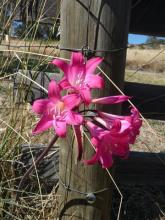
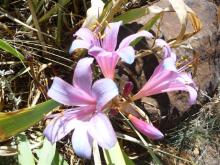
Wed, 02/15/2012 - 12:15amAround the garden this week we have the first of the Belladonnas, Amaryllis belladonna - most likely a hybrid - in a cerise/deep pink form
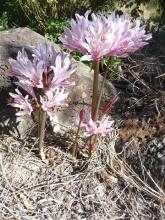
Lycoris sprengeri
and Lycoris incarnata
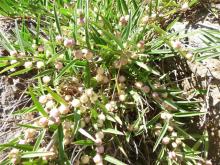
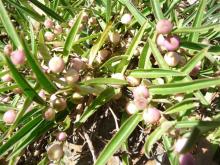
We can't grow Gaultherias but the berries on this Eremophila debilis almost make up for it!
cheers
fermi
Mark McDonough
What do you see on your garden walks? 2012
Wed, 02/15/2012 - 5:51amFermi, you folks down under have some of the coolest plants ever, the fruits on that Eremophila are fetching!!! Never heard of Eremophila, so looked it up, what a suprise, a large and colorful genus (beautiful flowers too), all endemic to Australia. Here are some highlights:
Eremophila, Emu Bush, Poverty Bush or Fuchsia, 215 recognised species, all of which are endemic to Australia.
http://en.wikipedia.org/wiki/Eremophila_(plant)
The genus name Eremophila is derived from the Greek words eremos (desert) and phileo (love), alluding to the species' adaptation to arid environments.
E. subfloccosa
http://www.anbg.gov.au/gnp/interns-2006/eremophila-subfloccosa-pl-700.jpg
Google images:
https://www.google.com/search?q=Eremophila&hl=en&prmd=imvns&source=lnms&tbm=isch&ei=prY7T7fvEuPX0QHHu6S6Cw&sa=X&oi=mode_link&ct=mode&cd=2&sqi=2&ved=0CAwQ_AUoAQ&biw=1340&bih=560
Mark McDonough
What do you see on your garden walks? 2012
Wed, 02/15/2012 - 6:01amI'm one of those people with a particularly good sniffer :) When visiting gardens, I might point out how this or that plant is sweet smelling or aromatic in some way, often a complete surprise to the gardener who has grown the subject plant for years but hadn't yet bothered to check for scent. I guess I'm just a hand's-on and nose-on sort of gardener ;D. I have heard it said that woman have better sense of smell than men, not sure if that's urban legend or has any basis in fact.
But it's the aspect of scent that can actually influence my planting decisions. For example, I planted a clump of Aster pilosus at the base of my deck stair, grows to 4'-5' tall with myriad very late white blooms that waft an enticing scent of vanilla, reminiscent of sugar cookies baking.
http://nargs.org/smf/index.php?topic=159.msg1037#msg1037
Tim Ingram (not verified)
What do you see on your garden walks? 2012
Wed, 02/15/2012 - 11:18amFermi - nice to see those Lycoris flowering. I have a few that originated from Jack Elliott's greenhouse and which I have tried outside; they grow but have very rarely flowered, presumably lacking sufficient summer heat (even though they are against a south wall). I wonder if anyone has tried crossing them with nerines? They do have a wonderful range of colours.
Mark McDonough
What do you see on your garden walks? 2012
Sat, 02/18/2012 - 9:28amNot an impressive display yet, but I believe this is the earliest date in my garden that a crocus has opened a flower, in 25 years that I have been here; Crocus vitellinus showing its first flower on February 18, 2012. Always the first crocus to bloom, but typically not until March. The shiny strap foliage nearby is Sternbergia lutea, foliage always stay evergreen and in good shape through our winters, with or without snow.
Back to my precocious Colchicum kesselringii; the flower on the left is the same one I showed taken 8 days ago, it has narrow pointed petals, the one on the right is a different form with larger flowers and wider rounded petals, just showing up.
The nights have gone down as low at 10 F (-12 C), but these blooms seem unfazed, their early showing from a non-ending succession of very mild winter days, mostly sunny, into the mid 40s F, was 48 F yesterday. Still no snow, this might be a snowless winter, a rarity.
Pages