
[Moderator's note: We have been a bit remiss at splitting this off into a new thread for 2012, but here it is, finally!
Lori]
A mix of things flowering or looking interesting in the garden at the moment. The garden is waking up with hellebores and many bulbs soon to come.
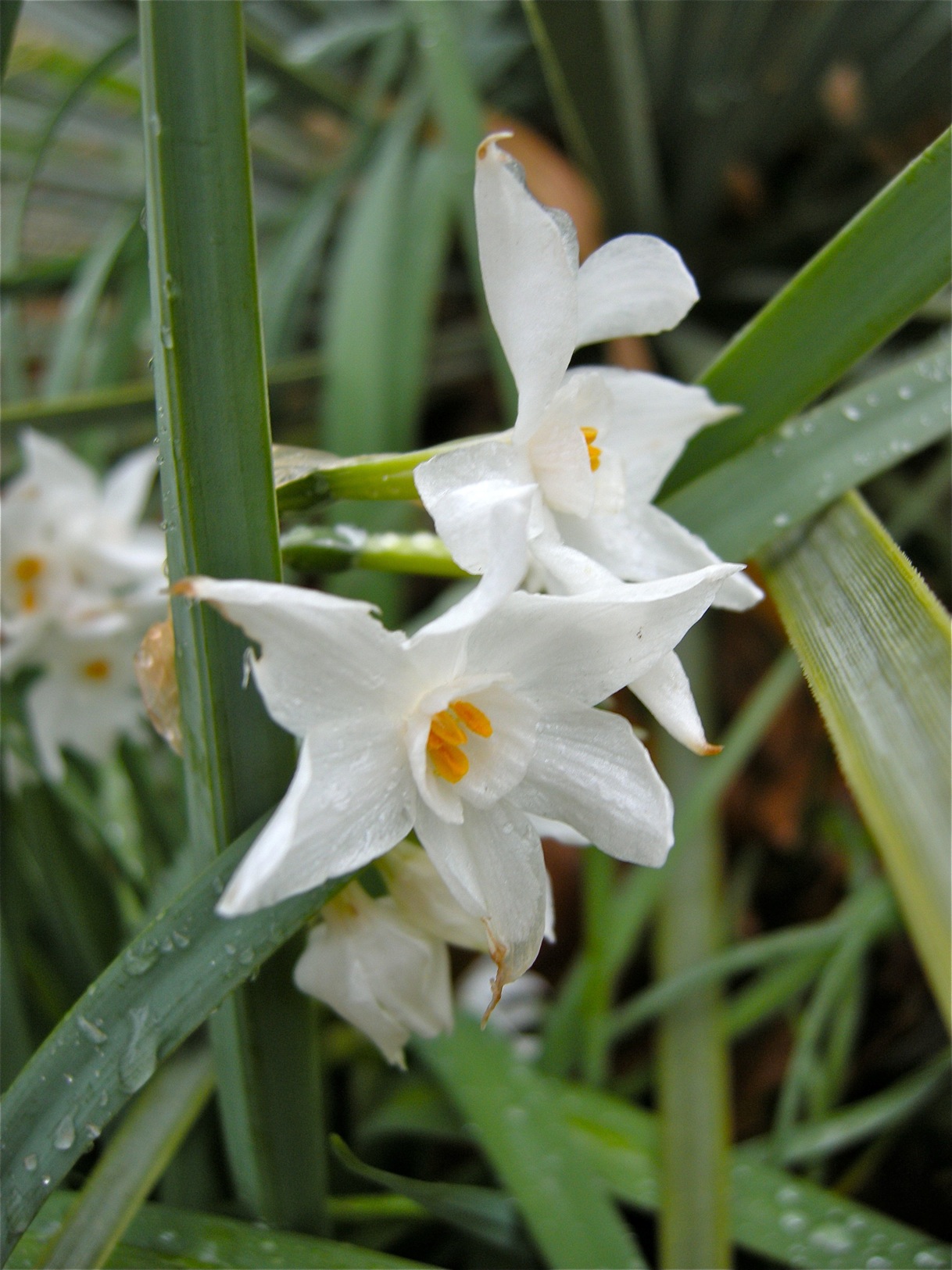
Narcissus panizzianus grown from Archibald seed. The flowers are small but always very early.
Muscari pseudomuscari, ditto. This is a lovely tidy species, growing here with a selection of Cyclamen hederifolium.
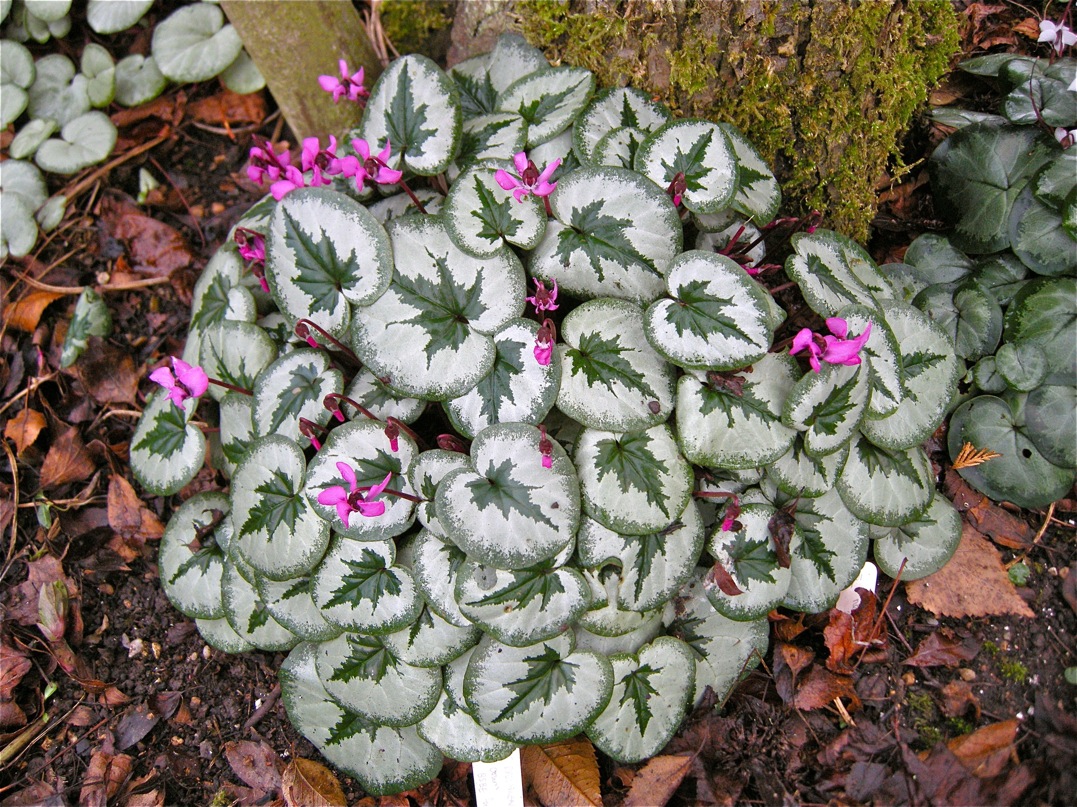
Cyclamen coum. Two forms with very silvered leaves from Tilebarn Nursery.
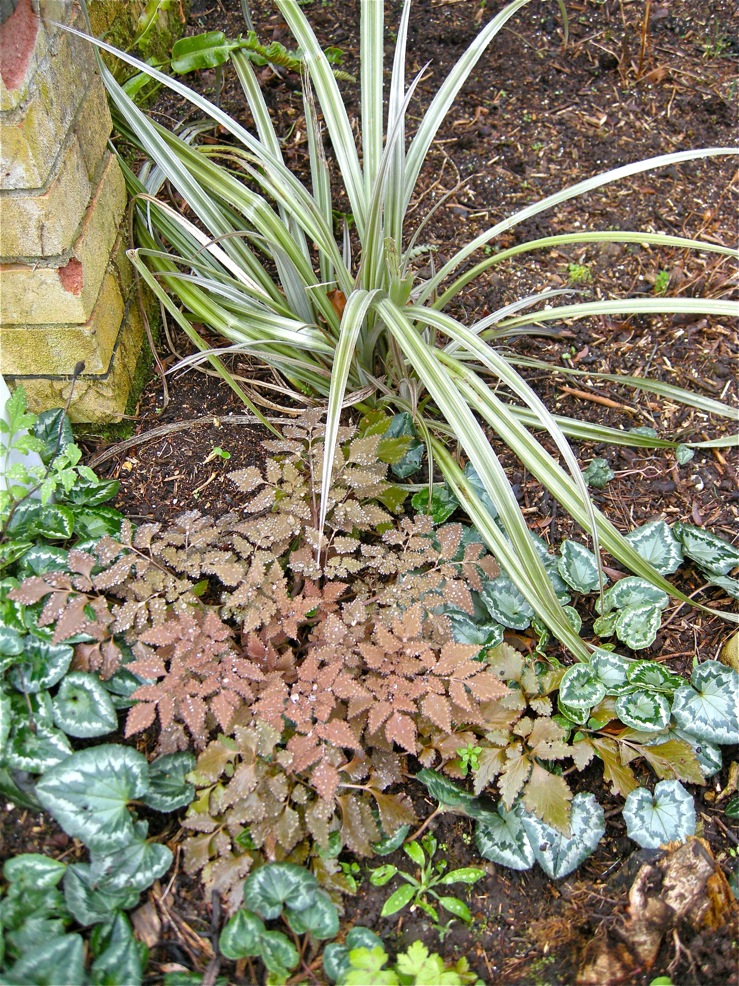
Corydalis quantmeyeriana 'Chocolate Stars' growing with cyclamen and Astelia nervosa. The corydalis is new to me and I haven't yet seen the flowers, but what foliage! I rather like this combination.
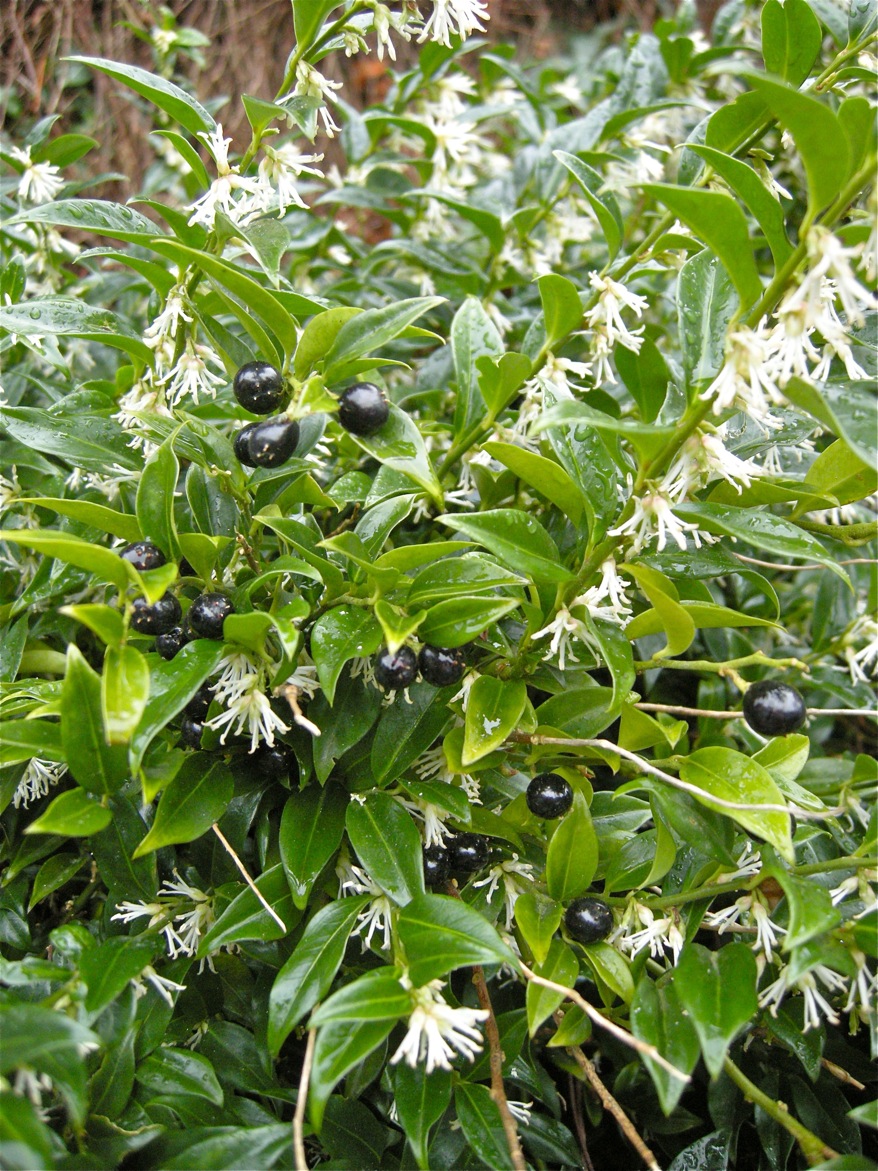
Sarcococca confusa. An unassuming shrub but one of the most delightful and scented winter flowers, and usefully tolerant of dry shade.


Comments
cohan (not verified)
Re: What do you see on your garden walks? 2012
Fri, 04/20/2012 - 11:00amLove the Draba, Lori!
The stone behind the Gentiana looked like running water in the thumbnail, and I thought OMG, your run-off is even worse than mine, I just have trickles! lol Of course I'd love to have a real stream in the garden.....
Trond Hoy
Re: What do you see on your garden walks? 2012
Fri, 04/20/2012 - 11:28amYou definitly grow some gems, all of you!
I went for a walk today visiting some of the wild populations of Hepatica nobilis on the island where I have my summerhouse. The usual blue form dominate in all populations except two. One consists almost completely of red (pink Lori?) flowered specimens and in the other 30-40% are red (and a few white). However, you can find red ones here and there other places too.
cohan (not verified)
Re: What do you see on your garden walks? 2012
Fri, 04/20/2012 - 11:39amThese are great, Trond- love the deep colours and pinks are very nice!
I just saw the first bulb emerging (apart from Cory I saw already a couple of days ago)! Probably a crocus... so far the first and only of the bulbs I planted last fall...lol
Lori S. (not verified)
Re: What do you see on your garden walks? 2012
Fri, 04/20/2012 - 12:26pmIt looks like the same number of stems as last year - 2; more would be nice though, if that's what happens! It's funny that I didn't even plant any F. pallidiflora out there... the bulbs may have been in the roots of a perennial that I moved. If the bulbs had been mixed in with other bulbs being planted, you'd think we would have noticed (from the skunky smell, if not from the different appearance.) The woody stems immediately behind the green shoots are some larger perennial that will emerge later.
Wow, just beautiful, Trond! If I had hepatica like that in my woods (if I had woods :rolleyes:), I don't think I'd even bother growing them in the yard!
Trond Hoy
Re: What do you see on your garden walks? 2012
Fri, 04/20/2012 - 1:58pmWe have no formal yard or garden at our summerhouse but plant a lot of different plants to substitute those that the deer, hares, rodents and sheep devour ;)
It isn't our wood but belongs to the two closest neighbours 500m away. Actually we have some Hepaticas on our property too but they were done for the season.
Here are some examples of what we have planted:
The spent Christmas Hyacinth bulbs flower well for many more years in the field. A Draba which suddenly appeared out of nowhere and an overwintered Delosperma in the "rock garden".
cohan (not verified)
Re: What do you see on your garden walks? 2012
Fri, 04/20/2012 - 11:24pmNice rock garden vignette, Trond! Besides the Delo, and Semp off to the right, what is at the left with small reddish rosettes- Rosularia? and what are the variegated grassy leaves?
Lori S. (not verified)
Re: What do you see on your garden walks? 2012
Sat, 04/21/2012 - 10:28amI agree - very attractive and colourful! Are the striped leaves crocuses?
Lori S. (not verified)
Re: What do you see on your garden walks? 2012
Sat, 04/21/2012 - 11:17amMore assorted crocuses:
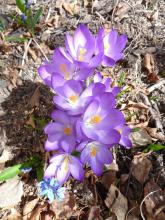
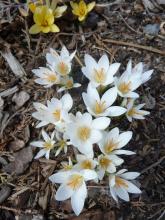
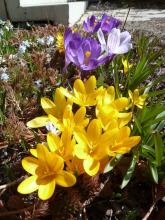
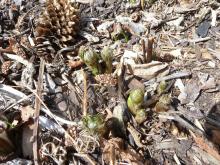
Adonis vernalis emerging:
The first waterlily blooms of the season in the greenhouse, Nymphaea 'Helvola':
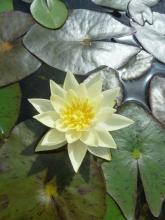
And with a sunny day warming the soil yesterday, I killed the first lily beetle. :P
Tim Ingram (not verified)
Re: What do you see on your garden walks? 2012
Sat, 04/21/2012 - 11:55amSeveral woodland species coming into their own at the moment:-
The Doronicum (caucasicum?) is always a nice surprise early in the season, and here is planted with cyclamen and Corydalis temulifolia 'Chocolate Stars'.
Nearby is another good combination, Tiarella cordifolia and Primula 'Strong Bear' (curious name for a very good deep blue double).
The finest wood anemone in the garden, A. nemorosa 'Allenii'. This is only just beginning to flower and has very large, beautifully soft-blue flowers, though perhaps not best placed under a magnolia that has just finished flowering!
cohan (not verified)
Re: What do you see on your garden walks? 2012
Sat, 04/21/2012 - 8:56pmLori-- lots of nice crocuses! sorry about the lily beetle :(
Several weeks after the winter snow melted from the bed (much of which was quite cool with frequent snow) I finally have a few noses poking (barely) above ground- Crocus and Galanthus, I think.. there was only one yesterday, but a few more today, and with next couple days around 20C, should finally see some progress!
The bad news- looks like maybe vole damage in my older spring bed that has Pulsatilla vulgaris a few bulbs, Muscari etc too soon to say what they have damaged, hopefully not too much....
Tim, more nice plant combinations! That is a nice A nemorosa :)
Trond Hoy
Re: What do you see on your garden walks? 2012
Sat, 04/21/2012 - 11:29pmThanks, Cohan ;)
The variegated grassy leaves are some Crocus as Lori suggests and the rosettes are Rosularia sedoides:
Trond Hoy
Re: What do you see on your garden walks? 2012
Sat, 04/21/2012 - 11:42pmLori, I tried once to grow waterlilies but didn't make it as the container was to small. How big are yours?
I have dreamt of growing such magnificent plants ever since I saw my first "nøkkerose" as a little kid.
Both in Norway and Sweden grow the red-flowered waterlily wild in several lakes and tarns:
From this site: http://friluftsrad.iis01.daldata.net/dalane/default.asp?WCI=ViewNews&WCE...
cohan (not verified)
Re: What do you see on your garden walks? 2012
Sat, 04/21/2012 - 11:57pmThanks, Trond- nice Rosularia! I did think after I typed that they could be Crocus.. mine are about 1cm tall so far....lol
Nice waterlily.. we have a wild one around here too, its yellow.. I don't see it much though,(and not close) since it is in quite inaccessible places here- in (presumably) deep water preceded by sometimes large areas of slough/bog, water, mud etc.. best chance is if a road or trail cuts through those areas and gets you nearer to the deep water..
Tim Ingram (not verified)
Re: What do you see on your garden walks? 2012
Sun, 04/22/2012 - 12:11amThat somehow seems quite a surprise to see waterlilies like that; I've only seen them in gardens. Interesting website with fine scenery - what are the rock drawings that are shown?
Trond Hoy
Re: What do you see on your garden walks? 2012
Sun, 04/22/2012 - 12:22amThe rock drawings are possibly depicted boats (and a foot print) with people on board from the bronze age - about 3000-4000 years ago.
http://www.fornminner.no/AmS/08-bo-i-sokndal/bo-i%20sokndal.htm
Trond Hoy
Re: What do you see on your garden walks? 2012
Sun, 04/22/2012 - 12:39amThe other place isn't very far in distance from where I live but I've never walked there (have to take a ferry and drive for a couple of hours ;)
I had a nice walk on another island when I was at my summerhouse yesterday (I drove home in the evening). Had to take my small boat though to get there but the weather was calm and sunny.
At the beach the very common scurvy-grass (Cochlearia officinalis) was in full flower. However, as I don't have scurvy I didn't eat any ;) Here and there the wild gooseberry (Ribes uva-crispa) also bloomed.
However my camera is damaged and it is difficult to take pictures - they're not sharp always.
The common windflower covers the floor of the deciduous woods. Here and there some other plants find footholds like the yellow star of Bethlehem (Gagea lutea, in Norw "gullstjerne" = gold star) and cowslip (Primula veris). Later the cowslip will dominate in more open situations.
Trond Hoy
Re: What do you see on your garden walks? 2012
Sun, 04/22/2012 - 12:52amI was early and the flowers still hang down waiting for the chill night air to warm up and the night haze to disappear.
Most of the plants have white flowers but quite a few have some pink in them particularly on the reverse of the sepals. Some get darker as they get older. Some of the flowers are quite large too.
Lina Hesseling (not verified)
Re: What do you see on your garden walks? 2012
Sun, 04/22/2012 - 1:59amHoy, this is so lovely to see!
I would like to take a walk there.
Thank you for taking us with you.
Lina.
gerrit (not verified)
Re: What do you see on your garden walks? 2012
Sun, 04/22/2012 - 3:14amBeautiful pictures Hoy. The morninglight through the leaves in the wood, perfectly catched in your (damaged) camera.
Lori S. (not verified)
Re: What do you see on your garden walks? 2012
Sun, 04/22/2012 - 8:51amThat would be spatterdock, Nuphar variegatum. There is a true water lily also, Nymphaea tetragona, which has white flowers, but I've yet to see it!
Anne Spiegel
Re: What do you see on your garden walks? 2012
Sun, 04/22/2012 - 9:28amLovely pictures, Hoy. You are very artistic with the camera.
Everything here is way ahead of schedule (at least 3-4 weeks). My garden in open for the Garden Conservancy May 5th and It will be interesting to see what's in bloom then - not a typical spring following a non-winter. The rhododendron is R.'Aglo', hardy here and unusual this year because the deer left it alone. There is usually bloom only on the top which they can't reach.
Trond Hoy
Re: What do you see on your garden walks? 2012
Sun, 04/22/2012 - 1:36pmWe have 3 species of the white Nymphaea (or subspecies some say) which of one have red forms too; and 2 species of the yellow Nuphar. Some of the species are rather common. I have picked them several times in my youth but they're difficult to put in a vase!
Trond Hoy
Re: What do you see on your garden walks? 2012
Sun, 04/22/2012 - 1:39pmThanks a lot! But my camera is damaged, I swear! The lens is bad and the electronics do what it want without listening to me!
Tim Ingram (not verified)
Re: What do you see on your garden walks? 2012
Sun, 04/22/2012 - 2:02pmTrond - it is amazing how Anemone nemorosa grows with hardly anything else flowering at the same time. In Blean woods near us (and Canterbury) it grows just like your pictures, but in other places under coppice it is mixed with bluebells and celandine. Very wonderful to see it en masse as in your photos.
cohan (not verified)
Re: What do you see on your garden walks? 2012
Sun, 04/22/2012 - 2:43pmGreat stuff!
Trond, the seashore plants are nice, but the Anemone woods are especially lovely :) As Tim mentions, it always fascinates me to see such solid growth of anything, pretty much unheard of here.. the pinkish ones are especially nice...
Anne- love the Hymenoxys, and the view of the Rhodo with the lovely stone house behind is really nice :)
Lori, I don't think I've seen the white waterlily either, though I was happy to see the native water arum once (Calla? too lazy to look it up right now...lol)
externmed (not verified)
Re: What do you see on your garden walks? 2012
Sun, 04/22/2012 - 8:59pmExtremely dry and warm spring. Now 3 to 4 inches of rain and possibly a low of 30F next Monday.
Charles, NE Massachusetts USA Z 6a +/-
cohan (not verified)
Re: What do you see on your garden walks? 2012
Sun, 04/22/2012 - 10:46pmGreat Pediocactus! My favourite genus of hardy cacti :)
Love the yellow tulip too :)
Just heard about that storm going through the east- hope you get some good moisture with no damage..
Its turned opposite here- into the low to mid 20'sC the last couple of days and tomorrow (31C forecast for Medicine Hat in southern Alberta) but then temps will drop back to more normal low teens C..
We now have that interesting spring phenomenon- we still have sizeable snow banks on parts of the property, summer temperatures, and mosquitoes!
Todd Boland
Re: What do you see on your garden walks? 2012
Mon, 04/23/2012 - 3:08amTrond, your meadows of Anemone are wonderful! Mine are about 5 cm high at the moment. Our Cochlearia will not flower until June.
Charles, to grow cacti outside is the stuff of dreams in my area.
We just had another spell of wonderful sunny, warm weather but now it is just 2 C and suppose to stay under 10 C the rest of the week...plus rian, drizzle and fog! The alpines will be on hold for a while.
externmed (not verified)
Re: What do you see on your garden walks? 2012
Mon, 04/23/2012 - 3:32pmCohan, Todd thanks for your comments. Have about 7 species of barrel cacti, every winter I hold my breath, but so far they have come through. Way back when, I angled a sash over a trough for the winter against a south wall; but I've gotten lazy and they're on their own. They're in at least 20 inches of sand mix above grade and against a free standing brick wall. I kept finding different sources of sand so it's a bit of an archiological site. I'm moving toward 90% sand with some limestone gravel (and some dirt), but I haven't gotten there yet.
Many of my cacti came from Beaver Creek in BC. Penstemons and Astragalus/ Oxytropis seem to have settled in too, at least the ones that lived long enough for me to plant them. Lewisia rediviva has 2 buds. I planted one under a stone and one in the open, the stones get infested with ants, so the one in the open is better.
Charles MA USA 6a
Richard T. Rodich
Re: What do you see on your garden walks? 2012
Mon, 04/23/2012 - 7:05pmAn update on the Leibnitzia anandria from here:
http://nargs.org/smf/index.php?topic=934.msg16283#msg16283
and the follow up message two down on that page.
~~~~Pollination did occur. When the petals withered, all that was left was the green calyx(or bracts). Today I noticed these protruding purple appendages. I am not sure what exactly they are, but they weren't there before! Only one flower was not pollinated (I asssume). It's the dried up stem at the lower right in the first photo.
Lori S. (not verified)
Re: What do you see on your garden walks? 2012
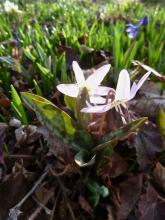
Mon, 04/23/2012 - 7:59pmI looked for the leaves of Erythronium dens-canis several times on the weekend and saw nothing... today, I come home and not only are the leaves up but this one's in bloom! :o (Sheesh, am I that unobservant?!?)
cohan (not verified)
Re: What do you see on your garden walks? 2012
Tue, 04/24/2012 - 11:27amThey look cool at that stage, Rick! I like the plant, makes me think of mini Petasites...
Lori- just missed it, or were they that fast in the warm weather? Seems too fast, though...lol
Trond Hoy
Re: What do you see on your garden walks? 2012
Wed, 04/25/2012 - 3:30amI am still only dreaming of growing cacti in the open garden! Or to be more precise, I have planted 2-3 different taxa (just one pad of each) outside at my summerhouse now ;) - but they still have to face a winter there before I can relax a little.
Anne Spiegel
Re: What do you see on your garden walks? 2012
Wed, 04/25/2012 - 6:21amOur much needed rain blasted the flowers on Paeonia tenuifolia before I got around to photgraphing it but Paeonia mlokosewitschii made it through OK. This has the added attraction of fire-red seed heads in the fall. You can see them from quite a distance.
Tim Ingram (not verified)
Re: What do you see on your garden walks? 2012
Wed, 04/25/2012 - 8:48amCharles - really interesting that you grow those cacti in such deep sand and are also trying astragalus and oxytropis. So far I haven't done too well with these but would love to grow more of them successfully. I think Anne also mentioned that her sand beds were very deep. Probably I haven't made them on a big enough scale. The Veronica (bombycina?) is a super plant.
externmed (not verified)
Re: What do you see on your garden walks? 2012
Wed, 04/25/2012 - 4:24pmWonderful specimen in great form. Hopefully it exceeds it's reputation of flowering for a week and looking at it's best for 4 hours.
....but then, how many other cherished plants might deserve that reputation?
Charles MA USA
Anne Spiegel
Re: What do you see on your garden walks? 2012
Thu, 04/26/2012 - 10:05amI think quite a few plants deserve that reputation but not this one. It blooms two weeks or longer with new buds opening all the time. The big deal is that the foliage survives a heavy rain, unlike Paeonia tenuifolia, which really is fleeting unless the weather is perfectly to its liking.
Todd Boland
Re: What do you see on your garden walks? 2012
Thu, 04/26/2012 - 4:53pmStunning peony Anne!
You are almost caught up to me Lori....my E. dens-canis is almost past.
Erythronium sibericum is my favourite species...I grew this from seed. Only one germinated and it is not spreading yet. I hope it does!
Anne Spiegel
Re: What do you see on your garden walks? 2012
Thu, 04/26/2012 - 8:55pmTodd, that's a beauty. Hope it spreads soon.
Trond Hoy
Re: What do you see on your garden walks? 2012
Fri, 04/27/2012 - 12:34pmSeems you all soon are ahead of me :-\ Although the weather hasn't been too bad it has been very cool and almost a standstill for plants. No Erythronium, peony or Trillium have opened yet although they have been ready for weeks.
I don't need rain, I need sun and warm weather!
Lori S. (not verified)
Re: What do you see on your garden walks? 2012
Sat, 04/28/2012 - 3:23pmBeautiful sights in everyone's gardens!
Some sunshine today has brought out the flowers...
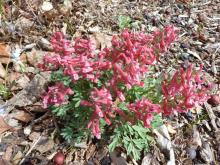
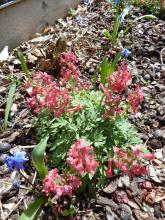
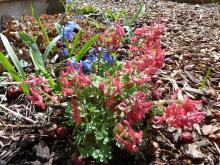
Corydalis solida 'George Baker', 3 plants bought last year:
Jeffersonia dubia:
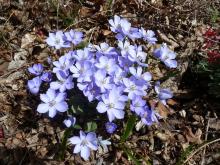
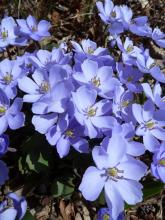
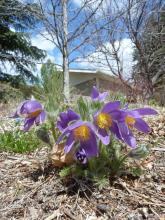
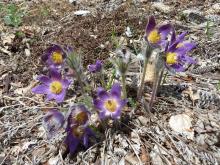
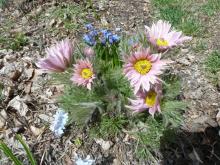
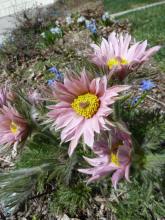
Pulsatilla vulgaris (x2), and P. vulgaris 'Papageno' (x2):
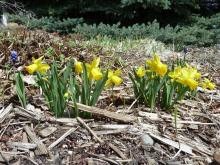
Narcissus 'Tete-a-tete':
cohan (not verified)
Re: What do you see on your garden walks? 2012
Sun, 04/29/2012 - 1:08pmLots of colour, Lori- your Jeffersonia is looking great!
Richard T. Rodich
Re: What do you see on your garden walks? 2012
Sun, 04/29/2012 - 7:22pmLori, the Jeffersonia dubia flower color and petal shape are superb!
(As is everything. :D)
------------------------------------
After our April Chapter meeting yesterday, I went with another member to visit Dick and Shirley's garden (also members). I've posted pics from their garden before, and it's very memorable. A few photos I took on this cold, drizzly day:
Anemone nemerosa 'Vestal' and Antennaria 'Silver Edge'
Virginia Bluebells (Mertensia virginica) happily thrive seemingly anywhere in the garden.
An unexpected treat, Buciniczia cabulica actually overwintered during this extremely mild and practically snowless winter. I never knew (but why would I?) that it was such an early bloomer: it already has a flower stalk!
I am a little partial to Tulipa sylvestris: bent over a little more than normal because of the rain, I think, it reminds me of my avatar. ;D
Part of their sand bed, and a lovely, fragrant Daphne caucasica var. rosea
Thlaspi praecox is ornamental in both flower and in seed:
cohan (not verified)
Re: What do you see on your garden walks? 2012
Sun, 04/29/2012 - 10:36pmLovely garden visit, Rick! This Thlaspi actually looks something like the only one we have here (the weed) ;D --I know this one is smaller and cuter with bigger flowers, though the one I saw blooming a week or more back was actually very tiny..lol
That reminds me that the greenest patch so far on my sparsely planted new rock planting from last fall is Taraxacum- even though its pseudo-roseum..lol
Trond Hoy
Re: What do you see on your garden walks? 2012
Mon, 04/30/2012 - 2:01amI join the chorus!
Lori, your Jeffersonia is awesome!
As is the garden you visited Rick. I am particularly jealous on those Virgina bluebells. I have had several attempts to establish that species but the slugs always make a feast on them.
The lesser celandine (Ranunculus ficaria) is one of the commoner "weeds" in the garden. The gastropods don't like it! I have a pale yellow and a doubleflowered too.
Cardamine heptaphylla and Waldsteinia ternata are also let alone by the slugs.
externmed (not verified)
Re: What do you see on your garden walks? 2012
Mon, 04/30/2012 - 5:00pmEnjoying everyones garden shots.
A few more: Fritillaria pallida, Asperula (gussonii or pontica), Dracocephalum imberbe, Lamium garganicum, Houstonia caerulea, and Delosperma (? sp. Reznicek).
The Dracocephalum and the Lamium move about in the sand bed, never staying in place for more than a couple of years. Houstonia grows here in barren clay soil or barren sandy clay soil, but this large bun was a commercial plant -- generally in the wild the plants without flowers are about an inch across and not much more than 1/4 inch high
Charles, Massachusetts USA z 6a, 40+ inches rain
cohan (not verified)
Re: What do you see on your garden walks? 2012
Mon, 04/30/2012 - 11:33pmCharles, some really choice selections!
Trond- I like your weeds! I wonder if R ficaria is hardy and/or weedy here? the mix of yellow and white is nice...
Tim Ingram (not verified)
Re: What do you see on your garden walks? 2012
Tue, 05/01/2012 - 1:42amI'm with Trond on those mertensias - what a sight! I only have one plant in my garden which has never increased. Something about those blues.
Anne Spiegel
Re: What do you see on your garden walks? 2012
Tue, 05/01/2012 - 7:27amThe genistas are coming into bloom now, one of my favorite times in the early garden. They have an affinity for stone. This one is blooming in the lower crevice garden and has formed a waterfall. The second picture is a general view of the lower crevice garden.
Anne Spiegel
Re: What do you see on your garden walks? 2012
Tue, 05/01/2012 - 7:29amDon't know what happened to the pictures, I'll try again.
Pages