Looking back over the 2011 thread is very stimulating. We sowed quite a bit of home collected seed last autumn and this is mostly outside in a cold frame; germination probably won't occur for a couple of months, though our mlld winter so far may not be sufficient to provide the stratification that is necessary for some plants. I am now going through seed from Alplains, Holubec and other collectors, and the seed exchanges to divide it into groups requiring different conditions. Quite a bit will go into the fridge after sowing for 6 to 8 weeks. We have sown other seed that needs no cold treatment in a propagator in the greenhouse but the lower light levels in the winter do lead to etiolation in some species (though not all). Great way of spending a winter's day...

Seed starting chronicles 2012
Forums:
Comments
Tim Ingram (not verified)
Re: Seed starting chronicles 2012
Mon, 03/19/2012 - 4:19amOh what dreams are made of if you could grow the Anarthrophyllum! I did try this once from John Watson's seed, but like a lot of South Americans the seedlings became very drawn and out of character (I think you need to put a UV lamp over it!). I am really attracted, like Anne Spiegel, by dwarf legumes, and the adesmias are another group that would be exciting to grow. There are also some excellent South American lupins and one we grew back in the 1990's was L. oreophilus, which I have seen again recently on the Chile Flora site. This grew well in the garden but like most lupins (well all) was relatively short lived. Unfortunately I only have slides from the dark ages of film!
Mark McDonough
Re: Seed starting chronicles 2012
Mon, 03/19/2012 - 8:47pmI once germinated Anarthrophyllum desideratum, a single seedling that lasted about 1 month, huzzah. Lori, I hope you have better success than I, one of the more amazing plants on this earth.
Richard T. Rodich
Re: Seed starting chronicles 2012
Thu, 03/22/2012 - 3:35amGlobularia trichosantha - uniformly germinated in 9 days at room temperature. This was my third try with this species, each from a different source. The first two times (other years) they were winter sowed without any success. They might have been bad seed, I suppose, but more likely rotted over the winter. These first two batches were seed lightly pressed into the soil surface, then covered with #2 granite grit. In the third try with the same soil mix, seed was sown on a bed of #1 granite grit, and covered with the #2 grit, and put directly into 68-70F temperature (not winter sown).
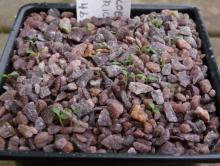
I received Eranthis hymenalis seed from Wim last year. He sent me some in moist packing and some dry seed in May, so the dry seed couldn't have dried that long, I would think. They were promptly planted 11 May 2011 in pots and left outside. With the crazily warm temps here (a week of 70-79F days and 55-60F nights) both lots came up simultaneously 16 March 2012.
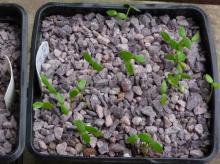
Oxytropis nana - germinated at room temperature in 2 days after scarification and 2 hour soak. It was quite amazing how quickly they absorbed water. In the 2 hours it seemed like they doubled in size, but in reality they increased in size by about 50%.
I did a second trial at room temperature with an equal number of seed from the same batch (NARGS Seed Ex seed wild collected in Wyoming) unscarified and not soaked. One seed emerged in 35 days, so far.
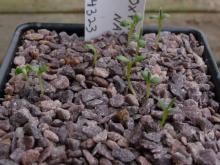
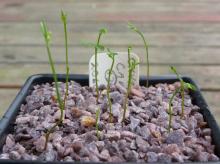
I am a bit puzzled by this one: it's supposed to be Oxytropis campestris. Scarified, and germinated in 7 days at room temperature. It looks like a monocot to me. Oxytropis is a dicot. Any ideas?
Trond Hoy
Re: Seed starting chronicles 2012
Thu, 03/22/2012 - 4:41amRick, it is a dicot and a Fabaceae. The pea (cotyledons) often remains in the soil. But I can't tell if it is an Oxytropis ;)
Mark McDonough
Re: Seed starting chronicles 2012
Sun, 03/25/2012 - 7:59amRick, I agree with Trond, it does look like a Fabaceae to me, almost Lathyrus-like, but some Oxytropes and Astragali have upright growth, such as O. campestris, so it might be right. Here's a photo, its a lovely locoweed.
http://www.em.ca/garden/native/nat_oxytropis_campestris.html
We too have had a full week of record breaking warm weather 75 F - 83 F resulting in a sudden explosion of rapid plant growth and flowering, full bore flowering of Magnolias, cherries, daffodils, everything! Seed flats that I leave out all winter are bursting with germination, flats of Jeffersonia dubia and diphylla coming up so thick that the soil and mulch top dressing lifts up like a lid. First time ever getting good germination on Anemonopsis, very happy about that. Epimedium seed coming up thickly too, both those that I've sown, and innumerable self-sown ones out in the garden.
But as expected with such mild winter weather overall, followed by a heat wave of sorts, cold is returning with a deep freeze predicted for tomorrow night, 19 F (-7 C), followed by several more nights of hard freezing. I'm not sure how the seedlings will withstand a sudden drop to 19 F, so I'm not taking chances with my flats and brought them indoors for a few days until temperatures moderate, I don't want to risk the bonanza of Anemonopsis, Jeffersonia, and Epimedium seedlings.
Lori S. (not verified)
Re: Seed starting chronicles 2012
Sun, 03/25/2012 - 10:06amUpdates:
Thlaspi bellidifolium; Microula tibetica ssp. pratensis; Rheum delavayi; Acantholimon saxifragiforme; Fumana procumbens:
Smelowskia calycina; Trachelium rumelian
cum; Achillea gypsicola; Ebenus pisidica; Cancrinia tianshanica:Lori S. (not verified)
Re: Seed starting chronicles 2012
Sun, 03/25/2012 - 10:12amMore updates:
Marrubium lutescens; Anaphalis cf. monocephala (a couple of these are producing flower buds!); Leontopodium cf. pusilum; Sideritis clandestina; Plantago urvillei:
Saussurea nupuripoensis; Tibetia tongolensis; Amorpha canescens; Leontopodium muscoideum; Achillea holosericea:
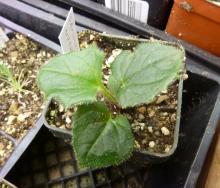
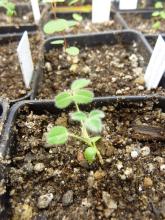
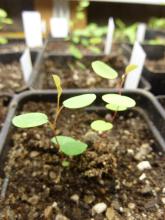
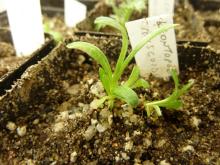
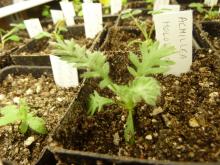
Some photos:
Achillea holosericea:
http://www.greekmountainflora.info/Timfristos/slides/Achillea%20holoseri...
Leontopodium pusilum:
http://botany.si.edu/tibet/photo_gallery.cfm?start=80
Tibetia tongolensis:
http://www.jansalpines.com/gallery/main.php?g2_itemId=13924
Plantago urvillei:
http://www.flora.crimea.ua/podorognik/Plantago-urvillei.jpg
Trond Hoy
Re: Seed starting chronicles 2012
Sun, 03/25/2012 - 10:54amLori, what do you give your speedy seedlings?
They're out of the diapers in no time :o
Lori S. (not verified)
Re: Seed starting chronicles 2012
Sun, 03/25/2012 - 11:11amWell, nothing but fast-draining soil, really. I've only given them a bit of fertilizer in the water once recently for the first time.
We'll be getting ready to put them on the cart to start spending their days outdoors soon (wheeled into the garage at night)... I'm out of room inside here now, so planting more seedlings into individual pots will depend on creating more room this way!
I shouldn't keep so many seedlings of each kind I guess, but I hate to kill them, despite that I know I'll end up giving lots away (or perhaps I should admit to forcing them on people ;) ) just to get rid of them... wish I could send you all some! I do try to flog them at the local rock garden society spring plant sale, but it seems that most people are extremely unlikely to even consider trying an unfamiliar species. (I'm the opposite, evidently!)
Amy Olmsted
Re: Seed starting chronicles 2012
Sun, 03/25/2012 - 11:26amLori...You do grow some obscure (well to me they are) species! ??? Loads of which I have never heard of. But you are doing an amazing job of germinating and growing on!
Richard T. Rodich
Re: Seed starting chronicles 2012
Sun, 03/25/2012 - 12:17pmWhat a perfect description! I would imagine that the good lighting helps a lot, too. The flowering anaphalis is wonderful surprise! Lori, how many hours a day are your lights on?
Every year in our Chapter newsletter, I always write in my plant sales article: "We encourage all contributors to clearly print plant names (botanical and common) and cultural information on the label. Putting your own name on the tag is an added bonus. We all like to know who grew our newly purchased plants (and who we might ask for additional plant information)." Although I always have people asking me for more information about my donate plants, few actual take my advice of put their own names on their own donated plants. I am at a loss of how to get people to do this. Any ideas?
Another thing that works very well to sell unfamiliar plants, is write an article about them in a prior Chapter newsletter. I think the best one I ever wrote was on Phyteuma (with pics, of course). I still have people asking me, years later, if I will be bringing any. The good thing is that someone is now also growing them from seed, and donating to the sale. But she won't put her name on them!
Lori S. (not verified)
Re: Seed starting chronicles 2012
Sun, 03/25/2012 - 2:51pmYes, that certainly is a fine turn of phrase! ;D Rick, the lights are on for 16 1/2 hours per day, set on a timer. There are 2 or 3 4-foot long fluorescent shop lights suspended on chains over each shelf; each shop light contains 2 bulbs of 40 watts each.
Thank you, Amy. The seeds are really doing it all themselves - I've just been providing the grunt work of planting, watering, and potting on. I've been mostly showing the easy ones, needless to say - I will bomb out totally with many species that are not inclined to germinate so readily, or that may need different conditions than what I can offer (e.g. cool growing conditions, perhaps?)
Rick, how about publishing a list in the local club report of who sold what, for later reference?
The president of the local rock gardening club has proposed that members who flog plants at the spring sale prepare slide shows for the upcoming May meeting, to show people what the plant will look like, and to talk about their experience at growing it. I will be doing this, for some of the species I grew a couple of years ago, that I am now growing more of with the hopes of dispersing at the sale. (Of course, that doesn't help with the totally unfamiliar things I'm growing and have no prior experience with... and yet hope to disperse! Actually, I often wonder why I am doing any of this... just want to get rid of excess plants, I guess.)
cohan (not verified)
Re: Seed starting chronicles 2012
Wed, 03/28/2012 - 10:50pmI have a dilemma- I have a number of seeds (received in winter, and I wasn`t organised to get them sown soon enough to give warm indoors and then cold outside) considered short lived and requiring warm/cold/warm germination... what should I do with them? I do not have a fridge I can put them in, so my only options for sowing are indoors now, warm or cool, followed by summer outside etc, or put them outside now (where there will be frost till the end of May, presumably.. and days warm to chilly depending on weather and siting)..
I don't remember everything there is to sow in this category, Aconitum and Dicentra, maybe Corydalis.. maybe others...
Richard T. Rodich
Re: Seed starting chronicles 2012
Thu, 03/29/2012 - 6:01amI grew Corydalis wilsonii from seed in 2010, was planning on a warm/cold/warm treatment, and they came up in the first warm conditioning. Plants don't survive zone 4 winters, but apparently the seed does better. Just a couple days ago I spied a seedling emerging from warm/cold/warm (summer/winter in garage/spring). The pot probably only reached a 10F(-12C) low. Also, remember our zone 4 spring is a month ahead this year.
Fermi de Sousa
Re: Seed starting chronicles 2012
Thu, 03/29/2012 - 10:54pmRick,
at our AGS Vic Group we have an annual plant swap known as "The Bunfight" because the original ones used to be a bit of a shemozzle. We ask for donors to put their initials on the back of the label so that we can identify the plants that way. It's less time consuming than writing their whole name and we now get quite a high compliance. I always like to acknowledge people from whom I've received something which has gone on to be a star in the garden.
cheers
fermi
Lori S. (not verified)
Re: Seed starting chronicles 2012
Sat, 03/31/2012 - 8:17amUpdates and recent germinations:
Androsace bisulca v. brahmaputrae - seeds from Holubec (collected: China, Gyamda, Tibet, 3700m, mountain grassland, unique plant, rounded cushions, 3-8cm wide, 1-2cm rosettes, large rose-red flws on 2-4cm long stems, 2010. Also China Zhoka, Tibet, 3500m, rock terraces, 2010); started germinating in the cold, after 33 days in the cold room; now at 5 weeks from germ.
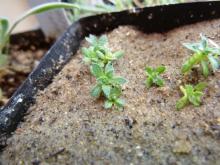
Campanula ptarmicifolia - seeds from Pavelka (collected: 2500m, Sipikor Dag, Turkey; dense tufts or compact cushions; narrow spathulate leaves, erect stems 10-25cm, blue flowers in spike, 2008 seed); germ. in the cold after 5 weeks:
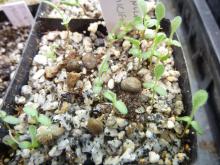
Helichrysum noeanum - seeds from Pavelka (collected: 1600m, Sivas, Turkey; dense cushions woody at base, strongly white lanate lvs, yellowflws, 10-15cm, gypsum hills, 2010 seed); germ. in 10 days at room temp; now at 5 weeks from germ:
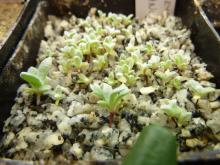
Dryas integrifolia - locally wild-collected; germ in 5 days at room temp:
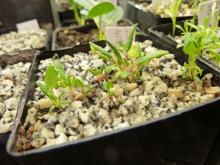
Gentiana straminea - treated with GA-3 (I meant to leave these in the solution of a tiny bit of GA-3 in a few drops of water overnight but forgot and left them 3 nights); germinated in ~7 days at room temp.; now at 6 weeks after germ.
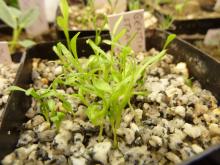
Penstemon pumilus - seeds from Alplains (collected: Idaho); germ started in the cold after 4 weeks:
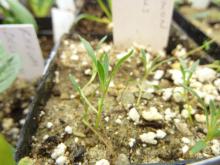
Dianthus scardicus - seeds from Pavelka (collected: 2200m, Sar Planina, Macedonia; dwarf cushions, glacuous lvs, almost stemless solitary pink flws, cold stoney slopes, rare and good); germ. in 1 month at room temp:
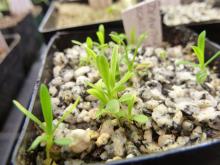
Schier (not verified)
Re: Seed starting chronicles 2012
Sat, 03/31/2012 - 8:45amCohan, I usually end up with a bunch of these too, I'm always disgusted with myself that this happens but it does! Anyway, I normally end up putting them outside, and if it's something I really want badly, I may try a few seeds indoors in the warm as well.
I don't have a dedicated fridge I can use either, just a few spots way in the back of always in use fridge for maybe 3 - 4 small pots that I have to watch like a hawk that no one tips them over! So, outside they go.
Mark McDonough
Re: Seed starting chronicles 2012
Sat, 03/31/2012 - 11:43amLori, I keep wondering where you are going to put all those new treasures ;) Seeing all of these plants at the early germination stage, with first leaves, is most educational, a resource unto itself.
Not knowing much about Anemonopsis macrophylla, I've been frustrated by the fact I never get any seedlings in the garden, even when I help things along by scratching in the seed out in the garden around the mother plant, which has proved so effective for many other plants I do this with. Last summer when the seed was ready, I harvested some of it and sowed the seed in a flat, top dressed with decomposed pink bark mulch, keep in shade and just moist for summer and fall, and left outside all winter, and I'm so pleased to finally have a fine crop of seedlings coming up. Now, only 4-5 years until full sized :o
Googling this plant, I'm surprised by the wikipedia link that says "As with many other members of the Ranunculaceae, seedlings of Anemonopsis form only cotyledons in their first season; the first true leaves form the year after germination". I wasn't aware of that. Can anyone comment, is it true that's all I'll get this year is pairs of cotyledons and no true leaves?
http://en.wikipedia.org/wiki/Anemonopsis
Mark McDonough
Re: Seed starting chronicles 2012
Sat, 03/31/2012 - 12:22pmTwo years ago I received a lots of fresh Trillium seed in mid-late summer, over 20 different varieties. I expanded some of my beds outdoors with the purpose of sowing all the seed outside directly in the garden. I was hoping, since the seed was fresh, that I could get accelerated seed germination the first year (hypogeal germination, followed by true cotyledon germination) all in one season, which can happen. The following spring I got only a few seedlings, out of an estimated 2000-2500 seeds sown.
This year is the 2nd spring for the sown trillium seed, thankfully many are now showing good germination. The following photo (sorry, not very good quality) shows a view where I marked the location for seed sown of Trillium pusillum v. alabamicum. There is one bigger leaf, it appeared the first spring. But looking closely, there are about 20 fresh seedlings appearing. Will probably need to wait another 4-5 years before flowering.
Amy Olmsted
Re: Seed starting chronicles 2012
Sat, 03/31/2012 - 1:50pmMark...I sowed seed from my plants 2 years ago, and I can say for sure that now in this second year is when I am seeing true leaves on them. Now if the red squirrels & chipmunck would leave the pots alone I'll be all set with many plants in a few years time!
Mark McDonough
Re: Seed starting chronicles 2012
Sat, 03/31/2012 - 5:16pmThanks Amy, then 2 years it is to see true leaves on Anemonopsis, they sure are slow!
May I recommend buying some "hardware cloth", typically available in hardware stores, sold by the foot or yard on rolls, as much as wanted. Then with standard wire snips (also at the hardware store), I cut pieces of the wire mesh to cover my pots, turned down at the sides to hold the mesh in place. When seeds germinate, the mesh can be easily bent to give some height to the covering to give seedlings some room and not have leaves pop up through the mesh and expand the leaves, making for a tricky situation removing the mesh eventually and no ripping the leaves off. It works well, even if the mesh is formed into a loose arch over the pots, so far squirrels and chipmunks leave such protected pots alone.
I no longer get great angst over incessant diggings of these varmints in my pots since I started using wire protection. The wire covers can of course be re-used over and over.
Trond Hoy
Re: Seed starting chronicles 2012
Sun, 04/01/2012 - 12:08amMark, do you have a picture of your "hardware cloth"? Don't know whether something like that exists here.
Tim Ingram (not verified)
Re: Seed starting chronicles 2012
Sun, 04/01/2012 - 4:47amA few more things germinating - here Eriogonum ovalifolium, Lomatium californicum and three Asclepias, hallii, latifolia and asperula (from Alplains), which I am particularly excited by if I can grow them on to flowering. These were all sown and kept in the fridge for 6 weeks before bringing out into the greenhouse. All this propagating is beginning to bear fruit as we fill the greenhouses with young plants on the nursery. And finally a lovely surprise in the garden, a mass of Trillium rivale seedlings next to the parent plants. For many years I only had one clone and never got seed set, but have planted several plants from different sources together. However, I didn't expect such largesse!
Lori S. (not verified)
Re: Seed starting chronicles 2012
Sun, 04/01/2012 - 9:01amTrond, hardware cloth is just a welded wire mesh - see photos:
http://www.google.ca/search?client=safari&rls=en&q=hardware+clth&oe=UTF-...
I'm considering making covers, as you suggest, Mark, for the troughs out front. The jackrabbits continued their munching this year (despite less snow cover and presumably more choice of things to eat) and nipped off my Prunus prostrata and a little juniper through the winter.
Lori S. (not verified)
Re: Seed starting chronicles 2012
Sun, 04/01/2012 - 1:29pmHa, at the rate that I kill stuff off?? :o Just (mostly) kidding. ;D ;D
Well, I did go overboard on seeding but think I have enough room in the existing and new beds for a couple of representatives of each new species... just not room for 5 or 6 of them. ;)
Amy Olmsted
Re: Seed starting chronicles 2012
Sun, 04/01/2012 - 6:51pmI have made a few flat covers with hardware cloth already and use them, I just have so many pots & trays to cover! I need to find a less expensive way to protect my 'babies'. :-[
Lori S. (not verified)
Re: Seed starting chronicles 2012
Sun, 04/01/2012 - 8:38pmHave you considered using chickenwire in the same way, Amy? It costs less than hardware cloth.
Trond Hoy
Re: Seed starting chronicles 2012
Sun, 04/01/2012 - 11:18pmThanks Lori. I supposed it was something like that. I use chickenwire against hares and European elk(!)
Mark McDonough
Re: Seed starting chronicles 2012
Tue, 04/03/2012 - 4:41amHere are a couple views of peat flats protected with small rectangles of "hardware cloth" or "welded wire fabric" or "welded wire mesh", all terms for basically the same thing. In the photo on the right, the mesh has been loosened to allow room for the developing Jeffersonia seedlings.
Trond Hoy
Re: Seed starting chronicles 2012
Wed, 04/04/2012 - 12:26amThey look pretty tough, Mark, not like the chicken wire I use! But my main problem is not warmblooded animals either. . . . However I could need it where I plant some of my bulbs. They are often dug up and eaten by some animal.
cohan (not verified)
Re: Seed starting chronicles 2012
Wed, 04/04/2012 - 4:19pmTrond, I was just reading how good ducks are at eating slugs!
Richard T. Rodich
Re: Seed starting chronicles 2012
Wed, 04/04/2012 - 6:11pmChickens, too...
cohan (not verified)
Re: Seed starting chronicles 2012
Wed, 04/04/2012 - 6:25pmI think the wild birds here must eat a lot of them- they are around, if you dig under rocks and boards etc, but I don't see much sign of them on plants, so far...
Trond Hoy
Re: Seed starting chronicles 2012
Wed, 04/04/2012 - 11:54pmI have read it too - but as we are away from home we don't even have a cat. When the girls were kids(!) they had rabbits and we (I) had enough of travelling with animals >:( Can't just leave them alone . . . .
cohan (not verified)
Re: Seed starting chronicles 2012
Thu, 04/05/2012 - 12:47amYou don't have to leave the ducks alone, they have the slugs to keep them company ;) I know what you mean though, we have our cat, who moved here from the neighbours' and adopted us, and he would be hard to leave alone since he lives partly in and partly out :-\ Plants are easier..
Trond Hoy
Re: Seed starting chronicles 2012
Thu, 04/05/2012 - 1:03amWell, plants are easier but they can't move themselves! I left a lot of pots outside when we left and see from the weather forecast that we have experienced freezing temps the last three nights! And that after 5 weeks without :-X I am very anxious for some of the plants. Many rhodos had started flowering too and some don't take freezing either :(
Lori S. (not verified)
Re: Seed starting chronicles 2012
Thu, 04/05/2012 - 12:59pmExcellent seed-starting results, Tim and Mark!
What? You don't find it convenient to travel with a crate of chickens or ducks, Trond?!? But surely that would be take-on luggage? ;D ;D
Kind of reminds me of a book I've loved since I read it as a kid - Gerald Durrell's My Family and Other Animals, in which he describes his family's pre-WWII emigration when he was a child to the island of Corfu and subsequent adventures... all with his various pets and eccentric family members and accoutrements in tow!
More babies:
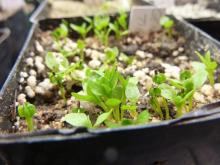
Gentiana tibetica - from Gardens North; germinated in 3 weeks at room temp, as per Kristl's directions:
Potentilla uniflora(?) - locally wild-collected; germ in the cold after ~1 month of stratifying; this is one of the magnificent alpine potentillas that I've struggled to ID conclusively - with a couple of these "in captivity", I hope to be able to finally satisfy myself on the ID!
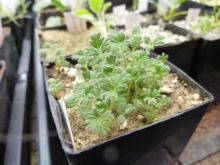
Erysimum leptophyllum - update; seeds from Pavelka (collected: 1900m, Dedegol Dag, Turkey; dense tufts, linear silky lvs, yellow flws, 3-5cm, alpine meadows; 2010 seed); germ at room temp in 12 days.
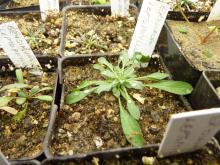
Dryas drummondii - locally wild-collected; germ in 4 days at room temp.
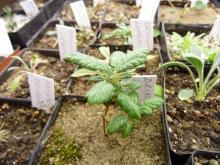
Alyssum sp. - seed from Pavelka (collected: 1500m Tahtali Dag, Turkey; very dwarf silver cushions, suffruticose at base, yellow flws 1-3cm, limestone rocky hills, 2010 seed); germ at room temp in 7 days.
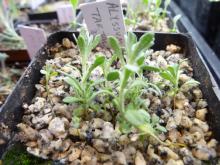
Acantholimon caryophyllaceum ssp. caryophyllaceum - NARGS seedex; germ in 5 days at room temp.
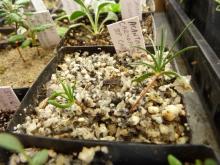
Primula denticulata - I used to have a lot of these but no more!; Gardens North; germ at room temp in 15 days.
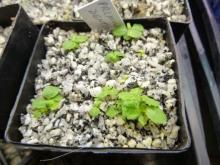
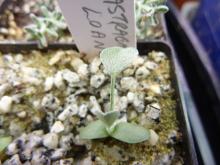
Astragalus loanus - NARGS seedex; as described in Stephanie Ferguson's article in RGQ Vol. 69 No. 4; germ in 9 days at room temp after scarifying.
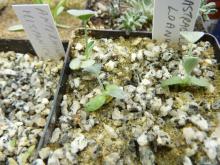
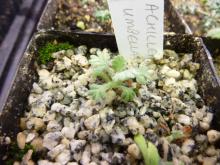
Achillea umbellata - seeds from Pavelka (collected: 2100m Aroania Mts. Greece; strongly silvery-wh tomentose cushions, white flws on scapes 5-15cm, limestone rocks); room temp
cohan (not verified)
Re: Seed starting chronicles 2012
Thu, 04/05/2012 - 4:35pmI avoid that problem by basically not putting anything outside at any time of year that can't take freezing...lol
cohan (not verified)
Re: Seed starting chronicles 2012
Thu, 04/05/2012 - 4:38pmGood stuff, Lori!
I often think of those books in certain circumstances, especially in reference to their ship bathroom adventures...... 'Opa!'
Trond Hoy
Re: Seed starting chronicles 2012
Thu, 04/05/2012 - 11:14pmWell, then you get the water problem. Who will water all your pets when you are not there?
Maybe I could get paid by bringing them along? Could help with the flight in an emergency case . . . .
Maybe I should look for that book?!
Trond Hoy
Re: Seed starting chronicles 2012
Thu, 04/05/2012 - 11:16pm. . . .and I'm still higly impressed by your jet-propulsed seedlings ;)
cohan (not verified)
Re: Seed starting chronicles 2012
Sat, 04/07/2012 - 9:07pmFirst of all, it's not a problem, since I can't afford to not be here ;D Secondly, most of my plants are xerophytic and can take some dry spells, and most of those I have that need frequent water are South African bulbs, and dormant in summer..
Richard T. Rodich
Re: Seed starting chronicles 2012
Sun, 04/08/2012 - 9:06pmI did some seedling transplanting today.
One year old Penstemon canescens:
Another example of the advantage of holding over pots for multiple years:
Penstemon euglaucus, last year's seedlings with a new crop of seeds sprouting from last year's sowing. (I think most penstemon cotyledons are narrow, but this species is different.)
Fermi de Sousa
Re: Seed starting chronicles 2012
Mon, 04/16/2012 - 2:01amI sowed these seeds a few weeks ago and they're already up
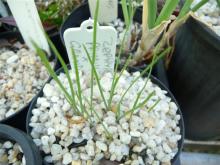
Zephyranthes primulina x Z 'Grandjax' cross-pollinated on Feb 2 and seed sown on March 4!
Can't wait to see what they produce [or if the cross "took"!]
cheers
fermi
Trond Hoy
Re: Seed starting chronicles 2012
Mon, 04/16/2012 - 12:54pmThat was very quick, only 4 weeks to ripen! Hereonly weeds ripen that fast. . . . . ;)
Lori S. (not verified)
Re: Seed starting chronicles 2012
Sat, 04/21/2012 - 5:34pmLooking back through my photos, the ones I've grown have shown some variability in that regard. P. albidus, virgatus ssp. asa-gray, and pumilus have the narrowest cotyledons among the ones I have seedling photos of, while P. euglaucus, attenuatus, brandegei, grandiflorus have rounded cotyledons. P. venustus is sort of intermediate. With such a large genus (about 270 species), I suppose there's bound to be variation! :)
Day 2 of hardening-off for 9 trays (~400 pots) of seedlings:
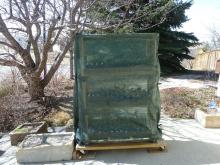
I used to put the trays out in the shade for 5 days for hardening-off, but we are instead using shade cloth on the plant stand this year. The shade cloth excludes 60% of the light, and seems to be doing its job. The stand can be rolled into the garage if frost is forecast.
Mark McDonough
Re: Seed starting chronicles 2012
Sat, 04/21/2012 - 6:27pmLori, you are one dedicated seedster! Ingenious method of hardening your seedlings off for transition outdoors, and the whole affair portable too, impressive. :)
Lori S. (not verified)
Re: Seed starting chronicles 2012
Sat, 04/21/2012 - 6:57pmIt is Stuart, not me, who has the skills and ingenuity for the outdoor plant stand, and so many other things!
Tim Ingram (not verified)
Re: Seed starting chronicles 2012
Wed, 04/25/2012 - 9:06amI like that reference to Gerald Durrell - I was hooked on his books too (I have 12 in addition to 'My Family and Other Animals'!). Not so easy to write about plants like this. I am keen to try more legumes in the garden (and to grow for the nursery) so have just spent several days chipping seed of oxytropis, astragalus, dalea, sophora and lupins. Some seed (especially the first three) are minute so this magnifying light that my wife uses for embroidery has come in really useful. Now I need to germinate and grow them on...
Trond Hoy
Re: Seed starting chronicles 2012
Wed, 04/25/2012 - 10:20amTim, I use sandpaper with different grit size when I "chip" peas. I have one lying at the table and one mounted on a piece of wood. Then it is very easy to chip all at once and I always get very good germination.
However, I'm not sure whether they are easier to grow on . . . . ;)
Pages