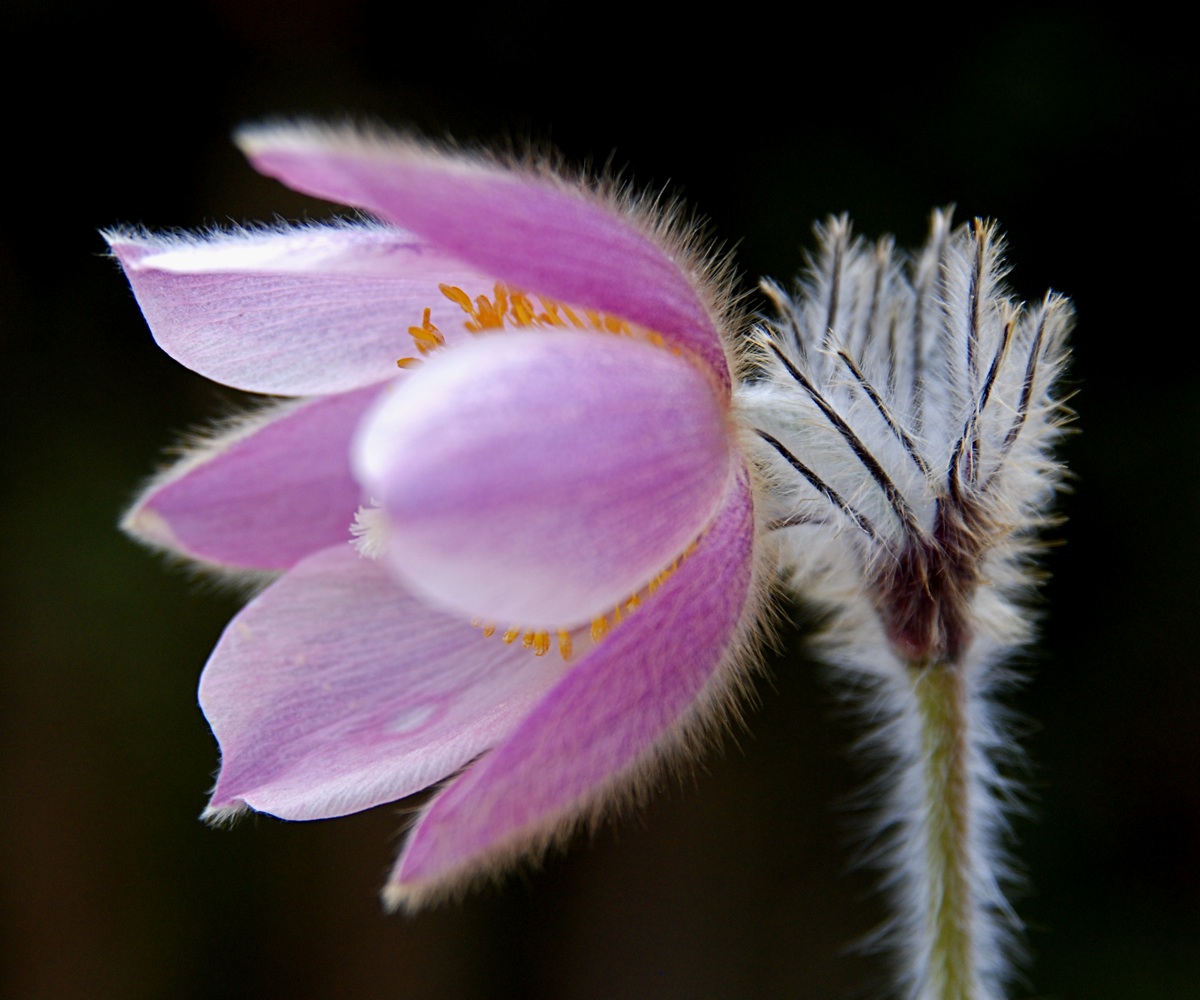
A very fine species, John! When I grow Polemoniums here they always become very lax. P. boreale is native to the uttermost north in Norway:
This little Jacobs ladder was found on Lopez Island, Washington. The Island is located in the northern portion of Puget Sound. It is a cliff dweller and exposed to fierce sea winds. I was dubious that it would survive my hot dry summers.It is planted it were it gets dappled shade at midday and regular light watering three times a week. It sailed through the heat with no problems.
Trond, I just spent almost 2 hours on the svalbardflora.net site, that is a first class web site, with excellent photos of nearly every species, an excellent "user interface" on the web site, a real pleasure to visit... thanks for posting it. Geography lesson everyone, go to Google, select maps, then type in Svalbard; once there zoom out and see where this place is! I had no idea about the existence of this place until I saw Trond's link. Cruise through the "species" link, then click on thumbnails to see fine large format photos.
May I endorse Mark's opinion of this remarkable site. The images are of the highest quality (for example:- Dryas octopetala in habitat on the Home page) and I would like to add my thanks to Trond for bringing this wonderful site to our attention. I am just slightly stunned that Ranunculus glacialis is missing from the species list when Saxifraga oppositifolia is present?
May I endorse Mark's opinion of this remarkable site. The images are of the highest quality (for example:- Dryas octopetala in habitat on the Home page) and I would like to add my thanks to Trond for bringing this wonderful site to our attention. I am just slightly stunned that Ranunculus glacialis is missing from the species list when Saxifraga oppositifolia is present?
You know, Cliff, Ranunculus glacialis don't exist anymore. Now it is Beckwithia glacialis!
I have been to Svalbard once, in May, when all the lovely plants still were covered in snow. I plan another tour there sometimes......
May I endorse Mark's opinion of this remarkable site. The images are of the highest quality (for example:- Dryas octopetala in habitat on the Home page) and I would like to add my thanks to Trond for bringing this wonderful site to our attention. I am just slightly stunned that Ranunculus glacialis is missing from the species list when Saxifraga oppositifolia is present?
You know, Cliff, Ranunculus glacialis don't exist anymore. Now it is Beckwithia glacialis!
How can I EVER come to terms with that? :D Old dog, new tricks ... I can barely remember my own name sometimes!
John, I am amazed, as perhaps you are, that this boreal Jacob's Ladder does well and is looking so fine in your hot summer garden.
I was too! I thought it would be a crispy criter by the end of June. 8)
That was half of my epimediums during this years record drought and string of days in July & August in the mid 90s, they were crispy critters. I love finding out about plants that seem easy and adaptable in cultivation, withstanding the extremes, in environments completely unlike what they are growing in; one such example is Erigeron scopulinus; which from its wild haunts in arid New Mexico and Arizona would imply it could not possibly adapt to the likes of New England, but it has become a well established rock garden inhabitant of choice in this area, and I believe amenable to cultivation in general.
John, I am amazed, as perhaps you are, that this boreal Jacob's Ladder does well and is looking so fine in your hot summer garden.
I was too! I thought it would be a crispy criter by the end of June. 8)
Svalbard has a very dry climate and the cold, strong wind can be desiccating the plants rapidly if they can't cope. But the temperature is another case. I think 10C/50F is as warm as it usually can be.
Winter contrast between the soft and the spiny! It's all in the details! 8)
Beautiful, a scene not often seen. :D One of my favorite movies is the Electric Horseman, one reason is because of the filming of the American West "off season". As a young fellow in the 1960s, TV at the time was saturated with "westerns", and it left an indelible impression of vast hot, dry, dusty, sagebrush and cactusy wastelands where good guys chased bad guys. But they never showed these areas in winter when it was cold, or with snow. In the Electric Horseman, the off-season scenery was depicted with affection and artistry, and it resonated for me. I want to see a desert in winter one day.
Haha! I remember "The Electric Horseman" previews. They were enough for me not to watch it. But like many (most?) plant nuts, I am always looking at the background geology and flora in movies. Maybe I would have liked it...
To the point photos: cacti are great in all seasons! Thanks, John. The cholla is especially nice.
Ah, the desert in winter... Not quite as fascinating as in spring, but still wonderful! We used to drive 30-some hours to spend the Christmas break in Big Bend N.P. (Texas) or in the southern Arizona parks. Got snowed on one time camping in high country of the Guadalupe Mt's, Texas... that we could have got at home! The snow on the agaves and pines was beautiful though.
Here's Veratrum viride ssp. eschscholtzii along the Helen Lake trail in Banff N.P..
Ah, the desert in winter... Not quite as fascinating as in spring, but still wonderful! We used to drive 30-some hours to spend the Christmas break in Big Bend N.P. (Texas) or in the southern Arizona parks. Got snowed on one time camping in high country of the Guadalupe Mt's, Texas... that we could have got at home! The snow on the agaves and pines was beautiful though.
Here's Veratrum viride ssp. eschscholtzii along the Helen Lake trail in Banff N.P..
I would like to experience a snow covered desert .... and afterwards when the cacti and other plants start blooming. I take it your veratrums are snow covered now too?
What a place to go skiing! But when thinking of it.... risky sport if you fall!
Hoy for great skiing the resorts at Lake Tahoe are hard to beat in the Sierra Nevada. There are fourteen Alpine and seven Nortic sky areas in the region. The closest are a 30 minute drive. No need to worry about landing on cacti they don't grow that high up in this part of Nevada and California. Now rocks and trees are present and can be a hazard to your health. ;)
What a place to go skiing! But when thinking of it.... risky sport if you fall!
Hoy for great skiing the resorts at Lake Tahoe are hard to beat in the Sierra Nevada. There are fourteen Alpine and seven Nortic sky areas in the region. The closest are a 30 minute drive. No need to worry about landing on cacti they don't grow that high up in this part of Nevada and California. Now rocks and trees are present and can be a hazard to your health. ;)
I prefere cross country skiing, thanks, so the Nordic ski areas had been fine! I am used to tackle stones and trees in the track. When my daughters were small they loved zigzagging in the birchwood.
I would like to experience a snow covered desert .... and afterwards when the cacti and other plants start blooming. I take it your veratrums are snow covered now too?
I can't say I have ever seen a snow-covered desert, though they do get snow, rarely, in those parts. Yes, the veratrums are certainly covered in snow now, though largely just the old, compacted snow from November. (Stuart was complaining that more fresh snow is needed before the back-country alpine skiing will be really good again!)
Erigeron aureus... please excuse the fuzzy areas in the photo (water droplets on the lens from the earlier snow flurries!)
Erigeron aureus... please excuse the fuzzy areas in the photo (water droplets on the lens from the earlier snow flurries!)
No need for excuses, I think it is fine. When I wear my glasses, everything is fuzzy (who makes all the fingerprints on them??), and without it is even worse!
The lily is most certainly a Caucasian species (or hybrid). I lean toward L. monadelphum. The other two Caucasians are L.kesselringianum and L. szovitsianum. If it likes a lot of moisture, than more likely L. kesselringianum. Szovitsianum is thought of by some botanists to be variety of monadelphum.
Lovely photo Lori...do you use a wide-angle on these plant-scene pictures?
Thanks, Todd! Good heavens, no, I'm no photographer at all. I just use a little digital camera... current one is a Panasonic Lumix which I'm not fond of, as it doesn't focus well or predictably, IMO... (compared, at least, to the previous Canon Powershot G9, which I did like but which died after 2 years and 1 month... >:()
I also use a panasonic Lumix, TZ4. I got it especially for the Leica lens and 10 optical zoom, but like you, using the zoom for macro close ups is for naught, as it won't focus without what it thinks is sufficient light. For individual flowers, about 2x is all I can consistently muster. Thank goodness there are photo editing programs, where you can crop and blow up your images. I am currently using a free one called Photofiltre.
For landscapes it is a different story, in my opinion. With the 10x optical and 4x digital zooms, 40x is impressive for a point and shoot camera.
I also use a panasonic Lumix, TZ4. I got it especially for the Leica lens and 10 optical zoom, but like you, using the zoom for macro close ups is for naught, as it won't focus without what it thinks is sufficient light. For individual flowers, about 2x is all I can consistently muster. Thank goodness there are photo editing programs, where you can crop and blow up your images. I am currently using a free one called Photofiltre.
For landscapes it is a different story, in my opinion. With the 10x optical and 4x digital zooms, 40x is impressive for a point and shoot camera.
I wouldn't say the model I have (which I'll have to add in here later) is so bad as that, but there is certainly a lack of sharpness in macros and considerable "indecisiveness" in the focus in general. I tend to use the "sharpen" feature in iPhoto a lot with this camera, but most other edits I might do tend to be more cosmetic than anything (e.g. cropping). Yes, the Leica lens was a big part of the sales pitch for mine too... And mine even has GPS!! ... which I've never used.
Well at least the images you post here Lori are impressive for a relatively simple digital. Santa is bringing me a wide-angle so I hope I can create the effects of the mountain scenes you post....my regular lens on my new Nikon D300 has a shallow depth of field, so it is fine for flower close-ups but not so great for having objects near and far in focus. I hope the wide-angle will do the trick.
Cliff, what about your fantastic mountain shots with plants in the foreground...are you using a wide-angle?
Rick, the one I have is a Panasonic Lumix DMX-ZS7... (And I see it has a 12X optical zoom, whoo-hoo! :rolleyes:) Anyway, to get shots like that with this camera (and the previous one), I just use the macro feature to try to get the plant in focus and then tilt the camera up a bit to get the background in... simple but reasonably effective.
Your camera is way better than mine, Lori. Reading my manual I was pretty excite at first, when I read I could add voice to pictures as I snapped them. Just think, going to botanical gardens without a notepad to record the botanical names of plant subjects. (You can't always take pics of dangling aluminum imprinted tags.) Alas, on my camera it is only an option in "travel" mode, and doesn't work with macro picture taking. But I bet you could do it with your fancy shmancy camera!
Never use GPS? I would if I had it. I have a "source directions" file for special plant materials, started when I was just a kid. Excerpt: Habenaria orbiculata (that's what it was called back then) 11 paces NNW of only rock at base of ridge hill, Old Black Joe's swamp. Some of the entries seem pretty cryptic, now that I look back at them, like a kids mystery book.
I have decided to buy a new camera for myself after Xmas (don't think Santa will bring any). When I look at all the magnificent pictures here I realize my old small automatic camera is done for. Moreover I get false light and colors in the pictures too. I had a very good old Nikon previously with really good lenses. Hope I can use some of them if I buy a new Nikon. I'll look at the possibilities.
Cliff, what about your (fantastic) fortunate mountain shots with plants in the foreground...are you using a wide-angle?
Hi Todd, Most of my earlier shots were taken with the tiny lens of the Nikon 995 (only 3.4 megapixels), which I still maintain is the most adaptable and useful camera I have ever purchased. Lots of the landscapes in my presentations were captured with this little gem, but I now use a Nikon D80 with a Sigma 17-70mm macro lens for everything. I never use a tripod (rocks or fences are usually available) or remote release, preferring instead to get the entire front of my body immersed in snow, water, mud, scree or ants (delete where appropriate). A good photographer must be a bit of a masochist or at least a little mad.
Cliff, I've also been known to get into some strange positions when taking pictures. I am hoping the wide-angle will allow for crisp focus from near to far...we'll find out! Otherwise, perhaps a macro is what I need. I thought a macro would have a shallow DOF, but based on your pics, they certainly don't.
Doesn't seem anyone has posted this Christmas Eve: sitting in lush Palos Verdes in Los Angeles overlooking the Ocean with palm trees and bougainvilleas everywhere...but thinking of an eventful year. I haven't posted an image here in a long time: I reviewed my Kazakhstan trips, and one of the highlights was finding Campanula karpusii (don't bother looking it up: it's obscure) on a limestone cliff on the summit of Aksu-Djabagly Reserve's Ulken Kaindy Pass, a remarkable escarpment full of treasures. The Campanula was in seed (as you would expect in September) in exposed spots, but on one shady cliff it was still in bloom. And I managed to get it pretty crisply focused despite a brisk wind and squall burgeoning...and my rushing about gathering lots of seed of treasures...
While waiting for my family to wake up it is little else to do than wishing you all an exuberant germinating new year! While we wait for the snow to recede I show a picture from last winter. It is my summer house!
Thanks Cliff --that is praise indeed coming from such an accomplished photographer as you :)
Todd wrote:
Spectacular Dave! What type of lens do YOU use? I think I am doing an informal inventory:)
Todd I use a Canon sx20 point and shoot for all my field trip pics.I find having the option to open out and tilt the LCD screen a great help. The particular details of that image are --manual ---landscape setting --down one step in terms of exposure compensation ,(to make the pic darker), to counter act the very high light levels we experience in NZ.
I recently had a wonderful visit to Rancho Soledad where Kelly Griffin (one of America's most amazing growers of xeric plants) works part time: the picture shows me and Kelly looking over his amazing table of special Aloe hybrids: he is considered the finest hybridizer of Aloes, and many of them are stunningly colored foliage plants: you can see some up close and even buy them at this website:
Of course, these are not hardy in areas of severe frost, but there are many aloes in South Africa growing at very high elevations...although admittedly he doesn't use these species for his hybrids. One day one hopes some of their genes might be crossed into these: I would love to have some of these colorful morsels in my outdoor garden. They are nevertheless very serviceable in a sunny window! Especially since they often bloom all winter long!
Silene uralensis ssp. attentuata in limestone scree, eastern slope Rockies - with it, in a little microcosm of the local alpine selection, are tiny plants of Minuartia austromontana, Smelowskia calycina, Androsace chamaejasme, Saussurea nuda var. densa, and Potentilla sp.. I need to learn to identify potentillas... any idea which one this may be?

Comments
Todd Boland
Re: Image of the day
Fri, 12/10/2010 - 5:50pmTrond, I also saw that Scadoxus blooming in South africa. Quite stunning.
This is Haplocarpha nervosa, a stemless gazania-like relative from the high Drakensberg...should be hardy as it was growing at 6500 feet.
Trond Hoy
Re: Image of the day
Sat, 12/11/2010 - 8:53amA very fine species, John! When I grow Polemoniums here they always become very lax. P. boreale is native to the uttermost north in Norway:
http://www.nordaflora.no/polemonium_boreale.htm
http://svalbardflora.net/index.php?id=234
Trond Hoy
Re: Image of the day
Sat, 12/11/2010 - 8:55amThis one I would like to grow in the short grass at my mountain cabin! (That's only 3000ft but harsher climate I presume!)
John P. Weiser
Re: Image of the day
Sat, 12/11/2010 - 11:20amThis little Jacobs ladder was found on Lopez Island, Washington. The Island is located in the northern portion of Puget Sound. It is a cliff dweller and exposed to fierce sea winds. I was dubious that it would survive my hot dry summers.It is planted it were it gets dappled shade at midday and regular light watering three times a week. It sailed through the heat with no problems.
Thank you for the links.
Mark McDonough
Re: Image of the day
Sat, 12/11/2010 - 7:47pmTrond, I just spent almost 2 hours on the svalbardflora.net site, that is a first class web site, with excellent photos of nearly every species, an excellent "user interface" on the web site, a real pleasure to visit... thanks for posting it. Geography lesson everyone, go to Google, select maps, then type in Svalbard; once there zoom out and see where this place is! I had no idea about the existence of this place until I saw Trond's link. Cruise through the "species" link, then click on thumbnails to see fine large format photos.
The full size photo of Polemonium boreale on that site is one of the more stunning alpine photos I've ever seen:
http://svalbardflora.net/assets/images/species/Polemonium_boreale/Polemo...
John, I am amazed, as perhaps you are, that this boreal Jacob's Ladder does well and is looking so fine in your hot summer garden.
Cliff Booker
Re: Image of the day
Sun, 12/12/2010 - 3:17amMay I endorse Mark's opinion of this remarkable site. The images are of the highest quality (for example:- Dryas octopetala in habitat on the Home page) and I would like to add my thanks to Trond for bringing this wonderful site to our attention.
I am just slightly stunned that Ranunculus glacialis is missing from the species list when Saxifraga oppositifolia is present?
Trond Hoy
Re: Image of the day
Sun, 12/12/2010 - 4:42amYou know, Cliff, Ranunculus glacialis don't exist anymore. Now it is Beckwithia glacialis!
I have been to Svalbard once, in May, when all the lovely plants still were covered in snow. I plan another tour there sometimes......
Cliff Booker
Re: Image of the day
Sun, 12/12/2010 - 5:21amHow can I EVER come to terms with that? :D Old dog, new tricks ... I can barely remember my own name sometimes!
Todd Boland
Re: Image of the day
Mon, 12/13/2010 - 5:58pmStunning site...thanks Trond. I am humbled by the photography. I recognize quite a few plants as several grow in Newfoundland.
John P. Weiser
Re: Image of the day
Mon, 12/13/2010 - 7:04pmI was too! I thought it would be a crispy criter by the end of June. 8)
Mark McDonough
Re: Image of the day
Mon, 12/13/2010 - 7:20pmThat was half of my epimediums during this years record drought and string of days in July & August in the mid 90s, they were crispy critters. I love finding out about plants that seem easy and adaptable in cultivation, withstanding the extremes, in environments completely unlike what they are growing in; one such example is Erigeron scopulinus; which from its wild haunts in arid New Mexico and Arizona would imply it could not possibly adapt to the likes of New England, but it has become a well established rock garden inhabitant of choice in this area, and I believe amenable to cultivation in general.
Trond Hoy
Re: Image of the day
Tue, 12/14/2010 - 4:05amSvalbard has a very dry climate and the cold, strong wind can be desiccating the plants rapidly if they can't cope.
But the temperature is another case. I think 10C/50F is as warm as it usually can be.
John P. Weiser
Re: Image of the day
Fri, 12/17/2010 - 12:02pmWinter contrast between the soft and the spiny!
It's all in the details! 8)
Mark McDonough
Re: Image of the day
Fri, 12/17/2010 - 8:11pmBeautiful, a scene not often seen. :D One of my favorite movies is the Electric Horseman, one reason is because of the filming of the American West "off season". As a young fellow in the 1960s, TV at the time was saturated with "westerns", and it left an indelible impression of vast hot, dry, dusty, sagebrush and cactusy wastelands where good guys chased bad guys. But they never showed these areas in winter when it was cold, or with snow. In the Electric Horseman, the off-season scenery was depicted with affection and artistry, and it resonated for me. I want to see a desert in winter one day.
Richard T. Rodich
Re: Image of the day
Fri, 12/17/2010 - 9:18pmHaha! I remember "The Electric Horseman" previews. They were enough for me not to watch it. But like many (most?) plant nuts, I am always looking at the background geology and flora in movies. Maybe I would have liked it...
To the point photos: cacti are great in all seasons! Thanks, John.
The cholla is especially nice.
Lori S. (not verified)
Re: Image of the day
Fri, 12/17/2010 - 10:48pmAh, the desert in winter... Not quite as fascinating as in spring, but still wonderful! We used to drive 30-some hours to spend the Christmas break in Big Bend N.P. (Texas) or in the southern Arizona parks. Got snowed on one time camping in high country of the Guadalupe Mt's, Texas... that we could have got at home! The snow on the agaves and pines was beautiful though.
Here's Veratrum viride ssp. eschscholtzii along the Helen Lake trail in Banff N.P..
Trond Hoy
Re: Image of the day
Sat, 12/18/2010 - 5:58amWhat a place to go skiing! But when thinking of it.... risky sport if you fall!
Trond Hoy
Re: Image of the day
Sat, 12/18/2010 - 6:02amI would like to experience a snow covered desert .... and afterwards when the cacti and other plants start blooming.
I take it your veratrums are snow covered now too?
John P. Weiser
Re: Image of the day
Sat, 12/18/2010 - 6:50amHoy for great skiing the resorts at Lake Tahoe are hard to beat in the Sierra Nevada. There are fourteen Alpine and seven Nortic sky areas in the region. The closest are a 30 minute drive. No need to worry about landing on cacti they don't grow that high up in this part of Nevada and California. Now rocks and trees are present and can be a hazard to your health. ;)
Trond Hoy
Re: Image of the day
Sat, 12/18/2010 - 8:07amI prefere cross country skiing, thanks, so the Nordic ski areas had been fine! I am used to tackle stones and trees in the track. When my daughters were small they loved zigzagging in the birchwood.
Lori S. (not verified)
Re: Image of the day
Sat, 12/18/2010 - 5:24pmI can't say I have ever seen a snow-covered desert, though they do get snow, rarely, in those parts. Yes, the veratrums are certainly covered in snow now, though largely just the old, compacted snow from November. (Stuart was complaining that more fresh snow is needed before the back-country alpine skiing will be really good again!)
Erigeron aureus... please excuse the fuzzy areas in the photo (water droplets on the lens from the earlier snow flurries!)
Trond Hoy
Re: Image of the day
Sun, 12/19/2010 - 6:00amNo need for excuses, I think it is fine. When I wear my glasses, everything is fuzzy (who makes all the fingerprints on them??), and without it is even worse!
Todd Boland
Re: Image of the day
Mon, 12/20/2010 - 5:16pmLovely photo Lori...do you use a wide-angle on these plant-scene pictures?
Cliff Booker
Re: Image of the day
Mon, 12/20/2010 - 9:41pmThree from June 2009 for today ...
An allium for Mark
A lily for naming please?
... And a semp to cheer. Sempervivum 'Engels'
Richard T. Rodich
Re: Image of the day
Mon, 12/20/2010 - 11:00pmNice trio.
The lily is most certainly a Caucasian species (or hybrid). I lean toward L. monadelphum. The other two Caucasians are L.kesselringianum and L. szovitsianum. If it likes a lot of moisture, than more likely L. kesselringianum. Szovitsianum is thought of by some botanists to be variety of monadelphum.
Lori S. (not verified)
Re: Image of the day
Tue, 12/21/2010 - 9:44pmThanks, Todd! Good heavens, no, I'm no photographer at all. I just use a little digital camera... current one is a Panasonic Lumix which I'm not fond of, as it doesn't focus well or predictably, IMO... (compared, at least, to the previous Canon Powershot G9, which I did like but which died after 2 years and 1 month... >:()
Richard T. Rodich
Re: Image of the day
Tue, 12/21/2010 - 10:40pmI also use a panasonic Lumix, TZ4. I got it especially for the Leica lens and 10 optical zoom, but like you, using the zoom for macro close ups is for naught, as it won't focus without what it thinks is sufficient light. For individual flowers, about 2x is all I can consistently muster. Thank goodness there are photo editing programs, where you can crop and blow up your images. I am currently using a free one called Photofiltre.
For landscapes it is a different story, in my opinion. With the 10x optical and 4x digital zooms, 40x is impressive for a point and shoot camera.
Mark McDonough
Re: Image of the day
Wed, 12/22/2010 - 11:58amCliff, 3 beautiful shots; nice Allium but I actually like the sempervivum best 8)
Lori S. (not verified)
Re: Image of the day
Wed, 12/22/2010 - 12:16pmI wouldn't say the model I have (which I'll have to add in here later) is so bad as that, but there is certainly a lack of sharpness in macros and considerable "indecisiveness" in the focus in general. I tend to use the "sharpen" feature in iPhoto a lot with this camera, but most other edits I might do tend to be more cosmetic than anything (e.g. cropping). Yes, the Leica lens was a big part of the sales pitch for mine too... And mine even has GPS!! ... which I've never used.
Todd Boland
Re: Image of the day
Wed, 12/22/2010 - 4:20pmWell at least the images you post here Lori are impressive for a relatively simple digital. Santa is bringing me a wide-angle so I hope I can create the effects of the mountain scenes you post....my regular lens on my new Nikon D300 has a shallow depth of field, so it is fine for flower close-ups but not so great for having objects near and far in focus. I hope the wide-angle will do the trick.
Cliff, what about your fantastic mountain shots with plants in the foreground...are you using a wide-angle?
Lori S. (not verified)
Re: Image of the day
Wed, 12/22/2010 - 5:59pmRick, the one I have is a Panasonic Lumix DMX-ZS7... (And I see it has a 12X optical zoom, whoo-hoo! :rolleyes:)
Anyway, to get shots like that with this camera (and the previous one), I just use the macro feature to try to get the plant in focus and then tilt the camera up a bit to get the background in... simple but reasonably effective.
Richard T. Rodich
Re: Image of the day
Wed, 12/22/2010 - 7:44pmYour camera is way better than mine, Lori. Reading my manual I was pretty excite at first, when I read I could add voice to pictures as I snapped them. Just think, going to botanical gardens without a notepad to record the botanical names of plant subjects. (You can't always take pics of dangling aluminum imprinted tags.) Alas, on my camera it is only an option in "travel" mode, and doesn't work with macro picture taking. But I bet you could do it with your fancy shmancy camera!
Never use GPS? I would if I had it. I have a "source directions" file for special plant materials, started when I was just a kid. Excerpt: Habenaria orbiculata (that's what it was called back then) 11 paces NNW of only rock at base of ridge hill, Old Black Joe's swamp. Some of the entries seem pretty cryptic, now that I look back at them, like a kids mystery book.
Lori S. (not verified)
Re: Image of the day
Wed, 12/22/2010 - 10:05pmYeah, probably, but then I'd have to memorize the manual. ;D
See response above... ;D
That's really neat, Rick, about your proto-GPP (Global Plant Positioning) system. You are the one who deserves a camera with built-in GPS!
Trond Hoy
Re: Image of the day
Thu, 12/23/2010 - 6:34amI have decided to buy a new camera for myself after Xmas (don't think Santa will bring any). When I look at all the magnificent pictures here I realize my old small automatic camera is done for. Moreover I get false light and colors in the pictures too.
I had a very good old Nikon previously with really good lenses. Hope I can use some of them if I buy a new Nikon. I'll look at the possibilities.
Cliff Booker
Re: Image of the day
Thu, 12/23/2010 - 7:32amHi Todd,
Most of my earlier shots were taken with the tiny lens of the Nikon 995 (only 3.4 megapixels), which I still maintain is the most adaptable and useful camera I have ever purchased. Lots of the landscapes in my presentations were captured with this little gem, but I now use a Nikon D80 with a Sigma 17-70mm macro lens for everything. I never use a tripod (rocks or fences are usually available) or remote release, preferring instead to get the entire front of my body immersed in snow, water, mud, scree or ants (delete where appropriate). A good photographer must be a bit of a masochist or at least a little mad.
Todd Boland
Re: Image of the day
Fri, 12/24/2010 - 4:37amCliff, I've also been known to get into some strange positions when taking pictures. I am hoping the wide-angle will allow for crisp focus from near to far...we'll find out! Otherwise, perhaps a macro is what I need. I thought a macro would have a shallow DOF, but based on your pics, they certainly don't.
Panayoti Kelaidis
Re: Image of the day
Fri, 12/24/2010 - 10:17amDoesn't seem anyone has posted this Christmas Eve: sitting in lush Palos Verdes in Los Angeles overlooking the Ocean with palm trees and bougainvilleas everywhere...but thinking of an eventful year. I haven't posted an image here in a long time: I reviewed my Kazakhstan trips, and one of the highlights was finding Campanula karpusii (don't bother looking it up: it's obscure) on a limestone cliff on the summit of Aksu-Djabagly Reserve's Ulken Kaindy Pass, a remarkable escarpment full of treasures. The Campanula was in seed (as you would expect in September) in exposed spots, but on one shady cliff it was still in bloom. And I managed to get it pretty crisply focused despite a brisk wind and squall burgeoning...and my rushing about gathering lots of seed of treasures...
Cliff Booker
Re: Image of the day
Fri, 12/24/2010 - 12:44pmGood to see you back, Panayoti ... and with such an unusual offering!
Lori S. (not verified)
Re: Image of the day
Fri, 12/24/2010 - 1:09pmApropos of nothing in particular, here is Dracocephalum fragile... :)
Happy holidays, all!
Todd Boland
Re: Image of the day
Fri, 12/24/2010 - 3:30pmMerry Christmas everyone! A white flower to celebrate our LACK of snow...a green Christmas here...the first time in years! (Lewisia brachycalyx)
Trond Hoy
Re: Image of the day
Sat, 12/25/2010 - 1:33amWhile waiting for my family to wake up it is little else to do than wishing you all an exuberant germinating new year!
While we wait for the snow to recede I show a picture from last winter. It is my summer house!
Toole (not verified)
Re: Image of the day
Mon, 12/27/2010 - 12:53pmNice to see the real thing Todd.
Seed received from numerous seedxs over the years has always turned out to be other sps of Lewisia . >:(
Been meaning to post this pic from a trip,(again ;D), onto the 'tops' last week.
Aciphylla on slope .
Cheers dave.
Cliff Booker
Re: Image of the day
Mon, 12/27/2010 - 12:59pmIncredible image, Dave ... beautifully captured.
Todd Boland
Re: Image of the day
Mon, 12/27/2010 - 2:52pmSpectacular Dave! What type of lens do YOU use? I think I am doing an informal inventory:)
Trond Hoy
Re: Image of the day
Mon, 12/27/2010 - 11:54pmYour picture urges me to walk in those mountains, Dave!
Toole (not verified)
Re: Image of the day
Tue, 12/28/2010 - 12:28amThanks Cliff --that is praise indeed coming from such an accomplished photographer as you :)
Todd
I use a Canon sx20 point and shoot for all my field trip pics.I find having the option to open out and tilt the LCD screen a great help.
The particular details of that image are --manual ---landscape setting --down one step in terms of exposure compensation ,(to make the pic darker), to counter act the very high light levels we experience in NZ.
You'd be welcome anytime Trond :D
Cheers Dave
Trond Hoy
Re: Image of the day
Tue, 12/28/2010 - 11:56pmThank you, Dave!
And don't hesitate to tell me if you (or someone else at the forum) are going to visit Norway. You are welcome!
Panayoti Kelaidis
Re: Image of the day
Wed, 12/29/2010 - 8:54amAnd now for something completely different...
I recently had a wonderful visit to Rancho Soledad where Kelly Griffin (one of America's most amazing growers of xeric plants) works part time: the picture shows me and Kelly looking over his amazing table of special Aloe hybrids: he is considered the finest hybridizer of Aloes, and many of them are stunningly colored foliage plants: you can see some up close and even buy them at this website:
http://www.xericgrowers.com/store/index.php?target=manufacturers&manufac...
Of course, these are not hardy in areas of severe frost, but there are many aloes in South Africa growing at very high elevations...although admittedly he doesn't use these species for his hybrids. One day one hopes some of their genes might be crossed into these: I would love to have some of these colorful morsels in my outdoor garden. They are nevertheless very serviceable in a sunny window! Especially since they often bloom all winter long!
Trond Hoy
Re: Image of the day
Thu, 12/30/2010 - 1:26amVery nice plants indeed, Kelaidis. I grow a couple of Aloes in pots but they aren't as showy as these.
Lori S. (not verified)
Re: Image of the day
Thu, 12/30/2010 - 9:52amSilene uralensis ssp. attentuata in limestone scree, eastern slope Rockies - with it, in a little microcosm of the local alpine selection, are tiny plants of Minuartia austromontana, Smelowskia calycina, Androsace chamaejasme, Saussurea nuda var. densa, and Potentilla sp.. I need to learn to identify potentillas... any idea which one this may be?
Pages