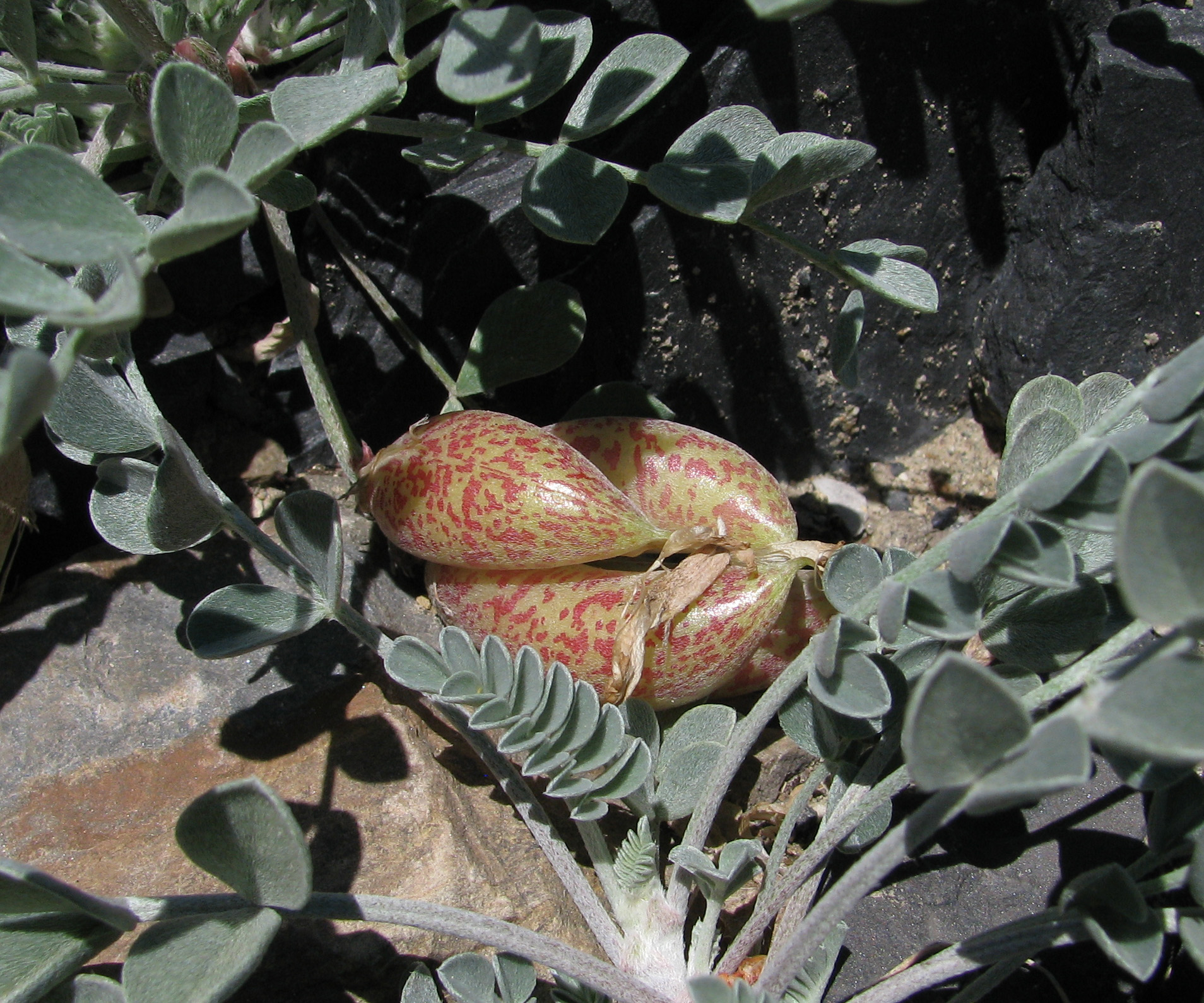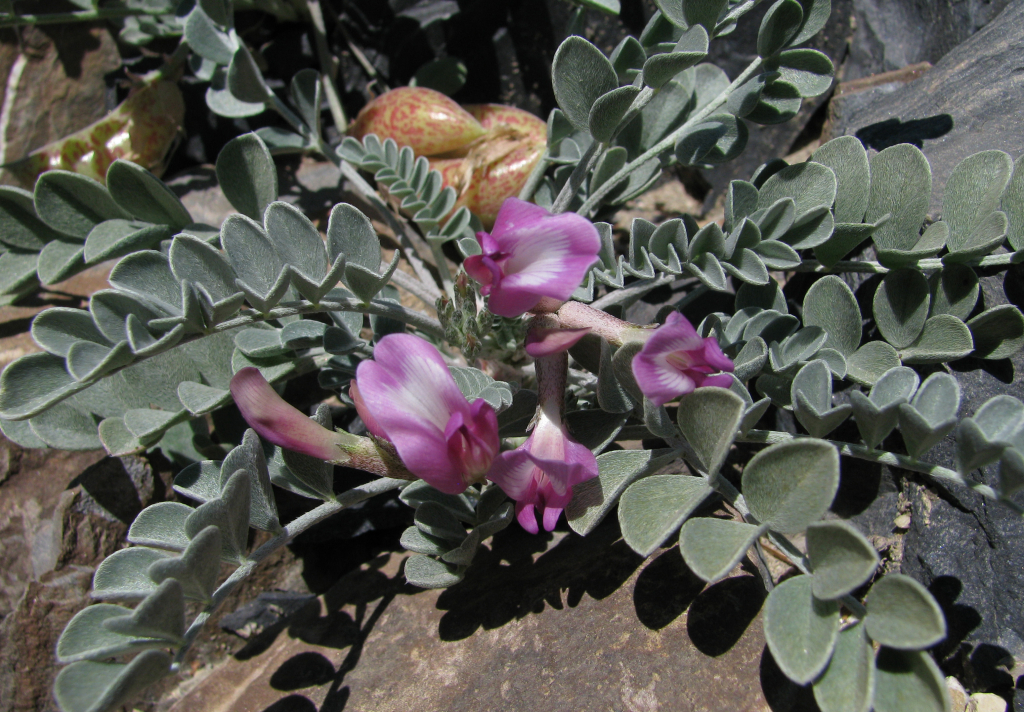
Astragalus chamaeleuce is commonly called the cicada milk-vetch. It is native primarily in Utah and neighboring areas of Montana, Wyoming and Colorado, where it grows in semi-desert regions, and open juniper scrubland. Plants are generally under 15 cm, with pinnate, silvery-green leaves and nearly stemless magenta-pink flowers. Swollen bladder-like pods are an interesting feature later in the season.
The blooming season is June and July.
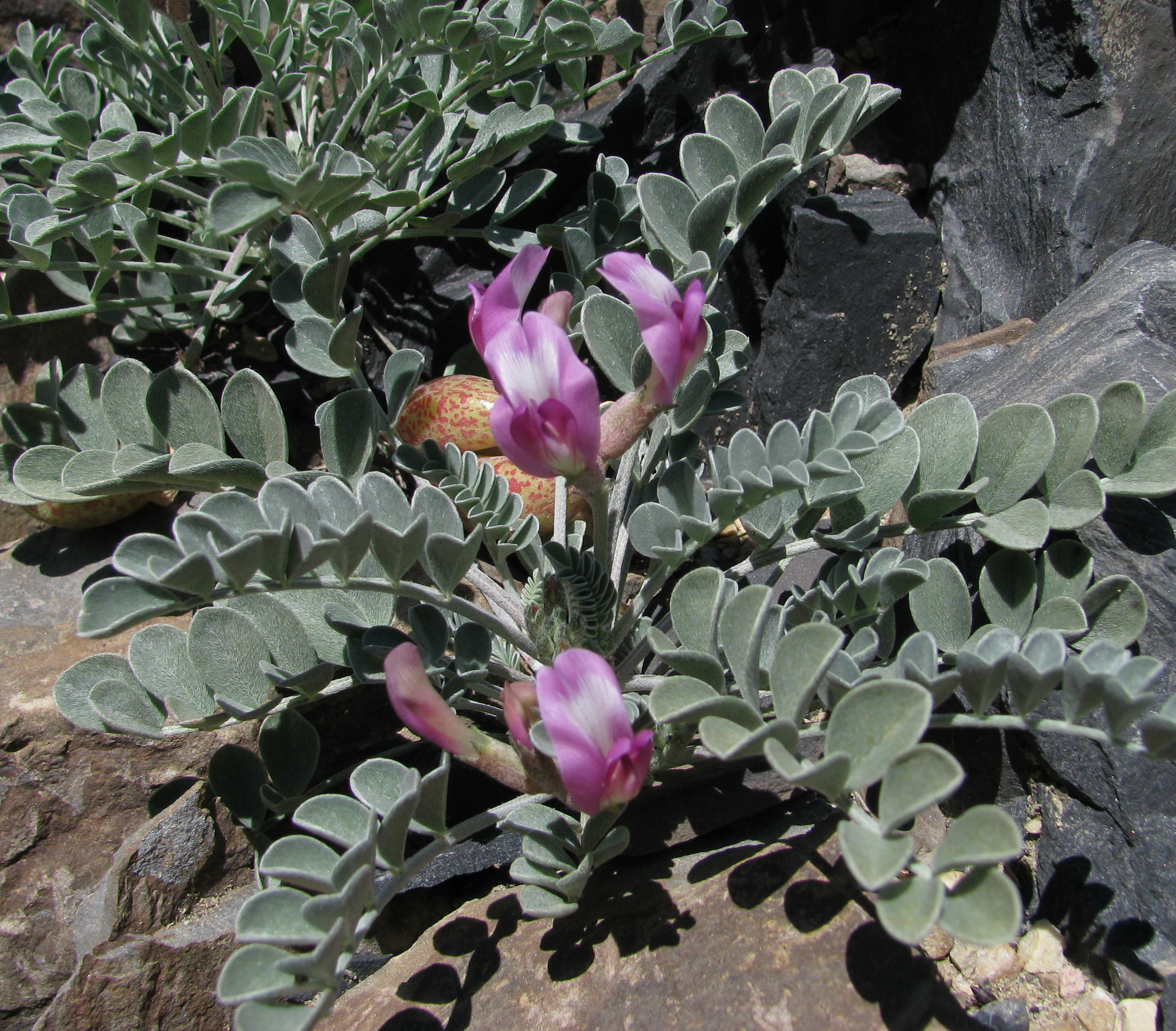
This dryland species is best grown under xeric conditions; sandy soil with excellent drainage and full sun. Due to its requirement for very dry conditions, it is not a species easy to cultivate in the east. Some chance at success might be had if grown under crevice-garden conditions or alpine house. Protection from winter wet is essential. It is hardy through zone 3-8.
This species is not readily available in the trade and must be grown from seed. It is a tap-rooted species so plants dislike transplanting. Seedlings should be planted in their permanent location as soon as possible. Scarify seeds before sowing. Germination is also enhanced by providing 3 weeks of stratification.