That is a marvel, Trond! Just not a good one..... Actually, its interesting to me that even at the 'cabin' you have community plumbing! Out here, its every property for itself, no public water or sewage until you go into a town...
Judging by the road, it looks quite warm in the mountains, when its cold here, there is no wetness on the road...
Well Cohan, the plumbing is a necessity! 25 years ago everybody let the sewage run into the ground or had old-style outhouses. The water supplies were fouled etc. Our cabin is modest; two years ago the mean "cabin" in Norway passed the mean house in living standard! A lot of people use a lot of money (but not so much time) on their "cabins".
The wet road is on the west coast - mild weather is coming up the valley from the sea. The eastern part is much colder, almost as cold as your place, down to -35C ;D
Trond, some sort of sewage treatment is required here--we have a sewage lagoon--quite far from the house, and downhill, but I doubt anyone installs those anymore, probably septic tanks are the norm (though I don't actually know that much about my neighbours' sewage!) but I'm quite sure development codes require treatment, its just an individual responsibility.. of course there is no way pipes for water or sewage could be run across country between properties, the distances would be unimaginable!
Hopefully we have seen our last -35C for this year, but you never know! Next week will be well above freezing...(daytime only)
Trond, some sort of sewage treatment is required here--we have a sewage lagoon--quite far from the house, and downhill, but I doubt anyone installs those anymore, probably septic tanks are the norm (though I don't actually know that much about my neighbours' sewage!) but I'm quite sure development codes require treatment, its just an individual responsibility.. of course there is no way pipes for water or sewage could be run across country between properties, the distances would be unimaginable!
Yes, we had codes here too but people often ignored it. The distances is smaller here - at least were we have our cabin. It is on the grounds of earlier mountain farmland (where they had their livestock in the summer, milking and making cheese, butter etc - it is called "sætring" in Norw.). The cabins lie close to each other - often in "family groups". Septic tanks are commonly used. In fact, we have at home! Our house is too lowlying to be connected to the main pipe.
A bit early in the season, this morning we got an inch of snow, but the weather brightens now!
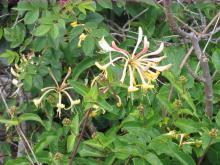
This climber, Lonicera periclymenum, is a weed here and makes thickets impossible to penetrate! It flowers sparingly all summer and has a pleasent scent in night.
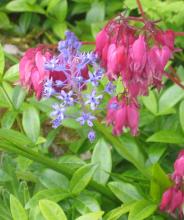
I have forgotten the name of this bulb, but think it is Scilla litardierei. May-June flowering.
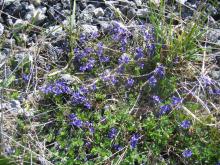
This is a common plant in the hills here, Polygala serpyllifolia. It also grows on the road verges.
That Lonicera is not a problem in Newfoundland...I even have one in my garden. The Scilla ID looks correct...I have that one too. And that Polygala...oohhhh I like it!
This is a common plant in the hills here, Polygala serpyllifolia. It also grows on the road verges.
Trond, what an adorable little Polygala, I like it. I was not aware of this European species, so thanks for the introduction. The foliage looks almost like it would be evergreen, is that the case? As always when I find new things on the forum, I go a'googling, and I share a few simple links. The flickr gallery image shows a sweet little plant.
This is a common plant in the hills here, Polygala serpyllifolia. It also grows on the road verges.
Trond, what an adorable little Polygala, I like it. I was not aware of this European species, so thanks for the introduction. The foliage looks almost like it would be evergreen, is that the case? As always when I find new things on the forum, I go a'googling, and I share a few simple links. The flickr gallery image shows a sweet little plant.
Polygala serpyllifolia, Heath Milkwort
Mark, it is actually a small evergreen shrub. It is very common here at the west coast and south coast but rarer eastwards. I have never tried it in the garden or tried sowing it but it should make a nice rock garden plant.
Well despite 2-3 feet of snow still on the ground and a forecasted 6" more tomorrow (urggghh....and this following 3 days of 5 C and rapid snow melt), the witch-hazels are blooming....in another month the first crocus could be open!
Well despite 2-3 feet of snow still on the ground and a forecasted 6" more tomorrow (urggghh....and this following 3 days of 5 C and rapid snow melt), the witch-hazels are blooming....in another month the first crocus could be open!
Really pretty! Not sure if any grow here, I sowed some last year, wild Ontario seed, no germination, but I kept the pots....
Yes, the winter without end :rolleyes:... we understand! The earliest recorded bloom for anything in my yard is March 20th* (Bulbocodium vernum), but this has been a rather cold winter, so we'll see...
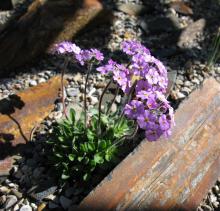
But jumping ahead to the end of April, here's Androsace mairei:
Very pretty Lori, I've not heard of that species before. The link to the FOC description says "umbels 5- or 6-flowered"; your plants seem more floriferous; perhaps more floriferous under better garden conditions.
Lori, do Galanthus bloom for you any earlier than March 20th, or does the Bulbocodium bloom before it?
Bulbocodium vernum is always my earliest (I can't say what happens in other people's yards), but Galanthus can be a close second (first photographic record of bloom on March 25th) though they are usually later. The comparison is not really fair, as my only Galanthus are planted in an area that stays frozen until the sun gets somewhat higher in the sky, whereas the Bulbocodium are on a southwest-facing slope. I stuck some more Galanthus out in the front yard last fall, so I may have a better comparison this spring.
I have tried Androsace mairei two times but it doesn't like it here. I'll try more!
Today we have had nice weather. However, it is not warm but 8-9C.
A few pictures from this afternoon
Spring snowflake (Leucojum vernum) is among the first to flower and need sun to fully open the flowers. Also snowdrops (Galanthus sp) and some croci (Crocus tomasinianus) are early.
Hellebores are always early. Usually this one (Helleborus niger) flowers at Xmas time. The peonies have just started!
Looking great, Trond! Hellebores are something I really want to try here.. No spring yet, though we have had a few days of +5 to 7C.. today only +1(still nice after -20 last week) and possible snow 5 days of the next 7.. I was very excited to see a small patch of bare ground in front of the house ;D
I took some photos a few days ago-- not much to see on the ground yet--still almost entirely snow covered, but I managed to find some texture and colour on tree tree trunks and the occasional fallen log above snow level... Full album on Picasa, https://picasaweb.google.com/cactuscactus/March132011ForestTextures# and I'll put a few more on my Alberta thread..
A lot of ground to be seen now and even some bloom, Eranthis hyemalis and an unknown crocus - planted years ago and has spread beautifully. Nice to know that spring will come.
Anne, great to see those early flowers :) Your antlered rats don't gobble up the first green things to show? I sowed a few pots of Eranthis last year, so I am hoping for some sprouts...
Trond-my spring hunger is still kind of abstract, since we are not at the point yet where I am 100% convinced that it will ever come! The bare patch of ground I mentioned above is gone again, buried under several cm of snow overnight....
I don't know the name of the lichens and mosses, unfortunately; I recently got one book ('Plants of the Western forest') that deals with them a little more, but it will take some serious field time to make any progress, and I'm sure the treatment in this book is still far from complete... I took a quick look, and they show a couple of Xanthorias, though neither photo looked quite right, it'll take more study.. Luckily, some of the lichens seem to be specific to various substrates, so that may help...
Not familiar with that species....but early blooms are always appreciated. Still 3 feet of snow in my back yard :( The snow just doesn't want to melt this year.
A true 'Image (or four) of the Day'. Four shots captured at the East Lancashire Alpine Garden Society Show held today (19th March) at Whitworth, near Rochdale, Lancashire. U.K. 1) The hall just prior to judging and before the crowds of visitors were admitted. 2) A general view of one of the four main show benches. 3) A stunning Pulsatilla grandis 'Budapest' that just missed out on the award for Best in Show but gained a well-deserved Certificate of Merit for Geoff Rollinson. 4) The worthy winner of the Farrer Medal (for Best in Show); Derek Pickard with his aged Dionysia bryoides.
Everything is in peak form. Er.....that was a silly statement: of course they are!
About how many people would you say view these public displays?
And Cliff, how old would you guess that Dionysia is?
Hi Rick, I believe the dionysia was about eighteen years old - visitor numbers are difficult to quantify as all AGS members get free admission, but I think we had nearly 150 paying customers from the general public. Other shows attract more and many attract a lot less ... much depends on location, the weather and costly publicity. We attracted 62 top exhibitors on a day when there were also major national shows in Kent and in Scotland.
We have no shows like that at all here in Norway. Had been very interesting to attend such a happening once!
McDonough wrote:
That's a cool plant Trond! Nice that it flowers so early too.
cohan wrote:
Nice one, Trond, It doesn't waste any time, does it?
Thanks, folks. It is an interesting plant both due to it's early flowering but also due to the leaves that stay green all winter and never are harmed by bad weather.
A feature of our shows in the U.K. are the miniature garden classes that attract so much interest on our show benches. The gardens are posted here, but as larger images (when clicked), so that interested members can better appreciate the craft and artistry employed to create them. John Dower from Frodsham is one of the nation's leading exponents of this delightful form of gardening and has proved an inspiration for many of these mini-gardeners and John's prize winning garden at the East Lancashire Show held yesterday will, without doubt, inspire others now via the world wide web.
John Dower and Peter Hood discussing the finer points of mini-gardening. Four gardens in the Open Section (John's First Prize winning garden is labelled Garden three) One garden in the intermediate Section
Another class (this time exclusive to East Lancashire) that always excites interest and captures the imagination of the public and exhibitors alike is:- 'One pan containing three rock plants for colour effect (in flower or foliage mixed)'. Some wonderful entries yesterday and here are some of the finest examples:-
Special class and entries for same.
The First Prize winner was exhibited by Diane Clement from Wolverhampton and is the final image of the sequence.
The quality of plants from these shows is always stunning, to say the least! Do the miniature gardens tend to be assembled for the show, or are they long-term plantings? (I have the impression of the former... ?)
I am not a fan of alpine-house forced plants...way too perfect for my liking, but I do appreciate the work that goes into such culture. I would especially appreciate them about now as I am longing to see some colour!
Guess I'll see colour in a couple of weeks at the International meeting!
I recently got one book ('Plants of the Western forest') that deals with them a little more, but it will take some serious field time to make any progress, and I'm sure the treatment in this book is still far from complete...
I think I have that one too - Plants of the Western Boreal Forest and Aspen Parkland (Johnson et al)? Nice book, if it's the one I'm thinking of, and it's really excellent for it to include a section on mosses and lichens. Wish I'd had such a reference decades ago! There's another one that I think you would enjoy - Mosses, Lichens and Ferns of Northwest North America (Vitt, Marsh, Bovey), also published by Lone Pine. It's nice that these Lone Pine books have wide distribution around here... they show up in stands in lots of stores (not just in book stores).
Yep, that's the book, does have some good stuff in it--though I hate seeing some of the near misses: nice plants that just don't quite make it over here as part of their natural range...lol The lichens still seem a bit daunting -- I just feel like I might get the right genus, but really there could be another 6 species that look more or less the same! Mind you, that's how I feel about Carex, Salix.......... I'll be trying to work on mosses this year too..... Interesting to see the differences in opinion about some names--they choose to stick to Habenaria, for example, where some others go with Platanthera.. hard to know which way to go with taxa one is not intimately familiar with! I have opinions about some cactus genera lumping/splitting, but no idea about bog orchids!
I picked up a Hepatica nobilis at the WWSW and it still has a few blooms. My attempt at spring (still a LONG ways off! Just got 40 cm of snow in the last 3 days!...I literally have the most snow for this season in my garden at the moment)
I don't think it is any exageration that I live in the snowiest region in the world for my latitude. Our springs are always questionable but this year is taking the prize in being the worst.
I don't think it is any exageration that I live in the snowiest region in the world for my latitude. Our springs are always questionable but this year is taking the prize in being the worst.
Todd, you have our sympathy but look onthe bright side... soon you will be travelling to the UK to enjoy our Spring weather and a meeting with hundreds of other rock gardeners..... that has to be better than all your snow! M
( She said... hoping that the UK Spring weather doesn't turn nasty and remind Todd too much of home!! ;D ;D)
You have my sympathy as well, Todd, but tonight e got some sleet and now everything is wet and nasty. I had planned tidying up the garden after the winter but now . . . .
I would love to join you all, Maggi, but unfortunately I am engaged all that week :(
Our normal should be 5 C...we cannot reach 0 C. Suppose to get yet another 6" of snow this weekend. We are only 9" away from a all-time record snow on the ground for this date....and to think the snowdrops were almost out here in mid-January!
In the greenhouse, Geranium 'Pink Spice' is opening. I tried it twice outdoor but it does not seem winter hardy here.
I had to look up Geranium 'Pink Spice'... sure looked like it had some G. sessiliflorum in it, and according to the patent info, it is apparently a cross between Geranium traversii var. elegans 'Cockayne' and Geranium sessiliflorum 'Cavanilles': http://www.freepatentsonline.com/PP12172.html
G. sessiliflorum is bone hardy here too....which is why I thought Pink Spice might be a go..I was unfamiliar with G. traversii which is obviously somewhat tender.
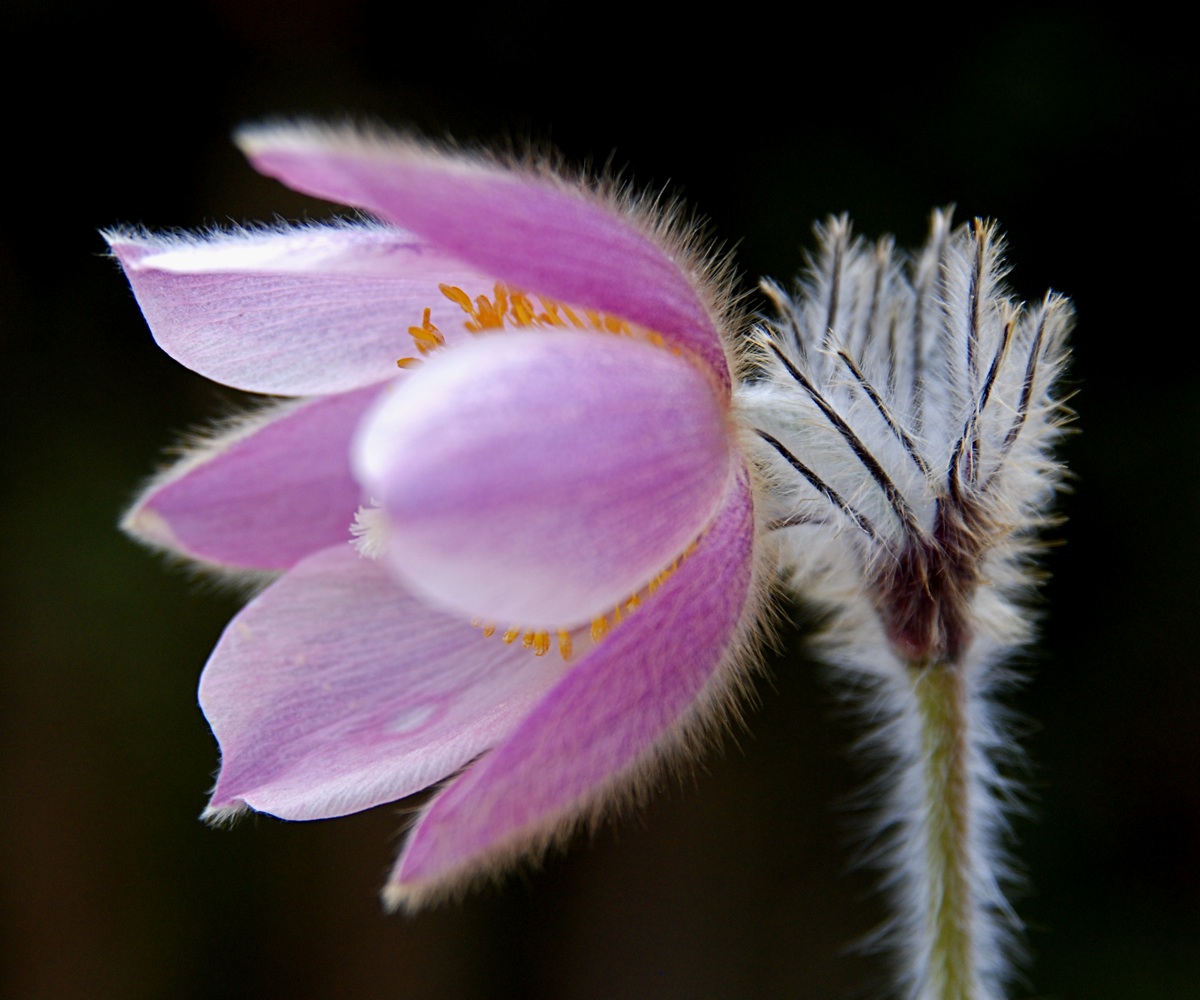

Comments
Richard T. Rodich
Re: Image of the day
Thu, 03/10/2011 - 3:06pmI guess there is an advantage to not having indoor plumbing at our cabin in northern Minnesota...
Mark McDonough
Re: Image of the day
Thu, 03/10/2011 - 8:03pmDon't forget folks, we do have a "Weather 2011" topic ;)
http://nargs.org/smf/index.php?topic=565.0
Trond Hoy
Re: Image of the day
Thu, 03/10/2011 - 11:01pmWell Cohan, the plumbing is a necessity! 25 years ago everybody let the sewage run into the ground or had old-style outhouses. The water supplies were fouled etc.
Our cabin is modest; two years ago the mean "cabin" in Norway passed the mean house in living standard! A lot of people use a lot of money (but not so much time) on their "cabins".
The wet road is on the west coast - mild weather is coming up the valley from the sea. The eastern part is much colder, almost as cold as your place, down to -35C ;D
Mark, I apologize and am blushing :-\
cohan (not verified)
Re: Image of the day
Thu, 03/10/2011 - 11:51pmTrond, some sort of sewage treatment is required here--we have a sewage lagoon--quite far from the house, and downhill, but I doubt anyone installs those anymore, probably septic tanks are the norm (though I don't actually know that much about my neighbours' sewage!) but I'm quite sure development codes require treatment, its just an individual responsibility.. of course there is no way pipes for water or sewage could be run across country between properties, the distances would be unimaginable!
Hopefully we have seen our last -35C for this year, but you never know! Next week will be well above freezing...(daytime only)
Trond Hoy
Re: Image of the day
Fri, 03/11/2011 - 12:25amYes, we had codes here too but people often ignored it. The distances is smaller here - at least were we have our cabin. It is on the grounds of earlier mountain farmland (where they had their livestock in the summer, milking and making cheese, butter etc - it is called "sætring" in Norw.). The cabins lie close to each other - often in "family groups". Septic tanks are commonly used. In fact, we have at home! Our house is too lowlying to be connected to the main pipe.
Trond Hoy
Re: Image of the day
Fri, 03/11/2011 - 1:03amA bit early in the season, this morning we got an inch of snow, but the weather brightens now!
This climber, Lonicera periclymenum, is a weed here and makes thickets impossible to penetrate! It flowers sparingly all summer and has a pleasent scent in night.
I have forgotten the name of this bulb, but think it is Scilla litardierei. May-June flowering.
This is a common plant in the hills here, Polygala serpyllifolia. It also grows on the road verges.
Todd Boland
Re: Image of the day
Fri, 03/11/2011 - 7:26amThat Lonicera is not a problem in Newfoundland...I even have one in my garden. The Scilla ID looks correct...I have that one too. And that Polygala...oohhhh I like it!
cohan (not verified)
Re: Image of the day
Fri, 03/11/2011 - 11:58amNice flowers, Trond-- I like the Polygala too! I found P senega around here last year, very nice, but not showy like this one..
Mark McDonough
Re: Image of the day
Fri, 03/11/2011 - 8:44pmTrond, what an adorable little Polygala, I like it. I was not aware of this European species, so thanks for the introduction. The foliage looks almost like it would be evergreen, is that the case? As always when I find new things on the forum, I go a'googling, and I share a few simple links. The flickr gallery image shows a sweet little plant.
Polygala serpyllifolia, Heath Milkwort
http://www.plant-identification.co.uk/skye/polygalaceae/polygala-serpyll...
flickr photo:
http://www.flickr.com/photos/31788134@N04/3821414124/
...and another:
http://www.pbase.com/mikelush/image/29381340
Trond Hoy
Re: Image of the day
Fri, 03/11/2011 - 11:16pmMark, it is actually a small evergreen shrub. It is very common here at the west coast and south coast but rarer eastwards.
I have never tried it in the garden or tried sowing it but it should make a nice rock garden plant.
Todd Boland
Re: Image of the day
Sun, 03/13/2011 - 9:17amWell despite 2-3 feet of snow still on the ground and a forecasted 6" more tomorrow (urggghh....and this following 3 days of 5 C and rapid snow melt), the witch-hazels are blooming....in another month the first crocus could be open!
Trond Hoy
Re: Image of the day
Sun, 03/13/2011 - 9:42amVery nice, Todd! Which one is that, 'Jelena'?
Cliff Booker
Re: Image of the day
Sun, 03/13/2011 - 9:46amThat is pretty, Todd ... and a lovely photograph.
cohan (not verified)
Re: Image of the day
Sun, 03/13/2011 - 10:01amReally pretty! Not sure if any grow here, I sowed some last year, wild Ontario seed, no germination, but I kept the pots....
Todd Boland
Re: Image of the day
Tue, 03/15/2011 - 3:32pmYes Trond it's Jelena
Just got another big dump of snow yesterday...20 cm. Snow is now drifted over my back fence again! This is the winter that never ends.
Lori S. (not verified)
Re: Image of the day
Tue, 03/15/2011 - 8:12pmYes, the winter without end :rolleyes:... we understand!
The earliest recorded bloom for anything in my yard is March 20th* (Bulbocodium vernum), but this has been a rather cold winter, so we'll see...
But jumping ahead to the end of April, here's Androsace mairei:
http://www.efloras.org/florataxon.aspx?flora_id=2&taxon_id=200016931
*Correction: March 16th for emerging buds; March 19th for flowers last year!
Mark McDonough
Re: Image of the day
Tue, 03/15/2011 - 8:24pmVery pretty Lori, I've not heard of that species before. The link to the FOC description says "umbels 5- or 6-flowered"; your plants seem more floriferous; perhaps more floriferous under better garden conditions.
Lori, do Galanthus bloom for you any earlier than March 20th, or does the Bulbocodium bloom before it?
Lori S. (not verified)
Re: Image of the day
Tue, 03/15/2011 - 9:10pmBulbocodium vernum is always my earliest (I can't say what happens in other people's yards), but Galanthus can be a close second (first photographic record of bloom on March 25th) though they are usually later. The comparison is not really fair, as my only Galanthus are planted in an area that stays frozen until the sun gets somewhat higher in the sky, whereas the Bulbocodium are on a southwest-facing slope. I stuck some more Galanthus out in the front yard last fall, so I may have a better comparison this spring.
Trond Hoy
Re: Image of the day
Wed, 03/16/2011 - 11:20amI have tried Androsace mairei two times but it doesn't like it here. I'll try more!
Today we have had nice weather. However, it is not warm but 8-9C.
A few pictures from this afternoon
Spring snowflake (Leucojum vernum) is among the first to flower and need sun to fully open the flowers. Also snowdrops (Galanthus sp) and some croci (Crocus tomasinianus) are early.
Hellebores are always early. Usually this one (Helleborus niger) flowers at Xmas time. The peonies have just started!
Mark McDonough
Re: Image of the day
Wed, 03/16/2011 - 11:53amVery nice Trond, looks like spring is definitely on its way for you!
cohan (not verified)
Re: Image of the day
Wed, 03/16/2011 - 1:09pmLooking great, Trond! Hellebores are something I really want to try here..
No spring yet, though we have had a few days of +5 to 7C.. today only +1(still nice after -20 last week) and possible snow 5 days of the next 7..
I was very excited to see a small patch of bare ground in front of the house ;D
cohan (not verified)
Re: Image of the day
Wed, 03/16/2011 - 4:59pmI took some photos a few days ago-- not much to see on the ground yet--still almost entirely snow covered, but I managed to find some texture and colour on tree tree trunks and the occasional fallen log above snow level...
Full album on Picasa,
https://picasaweb.google.com/cactuscactus/March132011ForestTextures#
and I'll put a few more on my Alberta thread..
Anne Spiegel
Re: Image of the day
Thu, 03/17/2011 - 8:16amA lot of ground to be seen now and even some bloom, Eranthis hyemalis and an unknown crocus - planted years ago and has spread beautifully. Nice to know that spring will come.
Trond Hoy
Re: Image of the day
Thu, 03/17/2011 - 8:48amCohan, you are hungry for the spring? The orange lichen, is it Xanthoria parietina? We call it "messinglav" ="brass lichen" ;D
Anne, I like all those winter aconites! Here they disappear as soon as I plant some.
cohan (not verified)
Re: Image of the day
Thu, 03/17/2011 - 10:49amAnne, great to see those early flowers :) Your antlered rats don't gobble up the first green things to show?
I sowed a few pots of Eranthis last year, so I am hoping for some sprouts...
Trond-my spring hunger is still kind of abstract, since we are not at the point yet where I am 100% convinced that it will ever come! The bare patch of ground I mentioned above is gone again, buried under several cm of snow overnight....
I don't know the name of the lichens and mosses, unfortunately;
I recently got one book ('Plants of the Western forest') that deals with them a little more, but it will take some serious field time to make any progress, and I'm sure the treatment in this book is still far from complete...
I took a quick look, and they show a couple of Xanthorias, though neither photo looked quite right, it'll take more study.. Luckily, some of the lichens seem to be specific to various substrates, so that may help...
Anne Spiegel
Re: Image of the day
Thu, 03/17/2011 - 11:33amThe antlered rats seem to be taking a small break after devouring gentians and daphnes.
cohan (not verified)
Re: Image of the day
Thu, 03/17/2011 - 11:41am:(
Have you tried the predator urine ? I've seen it sold, haven't used it...yet...
Trond Hoy
Re: Image of the day
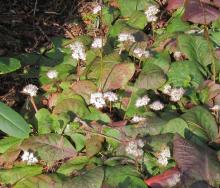
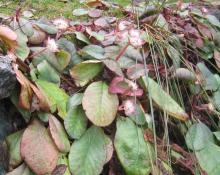
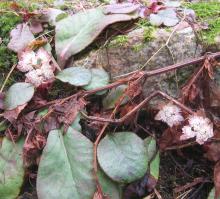
Fri, 03/18/2011 - 4:15pmEven if we had a little setback and snow last night Chrysosplenium macrophyllum blooms now. Nice weather this evening.
Mark McDonough
Re: Image of the day
Fri, 03/18/2011 - 4:19pmThat's a cool plant Trond! Nice that it flowers so early too.
cohan (not verified)
Re: Image of the day
Fri, 03/18/2011 - 9:40pmNice one, Trond, It doesn't waste any time, does it?
Todd Boland
Re: Image of the day
Sat, 03/19/2011 - 5:42amNot familiar with that species....but early blooms are always appreciated. Still 3 feet of snow in my back yard :( The snow just doesn't want to melt this year.
Cliff Booker
Re: Image of the day
Sat, 03/19/2011 - 1:15pmA true 'Image (or four) of the Day'. Four shots captured at the East Lancashire Alpine Garden Society Show held today (19th March) at Whitworth, near Rochdale, Lancashire. U.K.
1) The hall just prior to judging and before the crowds of visitors were admitted.
2) A general view of one of the four main show benches.
3) A stunning Pulsatilla grandis 'Budapest' that just missed out on the award for Best in Show but gained a well-deserved Certificate of Merit for Geoff Rollinson.
4) The worthy winner of the Farrer Medal (for Best in Show); Derek Pickard with his aged Dionysia bryoides.
Richard T. Rodich
Re: Image of the day
Sat, 03/19/2011 - 7:50pmEverything is in peak form. Er.....that was a silly statement: of course they are!
About how many people would you say view these public displays?
And Cliff, how old would you guess that Dionysia is?
cohan (not verified)
Re: Image of the day
Sat, 03/19/2011 - 9:09pmLooks like a fun day, Cliff!
Cliff Booker
Re: Image of the day
Sun, 03/20/2011 - 1:33amHi Rick,
I believe the dionysia was about eighteen years old - visitor numbers are difficult to quantify as all AGS members get free admission, but I think we had nearly 150 paying customers from the general public. Other shows attract more and many attract a lot less ... much depends on location, the weather and costly publicity. We attracted 62 top exhibitors on a day when there were also major national shows in Kent and in Scotland.
Trond Hoy
Re: Image of the day
Sun, 03/20/2011 - 2:39amWe have no shows like that at all here in Norway. Had been very interesting to attend such a happening once!
Thanks, folks.
It is an interesting plant both due to it's early flowering but also due to the leaves that stay green all winter and never are harmed by bad weather.
Cliff Booker
Re: Image of the day
Sun, 03/20/2011 - 8:57amA feature of our shows in the U.K. are the miniature garden classes that attract so much interest on our show benches.
The gardens are posted here, but as larger images (when clicked), so that interested members can better appreciate the craft and artistry employed to create them. John Dower from Frodsham is one of the nation's leading exponents of this delightful form of gardening and has proved an inspiration for many of these mini-gardeners and John's prize winning garden at the East Lancashire Show held yesterday will, without doubt, inspire others now via the world wide web.
John Dower and Peter Hood discussing the finer points of mini-gardening.
Four gardens in the Open Section (John's First Prize winning garden is labelled Garden three)
One garden in the intermediate Section
Cliff Booker
Re: Image of the day
Sun, 03/20/2011 - 9:04amAnother class (this time exclusive to East Lancashire) that always excites interest and captures the imagination of the public and exhibitors alike is:- 'One pan containing three rock plants for colour effect (in flower or foliage mixed)'.
Some wonderful entries yesterday and here are some of the finest examples:-
Special class and entries for same.
The First Prize winner was exhibited by Diane Clement from Wolverhampton and is the final image of the sequence.
Lori S. (not verified)
Re: Image of the day
Sun, 03/20/2011 - 1:31pmThe quality of plants from these shows is always stunning, to say the least! Do the miniature gardens tend to be assembled for the show, or are they long-term plantings? (I have the impression of the former... ?)
I love the Chrysosplenium too, Trond!
Todd Boland
Re: Image of the day
Sun, 03/20/2011 - 4:07pmThose mini gardens are incredible!
I am not a fan of alpine-house forced plants...way too perfect for my liking, but I do appreciate the work that goes into such culture. I would especially appreciate them about now as I am longing to see some colour!
Guess I'll see colour in a couple of weeks at the International meeting!
Lori S. (not verified)
Re: Image of the day
Sun, 03/20/2011 - 6:28pmI think I have that one too - Plants of the Western Boreal Forest and Aspen Parkland (Johnson et al)? Nice book, if it's the one I'm thinking of, and it's really excellent for it to include a section on mosses and lichens. Wish I'd had such a reference decades ago!
There's another one that I think you would enjoy - Mosses, Lichens and Ferns of Northwest North America (Vitt, Marsh, Bovey), also published by Lone Pine. It's nice that these Lone Pine books have wide distribution around here... they show up in stands in lots of stores (not just in book stores).
cohan (not verified)
Re: Image of the day
Mon, 03/21/2011 - 1:49amYep, that's the book, does have some good stuff in it--though I hate seeing some of the near misses: nice plants that just don't quite make it over here as part of their natural range...lol
The lichens still seem a bit daunting -- I just feel like I might get the right genus, but really there could be another 6 species that look more or less the same! Mind you, that's how I feel about Carex, Salix..........
I'll be trying to work on mosses this year too.....
Interesting to see the differences in opinion about some names--they choose to stick to Habenaria, for example, where some others go with Platanthera.. hard to know which way to go with taxa one is not intimately familiar with! I have opinions about some cactus genera lumping/splitting, but no idea about bog orchids!
Todd Boland
Re: Image of the day
Sat, 03/26/2011 - 12:28pmI picked up a Hepatica nobilis at the WWSW and it still has a few blooms. My attempt at spring (still a LONG ways off! Just got 40 cm of snow in the last 3 days!...I literally have the most snow for this season in my garden at the moment)
Trond Hoy
Re: Image of the day
Sat, 03/26/2011 - 12:40pmTodd, I can't say I do envy you all the snow! Here the first liverworts are in bloom! I found them today ;D
Todd Boland
Re: Image of the day
Sat, 03/26/2011 - 6:00pmI don't think it is any exageration that I live in the snowiest region in the world for my latitude. Our springs are always questionable but this year is taking the prize in being the worst.
Margaret Young
Re: Image of the day
Sun, 03/27/2011 - 1:16amTodd, you have our sympathy but look onthe bright side... soon you will be travelling to the UK to enjoy our Spring weather and a meeting with hundreds of other rock gardeners..... that has to be better than all your snow!
M
( She said... hoping that the UK Spring weather doesn't turn nasty and remind Todd too much of home!! ;D ;D)
Trond Hoy
Re: Image of the day
Sun, 03/27/2011 - 2:09amYou have my sympathy as well, Todd, but tonight e got some sleet and now everything is wet and nasty. I had planned tidying up the garden after the winter but now . . . .
I would love to join you all, Maggi, but unfortunately I am engaged all that week :(
Todd Boland
Re: Image of the day
Mon, 03/28/2011 - 4:11pmOur normal should be 5 C...we cannot reach 0 C. Suppose to get yet another 6" of snow this weekend. We are only 9" away from a all-time record snow on the ground for this date....and to think the snowdrops were almost out here in mid-January!
In the greenhouse, Geranium 'Pink Spice' is opening. I tried it twice outdoor but it does not seem winter hardy here.
Lori S. (not verified)
Re: Image of the day
Mon, 03/28/2011 - 9:51pmI had to look up Geranium 'Pink Spice'... sure looked like it had some G. sessiliflorum in it, and according to the patent info, it is apparently a cross between Geranium traversii var. elegans 'Cockayne' and Geranium sessiliflorum 'Cavanilles':
http://www.freepatentsonline.com/PP12172.html
I assume the lack of hardiness comes from G. traversii, based on both Helen's and my experience:
http://nargs.org/smf/index.php?topic=463.msg6246#msg6246
Todd Boland
Re: Image of the day
Tue, 03/29/2011 - 12:57pmG. sessiliflorum is bone hardy here too....which is why I thought Pink Spice might be a go..I was unfamiliar with G. traversii which is obviously somewhat tender.
Pages