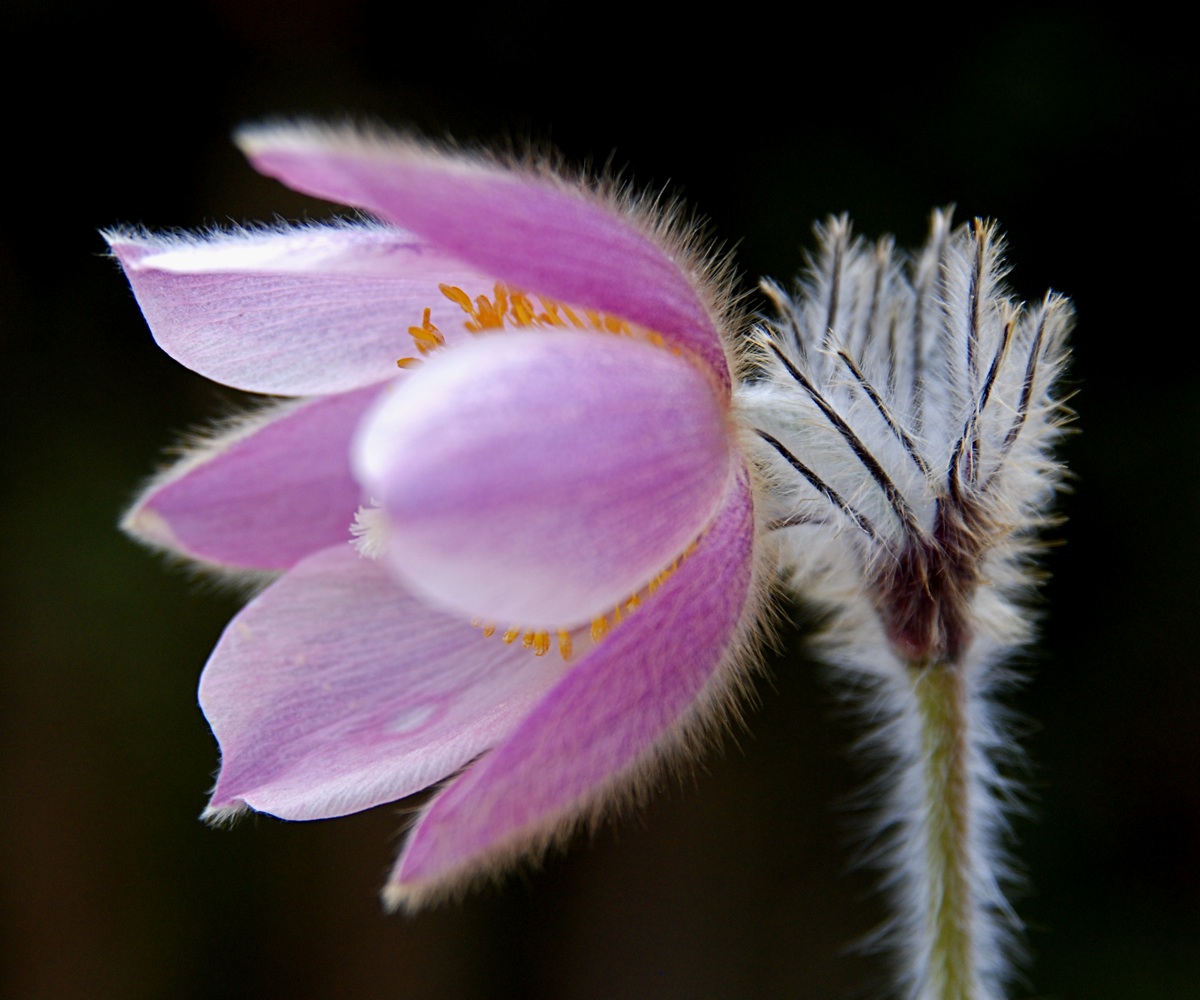
Blooming perhaps out of season but blooming the first year from seed is Hirpicium armerioides. This species hails from the Drakensburg but I think I'll overwinter it in my basement window (mind you it is suppose to be hardy to zone 5-6). Maybe I'll see one in real life when I get to the Drakensburgs in 2 weeks!
I tried this twice in the open garden but didn't manage to get it through the winter. One winter was open, no snow, and another had a sudden early deep freeze that it didn't survive. Worth any amount of trouble because it's really lovely.
Blooming perhaps out of season but blooming the first year from seed is Hirpicium armerioides. This species hails from the Drakensburg but I think I'll overwinter it in my basement window (mind you it is suppose to be hardy to zone 5-6). Maybe I'll see one in real life when I get to the Drakensburgs in 2 weeks!
That really is a pretty daisy! Why haven't I met her before? So, you are soon going to Drakensberg, Todd; I am envying you! Never came there when I visited South Africa. Is it just pleasure or "hard" work?
I've been calling it my underwater garden. I've been trying Primula florindae there and it doesn't seem to mind any amount of water. I've been told that if it has boggy conditions (as if such a thing were possible this summer in the northeast!) it will get 3-4' high. So far it has only grown to 2' here but when I had to move one I found a huge root system. This garden is way down by the road and has an 8' deer fence which has worked well so far. The stream is natural and the area stays moist all summer.
Trond, my trip is actually a birding vacation but I will stop to spell the Proteas!
I know you will observe a lot of interesting birds and proteas as well - and many, many other interesting plants and creatures. Beware of the baboons and have a nice vacation!
So many Asters are looking fine these days, as they always do in the cooler days of autumn. Rain has finally returned to the area after a near 4 month absence, and in spite of the devastating prolonged drought, some asters are looking good. Some other asters are "crispy critters", hopefully not dead, but almost nothing above ground that is alive vegetatively. Others like my favorite native Aster pilosus are coming back and making a fine show, albeit not as impressive as last year.
Three views of Aster pilosus (Symphyotrichum pilosum), the native Frost Aster, an apt enough name as it is the latest darn Aster I have ever seen. However, I am spearheading an effort to rename this aster, to be the Vanilla Cookie Aster, in reference to the rare characteristic of it being a fragrant aster, and not just any ol' fragrant aster, but one that exudes an intoxicating aroma like vanilla cookies baking, I kid you not.
In photos 1, you can see my deck in the background, with another even later flowering clone of Aster pilosus planted on the left of the deck stair, just starting to come into bloom, planted there deliberately to provide the intoxicating cookie aroma from now until December!
Mark, I think (this part of at least) your garden looks good after such a hard drought! If my garden had experienced such a drought everything had been burnt brown and grey. With asters like yours and fragrant too you don't need shrubs.
Attending a Berkshire Chapter NARGS meeting yesterday, I drive out to Peter George's garden in Central Massachusetts, then we drive to the western edge of Massachusetts near the New York border to the quaint town of Stockbridge, MA (incorporated 1739). It was a glorious autumn day, and in the waning afternoon light got a chance to peruse Peter's garden. Several Orostachys species were in weird yet dramatic flower; I do love these wonderfully quirky little plants (look for photos to be posted in the garden Visits topic). Most rock plants beginning to hunker down for winter, showing tight rosettes and promise for spring.
One trough was full of tiny treasures, some of unknown identity, but I had to marvel at a small yet proud miniature dome of Eritrichium howardii :o Above the Eritrichium, in the first photo, is what looks like a dwarf silver blue Veronica with 4-stacked leaves, again any ID suggestions would be welcome. Beside it grew the tiniest of tiny creeping woody plants, with microscopic rosettes of bead-like foliage. Look familiar to anyone? Would like to get an ID on this one. The second photo is a zoomed-in enlargement of the foliage.
A bit of autumnal color, two photos of Chrysanthemum weyrichii (white form) in Peter George's garden. Not sure if this is the same as the cultivar 'White Bomb', or simply a white form. Peter said that the mat has been there many years, and reliable with the fine show of white daisies. This planting was about 4' across if memory serves correctly, very nice.
Mark, it might be helpful towards an ID if you could work some photo manipulation magic and post a cropped photo of the veronica(??). (I'm not even sure of where it is in the photo right now. ???)
Mark, it might be helpful towards an ID if you could work some photo manipulation magic and post a cropped photo of the veronica(??). (I'm not even sure of where it is in the photo right now. ???)
Lori, the portion of Veronica can be seen in the upper edge of the photo, towards the middle edge. Unfortunately, I was primarily focused in on the Eritrichium, so don't have a better shot of the plant that looks like a Veronica to me... perhaps a follow up after a subsequent visit to Peter's garden.
Peter, how about Frankenia, ring any bells in terms of seed you may have sown a few years back?
Mark/Peter, The only junellia species that lingers with me is what purports to be Junellia wilczekii, which I have grown and flowered for nigh on ten years now. A gift from Alan Grainger when he lived in Manchester, England it has reached the edge of a twelve inch pan, but looks very much like the plant in Peter's garden, quite low and creeping but with little foliage to add mass to the spidery effect. It flowers annually with minute pale pink to white blooms that coat the tiny branches. Has Peter's plant ever flowered?
Cliff, I think you're right. I got the original plant from Harvey Wrightman, and I suggested to him that it might not be hardy here, as the one previous time I tried it, it croaked over the winter. Irene thought it would be fine here, and this one has made it through 3 winters so far, and shows no inclination to disappear. I'll ask Harvey and Irene if it is, in fact, Junellia wilczekii. It has bloomed every year, with a light pink flower.
Alpine gardeners here can attest to the fact that Junellia wilczekii is indeed extremely hardy. Here's my slow-growing little specimen, planted in 2007 from Wrightman's. The finest alpine gardener in town (you know who you are! ;D It would be lovely if you could be lured into participating here!) has one that must be about 15 inches across in the crevice garden. I don't know how old it is.
Mark, it might be helpful towards an ID if you could work some photo manipulation magic and post a cropped photo of the veronica(??). (I'm not even sure of where it is in the photo right now. ???)
Peter remembered the plant's identity, the one that I thought might be a veronica, it is Teucrium polium subsp. capitatum.
Alpine gardeners here can attest to the fact that Junellia wilczekii is indeed extremely hardy. Here's my slow-growing little specimen, planted in 2007 from Wrightman's. The finest alpine gardener in town (you know who you are! ;D It would be lovely if you could be lured into participating here!) has one that must be about 15 inches across in the crevice garden. I don't know how old it is.
Lori, that's the coolest little plant! You can see the affinity to Verbena in the flowers. Cliff, good sleuthing on that one.
Peter remembered the plant's identity, the one that I thought might be a veronica, it is Teucrium polium subsp. capitatum.
Dang! Once you'd indicated that it was actually the plant in the upper part of the photo (which I had discounted as a possible veronica), I was thinking "Teucrium"... if only I'd said so, I could have looked rather clever. ;D ;D
Not the most floriferous thing (at least not yet, what I'm showing here is a new item in y garden), is Delosperma sp - Kirstenbosch 16700, with small white flowers tipped light pink. It remains to be seen whether this "hardy Mesemb" will be hardy here, but I have my hopes. I like this pale flowered ice plant better than some of the hot pink types.
Today's photo shows the choice Ophiopogon umbraticola, perhaps the photo is a trifle premature as the berries are only just starting to color up blue, but they'll turn an incredible bright sky blue soon. This is the plant being sold by specialty nurseries in the USA as Ophiopogon chingii. Feeling that the plant is misnamed as it did not match the key in Flora of China, I studied the key and felt it was a closer fit with O. umbraticola. Communicating with a contact at Plant Delights Nursery, a fellow who works to verify plant IDs, and providing scanned images of the flowering plant parts on a 1 mm grid, it has been corroborated that the plant best fits with Ophiopogon umbraticola, the name they'll be selling it under.
For the rock gardener, this is concise, non-spreading or non-running type, remaining as a very small "nest" of narrow evergreen leaves that swirl around, the whole affair about 4" tall x 6" across in a number of years, and withstanding complete drought (as it did this year during a record-breaking drought).
Mark, I have that same Delosperma grown this year from seed...mine is blooming too. I KNOW it will not survive our winter outdoors...I will overwinter one in the basement window....maybe I'll see it growing in the wild next week!
Native Asters continue blooming unabated, one of the showiest that has been blooming for a month already but still looking great, is the Smooth Aster, A. laevis... or as we call it now, Symphyotrichum laeve. The variety found in Eastern North America is var. laeve. It grows 2-3' tall but the stems often fall over giving the impression of a lower growing plant.
It is as showy as New England Aster, Symphyotrichum novae-angliae, but much smaller (novae-angliae can grow to 6' or 2 meters), less stiff, and with good dark green leaves, and lots of large flowers that are strong blue to blue-purple. It does not seed around all that much, whereas most of the other native asters seed around with wild abandon.
Here my airy rock garden has started a second flush of flowering. One of the Primula auricula hybrids thinks it is spring and the same do the Lewisia cotyledon hybrids.
My goodness Trond, you're having a very early spring ;D
A quick change, today we had snow and sleet. They say its the earliest snowfall for 37 years here. But now the temp rises and the snow melts. No plants harmed either as it stayed above the freezing point.
McDonough wrote:
Allium thunbergii 'Ozawa' is at peak bloom right now, the white forms are just a tad later.
A pretty clump of color, Mark. I have never tried onions which are that late. Wonder if they can make it here?
1) The toad lily (Tricyrtis hirta) keeps its head up against the weather. The worst enemy is slugs and those culprits have slowed down activity now! 2 and 3) The ivy (Hedera helix) are always flowering late in the fall. The blue berries develop in springtime. Although green, the flowers produce an intoxicating fragrance.
A pretty clump of color, Mark. I have never tried onions which are that late. Wonder if they can make it here?
These things will continue to flower right through hard freezes and snow, I imagine they would do well enough for you, there is nothing like some nice purple color from bulbs this late in the season; they are much more snow/rain tolerant than the autumn crocus species.
Nice Tricytris hirta... I like them but have difficulty keeping them than 1-2 years. The only one I succeeded with for 5-6 years was golden T. macranthopsis, a glorious fall bloomer, but lost it due to incessant mole/chipmunk tunneling and too dry soil conditions.
Today warm weather returned, a balmy 74 degrees F (23 C), the most magnificent "Indian Summer" day this autumn so far. With the warmth, the wasps, bees, and bumbles swarmed over Aster pilosus (Symphyotrichum pilosum) with incredible abundance. And also with the warmth, the cloud of little white flowers on what I call the "vanilla cookie aster" (Aster pilosus) filled the air with a delicious aroma of cookies baking in the oven (no exaggeration). So, until we get scratch-n-sniff technology on the NARGS Forum, you'll just have to imagine sugar cookies baking in the oven when you view the photo of Aster pilosus, with the hot salmon foliage on Spiraea japonica 'Candlelight' on the left.
I can't even imagine 74F here at this time of the year. We are happy when we get that warmth in summer. after a few winterlike days with temps hoovering just above freezing we are back to normal 7-12C (45-54F) and rain, of course. The smells I encounter are those of decaying leaves while awaiting the fall and winter flowering shrubs.
This new variety, Polygonatum odoratum 'Carlisle', sets the new standard for variegated Polygonatum odoratum cultivars, found in the nursery of local nurseryman Leo Blanchette and named by him after the town he lives in; Carlisle Massachusetts. Not only is the white margin wider than normal, it is a uniformly dwarf or compact grower, little over a foot tall. It was looking nice in its autumn colors of yellow and white.
Just back from an autumn break in Mallorca, where we found this glorious little Colchicum filifolium growing in colonies in pine woods skirting the shoreline. The entire bloom being only 1 1/2 inches across.
Mother Nature is making it up to us this year with an amazingly warm fall. There were a couple days of 20-22 deg C last week, which is way off the average (though, honestly, the weather is so variable here that the "average" is almost irrelevant!) The coldest overnight temp has been ~-6 deg C, but it has varied from just under zero to above from day to day.... By contrast, last fall, we had -15 deg C in early October, that killed all the leaves on the trees... so no fall colour last year.
Here's some dramatic colour and a seasonally-appropriate image... Alpine larches on Panorama Ridge, Banff National Park.
(Actually, I'm late with this. The photo is from late-September - the peak of colour in that year... but the scene is magnificent enough for a repeat!)
I love the patterns formed by lichen. This quartzite boulder shows the characteristic species seen on the acidic rocks that outcrop in the mountains in this area.
Who don't like lichens? But you have to look at the symbiotic organisms close-up!
Cliff, you get me longing for summer!
I tend to like spring and summer better than fall and winter, but the yellow Larix canopies against the rockface makes me wonder if the fall can be as exciting as summer!
Cliff, don't tease me! The following pics are more appropriate for the season. Fortunately not where I garden but in the mountains. (OK Cliff, just show what we, or I at least, are waiting for. I appreciate the spring and summer more when I have lived through the fall and winter.)
A photo I took in August at 9,700' elevation. This is one of my favorite alpine Penstemons. Penstemon speciosus (high elevation form once known as subsp. kennedyi) This plant caught my eye from about twenty yards away. It was like a bit of the sky had fallen to the earth. This form is found growing on lose disintegrated granite screes at high elevations along the Eastern Sierra Range. It stays compact, in lower elevation gardens.
A photo I took in August at 9,700' elevation. This is one of my favorite alpine Penstemons. Penstemon speciosus (high elevation form once known as subsp. kennedyi) This plant caught my eye from about twenty yards away. It was like a bit of the sky had fallen to the earth. This form is found growing on lose disintegrated granite screes at high elevations along the Eastern Sierra Range. It stays compact, in lower elevation gardens.

Comments
Anne Spiegel
Re: Image of the day
Sun, 10/03/2010 - 7:14amI tried this twice in the open garden but didn't manage to get it through the winter. One winter was open, no snow, and another had a sudden early deep freeze that it didn't survive. Worth any amount of trouble because it's really lovely.
Anne Spiegel
Re: Image of the day
Sun, 10/03/2010 - 7:19amWe finally got rain. In a 30 hour period we got all the rain we were supposed to have over the summer. The pictures are of the
new stream garden.
Anne Spiegel
Re: Image of the day
Sun, 10/03/2010 - 7:29amA picture of the stream garden during construction (still ongoing) and pre-rain.
Trond Hoy
Re: Image of the day
Sun, 10/03/2010 - 9:44amThat really is a pretty daisy! Why haven't I met her before?
So, you are soon going to Drakensberg, Todd; I am envying you! Never came there when I visited South Africa. Is it just pleasure or "hard" work?
Trond Hoy
Re: Image of the day
Sun, 10/03/2010 - 9:48amI would love to make a water garden if I only had space for it! Very nice, Anne.
Richard T. Rodich
Re: Image of the day
Sun, 10/03/2010 - 5:57pmSo Anne, you have both high lands and low lands. Very nice!
How many feet above flood stage was that? (just kidding.)
Anne Spiegel
Re: Image of the day
Sun, 10/03/2010 - 6:25pmI've been calling it my underwater garden. I've been trying Primula florindae there and it doesn't seem to mind any amount of water. I've been told that if it has boggy conditions (as if such a thing were possible this summer in the northeast!) it will get 3-4' high.
So far it has only grown to 2' here but when I had to move one I found a huge root system. This garden is way down by the road and has an 8' deer fence which has worked well so far. The stream is natural and the area stays moist all summer.
Todd Boland
Re: Image of the day
Mon, 10/04/2010 - 3:02amAnne, the stream looks great, despite being a little flooded for a while.
Trond, my trip is actually a birding vacation but I will stop to spell the Proteas!
Trond Hoy
Re: Image of the day
Tue, 10/05/2010 - 9:34amI know you will observe a lot of interesting birds and proteas as well - and many, many other interesting plants and creatures. Beware of the baboons and have a nice vacation!
Mark McDonough
Re: Image of the day
Tue, 10/05/2010 - 9:08pmSo many Asters are looking fine these days, as they always do in the cooler days of autumn. Rain has finally returned to the area after a near 4 month absence, and in spite of the devastating prolonged drought, some asters are looking good. Some other asters are "crispy critters", hopefully not dead, but almost nothing above ground that is alive vegetatively. Others like my favorite native Aster pilosus are coming back and making a fine show, albeit not as impressive as last year.
Three views of Aster pilosus (Symphyotrichum pilosum), the native Frost Aster, an apt enough name as it is the latest darn Aster I have ever seen. However, I am spearheading an effort to rename this aster, to be the Vanilla Cookie Aster, in reference to the rare characteristic of it being a fragrant aster, and not just any ol' fragrant aster, but one that exudes an intoxicating aroma like vanilla cookies baking, I kid you not.
In photos 1, you can see my deck in the background, with another even later flowering clone of Aster pilosus planted on the left of the deck stair, just starting to come into bloom, planted there deliberately to provide the intoxicating cookie aroma from now until December!
Trond Hoy
Re: Image of the day
Wed, 10/06/2010 - 3:56amMark, I think (this part of at least) your garden looks good after such a hard drought! If my garden had experienced such a drought everything had been burnt brown and grey.
With asters like yours and fragrant too you don't need shrubs.
Mark McDonough
Re: Image of the day
Sun, 10/10/2010 - 8:45amAttending a Berkshire Chapter NARGS meeting yesterday, I drive out to Peter George's garden in Central Massachusetts, then we drive to the western edge of Massachusetts near the New York border to the quaint town of Stockbridge, MA (incorporated 1739). It was a glorious autumn day, and in the waning afternoon light got a chance to peruse Peter's garden. Several Orostachys species were in weird yet dramatic flower; I do love these wonderfully quirky little plants (look for photos to be posted in the garden Visits topic). Most rock plants beginning to hunker down for winter, showing tight rosettes and promise for spring.
One trough was full of tiny treasures, some of unknown identity, but I had to marvel at a small yet proud miniature dome of Eritrichium howardii :o Above the Eritrichium, in the first photo, is what looks like a dwarf silver blue Veronica with 4-stacked leaves, again any ID suggestions would be welcome. Beside it grew the tiniest of tiny creeping woody plants, with microscopic rosettes of bead-like foliage. Look familiar to anyone? Would like to get an ID on this one. The second photo is a zoomed-in enlargement of the foliage.
Mark McDonough
Re: Image of the day
Sun, 10/10/2010 - 8:57amA bit of autumnal color, two photos of Chrysanthemum weyrichii (white form) in Peter George's garden. Not sure if this is the same as the cultivar 'White Bomb', or simply a white form. Peter said that the mat has been there many years, and reliable with the fine show of white daisies. This planting was about 4' across if memory serves correctly, very nice.
Lori S. (not verified)
Re: Image of the day
Sun, 10/10/2010 - 1:25pmMark, it might be helpful towards an ID if you could work some photo manipulation magic and post a cropped photo of the veronica(??). (I'm not even sure of where it is in the photo right now. ???)
Cliff Booker
Re: Image of the day
Sun, 10/10/2010 - 2:17pmHi Mark,
My initial reaction to your query re: 'the tiniest of tiny creeping woody plants' was certainly South American and possibly a Junellia sp.?
Mark McDonough
Re: Image of the day
Sun, 10/10/2010 - 9:12pmLori, the portion of Veronica can be seen in the upper edge of the photo, towards the middle edge. Unfortunately, I was primarily focused in on the Eritrichium, so don't have a better shot of the plant that looks like a Veronica to me... perhaps a follow up after a subsequent visit to Peter's garden.
Mark McDonough
Re: Image of the day
Sun, 10/10/2010 - 9:16pmThanks Cliff. Peter, do you recollect ever getting seed of a Junellia (the South American "Verbena"). Off hand, I thought it might be a Frankenia, but most of those are larger, and tender, but there is some similarity with Frankenia laevis:
http://luirig.altervista.org/photos-search/index.php?title=Frankenia+laevis
Peter, how about Frankenia, ring any bells in terms of seed you may have sown a few years back?
Cliff Booker
Re: Image of the day
Mon, 10/11/2010 - 2:10amMark/Peter,
The only junellia species that lingers with me is what purports to be Junellia wilczekii, which I have grown and flowered for nigh on ten years now. A gift from Alan Grainger when he lived in Manchester, England it has reached the edge of a twelve inch pan, but looks very much like the plant in Peter's garden, quite low and creeping but with little foliage to add mass to the spidery effect. It flowers annually with minute pale pink to white blooms that coat the tiny branches. Has Peter's plant ever flowered?
Peter George
Re: Image of the day
Mon, 10/11/2010 - 7:25amCliff, I think you're right. I got the original plant from Harvey Wrightman, and I suggested to him that it might not be hardy here, as the one previous time I tried it, it croaked over the winter. Irene thought it would be fine here, and this one has made it through 3 winters so far, and shows no inclination to disappear. I'll ask Harvey and Irene if it is, in fact, Junellia wilczekii. It has bloomed every year, with a light pink flower.
Lori S. (not verified)
Re: Image of the day
Mon, 10/11/2010 - 9:19amAlpine gardeners here can attest to the fact that Junellia wilczekii is indeed extremely hardy. Here's my slow-growing little specimen, planted in 2007 from Wrightman's.
The finest alpine gardener in town (you know who you are! ;D It would be lovely if you could be lured into participating here!) has one that must be about 15 inches across in the crevice garden. I don't know how old it is.
Mark McDonough
Re: Image of the day
Mon, 10/11/2010 - 4:49pmPeter remembered the plant's identity, the one that I thought might be a veronica, it is Teucrium polium subsp. capitatum.
Mark McDonough
Re: Image of the day
Mon, 10/11/2010 - 4:53pmLori, that's the coolest little plant! You can see the affinity to Verbena in the flowers. Cliff, good sleuthing on that one.
Lori S. (not verified)
Re: Image of the day
Mon, 10/11/2010 - 6:10pmDang! Once you'd indicated that it was actually the plant in the upper part of the photo (which I had discounted as a possible veronica), I was thinking "Teucrium"... if only I'd said so, I could have looked rather clever. ;D ;D
Good sleuthing indeed, Cliff, re. the Junellia!
Mark McDonough
Re: Image of the day
Tue, 10/12/2010 - 4:13amNot the most floriferous thing (at least not yet, what I'm showing here is a new item in y garden), is Delosperma sp - Kirstenbosch 16700, with small white flowers tipped light pink. It remains to be seen whether this "hardy Mesemb" will be hardy here, but I have my hopes. I like this pale flowered ice plant better than some of the hot pink types.
Mark McDonough
Re: Image of the day
Tue, 10/12/2010 - 4:16amNote: The interesting discussion on plant labels and maps has been moved into its own topic.
http://nargs.org/smf/index.php?topic=447.0
Mark McDonough
Re: Image of the day
Tue, 10/12/2010 - 7:26amToday's photo shows the choice Ophiopogon umbraticola, perhaps the photo is a trifle premature as the berries are only just starting to color up blue, but they'll turn an incredible bright sky blue soon. This is the plant being sold by specialty nurseries in the USA as Ophiopogon chingii. Feeling that the plant is misnamed as it did not match the key in Flora of China, I studied the key and felt it was a closer fit with O. umbraticola. Communicating with a contact at Plant Delights Nursery, a fellow who works to verify plant IDs, and providing scanned images of the flowering plant parts on a 1 mm grid, it has been corroborated that the plant best fits with Ophiopogon umbraticola, the name they'll be selling it under.
For the rock gardener, this is concise, non-spreading or non-running type, remaining as a very small "nest" of narrow evergreen leaves that swirl around, the whole affair about 4" tall x 6" across in a number of years, and withstanding complete drought (as it did this year during a record-breaking drought).
Previous posts on this plant showing flowers and evergreen leaves:
http://nargs.org/smf/index.php?topic=333.msg3155#msg3155
http://nargs.org/smf/index.php?topic=107.msg659#msg659
Todd Boland
Re: Image of the day
Tue, 10/12/2010 - 2:50pmMark, I have that same Delosperma grown this year from seed...mine is blooming too. I KNOW it will not survive our winter outdoors...I will overwinter one in the basement window....maybe I'll see it growing in the wild next week!
Mark McDonough
Re: Image of the day
Thu, 10/14/2010 - 11:09amNative Asters continue blooming unabated, one of the showiest that has been blooming for a month already but still looking great, is the Smooth Aster, A. laevis... or as we call it now, Symphyotrichum laeve. The variety found in Eastern North America is var. laeve. It grows 2-3' tall but the stems often fall over giving the impression of a lower growing plant.
It is as showy as New England Aster, Symphyotrichum novae-angliae, but much smaller (novae-angliae can grow to 6' or 2 meters), less stiff, and with good dark green leaves, and lots of large flowers that are strong blue to blue-purple. It does not seed around all that much, whereas most of the other native asters seed around with wild abandon.
Trond Hoy
Re: Image of the day
Tue, 10/19/2010 - 9:59amHere my airy rock garden has started a second flush of flowering. One of the Primula auricula hybrids thinks it is spring and the same do the Lewisia cotyledon hybrids.
Mark McDonough
Re: Image of the day
Thu, 10/21/2010 - 7:40amMy goodness Trond, you're having a very early spring ;D
Allium thunbergii 'Ozawa' is at peak bloom right now, the white forms are just a tad later.
Trond Hoy
Re: Image of the day
Thu, 10/21/2010 - 12:17pmA quick change, today we had snow and sleet. They say its the earliest snowfall for 37 years here. But now the temp rises and the snow melts. No plants harmed either as it stayed above the freezing point.
A pretty clump of color, Mark. I have never tried onions which are that late. Wonder if they can make it here?
Trond Hoy
Re: Image of the day
Thu, 10/21/2010 - 12:37pm1) The toad lily (Tricyrtis hirta) keeps its head up against the weather. The worst enemy is slugs and those culprits have slowed down activity now!
2 and 3) The ivy (Hedera helix) are always flowering late in the fall. The blue berries develop in springtime. Although green, the flowers produce an intoxicating fragrance.
Mark McDonough
Re: Image of the day
Thu, 10/21/2010 - 12:42pmThese things will continue to flower right through hard freezes and snow, I imagine they would do well enough for you, there is nothing like some nice purple color from bulbs this late in the season; they are much more snow/rain tolerant than the autumn crocus species.
Nice Tricytris hirta... I like them but have difficulty keeping them than 1-2 years. The only one I succeeded with for 5-6 years was golden T. macranthopsis, a glorious fall bloomer, but lost it due to incessant mole/chipmunk tunneling and too dry soil conditions.
Trond Hoy
Re: Image of the day
Fri, 10/22/2010 - 8:20amThanks, Mark. Then Thunberg's onion is on my wish list!
Mark McDonough
Re: Image of the day
Tue, 10/26/2010 - 7:26pmToday warm weather returned, a balmy 74 degrees F (23 C), the most magnificent "Indian Summer" day this autumn so far. With the warmth, the wasps, bees, and bumbles swarmed over Aster pilosus (Symphyotrichum pilosum) with incredible abundance. And also with the warmth, the cloud of little white flowers on what I call the "vanilla cookie aster" (Aster pilosus) filled the air with a delicious aroma of cookies baking in the oven (no exaggeration). So, until we get scratch-n-sniff technology on the NARGS Forum, you'll just have to imagine sugar cookies baking in the oven when you view the photo of Aster pilosus, with the hot salmon foliage on Spiraea japonica 'Candlelight' on the left.
Trond Hoy
Re: Image of the day
Wed, 10/27/2010 - 9:40amI can't even imagine 74F here at this time of the year. We are happy when we get that warmth in summer.
after a few winterlike days with temps hoovering just above freezing we are back to normal 7-12C (45-54F) and rain, of course. The smells I encounter are those of decaying leaves while awaiting the fall and winter flowering shrubs.
Mark McDonough
Re: Image of the day
Thu, 10/28/2010 - 3:01pmThis new variety, Polygonatum odoratum 'Carlisle', sets the new standard for variegated Polygonatum odoratum cultivars, found in the nursery of local nurseryman Leo Blanchette and named by him after the town he lives in; Carlisle Massachusetts. Not only is the white margin wider than normal, it is a uniformly dwarf or compact grower, little over a foot tall. It was looking nice in its autumn colors of yellow and white.
Richard T. Rodich
Re: Image of the day
Thu, 10/28/2010 - 10:32pmOutstanding, Mark. It's really quite amazing all the fall color you have with such a drought.
Cliff Booker
Re: Image of the day
Thu, 10/28/2010 - 11:45pmJust back from an autumn break in Mallorca, where we found this glorious little Colchicum filifolium growing in colonies in pine woods skirting the shoreline. The entire bloom being only 1 1/2 inches across.
Trond Hoy
Re: Image of the day
Fri, 10/29/2010 - 9:09amA cute little thing!
Lori S. (not verified)
Re: Image of the day
Sat, 11/06/2010 - 9:15amMother Nature is making it up to us this year with an amazingly warm fall. There were a couple days of 20-22 deg C last week, which is way off the average (though, honestly, the weather is so variable here that the "average" is almost irrelevant!) The coldest overnight temp has been ~-6 deg C, but it has varied from just under zero to above from day to day.... By contrast, last fall, we had -15 deg C in early October, that killed all the leaves on the trees... so no fall colour last year.
Here's some dramatic colour and a seasonally-appropriate image... Alpine larches on Panorama Ridge, Banff National Park.
(Actually, I'm late with this. The photo is from late-September - the peak of colour in that year... but the scene is magnificent enough for a repeat!)
Cliff Booker
Re: Image of the day
Sat, 11/06/2010 - 1:36pmAnother beautiful image Lori ...
One from the Dolomites from me this evening ... Dryas octopetala.
Mark McDonough
Re: Image of the day
Sat, 11/06/2010 - 5:47pmBoth images are spectacular, each would make a nice wall poster!
Lori S. (not verified)
Re: Image of the day
Sun, 11/07/2010 - 4:28pmStunning photo, Cliff!
I love the patterns formed by lichen. This quartzite boulder shows the characteristic species seen on the acidic rocks that outcrop in the mountains in this area.
Trond Hoy
Re: Image of the day
Mon, 11/08/2010 - 4:00amWho don't like lichens? But you have to look at the symbiotic organisms close-up!
Cliff, you get me longing for summer!
I tend to like spring and summer better than fall and winter, but the yellow Larix canopies against the rockface makes me wonder if the fall can be as exciting as summer!
Cliff Booker
Re: Image of the day
Mon, 11/08/2010 - 4:53amAnother summer one for you then, Trond ...
Trond Hoy
Re: Image of the day
Mon, 11/08/2010 - 9:32amCliff, don't tease me!
The following pics are more appropriate for the season. Fortunately not where I garden but in the mountains.
(OK Cliff, just show what we, or I at least, are waiting for. I appreciate the spring and summer more when I have lived through the fall and winter.)
John P. Weiser
Re: Image of the day
Mon, 11/08/2010 - 7:53pmA photo I took in August at 9,700' elevation. This is one of my favorite alpine Penstemons. Penstemon speciosus (high elevation form once known as subsp. kennedyi) This plant caught my eye from about twenty yards away. It was like a bit of the sky had fallen to the earth.
This form is found growing on lose disintegrated granite screes at high elevations along the Eastern Sierra Range. It stays compact, in lower elevation gardens.
Mark McDonough
Re: Image of the day
Mon, 11/08/2010 - 9:01pmJohn, an awesome Penstemon!
Richard T. Rodich
Re: Image of the day
Tue, 11/09/2010 - 1:06amMarvelous penstemon, John. Definitely one that I will try.
Pages