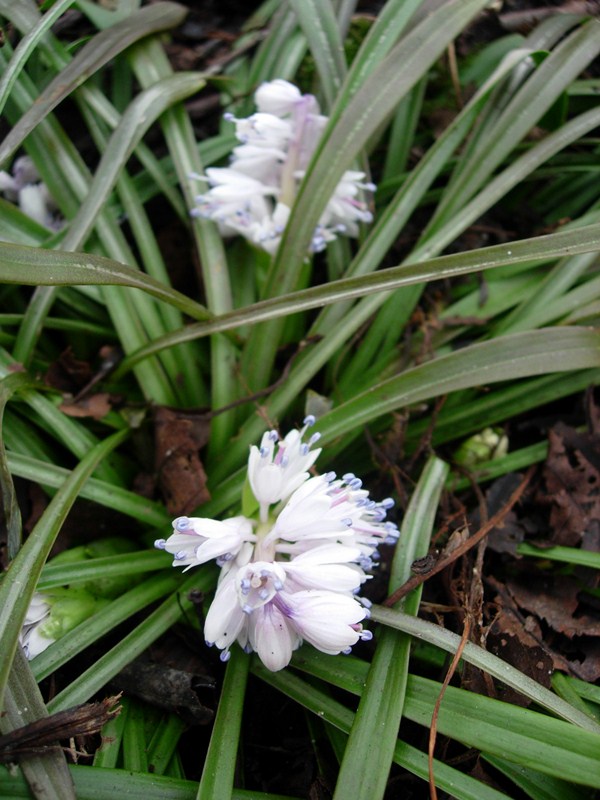
That's something like the flowering density of Pyrola here- or maybe even more flowers than Pyrola has, depending how large the patch is.. might vary depending on conditions though.. I'd still like to try some of those Cardamines... seem interesting, and for places where maybe not so many other things grow..
Trond- love the Cardamines and nice colour on that Primula; Earlier I'd reported how happy I was with the two auriculas I planted last summer, one of which flowered in fall, and I could see bright green overwintered foliage as soon as the snow melted.. Well, my report of excellent hardiness here seems premature, since while one came through nicely, the other seems gone, unless it resprouts later... :(
The wild Pyrola spp. in Minnesota are very floriferous compared to Cardamine laciniata. If each growing point of cardamine is thought of as a separate plant, pyrolas would be ten time more floriferous. I have never notice that pyrolas are rhizomatous, I don't think they are.
All great pics, Wim. That's really a deep color for D. cucullaria, I think.
I don't think the native Thalictrum thalictroides liked the snowless, warm winter this past season. The Schoaff's Double in my garden seems to be unaffected, but the native ones have taken a big step backwards. Still true to the trend this spring, though, the native ones' flower color seems to be deeper.
Schoaff's Double - 1 April, and 8 April
The gold foliage on that Bellwort must be striking, Wim. Our Minnesota native Uvularia grandiflora has twisted petals - something I always thought set it apart from similar species, but I guess it is not a defining trait after all.
I notice much more flowering in the native woodland species here after a snowy winter- that snowmelt is key moisture here, since we often don't get a lot of rain after the snow stops until late May/June..
I'm pretty sure Pyrolas here (mainly asarifolia, though there are others, as well as Orthilia and Monese) are rhizomatous, or stoloniferous, or something (Okay, I checked Moss/Packer and they use the phrase for the genus 'creeping rootstocks) since they all tend to form patches, with, esp for Pyrola, a low rate of flowering.. in the mixed woods right behind my house, they colony or adjoining colonies extend over a large area-- many many square metres (I should attempt some sort of measurement, since these large patches fascinate me) though never exclusive of other plants which grow among, through, above the Pyrolas- a number of patches extending (maybe?)15-20 feet in all directions, with small breaks and other patches next to them.... Flower stalks are certaily not uncommon, and might cluster several near, but then there could be several feet or more to the next (I'll have to try to dig up some photos...).. I think colonies in sunnier spots might have a slightly higher rate of flowering, though I have not encountered such extensive groups in sunnier spots..
That's interesting, Cohan. I got that idea from your first posting about pyrola "mats", but I have never seen them do that here. Thanks for the clarification. Perhaps I have just not been to the right places. Of the three Minnesota flora books I have, only one mentions the rhizomatous quality of pyrola (so I am wrong). In A Flora of Northeastern Minnesota, Lakela notes the trait for all six native Pyrola spp. there, and for Moneses uniflora. Indeed, ones that I have seen up there could be so, but nothing really suggested to me that the colonies, usually of 1 to 10 sparsely spaced plants, were connected. :-\ I have noted mats of Moneses uniflora, though.
Does the flower of the hepatica stand up against the leaves?
Thanks, Hoy! I wouldn't know, I just bought it (the leaves were really eye-catching ;D). I guess it doesn't really matter anyhow...it probably flowers before the new leaves start growing. The flower is described as pink with a white starry middle :-\ I wonder
cohan wrote:
Wim- that Primula really is red!
Cohan,
it is indeed, a vibrant red and it keeps on flowering for months, it's a superb plant!
RickR wrote:
All great pics, Wim. That's really a deep color for D. cucullaria, I think.
Rick, no doubt a matter of the growing conditions- if there are only a few plants, you wouldn't notice 'creeping rootstocks'.. of course not every colony is that extensive here, but I probably couldn't go more than a few metres anywhere on my property (except the sunniest mowed patchs) without seeing some... I still have to dig up some of those pics...lol
Some Pyrola species make loose mats of plants by underground runners which can be very long! I know as I once tried to move one clump to my garden. Never more. . . And as Cohan says, it commoner in dark woodland than in open situations. Othilia makes mats too - I have seen patches about 2 meter across. Moneses also make patches but much smaller.
I wondered if I should have added Saruma henryi to the winners and losers thread. But I couldn't tell which it would be! With the unseasonable cold, foliage color was a bit off, with a bit of blackish hue noticeable on the undersides. Stem and leaf growth is a little stunted now, I think, but flowers are the largest I have seen on this nine year old plant. :o
Pulmonaria 'Apple Frost' is stunning! Where did you obtain this one, I've not heard of it. I was going to post photos of Saruma henryi taken today, but yours are really good, a really good woodland plant. I have some seedlings potted for an upcoming NARGS chapter meeting.
Apple Frost didn't do a lot when I had it planted with the hungry roots of the neighbor's sugar maple. Now, this is only the second season for it in its new home. It really has taken off, given some more sun and relatively little root competition. It has doubled in size already! The original plant came from Heronswood when it was still the real thing (2002).
I wondered if I should have added Saruma henryi to the winners and losers thread. But I couldn't tell which it would be! With the unseasonable cold, foliage color was a bit off, with a bit of blackish hue noticeable on the undersides. Stem and leaf growth is a little stunted now, I think, but flowers are the largest I have seen on this nine year old plant. :o Pulmonaria 'Apple Frost'
I have had Saruma thrice but none lived as long as a whole summer - slugs >:( I am a little reluctant planting Pulmonarias as they selfsow around but I would make an exception for 'Apple Frost' ;)
Those look to be very special. Interestingly shaped leaves, shiny foliage, changing color, really cool flowers... what more could one want! :o
Yeah, I'm really excited...not only because it's a wonderful plant, but also because people told me it was an impossible genus to grow in Belgium! I'm aiming for a full collection of this genus there are only 6 species and 17 subspecies...so it should be possible!!
Wim - those are absolutely superb plants! Always good to be told something is impossible! David Sampson, a fine nurseryman in the south of Britain where such plants are difficult to grow, used to also grow these well from seed and kept them in raised beds in a shade tunnel. (He also grew really choice primulas). Will be great to see how you get on making the collection.
The pulmonaria is very nice - the best in our garden has been 'Diana Clare' from Bob Brown (Cotswald Garden Flowers).
Congrats on those Shortias, Wim! I don't know too much about them, apart from seeing John W in Nova Scotia post some on SRGC.. why should they be unsuitable for your climate?
All the Pulmonarias seem nice, seem like something I should be watching for :)
Congrats on those Shortias, Wim! I don't know too much about them, apart from seeing John W in Nova Scotia post some on SRGC.. why should they be unsuitable for your climate?
Thanks Cohan,
I was told my climate was too dry and too hot in summer, even the seedlings would not get past their first year.....but everyone who told me it was impossible had never tried it (because they had been told it was impossible too :rolleyes: :rolleyes:)
Very nice Wim! Where did you get seed from? I have looked for seeds of Shortia for a long time! I had some seedlings a few years ago but they died in a dry spell in the summer.
Shortia uniflora from the botanical garden in Oslo in April, one grows in sun (to much maybe) and the other in shade:
Very nice Wim! Where did you get seed from? I have looked for seeds of Shortia for a long time! I had some seedlings a few years ago but they died in a dry spell in the summer.
Shortia uniflora from the botanical garden in Oslo in April, one grows in sun (to much maybe) and the other in shade:
Very nice Wim! Where did you get seed from? I have looked for seeds of Shortia for a long time! I had some seedlings a few years ago but they died in a dry spell in the summer.
Shortia uniflora from the botanical garden in Oslo in April, one grows in sun (to much maybe) and the other in shade:
I have looked in several catalogues but not found seeds of Shortia, at least not last year - I know some catalogues have from time to time but not every year :-\
I have looked in several catalogues but not found seeds of Shortia, at least not last year - I know some catalogues have from time to time but not every year :-\
Trond, I'm not laughing with you....only with Cohan's comment....just say the word "seeds" and there he is! ;) ;) ;D
You really should try Göteborg....in the five years I receive their catalogue, there's only been one year in which they didn't sell any Shortia seed!
Trond, I'm not laughing with you....only with Cohan's comment....just say the word "seeds" and there he is! ;) ;) ;D
Because my chances to buy interesting plants are very few!...lol Besides, going through catalogues- and trying to find out what the uncommon plants are, is a great pleasure :)
Trond, I'm not laughing with you....only with Cohan's comment....just say the word "seeds" and there he is! ;) ;) ;D
Because my chances to buy interesting plants are very few!...lol Besides, going through catalogues- and trying to find out what the uncommon plants are, is a great pleasure :)
Trond, I'm not laughing with you....only with Cohan's comment....just say the word "seeds" and there he is! ;) ;) ;D
Because my chances to buy interesting plants are very few!...lol Besides, going through catalogues- and trying to find out what the uncommon plants are, is a great pleasure :)
Just pulling your leg, Cohan ;)
No, really, your characterisation was very accurate...lol.. have to remember to check that Goteberg site ;)
It is Kirengeshoma season again! This year, the spring rainfall was plentiful, and this moisture-loving woodlander grew robust, the clumps taller than me so topping 6' (2 meters) in height, and once laden with waxy yellow bells and the stems declining somewhat under their weight, spreading to 8' across. This is a GIANT PLANT that needs room. And, after many many years, and never a self-sown seedling, in the last couple of exceptionally mild autumns and early winters, seed was plentiful and a handful of self-sown seedlings have appeared... I must get these moved to where they have room to mature.
A number of views of Kirensheshoma palmata in bloom, a show that'll go on for about 2 months, unless drought sets in. The flowers essentially take two day to open, at first the spiral unfolding buds are intriguing, and at full bloom, the open ulily-like shape of the waxy yellow blooms is appreciated so late in the season. The flowers appear in the upper leaf axils, up to 3 levels of bloom.
Part of an enormous Sugar Maple that fell recently and squashed parts of my garden, I worried more about having a tree-cutting crew in, with inevitable damage from human trampling being much worse than the fallen tree damage; part of the tree cut-up work has been done by an arborist that also happens to be a plant person who took care to stay on garden paths and not trample plants to any extent possible, the lone shoot of Kirengeshoma koreana stands proud, among considerable first-hand plant devestation from a 4' wide tree trunk falling on the area. I'm happy with the outcome. http://nargs.org/smf/index.php?topic=807.msg18351#msg18351
Last, a view of Thalictrum rochebrunianum as a normal 5'-9" tall human might see it; sort of ridiculous, the plant must be 8-9' tall (3 m) this year. It would have to be planted in a low ravine, and observed from a up-slope path 1 meter higher to even begin to appreciate the flowers.
Three views of Deinanthe bifida, blooming now in the woodland garden. Not sure why I grow this oddity, not that I mind an oddity, I like such things, but because I can't find a place moist enough for it. This plant is like the proverbial canary in the coal mine, sulking dramatically at the first whiff of dryness. After a month of relentless hot sunny days, finally with some rain relief this past week, the flopping collapsing mass of foliage stood up, the weird waxy white blooms with pinkish pedicel tips, opening from brownish drought-tinged buds. Is it worth growing this leafy thing, dumping what seems like hundreds of gallons of water on it (mild exaggeration) just to keep it alive during a month without rain, ultimately with modest, ephemeral, curious blooms decidely small in proportion to the leafiness; I'm not sure.
.......... Is it worth growing this leafy thing, dumping what seems like hundreds of gallons of water on it (mild exaggeration) just to keep it alive during a month without rain, ultimately with modest, ephemeral, curious blooms decidely small in proportion to the leafiness; I'm not sure.
Depends Mark. If you are a man with infinite patience and time, press on. If not the compost heap beckons although it's a pretty little thing.
Mark, glad the damage weren't unbearable! Nice to see the Kirengeshoma. My plants have started to dwindle - don't know why :-\ I like Deinanthe and have a couple I think, but they grow in dense shade and are seldom seen :-\ :-\
Mark - I can't imagine a Kirengeshoma 8ft across until you showed your pictures. What a special plant! the best I have ever seen was next to a mill stream in a garden in Suffolk. I expect it is the sort of plant they grow superbly at Crug Farm in North Wales, along with giant polygonatums and arisaemas. Summer growing woodlanders in our garden rarely do well, although this year's cool wet summer has helped.
You all might be wondering why I'm posting about a Coreopsis species in "Miscellaneous Woodlanders", but in fact, Coreopsis pulchra is a rather rare southeastern USA species, known as "woodland tickseed", from a very small distribution in Alabama and Georgia.
I got my plant from a NARGS Chapter plant auction earlier this year, donated by Darrell Probst, who originally got it from Jim Jones, our own great grower of esoterica. It has very fine foliage and late blooms that are good sized and bright golden yellow with a brown center. Haven't found just the right spot to plant it out yet, but I welcome growing a woodlander that will flower August through September.
Mark - I can't imagine a Kirengeshoma 8ft across until you showed your pictures. What a special plant! the best I have ever seen was next to a mill stream in a garden in Suffolk. I expect it is the sort of plant they grow superbly at Crug Farm in North Wales, along with giant polygonatums and arisaemas. Summer growing woodlanders in our garden rarely do well, although this year's cool wet summer has helped.
I wish I had a small stream or bubbling brook to grow Kirengeshoma along the banks, as it is most definitely a water hog. They were looking splendid this year with our moist latter part of spring, until the 6 weeks of drought and very hot daily temperatures, when they started collapsing in spite of my alternate-day watering efforts. Now that we seem to have adopted a monsoon weather pattern like that of Calcutta with thunderstorms dumping 1-3" of rain each day or night, they have perked up, but the drought mostly put an end to the flower buds and scorched the foliage so that it looks bedraggled.
With the heat and now over-abundant rains, some self-sown seedlings are grow lustily, must move them someplace where they have room to bulk up.
After last year's discovery of a single plant of K. koreana in a nursery among the left-over perennials late in summer, the plant overwintered fine, and amazingly, survived intact after the fall of a gargantuan sugar maple tree, and miraculously survived the foot pummeling of two different arborists cutting up and removing the massive branches and trunk. Here it sits quite unaffected, with most plants on either side of it and behind, no longer showing any trace of existance (although I'm hoping the roots of these beheaded plants will resprout next spring). Kirengeshoma koreana is most welcome for the fact it blooms so late, still just in bud.
My Kirengeshomas have dwindled the last two years. Think I have to find some other place for them :-\
Mark, that Coreopsis looks good! It should bring light and colour to a dull green wood :) I have to look for that species!
I have gotten this one (see below) in my woodland. It has escaped from somewhere. It is a bit like Senecio cannabifolius (which I have plenty of) but the leaves are entire not digitate.
Nice Coreopsis, Mark- yellow would be welcome this time of year- I only have the (I think) native Hieracium umbellatum- a not particularly showy plant, and mostly grows singly or in very small numbers, though in many places, I was thinking today it would be good to make a group of them to complement the numerous lilac/blue asters (ciliolatum, I think, is the most common one wild on my property, flowering virtually anywhere I miss mowing for a while).. the Coreopsis is much fancier though, as is Trond's Senecio! :o though 'escaped from somewhere' sounds a bit ominous... We have Solidagos, but they are mostly done by the time the asters are going full strength, and don't seem to come into the forest edge as much...
The type Senecio cannabifolius has very interesting divided leaves as the name suggests, here are some links to this plant. I had not known about this plant until you posted it :)
Finally, Kirengeshoma koreana has opened some flowers, this species is very late, flowering after K. palmata has finished. Love the waxy spiralling golden eggs, the stem tips bending over under their weight.

Comments
cohan (not verified)
Re: Miscellaneous Woodlanders
Sat, 04/21/2012 - 9:53pmThat's something like the flowering density of Pyrola here- or maybe even more flowers than Pyrola has, depending how large the patch is..
might vary depending on conditions though.. I'd still like to try some of those Cardamines... seem interesting, and for places where maybe not so many other things grow..
Trond Hoy
Re: Miscellaneous Woodlanders
Sun, 04/22/2012 - 12:56amCardamine is one of my favorite genera - and one that is not damaged by slugs ;)
WimB (not verified)
Re: Miscellaneous Woodlanders
Sun, 04/22/2012 - 10:05amA couple of shade-loving plants in flower here now:
Adonis amurensis 'Flore Pleno'
Dicentra cucullaria 'Pink Punk'
Primula 'Cowichan Red'
WimB (not verified)
Re: Miscellaneous Woodlanders
Sun, 04/22/2012 - 10:40amAnd I forgot some others:
Thalictrum thalictroides 'Amelia'
Thalictrum thalictroides 'Pink Flash'
Uvularia grandiflora 'Gold Leaf Form' (the leaves turn yellow after flowering)
Hepatica nobilis 'Perrine's Pink' (just for the leaves)
Trond Hoy
Re: Miscellaneous Woodlanders
Sun, 04/22/2012 - 1:15pmYou really have some gems, Wim!
Does the flower of the hepatica stand up against the leaves?
Trond Hoy
Re: Miscellaneous Woodlanders
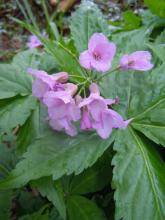
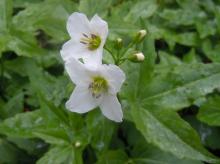
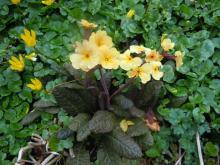
Sun, 04/22/2012 - 1:26pmThe cresses are starting now, here are two:
Cardamine pentaphylla and waldsteinii, and a lone Primula of unknown parentage:
cohan (not verified)
Re: Miscellaneous Woodlanders
Sun, 04/22/2012 - 2:51pmWim- that Primula really is red!
Trond- love the Cardamines and nice colour on that Primula;
Earlier I'd reported how happy I was with the two auriculas I planted last summer, one of which flowered in fall, and I could see bright green overwintered foliage as soon as the snow melted.. Well, my report of excellent hardiness here seems premature, since while one came through nicely, the other seems gone, unless it resprouts later... :(
Richard T. Rodich
Re: Miscellaneous Woodlanders
Sun, 04/22/2012 - 8:51pmThe wild Pyrola spp. in Minnesota are very floriferous compared to Cardamine laciniata. If each growing point of cardamine is thought of as a separate plant, pyrolas would be ten time more floriferous. I have never notice that pyrolas are rhizomatous, I don't think they are.
All great pics, Wim. That's really a deep color for D. cucullaria, I think.
I don't think the native Thalictrum thalictroides liked the snowless, warm winter this past season. The Schoaff's Double in my garden seems to be unaffected, but the native ones have taken a big step backwards. Still true to the trend this spring, though, the native ones' flower color seems to be deeper.
Schoaff's Double - 1 April, and 8 April
The gold foliage on that Bellwort must be striking, Wim. Our Minnesota native Uvularia grandiflora has twisted petals - something I always thought set it apart from similar species, but I guess it is not a defining trait after all.
cohan (not verified)
Re: Miscellaneous Woodlanders
Sun, 04/22/2012 - 10:58pmI notice much more flowering in the native woodland species here after a snowy winter- that snowmelt is key moisture here, since we often don't get a lot of rain after the snow stops until late May/June..
I'm pretty sure Pyrolas here (mainly asarifolia, though there are others, as well as Orthilia and Monese) are rhizomatous, or stoloniferous, or something (Okay, I checked Moss/Packer and they use the phrase for the genus 'creeping rootstocks) since they all tend to form patches, with, esp for Pyrola, a low rate of flowering.. in the mixed woods right behind my house, they colony or adjoining colonies extend over a large area-- many many square metres (I should attempt some sort of measurement, since these large patches fascinate me) though never exclusive of other plants which grow among, through, above the Pyrolas- a number of patches extending (maybe?)15-20 feet in all directions, with small breaks and other patches next to them.... Flower stalks are certaily not uncommon, and might cluster several near, but then there could be several feet or more to the next (I'll have to try to dig up some photos...).. I think colonies in sunnier spots might have a slightly higher rate of flowering, though I have not encountered such extensive groups in sunnier spots..
Richard T. Rodich
Re: Miscellaneous Woodlanders
Mon, 04/23/2012 - 7:09amThat's interesting, Cohan. I got that idea from your first posting about pyrola "mats", but I have never seen them do that here. Thanks for the clarification. Perhaps I have just not been to the right places. Of the three Minnesota flora books I have, only one mentions the rhizomatous quality of pyrola (so I am wrong). In A Flora of Northeastern Minnesota, Lakela notes the trait for all six native Pyrola spp. there, and for Moneses uniflora. Indeed, ones that I have seen up there could be so, but nothing really suggested to me that the colonies, usually of 1 to 10 sparsely spaced plants, were connected. :-\ I have noted mats of Moneses uniflora, though.
WimB (not verified)
Re: Miscellaneous Woodlanders
Mon, 04/23/2012 - 7:55amThanks, Hoy!
I wouldn't know, I just bought it (the leaves were really eye-catching ;D). I guess it doesn't really matter anyhow...it probably flowers before the new leaves start growing.
The flower is described as pink with a white starry middle :-\ I wonder
Cohan,
it is indeed, a vibrant red and it keeps on flowering for months, it's a superb plant!
Thanks Rick,
that D. cucullaria 'Pink Punk' is a selection made by Susan Band of Pitcairn nurseries (http://www.pitcairnalpines.co.uk/)
cohan (not verified)
Re: Miscellaneous Woodlanders
Mon, 04/23/2012 - 11:03amWim- for months, wow!
Rick, no doubt a matter of the growing conditions- if there are only a few plants, you wouldn't notice 'creeping rootstocks'.. of course not every colony is that extensive here, but I probably couldn't go more than a few metres anywhere on my property (except the sunniest mowed patchs) without seeing some... I still have to dig up some of those pics...lol
Trond Hoy
Re: Miscellaneous Woodlanders
Mon, 04/23/2012 - 12:52pmSome Pyrola species make loose mats of plants by underground runners which can be very long! I know as I once tried to move one clump to my garden. Never more. . . And as Cohan says, it commoner in dark woodland than in open situations.
Othilia makes mats too - I have seen patches about 2 meter across. Moneses also make patches but much smaller.
Richard T. Rodich
Re: Miscellaneous Woodlanders
Tue, 04/24/2012 - 7:36pmI wondered if I should have added Saruma henryi to the winners and losers thread. But I couldn't tell which it would be! With the unseasonable cold, foliage color was a bit off, with a bit of blackish hue noticeable on the undersides. Stem and leaf growth is a little stunted now, I think, but flowers are the largest I have seen on this nine year old plant. :o
Pulmonaria 'Apple Frost'
Mark McDonough
Re: Miscellaneous Woodlanders
Tue, 04/24/2012 - 7:39pmPulmonaria 'Apple Frost' is stunning! Where did you obtain this one, I've not heard of it. I was going to post photos of Saruma henryi taken today, but yours are really good, a really good woodland plant. I have some seedlings potted for an upcoming NARGS chapter meeting.
Richard T. Rodich
Re: Miscellaneous Woodlanders
Tue, 04/24/2012 - 8:20pmApple Frost didn't do a lot when I had it planted with the hungry roots of the neighbor's sugar maple. Now, this is only the second season for it in its new home. It really has taken off, given some more sun and relatively little root competition. It has doubled in size already! The original plant came from Heronswood when it was still the real thing (2002).
Trond Hoy
Re: Miscellaneous Woodlanders
Wed, 04/25/2012 - 3:53amI have had Saruma thrice but none lived as long as a whole summer - slugs >:(
I am a little reluctant planting Pulmonarias as they selfsow around but I would make an exception for 'Apple Frost' ;)
WimB (not verified)
Re: Miscellaneous Woodlanders
Thu, 04/26/2012 - 8:14amFor the first time, one of my own seedlings of Shortia is flowering! Woooohooow!!! ;D ;D
Last year they still looked like this:
I planted them out in fall last year!
Two weeks ago Shortia soldanelloides var. soldanelloides (= Shortia soldanelloides or Schizocodon soldanelloides) looked like this:
And today I had my first flower on Shortia soldanelloides var. magna (= Shortia magnus or Schizocodon magnus)
And next week I'll have my first flower on Shortia soldanelloides var. illicifolia (= Shortia illicifolia or Schizocodon illicifolia)
Richard T. Rodich
Re: Miscellaneous Woodlanders
Thu, 04/26/2012 - 10:12amNo wonder you're excited, Wim!
Those look to be very special. Interestingly shaped leaves, shiny foliage, changing color, really cool flowers... what more could one want! :o
WimB (not verified)
Re: Miscellaneous Woodlanders
Thu, 04/26/2012 - 11:12amYeah, I'm really excited...not only because it's a wonderful plant, but also because people told me it was an impossible genus to grow in Belgium!
I'm aiming for a full collection of this genus there are only 6 species and 17 subspecies...so it should be possible!!
Tim Ingram (not verified)
Re: Miscellaneous Woodlanders
Thu, 04/26/2012 - 11:49amWim - those are absolutely superb plants! Always good to be told something is impossible! David Sampson, a fine nurseryman in the south of Britain where such plants are difficult to grow, used to also grow these well from seed and kept them in raised beds in a shade tunnel. (He also grew really choice primulas). Will be great to see how you get on making the collection.
The pulmonaria is very nice - the best in our garden has been 'Diana Clare' from Bob Brown (Cotswald Garden Flowers).
cohan (not verified)
Re: Miscellaneous Woodlanders
Thu, 04/26/2012 - 11:17pmCongrats on those Shortias, Wim! I don't know too much about them, apart from seeing John W in Nova Scotia post some on SRGC.. why should they be unsuitable for your climate?
All the Pulmonarias seem nice, seem like something I should be watching for :)
WimB (not verified)
Re: Miscellaneous Woodlanders
Thu, 04/26/2012 - 11:50pmThanks Cohan,
I was told my climate was too dry and too hot in summer, even the seedlings would not get past their first year.....but everyone who told me it was impossible had never tried it (because they had been told it was impossible too :rolleyes: :rolleyes:)
deesen (not verified)
Re: Miscellaneous Woodlanders
Fri, 04/27/2012 - 4:55amWell done Wim, have you posted these on the SRGC Forum? I'm sure there would be some envious viewers in Scotland. ;D
WimB (not verified)
Re: Miscellaneous Woodlanders
Fri, 04/27/2012 - 7:57amThanks David, haven't posted them on the SRGC forum yet....I'll post them as soon as the attachments are working again!
Trond Hoy
Re: Miscellaneous Woodlanders
Fri, 04/27/2012 - 1:01pmVery nice Wim!
Where did you get seed from? I have looked for seeds of Shortia for a long time! I had some seedlings a few years ago but they died in a dry spell in the summer.
Shortia uniflora from the botanical garden in Oslo in April, one grows in sun (to much maybe) and the other in shade:
WimB (not verified)
Re: Miscellaneous Woodlanders
Fri, 04/27/2012 - 11:58pmThanks Trond,
I got the seeds from the botanical garden of Göteborg. If you become a member of their "Connoisseur's Club' (for free) http://gotbot.se/kulturvast_templates/Kultur_XForm.aspx?id=51524, you get their seed-catalogue each year!
WimB (not verified)
Re: Miscellaneous Woodlanders
Sun, 04/29/2012 - 6:47amThe first flower on Shortia soldanelloides var illicifolia :D :D
cohan (not verified)
Re: Miscellaneous Woodlanders
Sun, 04/29/2012 - 10:28amDid someone say seed-catalogue? ;D
WimB (not verified)
Re: Miscellaneous Woodlanders
Sun, 04/29/2012 - 10:31am;D ;D ;D ;D ;D
ErnieC123 (not verified)
Re: Miscellaneous Woodlanders
Sun, 04/29/2012 - 1:35pmSeed-hunter have entered the stage :-) Good luck with it!
Here are some impressions of my garden
Clematis recta 'Purpurea' with lovely foliage
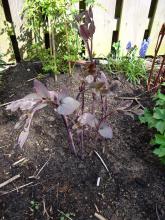
Gillenia stipulata in the third year after sowing
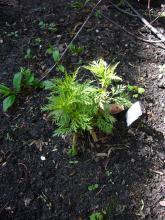
My favorite grass Hakonechloa macra 'Aureola'
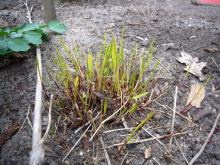
Kirengeshoma palmata
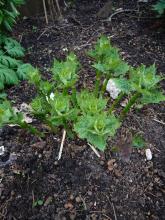
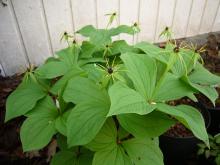
Paris quadrifolia
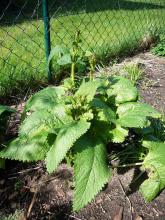
Phlomis tuberosa 'Amazone'
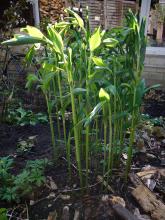
Polygonatum x 'Weihenstephan' ( a real nice and vital one)
Some other Polygonatum pictures will follow maybe next week! Or should i create a new Polygonatum topic?
Trond Hoy
Re: Miscellaneous Woodlanders
Mon, 04/30/2012 - 1:06amDon't laugh :(
I have looked in several catalogues but not found seeds of Shortia, at least not last year - I know some catalogues have from time to time but not every year :-\
WimB (not verified)
Re: Miscellaneous Woodlanders
Mon, 04/30/2012 - 2:24amTrond, I'm not laughing with you....only with Cohan's comment....just say the word "seeds" and there he is! ;) ;) ;D
You really should try Göteborg....in the five years I receive their catalogue, there's only been one year in which they didn't sell any Shortia seed!
Trond Hoy
Re: Miscellaneous Woodlanders
Mon, 04/30/2012 - 2:42amWim, thank you for the information. I have to join that Göteborgian club!
cohan (not verified)
Re: Miscellaneous Woodlanders
Mon, 04/30/2012 - 11:47amBecause my chances to buy interesting plants are very few!...lol Besides, going through catalogues- and trying to find out what the uncommon plants are, is a great pleasure :)
WimB (not verified)
Re: Miscellaneous Woodlanders
Mon, 04/30/2012 - 12:25pmJust pulling your leg, Cohan ;)
cohan (not verified)
Re: Miscellaneous Woodlanders
Mon, 04/30/2012 - 11:07pmNo, really, your characterisation was very accurate...lol.. have to remember to check that Goteberg site ;)
Mark McDonough
Re: Miscellaneous Woodlanders
Sun, 07/08/2012 - 6:39pmIt is Kirengeshoma season again! This year, the spring rainfall was plentiful, and this moisture-loving woodlander grew robust, the clumps taller than me so topping 6' (2 meters) in height, and once laden with waxy yellow bells and the stems declining somewhat under their weight, spreading to 8' across. This is a GIANT PLANT that needs room. And, after many many years, and never a self-sown seedling, in the last couple of exceptionally mild autumns and early winters, seed was plentiful and a handful of self-sown seedlings have appeared... I must get these moved to where they have room to mature.
A number of views of Kirensheshoma palmata in bloom, a show that'll go on for about 2 months, unless drought sets in. The flowers essentially take two day to open, at first the spiral unfolding buds are intriguing, and at full bloom, the open ulily-like shape of the waxy yellow blooms is appreciated so late in the season. The flowers appear in the upper leaf axils, up to 3 levels of bloom.
Part of an enormous Sugar Maple that fell recently and squashed parts of my garden, I worried more about having a tree-cutting crew in, with inevitable damage from human trampling being much worse than the fallen tree damage; part of the tree cut-up work has been done by an arborist that also happens to be a plant person who took care to stay on garden paths and not trample plants to any extent possible, the lone shoot of Kirengeshoma koreana stands proud, among considerable first-hand plant devestation from a 4' wide tree trunk falling on the area. I'm happy with the outcome.
http://nargs.org/smf/index.php?topic=807.msg18351#msg18351
Last, a view of Thalictrum rochebrunianum as a normal 5'-9" tall human might see it; sort of ridiculous, the plant must be 8-9' tall (3 m) this year. It would have to be planted in a low ravine, and observed from a up-slope path 1 meter higher to even begin to appreciate the flowers.
cohan (not verified)
Re: Miscellaneous Woodlanders
Sun, 07/08/2012 - 7:18pmWow, those are some giants! I don't have anything like that here- the tallest thing is the native Heracleum, and its usually not much more than 90cm..
Mark McDonough
Re: Miscellaneous Woodlanders
Sun, 07/29/2012 - 6:21pmThree views of Deinanthe bifida, blooming now in the woodland garden. Not sure why I grow this oddity, not that I mind an oddity, I like such things, but because I can't find a place moist enough for it. This plant is like the proverbial canary in the coal mine, sulking dramatically at the first whiff of dryness. After a month of relentless hot sunny days, finally with some rain relief this past week, the flopping collapsing mass of foliage stood up, the weird waxy white blooms with pinkish pedicel tips, opening from brownish drought-tinged buds. Is it worth growing this leafy thing, dumping what seems like hundreds of gallons of water on it (mild exaggeration) just to keep it alive during a month without rain, ultimately with modest, ephemeral, curious blooms decidely small in proportion to the leafiness; I'm not sure.
cohan (not verified)
Re: Miscellaneous Woodlanders
Sun, 07/29/2012 - 11:21pmIt does seem pretty, and nice to have later woodlanders.. though whether its worthwhile in your recent dry summers is another question...
deesen (not verified)
Re: Miscellaneous Woodlanders
Mon, 07/30/2012 - 10:55amDepends Mark. If you are a man with infinite patience and time, press on. If not the compost heap beckons although it's a pretty little thing.
Trond Hoy
Re: Miscellaneous Woodlanders
Mon, 07/30/2012 - 11:24pmMark, glad the damage weren't unbearable! Nice to see the Kirengeshoma. My plants have started to dwindle - don't know why :-\
I like Deinanthe and have a couple I think, but they grow in dense shade and are seldom seen :-\ :-\
Tim Ingram (not verified)
Re: Miscellaneous Woodlanders
Tue, 07/31/2012 - 12:19amMark - I can't imagine a Kirengeshoma 8ft across until you showed your pictures. What a special plant! the best I have ever seen was next to a mill stream in a garden in Suffolk. I expect it is the sort of plant they grow superbly at Crug Farm in North Wales, along with giant polygonatums and arisaemas. Summer growing woodlanders in our garden rarely do well, although this year's cool wet summer has helped.
Mark McDonough
Re: Miscellaneous Woodlanders
Sat, 08/18/2012 - 1:12pmYou all might be wondering why I'm posting about a Coreopsis species in "Miscellaneous Woodlanders", but in fact, Coreopsis pulchra is a rather rare southeastern USA species, known as "woodland tickseed", from a very small distribution in Alabama and Georgia.
I got my plant from a NARGS Chapter plant auction earlier this year, donated by Darrell Probst, who originally got it from Jim Jones, our own great grower of esoterica. It has very fine foliage and late blooms that are good sized and bright golden yellow with a brown center. Haven't found just the right spot to plant it out yet, but I welcome growing a woodlander that will flower August through September.
Coreopsis pulchra (woodland tickseed)
http://plants.usda.gov/java/profile?symbol=Copu9
Mark McDonough
Re: Miscellaneous Woodlanders
Sat, 08/18/2012 - 1:26pmI wish I had a small stream or bubbling brook to grow Kirengeshoma along the banks, as it is most definitely a water hog. They were looking splendid this year with our moist latter part of spring, until the 6 weeks of drought and very hot daily temperatures, when they started collapsing in spite of my alternate-day watering efforts. Now that we seem to have adopted a monsoon weather pattern like that of Calcutta with thunderstorms dumping 1-3" of rain each day or night, they have perked up, but the drought mostly put an end to the flower buds and scorched the foliage so that it looks bedraggled.
With the heat and now over-abundant rains, some self-sown seedlings are grow lustily, must move them someplace where they have room to bulk up.
After last year's discovery of a single plant of K. koreana in a nursery among the left-over perennials late in summer, the plant overwintered fine, and amazingly, survived intact after the fall of a gargantuan sugar maple tree, and miraculously survived the foot pummeling of two different arborists cutting up and removing the massive branches and trunk. Here it sits quite unaffected, with most plants on either side of it and behind, no longer showing any trace of existance (although I'm hoping the roots of these beheaded plants will resprout next spring). Kirengeshoma koreana is most welcome for the fact it blooms so late, still just in bud.
Trond Hoy
Re: Miscellaneous Woodlanders
Sat, 08/18/2012 - 11:57pmMy Kirengeshomas have dwindled the last two years. Think I have to find some other place for them :-\
Mark, that Coreopsis looks good! It should bring light and colour to a dull green wood :) I have to look for that species!
I have gotten this one (see below) in my woodland. It has escaped from somewhere. It is a bit like Senecio cannabifolius (which I have plenty of) but the leaves are entire not digitate.
cohan (not verified)
Re: Miscellaneous Woodlanders
Sun, 08/19/2012 - 4:30pmNice Coreopsis, Mark- yellow would be welcome this time of year- I only have the (I think) native Hieracium umbellatum- a not particularly showy plant, and mostly grows singly or in very small numbers, though in many places, I was thinking today it would be good to make a group of them to complement the numerous lilac/blue asters (ciliolatum, I think, is the most common one wild on my property, flowering virtually anywhere I miss mowing for a while).. the Coreopsis is much fancier though, as is Trond's Senecio! :o though 'escaped from somewhere' sounds a bit ominous...
We have Solidagos, but they are mostly done by the time the asters are going full strength, and don't seem to come into the forest edge as much...
Mark McDonough
Re: Miscellaneous Woodlanders
Sun, 09/23/2012 - 7:56amTrond, even a tall Senecio blooming yellow in the fall would be welcome in the shade garden, although I'm wondering about your plant, perhaps what you have is Senecio cannabifolius var. integrifolius with undivided leaves.
http://www.efloras.org/florataxon.aspx?flora_id=2&taxon_id=242348219
The type Senecio cannabifolius has very interesting divided leaves as the name suggests, here are some links to this plant. I had not known about this plant until you posted it :)
Senecio cannabifolius
http://hosho.ees.hokudai.ac.jp/~tsuyu/plants/senecio/can.html
foliage close-ups:
http://davesgarden.com/guides/pf/showimage/317610/
http://had0.big.ous.ac.jp/plantsdic/angiospermae/dicotyledoneae/sympetal...
Finally, Kirengeshoma koreana has opened some flowers, this species is very late, flowering after K. palmata has finished. Love the waxy spiralling golden eggs, the stem tips bending over under their weight.
cohan (not verified)
Re: Miscellaneous Woodlanders
Sun, 09/23/2012 - 11:02amThat is a nice one, Mark- and that is late to start flowering, thoujgh of course not nearly so late for your garden as it would be here..
Pages