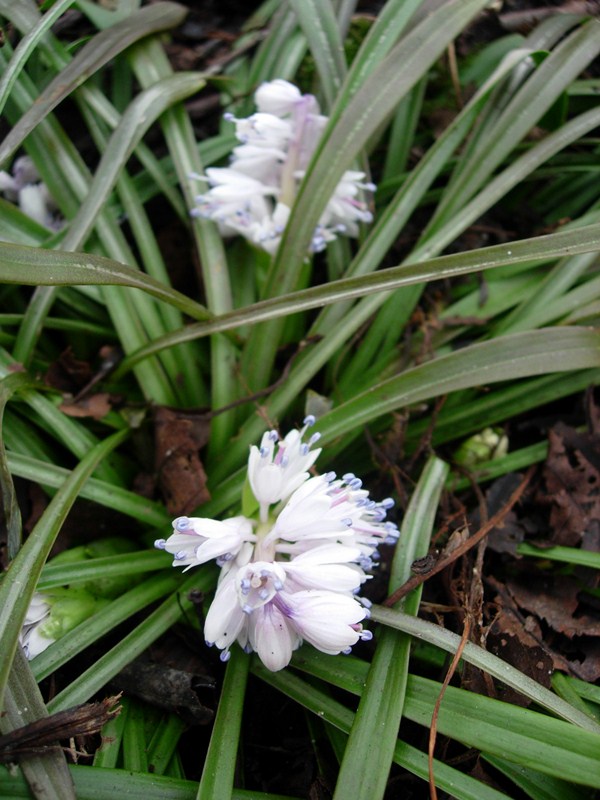
One of the first woodlanders to flower here: Ypsilandra cavaleriei
Wim, I've been admiring photos of this unusual genus over on SRGC, seems to be a popular genus in Europe, I have never met seen this plant in North American gardeners, although I don't "get out that much". This is a genus I must look into, as I like small (and early blooming) Liliaceae for the woodland; thanks for showing this one. Did you grow yours from seed, if so, how long to get a plant to flower? What are the plant's moisture requirements, wondering how it would do in my dry woodland conditions.
The name Ypsilandra is unusual, and sort of fun to say. Not very familiar with the genus I looked it up in Flora of China, and I learned a lot about it, the related genera Heloniopsis and our own Eastern US Swamp Pink" Helonias bullata. I share a miscellany of pertinent links.
Ypsilandra is a small genus of 5 species, and only one species each in Heloniopsis and Helonias. At one point, all species were classified as Helonias. The Flora of China separates out Ypsilandra and Heloniopsis by the inflorescence type:
Ypsilandra: Inflorescence racemose or spicate Heloniopsis: Inflorescence umbellate or umbellate-racemose
Tanaka (J. Jap. Bot. 73: 102--115. 1998) reduced Heloniopsis and Ypsilandra to synonymy under Helonias. However, a recent molecular phylogenetic study by Fuse and Tamura (Plant Biol. 2: 1--13. 2000) confirmed that Helonias Heloniopsis and Ypsilandra are not mixed with each other, and they each deserve independent generic status.
I like Ypsilandra and Heloniopsis a lot too. I'm afraid they wouldn't like your dry summers though :'(. I'm fairly certain Heloniopsis would not survive a year if its roots dry out. I have problems with some of the Heloniopsis, since even though we normally have "Belgian" summers (meaning with a lot of rain and rain and rain...), we sometimes can have very hot and dry summers too. You could try this Ypsilandra since it seems to be a lot stronger, but no guarantees. I didn't sow this plant and it has never set seed for me...I guess the pollinators are absent here (maybe I should start walking around with a paintbrush ;))
Here's another picture of Ypsilandra cavaleriei from today.
I've only ever seen Y. cavaleriei and Y. thibetica either. I didn't even know there were three other species. I'll post some pics of Heloniopsis when they are flowering here. As for Helonias: that is a really stunning plant. I've tried it from seed a few times but was never successful. I guess I'll have to buy a plant.
Oh my, your Ypsilandra is even more beautiful today... so delicate... gorgeous! :o :o :o
I am planning to make a new garden in a singular low spot (still up on a hill) in my garden, when I envision the ability to grow plants needing more moisture. In spring, I can't mow the grass in this small area until about June because water run-off from the hill passes through and my tractor mower gets stuck in the mud.
Regarding Helonias, this is a true swamp plant, has to be grown with its feet in water, at least that is how I've seen it growing here. North of me, in Southern New Hampshire, Dr. George Newman has a fantastic woodland garden of 4-5 acres, surrounded by wetlands and swamps. He puts "waders" on and plants the swampy areas with Helonias, where they grow to majestic proportions, taller than you might imagine... most impressive. My friend Marsha Russell, grew her plants in large tubs outdoors, the tubs sitting in a 6" deep pool of water in almost full sun; her plants did not grow as tall, but always flowered splendidly.
Oh my, your Ypsilandra is even more beautiful today... so delicate... gorgeous! :o :o :o
I thought so too ;)
McDonough wrote:
I am planning to make a new garden in a singular low spot (still up on a hill) in my garden, when I envision the ability to grow plants needing more moisture. In spring, I can't mow the grass in this small area until about June because water run-off from the hill passes through and my tractor mower gets stuck in the mud.
Regarding Helonias, this is a true swamp plant, has to be grown with its feet in water, at least that is how I've seen it growing here. North of me, in Southern New Hampshire, Dr. George Newman has a fantastic woodland garden of 4-5 acres, surrounded by wetlands and swamps. He puts "waders" on and plants the swampy areas with Helonias, where they grow to majestic proportions, taller than you might imagine... most impressive. My friend Marsha Russell, grew her plants in large tubs outdoors, the tubs sitting in a 6" deep pool of water in almost full sun; her plants did not grow as tall, but always flowered splendidly.
With a low spot which stays damp you might be able to grow these plants. I look forward to seeing your project progress.
I've tried sowing Helonias in swamp-like conditions. In the same way I sow Sarracenia, Pinguicula and Drosera. But maybe they need another growing medium than a peat/sand mix?
I have been looking for other species of Ypsilandra to grow here. I have had Y thibethica for years and it grows very well in a rather dry position in my woodland. Picture taken March last spring:
..and a few days later: It blooms early but not yet this year. I have never seen seed but I think youhave to grow different clones. Seems that cavaleriei looks abit better but my plant grows in deep shade.
Interesting to see these! The Helonias is especially interesting! I wonder how hardy any of these are? None of your areas are cold enough to count...lol
Interesting to see these! The Helonias is especially interesting! I wonder how hardy any of these are? None of your areas are cold enough to count...lol
Cohan, my plant has taken severe frost this winter without snow cover - unharmed! (Been down to -16C)
Good to know--means it might at least survive part of september here ;) seriously, of course, you never know--many things survive where you don't expect it--just look at Lori's garden ;D and of course, I don't know how cold it gets where these come from
Good to know--means it might at least survive part of september here ;) seriously, of course, you never know--many things survive where you don't expect it--just look at Lori's garden ;D and of course, I don't know how cold it gets where these come from
Still awake Cohan :o I have just started my new day ;D
What I mean is, if it takes that freezing it surely takes more. The mechanism for tolerating freezing certainly works in that species and the difference - for a plant - between say - 16 and - 30 isn't as big as between 0 and - 16. When the worst of winter strikes your plants are covered in snow I suppose?
I was still up--my time is one hour earlier than forum time, so it wasn't even 1 o'clock here :)
Wrightman's has an article on hardiness, http://www.wrightmanalpines.com/article_6.asp in which they say: "Most of the plants we offer are hardy into very cold winter climates (lows of -30°C). Very few plants survive in places where temperatures dip below -40°C as there is an actual physical change in the water molecule below this level and only a few genera have developed the special adaptations needed to survive. Very few customers live in those regions, so it is not a condition we have to consider. " Statements I find slightly objectionable ;D since, in fact, there are many plants living here, thank-you! and quite a few people too, however, maybe not many folks in Alberta, Saskatchewan, Manitoba etc ordering from Wrightman's.... We don't get many days below -40, it probably has not happened this year, or just barely, we were definitely at -38/-39 at least, a couple of times..however, plants for long term survival here should be able to take it!
Our snow cover is variable, more than Lori, but this is still a relatively dry climate; Usually we have snow before we get -40, but its not at all impossible for some spots (usually under trees, but could happen on a sunny exposed rock garden slope) to be bare in late winter cold spells-bare patches can appear in Feb, even though it wont be all gone for a long time after that, and we just had -38 in March; Its also highly possible to get -30 any time from late October to December, before the snow cover is established; this year the snow came in mid Nov and has not left, but mid-Dec or later is common for lasting snow.... weeks of nightly frost, many lows to -10 and at least -20 will occur before we have any lasting snow..
OK, both dry and cold then! I recently read that some plants could tolerate -80oC when exposed to low nonfreezing temps in fall! Can't remember which plants but that is much colder than any plants on Earth grow anyway. I think the coldest temp measured in Norway this winter was almost -50 in December - but that was in the far north! .... and they have lots of nice plants too up there ;D
OK, both dry and cold then! I recently read that some plants could tolerate -80oC when exposed to low nonfreezing temps in fall! Can't remember which plants but that is much colder than any plants on Earth grow anyway. I think the coldest temp measured in Norway this winter was almost -50 in December - but that was in the far north! .... and they have lots of nice plants too up there ;D
There is a danger for plants which are exposed --sometimes things like native Pyrolas may be exposed in late winter/early spring when the ground is still solidly frozen, and there can be damage to foliage.. of course they recover later, but things like Ledum (wild) don't look as good here as they do in places where snow is reliably deeper (farther west).. Luckily,most of my yard and gardens present and future is the kind of area that holds snow longer, so most plants wont be exposed too early... fall/early winter is always a question, though.... The comment about the right fall temperatures setting up winter survival are worth noting--2009 we had a very warm fall, then suddenly very cold--it was very hard on plants that normally survive easily here...
Hmm, I know that the conventional wisdom says that snow cover is pretty well essential for wintering-over plants and that a lack of snow cover means certain death, but we normally do not have continuous or blanketing snow cover here (the last 3 winters being an exception in the last 14 years)... and on top of that, there are also chinook conditions that can raise the temperature by 30 degrees C in 12 hours. Yet it seems like a really pretty good place to grow perennials nonetheless (admittedly not near so good for woody species). I dunno... I haven't seen much reason to put a lot of faith in the conventional wisdom in general when it comes to gardening. :)
I'm sure it depends a lot on what plant it is, and lots of other hardiness/cultivation factors! Snow cover, like many other things, being a factor some plants appreciate, some don't some couldn't care less :) I don't know much about garden wisdom, conventional or other wise, but I have clearly seen the impact on some native species, as I mentioned above, of varying snow cover--some of the native evergreen woodland species, such as Pyrolas, are clearly damaged when they are exposed by early melting in Feb, etc, followed, inevitably by deep cold (no doubt wind and sun exposure come into play in this as well, though of course those are components of the bareness to start with!)...their brethren in spots that do not melt early do not suffer the same foliar damage...
I also see a big difference between Ledum here--where it grows commonly in moist woods--versus plants in the foothills and mountains in spots which I presume to have a heavier snowfall (wetter in general, but the places they grow here stay quite moist all year, here, so I don't think its just a moisture issue) plants farther west are much taller, with much healthier looking foliage, our plants often seem to have winter damaged foliage, and don't grow as high, since snow cover is not usually that deep --note 'think' and 'presume' I certainly don't claim to have done scientific study on this subject ;D and there could be some other factor affecting them, unrelated to snow depth!
Both these examples refer to evergreen plants, and woody in the second case, so this doesn't necessarily disagree with Lori's observations...
Also my climate does have some significant if subtle differences from Lori's a little less dry in general, less frequent and less dramatic winter warming episodes, and more/lasting snow.. On my property, these differences are enhanced by forest on two sides, and tree windbreaks on the other two, with a break (driveway!) on one corner--,meaning, this is not a bad place for woodies, in general ;D Other than that, I have no idea yet of the success of alpine and dryland plants in general, here, let alone some of the exotic stuff Lori is growing ;D
I just picked up a Ypsilandra thibetica at the WWSW last week. We'll see how it does in Newfoundland where dry summers are not the norm! I have Heloniopsis orientalis in a peaty site. It blooms in late April.
Todd, Heloniopsis orientalis is a plant I have tried to acquire for years. I have sowed seed several times - no germination :-[ and you never find it in the nurseries here.
One of my many treasures from Plant Delights is a Paris polyphylla....I've never grown this before so does anyone have experience with it and can pass along any tips for getting it to thrive? I garden on a lake & streamside under large pines & hemlocks over ledge. I've got Trillium doing quite well and they grow wild all around here. :)
An obscure genus that I find intriguing is Chloranthus, in its own family Chloranthaceae, a small genus of 18 species, many from tropical to subtropical areas in Asia. Flora of China lists 12 species, and on this years NARGS Surplus Seed List 2 species are available, C. henryi and C. multistachys, although I'm not familiar with them.
The only reason I'm actually aware of the genus, is that I have seen and photographed a Chloranthus sp. in one of Darrell Probst's garden beds full of treasures he collected in China (see image above). Looking through the FOC key, maybe it comes closest to Chloranthus holostegius because of the unbranched stems, and clasping scale-like leaves and terminal whorl of elliptic guard leaves that form a cup holding a small white candle of bloom. Chloranthus holostegius grows up to 2800 m, one of the few species native to such heights, another clue that the hardy plant shown above might be this species.
Such an odd looking plant, but alluring in a strange way.
Interesting... with the flower spike and tripartite leaf, it looks almost like an Asian analogue to vanilla leaf, Achlys triphylla... though it looks like the leaves remain much smaller? (They are not related, however.) Achlys triphylla, a western North American woodlander:
Interesting... with the flower spike and tripartite leaf, it looks almost like an Asian analogue to vanilla leaf, Achlys triphylla... though it looks like the leaves remain much smaller? (They are not related, however.) Achlys triphylla, a western North American woodlander: [attachthumb=1] [attachthumb=2] [attachthumb=3]
Wim, I can't wait to see the Primula maximowiczii! Not meaning to spoil the coming surprise, but a true red primula - wow! I grew it for a couple (or 3?) years and then, poof, it was gone... and I had not saved seed for myself (donated it all, foolishly :rolleyes:). Scoliopus is interesting. I wonder how hardy it is? Is it difficult from seed?
I wonder how hardy it is? Is it difficult from seed?
Lori, It must be quite hardy...I bought a P. maximowiczii from Cady's Falls Nursery in Morrisville, VT a couple years ago, a zone 4 nursery. But it never made it through the first summer...too hot I think. I've got seed of it from the Primrose society seed-ex and I'm going to try again. I would also like to know of any germinating tips for it.
P. maximowiczii lasted here for 2-3 years, so seemingly pretty hardy, though I cannot claim it was long-lived! Flora of China says it's a perennial. http://www.efloras.org/florataxon.aspx?flora_id=2&taxon_id=200017319 I bought my plant, as you did, and have not yet tried it from seed.
Wim, love seeing the two Scoliopus species; I find it fascinating how such North American treasures are more often grown in Europe than here. And to see S. hallii, that's a double treat as it is much less commonly grown. I first encountered Scoliopus in NARGS member's gardens in the greater Seattle Washington area, and was totally charmed by these little munchkins (with a terrible common name of Fetid Adder's Tongue). Have not tried growing there here in New England, but they are most definitely on my list. Wim, are the flowers bad smelling, to earn their name? http://plants.usda.gov/java/profile?symbol=SCOLI
Wim, I can't wait to see the Primula maximowiczii! Not meaning to spoil the coming surprise, but a true red primula - wow! I grew it for a couple (or 3?) years and then, poof, it was gone... and I had not saved seed for myself (donated it all, foolishly :rolleyes:). Scoliopus is interesting. I wonder how hardy it is? Is it difficult from seed?
Hi Lori,
if I get some seed of P. maximowiczii this year I can send you some.
Lori, It must be quite hardy...I bought a P. maximowiczii from Cady's Falls Nursery in Morrisville, VT a couple years ago, a zone 4 nursery. But it never made it through the first summer...too hot I think. I've got seed of it from the Primrose society seed-ex and I'm going to try again. I would also like to know of any germinating tips for it.
Amy,
I sowed P. maximowiczii as soon as I received the seeds (I got them in June of 2009). I think the seeds need to be sown as fresh as possible. I surface sowed them on some leafmould and they germinated very quickly. Just make sure they never dry out and they don't like direct sunlight
Wim, are the flowers bad smelling, to earn their name?
They have a very typical smell indeed, a bit like a dog which hasn't been washed in ages and just ran trough the rain. I've heard the smell can be very strong if grown in a greenhouse and if you have large groups of them in your garden. Here I have to lean in very close to smell it, which I don't do very often...wet dog is not my favorite smell ;D ;)
the distribution pattern of Scoliopus hallii is weird indeed (quite border-bound for a plant ???)...I'm curious about that too?
Edit by Wim: It only grows to an elevation of 800 m, so I guess the white spot in the middle of the distribution pattern is where the Cascade Mountains are higher than 800 m?
We have lots of this plant around the garden, all raised from seed, and we are rarely without out a flower from late December until early May. Despite what has been written about it not producing seeds in cultivation ( for instance in Alf Evans book, 'the Peat Garden') we have always had good seed set on our plants. This year the flowers are later and are only just beginning.
We grow Scoliopus bigelovii and S. hallii . We love them both but you could be thought crazy for wanting them as they are curious little flowers, especially hallii, that you could easily walk past and never see.
Scoliopus bigelovii and S. hallii
Both of these are growing in fish box troughs but we also have them growing and self seeding in the open garden. The secret of keeping them growing is never let them dry out or get too hot in the summer, they do not like it.
The bigelovii has lovely spotted leaves while the foliage is young though the spots fade as the foliage matures. S. hallii has plain, brighter green leaves. The hallii flowers are at most 15mm across... just adorable little things. The smell is not one you'd want to be cooped up with, but it can be quite pleasant if all you get is a quick whiff in passing! ;D ;D The veining and marking o nthe slightly larger bigelovii flowers is really gorgeous. These guys are real favourites of mine!
Here are a couple of other Bulb Log Links about Scoliopus...
On close examination, the flowers are quite exquisite!
If the distribution is below 800m, I expect the hardiness rating is not too high, but then Vancouveria is rated zone 6-7 and Lori has it in Calgary (zone 3) so who knows the ultimate hardiness of Scoliopis.
We have lots of this plant around the garden, all raised from seed, and we are rarely without out a flower from late December until early May. Despite what has been written about it not producing seeds in cultivation ( for instance in Alf Evans book, 'the Peat Garden') we have always had good seed set on our plants. This year the flowers are later and are only just beginning.
We grow Scoliopus bigelovii and S. hallii . We love them both but you could be thought crazy for wanting them as they are curious little flowers, especially hallii, that you could easily walk past and never see.
Scoliopus bigelovii and S. hallii
Both of these are growing in fish box troughs but we also have them growing and self seeding in the open garden. The secret of keeping them growing is never let them dry out or get too hot in the summer, they do not like it.
The bigelovii has lovely spotted leaves while the foliage is young though the spots fade as the foliage matures. S. hallii has plain, brighter green leaves. The hallii flowers are at most 15mm across... just adorable little things. The smell is not one you'd want to be cooped up with, but it can be quite pleasant if all you get is a quick whiff in passing! ;D ;D The veining and marking o nthe slightly larger bigelovii flowers is really gorgeous. These guys are real favourites of mine! Here are a couple of other Bulb Log Links about Scoliopus... http://www.srgc.org.uk/bulblog/190303/log.html http://www.srgc.org.uk/bulblog/log2005/010205/log.html Two pix of S. bigelovii Of course, they are named for Mr Bigelow, so the "v" is a twist. http://www.marin.edu/cnps/Bigelow.html
Maggi Edit: oops , didn't add the second pic as a thumbnail! Fixed now... click to enlrage!)
On close examination, the flowers are quite exquisite!
If the distribution is below 800m, I expect the hardiness rating is not too high, but then Vancouveria is rated zone 6-7 and Lori has it in Calgary (zone 3) so who knows the ultimate hardiness of Scoliopis.
The intricate shapes and markings of the flowers repay close attention, that's for sure. There are deep furrows with the markings, very sculptural.
We've had the Scoliopus bigelovii down to minus 19 C for a longish spell some years ago and this year to around minus ten for longer than we liked so it's proving tough enough for N. E. Scotland.
I found a good video showing Scoliopus bigelovii being pollinated by fungus gnats. Some excellent close-up views of the flowers too. You might want to turn down the music or mute it on this one, but all in all, a rare treat; would like to see more plant-related videos.
Screen capture of the YouTube video, this user BotanyVideo has a number of good ones to watch.
Scoliopus bigelovii - pollination (tip: if you have high-speed internet, hit the "full screen" button on the right right, hit ESC to return screen to normal)
T thalictroides 'Babe' T thalictroides 'Betty Blake' T thalictroides 'Big' T thalictroides 'Diamant' T thalictroides 'Jade Feather' T thalictroides 'Pink Diamant' T thalictroides 'White Singel' and T thalictroides 'XXL'
Beautiful, Wim. The native Thalictrum thalictroides (we call them May flowers) are barely detectable at the soil surface here.
And our native Uvularia grandiflora are a half inch high. Does your Gold Leaf Form have leaves that turn yellow later? It looks like normal leaf color in your photo...
Beautiful, Wim. The native Thalictrum thalictroides (we call them May flowers) are barely detectable at the soil surface here.
And our native Uvularia grandiflora are a half inch high. Does your Gold Leaf Form have leaves that turn yellow later? It looks like normal leaf color in your photo...
Hi Rick,
The leaves get a bit more yellow but it's not very spectacular...I wouldn't have given it a cultivar name. I've heard there's an orange flowering Uvularia going around. Anyone ever seen it?
interesting to see the Thalictrum, our local sp has sprays of tiny flowers, and flowers in summer,, Rick, on your wild T thalictroides, are the flowers at all large like these cultivars?

Comments
Mark McDonough
Re: Miscellaneous Woodlanders
Wed, 03/02/2011 - 8:12amWim, I've been admiring photos of this unusual genus over on SRGC, seems to be a popular genus in Europe, I have never met seen this plant in North American gardeners, although I don't "get out that much". This is a genus I must look into, as I like small (and early blooming) Liliaceae for the woodland; thanks for showing this one. Did you grow yours from seed, if so, how long to get a plant to flower? What are the plant's moisture requirements, wondering how it would do in my dry woodland conditions.
Mark McDonough
Re: Miscellaneous Woodlanders
Wed, 03/02/2011 - 8:26amThe name Ypsilandra is unusual, and sort of fun to say. Not very familiar with the genus I looked it up in Flora of China, and I learned a lot about it, the related genera Heloniopsis and our own Eastern US Swamp Pink" Helonias bullata. I share a miscellany of pertinent links.
Ypsilandra is a small genus of 5 species, and only one species each in Heloniopsis and Helonias. At one point, all species were classified as Helonias. The Flora of China separates out Ypsilandra and Heloniopsis by the inflorescence type:
Ypsilandra: Inflorescence racemose or spicate
Heloniopsis: Inflorescence umbellate or umbellate-racemose
Another Ypsilandra species was shown recently on SRGC, Y. thibetica, reminds me of Scilla autumnalis:
http://www.srgc.org.uk/smf/index.php?action=dlattach;topic=6656.0;attach...
From the Flora of China page on Heloniopsis orientalis:
http://www.efloras.org/florataxon.aspx?flora_id=2&taxon_id=114957
...good line drawing:
http://www.efloras.org/object_page.aspx?object_id=60560&flora_id=2
...photo on SRGC
http://www.srgc.org.uk/smf/index.php?action=dlattach;topic=6656.0;attach...
Tanaka (J. Jap. Bot. 73: 102--115. 1998) reduced Heloniopsis and Ypsilandra to synonymy under Helonias. However, a recent molecular phylogenetic study by Fuse and Tamura (Plant Biol. 2: 1--13. 2000) confirmed that Helonias Heloniopsis and Ypsilandra are not mixed with each other, and they each deserve independent generic status.
More discussion on the Helonias, Heloniopsis and Ypsilandra on the Flora of North America site, where the single N.American plant Helonias bullata is covered.
http://www.efloras.org/florataxon.aspx?flora_id=1&taxon_id=114956
Helonias bullata
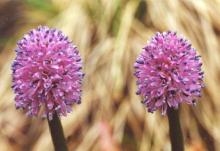
http://plants.usda.gov/java/profile?symbol=HEBU
Photo taken in Marsha Russell's garden, Littleton, Massachusetts.
...Helonias bullata image on SRGC:
http://www.srgc.org.uk/smf/index.php?action=dlattach;topic=1722.0;attach...
...New Jersey State publication, scroll halfway down for two photos, one showing habitat:
http://www.state.nj.us/pinelands/science/current/kc/
...US Forest Service page on Helonias bullata:
http://www.fs.fed.us/wildflowers/rareplants/profiles/tep/helonias_bullat...
...photos of Helonias bullata taken at the Garden In The Woods, New England Wild Flower Society, Natick Massachusetts:
http://www.flickr.com/photos/arborboy/386153091/in/faves-7623220@N04/
WimB (not verified)
Re: Miscellaneous Woodlanders
Wed, 03/02/2011 - 8:26amI like Ypsilandra and Heloniopsis a lot too. I'm afraid they wouldn't like your dry summers though :'(. I'm fairly certain Heloniopsis would not survive a year if its roots dry out. I have problems with some of the Heloniopsis, since even though we normally have "Belgian" summers (meaning with a lot of rain and rain and rain...), we sometimes can have very hot and dry summers too. You could try this Ypsilandra since it seems to be a lot stronger, but no guarantees. I didn't sow this plant and it has never set seed for me...I guess the pollinators are absent here (maybe I should start walking around with a paintbrush ;))
Here's another picture of Ypsilandra cavaleriei from today.
WimB (not verified)
Re: Miscellaneous Woodlanders
Wed, 03/02/2011 - 8:34amI've only ever seen Y. cavaleriei and Y. thibetica either. I didn't even know there were three other species. I'll post some pics of Heloniopsis when they are flowering here. As for Helonias: that is a really stunning plant. I've tried it from seed a few times but was never successful. I guess I'll have to buy a plant.
Mark McDonough
Re: Miscellaneous Woodlanders
Wed, 03/02/2011 - 8:42amOh my, your Ypsilandra is even more beautiful today... so delicate... gorgeous! :o :o :o
I am planning to make a new garden in a singular low spot (still up on a hill) in my garden, when I envision the ability to grow plants needing more moisture. In spring, I can't mow the grass in this small area until about June because water run-off from the hill passes through and my tractor mower gets stuck in the mud.
Regarding Helonias, this is a true swamp plant, has to be grown with its feet in water, at least that is how I've seen it growing here. North of me, in Southern New Hampshire, Dr. George Newman has a fantastic woodland garden of 4-5 acres, surrounded by wetlands and swamps. He puts "waders" on and plants the swampy areas with Helonias, where they grow to majestic proportions, taller than you might imagine... most impressive. My friend Marsha Russell, grew her plants in large tubs outdoors, the tubs sitting in a 6" deep pool of water in almost full sun; her plants did not grow as tall, but always flowered splendidly.
WimB (not verified)
Re: Miscellaneous Woodlanders
Wed, 03/02/2011 - 9:03amI thought so too ;)
With a low spot which stays damp you might be able to grow these plants. I look forward to seeing your project progress.
I've tried sowing Helonias in swamp-like conditions. In the same way I sow Sarracenia, Pinguicula and Drosera. But maybe they need another growing medium than a peat/sand mix?
Trond Hoy
Re: Miscellaneous Woodlanders
Wed, 03/02/2011 - 1:34pmI have been looking for other species of Ypsilandra to grow here. I have had Y thibethica for years and it grows very well in a rather dry position in my woodland.
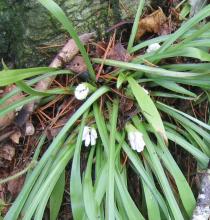
Picture taken March last spring:
..and a few days later:
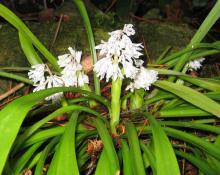
It blooms early but not yet this year. I have never seen seed but I think youhave to grow different clones.
Seems that cavaleriei looks abit better but my plant grows in deep shade.
cohan (not verified)
Re: Miscellaneous Woodlanders
Wed, 03/02/2011 - 4:23pmInteresting to see these! The Helonias is especially interesting! I wonder how hardy any of these are? None of your areas are cold enough to count...lol
Trond Hoy
Re: Miscellaneous Woodlanders
Wed, 03/02/2011 - 11:30pmCohan, my plant has taken severe frost this winter without snow cover - unharmed! (Been down to -16C)
cohan (not verified)
Re: Miscellaneous Woodlanders
Wed, 03/02/2011 - 11:43pmGood to know--means it might at least survive part of september here ;)
seriously, of course, you never know--many things survive where you don't expect it--just look at Lori's garden ;D and of course, I don't know how cold it gets where these come from
Trond Hoy
Re: Miscellaneous Woodlanders
Wed, 03/02/2011 - 11:55pmStill awake Cohan :o I have just started my new day ;D
What I mean is, if it takes that freezing it surely takes more. The mechanism for tolerating freezing certainly works in that species and the difference - for a plant - between say - 16 and - 30 isn't as big as between 0 and - 16. When the worst of winter strikes your plants are covered in snow I suppose?
cohan (not verified)
Re: Miscellaneous Woodlanders
Thu, 03/03/2011 - 11:56amI was still up--my time is one hour earlier than forum time, so it wasn't even 1 o'clock here :)
Wrightman's has an article on hardiness,
http://www.wrightmanalpines.com/article_6.asp
in which they say:
"Most of the plants we offer are hardy into very cold winter climates (lows of -30°C). Very few plants survive in places where temperatures dip below -40°C as there is an actual physical change in the water molecule below this level and only a few genera have developed the special adaptations needed to survive. Very few customers live in those regions, so it is not a condition we have to consider. "
Statements I find slightly objectionable ;D since, in fact, there are many plants living here, thank-you! and quite a few people too, however, maybe not many folks in Alberta, Saskatchewan, Manitoba etc ordering from Wrightman's....
We don't get many days below -40, it probably has not happened this year, or just barely, we were definitely at -38/-39 at least, a couple of times..however, plants for long term survival here should be able to take it!
Our snow cover is variable, more than Lori, but this is still a relatively dry climate; Usually we have snow before we get -40, but its not at all impossible for some spots (usually under trees, but could happen on a sunny exposed rock garden slope) to be bare in late winter cold spells-bare patches can appear in Feb, even though it wont be all gone for a long time after that, and we just had -38 in March;
Its also highly possible to get -30 any time from late October to December, before the snow cover is established; this year the snow came in mid Nov and has not left, but mid-Dec or later is common for lasting snow.... weeks of nightly frost, many lows to -10 and at least -20 will occur before we have any lasting snow..
Trond Hoy
Re: Miscellaneous Woodlanders
Thu, 03/03/2011 - 1:22pmOK, both dry and cold then!
I recently read that some plants could tolerate -80oC when exposed to low nonfreezing temps in fall! Can't remember which plants but that is much colder than any plants on Earth grow anyway.
I think the coldest temp measured in Norway this winter was almost -50 in December - but that was in the far north! .... and they have lots of nice plants too up there ;D
cohan (not verified)
Re: Miscellaneous Woodlanders
Thu, 03/03/2011 - 10:34pmThere is a danger for plants which are exposed --sometimes things like native Pyrolas may be exposed in late winter/early spring when the ground is still solidly frozen, and there can be damage to foliage.. of course they recover later, but things like Ledum (wild) don't look as good here as they do in places where snow is reliably deeper (farther west)..
Luckily,most of my yard and gardens present and future is the kind of area that holds snow longer, so most plants wont be exposed too early... fall/early winter is always a question, though....
The comment about the right fall temperatures setting up winter survival are worth noting--2009 we had a very warm fall, then suddenly very cold--it was very hard on plants that normally survive easily here...
Lori S. (not verified)
Re: Miscellaneous Woodlanders
Thu, 03/03/2011 - 11:15pmHmm, I know that the conventional wisdom says that snow cover is pretty well essential for wintering-over plants and that a lack of snow cover means certain death, but we normally do not have continuous or blanketing snow cover here (the last 3 winters being an exception in the last 14 years)... and on top of that, there are also chinook conditions that can raise the temperature by 30 degrees C in 12 hours. Yet it seems like a really pretty good place to grow perennials nonetheless (admittedly not near so good for woody species).
I dunno... I haven't seen much reason to put a lot of faith in the conventional wisdom in general when it comes to gardening. :)
cohan (not verified)
Re: Miscellaneous Woodlanders
Fri, 03/04/2011 - 12:23amI'm sure it depends a lot on what plant it is, and lots of other hardiness/cultivation factors! Snow cover, like many other things, being a factor some plants appreciate, some don't some couldn't care less :)
I don't know much about garden wisdom, conventional or other wise, but I have clearly seen the impact on some native species, as I mentioned above, of varying snow cover--some of the native evergreen woodland species, such as Pyrolas, are clearly damaged when they are exposed by early melting in Feb, etc, followed, inevitably by deep cold (no doubt wind and sun exposure come into play in this as well, though of course those are components of the bareness to start with!)...their brethren in spots that do not melt early do not suffer the same foliar damage...
I also see a big difference between Ledum here--where it grows commonly in moist woods--versus plants in the foothills and mountains in spots which I presume to have a heavier snowfall (wetter in general, but the places they grow here stay quite moist all year, here, so I don't think its just a moisture issue) plants farther west are much taller, with much healthier looking foliage, our plants often seem to have winter damaged foliage, and don't grow as high, since snow cover is not usually that deep --note 'think' and 'presume' I certainly don't claim to have done scientific study on this subject ;D and there could be some other factor affecting them, unrelated to snow depth!
Both these examples refer to evergreen plants, and woody in the second case, so this doesn't necessarily disagree with Lori's observations...
Also my climate does have some significant if subtle differences from Lori's a little less dry in general, less frequent and less dramatic winter warming episodes, and more/lasting snow.. On my property, these differences are enhanced by forest on two sides, and tree windbreaks on the other two, with a break (driveway!) on one corner--,meaning, this is not a bad place for woodies, in general ;D Other than that, I have no idea yet of the success of alpine and dryland plants in general, here, let alone some of the exotic stuff Lori is growing ;D
Todd Boland
Re: Miscellaneous Woodlanders
Tue, 03/08/2011 - 11:15amI just picked up a Ypsilandra thibetica at the WWSW last week. We'll see how it does in Newfoundland where dry summers are not the norm! I have Heloniopsis orientalis in a peaty site. It blooms in late April.
cohan (not verified)
Re: Miscellaneous Woodlanders
Tue, 03/08/2011 - 11:43amReally nice plant, Todd! Good luck with the Ypsilandra--sounds like it should be a good fit for your climate..
Trond Hoy
Re: Miscellaneous Woodlanders
Tue, 03/08/2011 - 12:39pmTodd, Heloniopsis orientalis is a plant I have tried to acquire for years. I have sowed seed several times - no germination :-[ and you never find it in the nurseries here.
Amy Olmsted
Re: Miscellaneous Woodlanders
Tue, 03/08/2011 - 3:33pmOne of my many treasures from Plant Delights is a Paris polyphylla....I've never grown this before so does anyone have experience with it and can pass along any tips for getting it to thrive? I garden on a lake & streamside under large pines & hemlocks over ledge. I've got Trillium doing quite well and they grow wild all around here. :)
Todd Boland
Re: Miscellaneous Woodlanders
Wed, 03/09/2011 - 10:54amI've seen Paris growing under Beech forest, so I expect wherever Trilliums do well, Paris would be equally happy.
Mark McDonough
Re: Miscellaneous Woodlanders
Wed, 03/09/2011 - 11:27amAn obscure genus that I find intriguing is Chloranthus, in its own family Chloranthaceae, a small genus of 18 species, many from tropical to subtropical areas in Asia. Flora of China lists 12 species, and on this years NARGS Surplus Seed List 2 species are available, C. henryi and C. multistachys, although I'm not familiar with them.
The only reason I'm actually aware of the genus, is that I have seen and photographed a Chloranthus sp. in one of Darrell Probst's garden beds full of treasures he collected in China (see image above). Looking through the FOC key, maybe it comes closest to Chloranthus holostegius because of the unbranched stems, and clasping scale-like leaves and terminal whorl of elliptic guard leaves that form a cup holding a small white candle of bloom. Chloranthus holostegius grows up to 2800 m, one of the few species native to such heights, another clue that the hardy plant shown above might be this species.
Such an odd looking plant, but alluring in a strange way.
Trond Hoy
Re: Miscellaneous Woodlanders
Wed, 03/09/2011 - 12:31pmMark, now I have placed Chloranthus on my wish list! I never really knew how charming it is till I saw your picture! Thanks :D
cohan (not verified)
Re: Miscellaneous Woodlanders
Wed, 03/09/2011 - 2:09pmChloranthus does look pretty cool... the name seems familiar.... a discussion elsewhere recently?
Todd Boland
Re: Miscellaneous Woodlanders
Wed, 03/09/2011 - 6:00pmThat is certainly a charming plant!
Lori S. (not verified)
Re: Miscellaneous Woodlanders
Wed, 03/09/2011 - 6:49pmInteresting... with the flower spike and tripartite leaf, it looks almost like an Asian analogue to vanilla leaf, Achlys triphylla... though it looks like the leaves remain much smaller? (They are not related, however.)
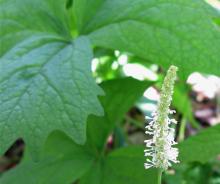
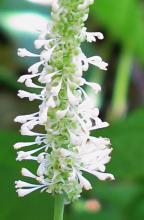
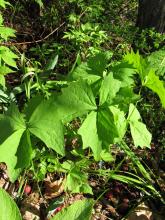
Achlys triphylla, a western North American woodlander:
http://plants.usda.gov/java/profile?symbol=ACTR
On the right in this link is Chloranthus japonicus:
http://tolweb.org/Chloranthaceae/20669
cohan (not verified)
Re: Miscellaneous Woodlanders
Wed, 03/09/2011 - 7:07pmAchlys is nice too! Are you growing this?
Lori S. (not verified)
Re: Miscellaneous Woodlanders
Wed, 03/09/2011 - 7:15pmYes, another "zone 6" plant... :rolleyes:
I should mention... it spreads around a bit too loosely to be as attractive as Mark's photo of the Chlorathus, but I kind of like it.
WimB (not verified)
Re: Miscellaneous Woodlanders
Thu, 03/10/2011 - 12:23amSome "Woodlanders" which were flowering here in the last week
Heloniopsis orientalis 'Korean form'
Hepatica nobilis 'Rubra Plena'
Corydalis solida 'Elrond'
Corydalis solida 'Loth Lorien'
Two natives of your continent.
Scoliopus bigelovii
and Scoliopus hallii
and Primula maximowiczii in bud.
Todd Boland
Re: Miscellaneous Woodlanders
Thu, 03/10/2011 - 3:08amI have to try and track down Scoliopus...what a charming plant.
It seems I need to try a vanilla root...I was dubious if it would survive here but if in Calgary, then no problems!
Lori S. (not verified)
Re: Miscellaneous Woodlanders
Thu, 03/10/2011 - 5:20amWim, I can't wait to see the Primula maximowiczii! Not meaning to spoil the coming surprise, but a true red primula - wow! I grew it for a couple (or 3?) years and then, poof, it was gone... and I had not saved seed for myself (donated it all, foolishly :rolleyes:).
Scoliopus is interesting. I wonder how hardy it is? Is it difficult from seed?
Amy Olmsted
Re: Miscellaneous Woodlanders
Thu, 03/10/2011 - 8:26amLori, It must be quite hardy...I bought a P. maximowiczii from Cady's Falls Nursery in Morrisville, VT a couple years ago, a zone 4 nursery. But it never made it through the first summer...too hot I think. I've got seed of it from the Primrose society seed-ex and I'm going to try again. I would also like to know of any germinating tips for it.
cohan (not verified)
Re: Miscellaneous Woodlanders
Thu, 03/10/2011 - 9:10amone to watch for seed of, then :) loose is ok, best intermingled with something else, then, I guess..
Lori S. (not verified)
Re: Miscellaneous Woodlanders
Thu, 03/10/2011 - 9:24amP. maximowiczii lasted here for 2-3 years, so seemingly pretty hardy, though I cannot claim it was long-lived! Flora of China says it's a perennial.
http://www.efloras.org/florataxon.aspx?flora_id=2&taxon_id=200017319
I bought my plant, as you did, and have not yet tried it from seed.
cohan (not verified)
Re: Miscellaneous Woodlanders
Thu, 03/10/2011 - 9:36amThe Scoliopus are very interesting! I've only seen them on SRGC, and somehow didn't have any accurate image in mind....
Mark McDonough
Re: Miscellaneous Woodlanders
Thu, 03/10/2011 - 9:53amWim, love seeing the two Scoliopus species; I find it fascinating how such North American treasures are more often grown in Europe than here. And to see S. hallii, that's a double treat as it is much less commonly grown. I first encountered Scoliopus in NARGS member's gardens in the greater Seattle Washington area, and was totally charmed by these little munchkins (with a terrible common name of Fetid Adder's Tongue). Have not tried growing there here in New England, but they are most definitely on my list. Wim, are the flowers bad smelling, to earn their name?
http://plants.usda.gov/java/profile?symbol=SCOLI
google images:
http://www.google.com/images?hl=en&sugexp=gsisc&xhr=t&q=scoliopus&cp=7&bav=on.2,or.&um=1&ie=UTF-8&source=og&sa=N&tab=wi&biw=1280&bih=809
Trond Hoy
Re: Miscellaneous Woodlanders
Thu, 03/10/2011 - 10:20amMore than once have I considered Scoliopus but never acquired any. No I have to reconsider that!
Richard T. Rodich
Re: Miscellaneous Woodlanders
Thu, 03/10/2011 - 2:44pmThat Scoliopus is a beaut. Kinda has a funny distribution:
http://www.efloras.org/object_page.aspx?object_id=8123&flora_id=1
Is that because of the mountain rain shadows?
Trond Hoy
Re: Miscellaneous Woodlanders
Thu, 03/10/2011 - 10:49pmIt doesn't like neither California nor Washington ;)
WimB (not verified)
Re: Miscellaneous Woodlanders
Fri, 03/11/2011 - 1:29amHi Lori,
if I get some seed of P. maximowiczii this year I can send you some.
I have no idea how hardy Scoliopus is. And I have never sown them myself but I heard from some friends they are really easy from seed. For more info about Scoliopus sowing you can have a look here: http://www.srgc.org.uk/bulblog/log2006/080606/log.html, http://www.srgc.org.uk/bulblog/log2007/210607/log.html and http://www.srgc.org.uk/logs/logdir/2009Jun171245243874BULB_LOG__2409.pdf.
Amy,
I sowed P. maximowiczii as soon as I received the seeds (I got them in June of 2009). I think the seeds need to be sown as fresh as possible. I surface sowed them on some leafmould and they germinated very quickly. Just make sure they never dry out and they don't like direct sunlight
WimB (not verified)
Re: Miscellaneous Woodlanders
Fri, 03/11/2011 - 1:34amThey have a very typical smell indeed, a bit like a dog which hasn't been washed in ages and just ran trough the rain. I've heard the smell can be very strong if grown in a greenhouse and if you have large groups of them in your garden. Here I have to lean in very close to smell it, which I don't do very often...wet dog is not my favorite smell ;D ;)
Rick,
the distribution pattern of Scoliopus hallii is weird indeed (quite border-bound for a plant ???)...I'm curious about that too?
Edit by Wim: It only grows to an elevation of 800 m, so I guess the white spot in the middle of the distribution pattern is where the Cascade Mountains are higher than 800 m?
Margaret Young
Re: Miscellaneous Woodlanders
Fri, 03/11/2011 - 4:12amWe have lots of this plant around the garden, all raised from seed, and we are rarely without out a flower from late December until early May. Despite what has been written about it not producing seeds in cultivation ( for instance in Alf Evans book, 'the Peat Garden') we have always had good seed set on our plants.
This year the flowers are later and are only just beginning.
We grow Scoliopus bigelovii and S. hallii . We love them both but you could be thought crazy for wanting them as they are curious little flowers, especially hallii, that you could easily walk past and never see.
Scoliopus bigelovii and S. hallii
Both of these are growing in fish box troughs but we also have them growing and self seeding in the open garden. The secret of keeping them growing is never let them dry out or get too hot in the summer, they do not like it.
The bigelovii has lovely spotted leaves while the foliage is young though the spots fade as the foliage matures. S. hallii has plain, brighter green leaves.
The hallii flowers are at most 15mm across... just adorable little things.
The smell is not one you'd want to be cooped up with, but it can be quite pleasant if all you get is a quick whiff in passing! ;D ;D
The veining and marking o nthe slightly larger bigelovii flowers is really gorgeous.
These guys are real favourites of mine!
Here are a couple of other Bulb Log Links about Scoliopus...
http://www.srgc.org.uk/bulblog/190303/log.html
http://www.srgc.org.uk/bulblog/log2005/010205/log.html
Two pix of S. bigelovii
Of course, they are named for Mr Bigelow, so the "v" is a twist.
http://www.marin.edu/cnps/Bigelow.html
Maggi
Edit: oops , didn't add the second pic as a thumbnail! Fixed now... click to enlarge!)
Todd Boland
Re: Miscellaneous Woodlanders
Fri, 03/11/2011 - 7:33amOn close examination, the flowers are quite exquisite!
If the distribution is below 800m, I expect the hardiness rating is not too high, but then Vancouveria is rated zone 6-7 and Lori has it in Calgary (zone 3) so who knows the ultimate hardiness of Scoliopis.
cohan (not verified)
Re: Miscellaneous Woodlanders
Fri, 03/11/2011 - 12:08pmYes, very cool plants for sure!
Margaret Young
Re: Miscellaneous Woodlanders
Fri, 03/11/2011 - 2:34pmThe intricate shapes and markings of the flowers repay close attention, that's for sure. There are deep furrows with the markings, very sculptural.
We've had the Scoliopus bigelovii down to minus 19 C for a longish spell some years ago and this year to around minus ten for longer than we liked so it's proving tough enough for N. E. Scotland.
Mark McDonough
Re: Miscellaneous Woodlanders
Sun, 03/13/2011 - 1:26pmI found a good video showing Scoliopus bigelovii being pollinated by fungus gnats. Some excellent close-up views of the flowers too. You might want to turn down the music or mute it on this one, but all in all, a rare treat; would like to see more plant-related videos.
Screen capture of the YouTube video, this user BotanyVideo has a number of good ones to watch.
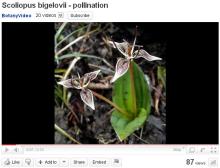
Scoliopus bigelovii - pollination
(tip: if you have high-speed internet, hit the "full screen" button on the right right, hit ESC to return screen to normal)
WimB (not verified)
Re: Miscellaneous Woodlanders
Fri, 04/08/2011 - 4:53amSome Thalictrum thalictroides in flower here now:
T thalictroides 'Babe'
T thalictroides 'Betty Blake'
T thalictroides 'Big'
T thalictroides 'Diamant'
T thalictroides 'Jade Feather'
T thalictroides 'Pink Diamant'
T thalictroides 'White Singel'
and T thalictroides 'XXL'
and two other shade lovers:
Glaucidium palmatum and Uvularia grandiflora 'Gold Leaf Form'
Richard T. Rodich
Re: Miscellaneous Woodlanders
Fri, 04/08/2011 - 9:21amBeautiful, Wim. The native Thalictrum thalictroides (we call them May flowers) are barely detectable at the soil surface here.
And our native Uvularia grandiflora are a half inch high. Does your Gold Leaf Form have leaves that turn yellow later? It looks like normal leaf color in your photo...
WimB (not verified)
Re: Miscellaneous Woodlanders
Fri, 04/08/2011 - 9:51amHi Rick,
The leaves get a bit more yellow but it's not very spectacular...I wouldn't have given it a cultivar name. I've heard there's an orange flowering Uvularia going around. Anyone ever seen it?
cohan (not verified)
Re: Miscellaneous Woodlanders
Sun, 04/10/2011 - 3:46pminteresting to see the Thalictrum, our local sp has sprays of tiny flowers, and flowers in summer,,
Rick, on your wild T thalictroides, are the flowers at all large like these cultivars?
Pages