Interesting observations, Mark! I suppose you intend to plant the new plant out some place and compare the specimens next year when the new one has had a better life than restricted in a pot.
Daniel J Hinkley mentions in his book "The explorer's garden. rare and unusual perennials" that "The large, sharply lobed, maplelike leaves (of K.palmata) are borne in opposite pairs . . . . .. Atop stems that rise to 6ft (1.8m) on content individuals, cymes of elegant pendulous, pastel-yellow flowers are produced on lax pedicels in late summer . . . . . .The nodding floral branches are what distinguish this species from K. coreana, the flowers of which are borne on a stiffly upright inflorescence. With a stem reaching nearly 7ft (2.1m) high on robust specimens, K. coreana can be somewhat larger than the Japanese counterpart".
He also mentions that the University of British Columbia Botanical Garden has successfully crossed the two species. Possibly others have done too.
Fascinating! Thanks Trond! I think there is so much parroted (mis)information out there on the internet, it's hard to get to the root of these situations. And as well, plants in cultivation, when lacking well known and accessible botanical information, are often mixed up because there is little basis for comparison and any correction. But when I saw this potted plant of K. koreana, I was struck with the obvious differences between it and palmata. The Hinkley description is interesting, and now I'm more anxious than ever to see if the buds on K. koreana remain upright.
It is curious that in the Flora of China entry for K. palmata, reports flowering and fruiting months as: Fl. Apr-Mar, fr. May-Aug, which seems completely wrong, the early dates surely an error, as Kirengheshoma is a late summer blooming. Flora of Japan gives flowering time as August.
By the way, I do have The Explorer's Garden book, but didn't think to check it, thanks for the insight.
About K. palmata, I found one site that states: The flowers of most of the plants seen in gardens are a fairly deep yellow, though the colour of wild specimens ranges from white to apricot.
We've had regular rain this summer, but even so, with the extra heavy total rainfall from last week's Hurricane Irene (Tropical Storm Irene) by the time it reached us, Kirengeshoma palmata is more floriferous than ever, certainly enjoying all that rain and repaying in kind with a burst of new flowers and more buds (left photo). And my recently purchased and planted K. koreana shows buds a trifle swollen, still waiting for them to open (photos 2 & 3 on the right):
Another moisture lover (although taking normal moderate dry soils well, but not drought) is Leucoceptrum stillipilum, the Japanese Shrub Mint. This is a small Asian genus, and at least with a couple species I know about, are superb autumn blooming plants that excel in shady woodland conditions. It's been perfectly hardy for a number of years, and unlike what might be implied by the common name, it behaves as a woody-stemmed herbaceous perennial, all growth dying down over winter and resprouting with fresh shoots in the spring. It is worth growing for the board, textured foliage, looking something like a Hydrangea. In mid October the buds expand into stamen-candles of lavender. Here are some photos of foliage and buds taken today, and a freshly expanding flower taken Oct. 15th, 2010.
Leucoceptrum stillipilum is a rare one! I don't think I've ever seen it for sale anywhere anytime :o Does it produce seed?
Nope, never seen seed; this plant flowers mid October through November, and by the end of flowering, the season shuts down and we're into freezing temperatures and often some snow, so seed on such late bloomers never has time to develop.
The last blooms on Anemonopsis macrophylla just finished up. The form I have is not the best, and this season I only had 1 bloom stalk versus the 5-6 stalks I usually get, not sure why the deficit. The individual flowers deserve to be uplifted for close inspection, as they are extraordinarily beautiful.
I've got 3 A. macrophylla from 2 different growers. the 2 from Ellen Hornig are much more compact than the one from Peter Joppe and they are planted pretty near each other. But they all bloomed and now I'm hoping for a good seed set. :D
My A. macrophylla 'White Swan' has bloomed well this year and looks to have set a good crop of seed. I am already wondering what the off spring will look like. A poor picture but the only one I have
as you are the first to ask I will certainly hope to be able to send you some.
At the moment I do not know what the capsules contain but previous experience shows that if no seed is set the capsules shrivel and this has not happened so far. Fingers crossed!
My A. macrophylla 'White Swan' has bloomed well this year and looks to have set a good crop of seed. I am already wondering what the off spring will look like. A poor picture but the only one I have
Very very nice Tony. :-* ;D
The leaves of Wild Ginger (Asarum caudatum) tend to be a bit tatty after winter however its wonderful flowers at this time of the year more than make up for that . :) I understand the leaves give off a sweet ginger fragrance if bruised--must try that out this weekend.....
Continuing on the Kirengeshoma front, buds on K. koreana finally opened, not sure if its flowering so late because its a young nursery-grown potted plant (now planted in the garden) or whether it is naturally so late flowering, waiting until September. With all the rain that we've had this season, K. palmata is flowering more than ever, a full 2 months of flowering! I'm convinced the buds that form at leaf internodes are indeterminate; that is, a seemingly unlimited number of buds can continue forming as long as conditions allow and promote such floriferous behavior.
Here is a recent shot of K. palmata on the left, show more outfacing flared bells; in the background is the foliage of Saruma henryi. The middle and right-hand photo are of K. koreana; the flowers more distinctly nodding, remaining more closed and incurved, lovely when lifted up (as I've done in the photos) to see the overlapping petal twist... the flowers on both are thick and waxy.
Unless there's another surprise flush of flowers, Kirengeshoma palmata has put on its final hurrah, just a couple waxy flared flowers left for the season.
Wim, is that a Saxifraga fortunei hybrid or selection? Beautiful deep color, and most valuable for the late flowering. What can you tell us about 'Sugar Plum Fairy'?
A local NARGS member, Jim Jones, has been selecting pink form of S. fortunei and they are delightful, although mostly his are a softer pink. I moved mine this year as it was swamped by more aggressive neighboring plants, but in its new hasn't done much... will have to go out and look to see if any buds are showing; here it flowers VERY late; usually October. The color on mine however is very pale, looking white in photos, but it is actually a blush pink. Here are two photos from October 2008.
Wim, is that a Saxifraga fortunei hybrid or selection? Beautiful deep color, and most valuable for the late flowering. What can you tell us about 'Sugar Plum Fairy'?
Mark,
It's a Japanese S. fortunei cultivar (not a hybrid). The original Japanese name is Saxifraga fortunei 'Toujya' (literally: Plum Happiness), but most of these Japanese cultivars have been given English names when they were exported to the UK or the States. These Saxifrages are very good for bringing color in the shade garden when almost nothing else is flowering... I fell in love with them last year while looking at this site: https://www.alpine-peters.de/shop/saxifraga/cortusifolia.html.
P.S. While looking at Jürgen Peters site again I see he sells 'Sugar Plum Fairy' too but it looks completely different to mine :rolleyes: :rolleyes: I'll have to look into that!
OMG Wim, you would have to go show me that site! I want them all!!! Such a diversity of color and flower forms; I'm intrigued by the bilateral form of many of the cultivars, and of typically the species itself. I see what you're saying, the Sugar Plum Fairy on that site is very pale pink... whatever yours is, I love the deep color.
I snapped a photo of my plant before leaving on my a business trip, the stems and buds have appeared, although the whole plant has "downsized" since I moved it; didn't seem to like being moved.
OMG Wim, you would have to go show me that site! I want them all!!! Such a diversity of color and flower forms; I'm intrigued by the bilateral form of many of the cultivars, and of typically the species itself.
;D ;D
McDonough wrote:
I see what you're saying, the Sugar Plum Fairy on that site is very pale pink... whatever yours is, I love the deep color.
Just checked 'Sugar Plum Fairy' in the Saxifrage book of Malcolm McGregor and there it's described as having pale pink flowers and toothed petals, so mine certainly isn't 'Suger Plum Fairy'
McDonough wrote:
I snapped a photo of my plant before leaving on my a business trip, the stems and buds have appeared, although the whole plant has "downsized" since I moved it; didn't seem to like being moved.
I love your form of S. fortunei, looks very airy, almost like lace!
Confirmation that i grow other genera besides Trilliums ;D ;D
Scoliopus bigelovii
While I have a couple of established clumps in the garden these are now ,ever since i extended some plots ,in awkward positions for photographing so rather than move them i plan to plant a number of pots of unflowered seedlings in troughs to be able to enjoy the plants in more detail.
Confirmation that i grow other genera besides Trilliums ;D ;D
Scoliopus bigelovii
While I have a couple of established clumps in the garden these are now ,ever since i extended some plots ,in awkward positions for photographing so rather than move them i plan to plant a number of pots of unflowered seedlings in troughs to be able to enjoy the plants in more detail.
Cheers Dave.
Love that little plant, Dave. Don't love the smell though :-X Do you grow Scoliopus hallii too?
Checked the name of my Saxifraga fortunei cultivar: it seems to be 'Cherry Pie' instead of 'Sugar Plum Fairy'.
According to Malcolm McGregor's book 'Cherry Pie' is described as: Deep pink flowers, foliage deep green with dark marks at the base of the leaf lobes (like ‘Blackberry and Apple Pie') whilst 'Sugar Plum Fairy' is decribed as: Pale Cream-pink petals toothed rather like ‘Cheap Confections’ but lower petals clearly longer than upper. Leaves large and pale green. Original Japanese name is ‘Toujya’.
Following up on my previous post on Japanese Shrub Mint or Leucosceptrum stellipilum (page 11 of this thread, or use this link: http://nargs.org/smf/index.php?topic=593.msg11128#msg11128), after being gone on a business trip for a week, it is now in flower. Had to take photos in the rain today, makes the leaves look shiny but they are actually have a textured matte consistency. It's looking good this year due to all the rain, much to its liking... not a plant for drought conditions. I like having plants that begin blooming in October, and will grow and flower in the shade! Several selected views, the first one 1 week ago before my trip, with the buds elongating; the remainder from this rainy day a week later on October 1, 2011:
Recent view of Japanese Shrub Mint or Leucosceptrum stellipilum, at its peak on these very warm days of October 2011. In the background is Eupatorium rugosum 'Chocolate'.
Eupatorium rugosum 'Chocolate' is one of the finest native species and selections for shady autumn garden. All season long the foliage is a very dark chocolate color, somewhat lightening up by fall, then a long season of fresh white flowers. Grows about 3' tall. http://www.northcreeknurseries.com/index.cfm/fuseaction/plants.plantDeta...
Of the many Asters in bloom now (Symphyotrichum and other astery-micro-split genera), the most common is Aster cordifolius, the Blue Wood Aster. While having a somewhat uniform and familiar appearance from afar, it is incredibly variable when observed at close hand. It can be weedy, in fact, the edges of woodlands and stone walls that line rural streets here in New England, can become a haze of smokey lavender blue from this species' profusion. In the past I allowed too many seedlings in my garden, so it has to be kept in check, which is easy enough... just allow some to grow in spots here and there for 6 weeks or more of cheerful display.
Mark - I learn so much from this Forum! Leucosceptrum is completely new to me, even though I have a Japanese friend who often gives me native floras. I have just looked to see if it is in the Plantfinder and Crug Farm in North Wales list wild collected forms. They grow many amazing plants but do get a little more rain than we do in Kent!
I have to pay Crûg Farm Nursery a visit once, they have a lot of interesting plants -and don't dispatch to Norway! A pity. I have been wanting that Leucosceptrum ever since Mark showed it the first time.
I once had Aster cordifolius too; now I wonder what has happened to it, haven't seen it this fall. Euptorium certainly is more than the one I know of!
I have to pay Crûg Farm Nursery a visit once, they have a lot of interesting plants -and don't dispatch to Norway! A pity. I have been wanting that Leucosceptrum ever since Mark showed it the first time.
I'll have to pay attention to the spikes of Leucosceptrum, to see if there are late maturing seeds within those scale-like bracts. If we have a long mild autumn/early winter, and a reasonable amount of dryness, there's a possibility for sufficient time for seed to form. For 2 of the last 3 years I got seed on Kirengeshoma palmata, even a few self sown seedlings... the first ever to appear.
Trond, did you notice on that Japanese nursery link you gave on the Allium 2011 topic, that they offer 2 named forms of Leucoceptrum japonicum! They do international shipping, although they don't give much in the way of details about that fact. http://yuzawa-engei.net/11English/08Leontopodium/Leontopodium_page.html
Trond, did you notice on that Japanese nursery link you gave on the Allium 2011 topic, that they offer 2 named forms of Leucoceptrum japonicum! They do international shipping, although they don't give much in the way of details about that fact. http://yuzawa-engei.net/11English/08Leontopodium/Leontopodium_page.html
Yes Mark, I noticed and have done something too ;)
Kirengeshoma is a superb genus that I do not grow, or I should say, have not been successful in keeping alive. Would love to try it again now that I live in a gardening climate.
The two species, koreana and palmata, really are distinct both in morphology and genetically. From the authors a recent paper on the phylogeography of the genus; "it [koreana] differs, however, by a hexagonal green (vs quadrangular purplish) stem, denser trichomes, paler and fewer flowers, and elongated stigmas." Qiu et al., New Phytologist (2009) 183: 480–495. Their phylogeny and haplotype data suggests both species should be recognized with P. koreana being the older species and the Chinese and Japanese palmata more recently diverged.
Strangely I did not have a single paper on the genus saved to my extensive pdf library! Must be misplaced somewhere in all the files. Also, I did not realize that palmata is only known from 7 populations and koreana from a single mountain which contains a single population!
Aaron
I'd love to find information that clearly delineate these two species; I believe that is the source of the problem, there is precious little accessible information that makes the difference between these two species clear. In my informal google research, there is some belief that there is only one variable species. I have not heard nor realized that the native distribution of the two species is so perilously restricted, I hadn't had that impression when doing casual research. I had done lots of research previously, but in a more brief effort tonight, here are some links to technical papers that include information on native distribution of the 2 species. Some links are "for-purchase" papers, but one can read the "abstract" or summaries of the papers to get an idea of content. I know that I previously saw many other pages that showed plant species distribution, but here are a few:
A friend of mine bought this as Blanchette Nursery nearby (Carlisle Massachusetts), I hear that he has an excellent selection of Polygonatum species and cultivars.
This one has the cutest boxy white green-tipped flowers and very neat short growth under a foot (< 30 cm). So far is has spread but moderately. I have earmarked a piece for you Aaron :)
Mark, I fully agree! Although I grow several Polygonatums I don't have this one and it is one of the better I've seen!
Neat and rather large flowers. Wonderful ;)
I am in agreement too! Beautiful large flowers on a good sized plant! I'll be sowing seed of Polygonatum biflorum..should I soak these first or sow just sow & stratify?
I'll be sowing seed of Polygonatum biflorum..should I soak these first or sow just sow & stratify?
Not sure about sowing Polygonatum seed, I have no experience growing them from seed, but I'm sure someone else here will be able to answer; I'm anxious to learn how to grow these from seed too.
I'll be sowing seed of Polygonatum biflorum..should I soak these first or sow just sow & stratify?
Deno says:
P. biflourum seeds collected in October. Washed in water and cleaned with three rinses with water daily for 7 days, and placed outdoors germinated 90% in May-June. None germinated in 70F with light, 70F in dark or 40-70 (3 months at 40F then 3 months at 70F).
I'll be sowing seed of Polygonatum biflorum..should I soak these first or sow just sow & stratify?
Deno says:
P. biflourum seeds collected in October. Washed in water and cleaned with three rinses with water daily for 7 days, and placed outdoors germinated 90% in May-June. None germinated in 70F with light, 70F in dark or 40-70 (3 months at 40F then 3 months at 70F).
Thanks Rick! ;D Outdoors they go! I love this forum...I always something new! :)
With Polygonatum there have been a few germination studies to facilitate their production for vegetables in Asia. In all cases (P. cirrhifolium, P. macranthum, and P. odoratum) cleaned seed stored cool for 30-40 days, then warmth for 60-90 and then cool/cold again for the same duration gave a green leaf upon warmth again. This means a whole 2 seasons are gotten through in the first year. I have flowered verticillate species in 3 years this way.
Aaron: Do you have any references to cultivation of Polygonatum as vegetable in Asia. I have various references to their wild collection as vegetables, but can't recall seeing anything about their cultivation for food, although I haven't searched very hard...
Amy, have you remembered rinsing the seeds several times a day for a week ;)
Trond....these are from the NARGS exchange and so are already cleaned.
Afloden wrote:
Yes, stored moist. Sow them and then give a cool period.
They are sown in 5" plastic deli containers in moist potting mix and in the fridge for the next few weeks. I will follow your directions and see what happens! And thanks.
Hylomecon vernalis (syn H japonica) is one of my woodland favorites. Although the flowers don't last long they are very welcome. The plant tolerates deep shade and fits perfect in my woodland. Seems that the former 2-3 species are lumped into one.

Comments
Trond Hoy
Re: Miscellaneous Woodlanders
Sat, 08/27/2011 - 9:23amInteresting observations, Mark!
I suppose you intend to plant the new plant out some place and compare the specimens next year when the new one has had a better life than restricted in a pot.
Daniel J Hinkley mentions in his book "The explorer's garden. rare and unusual perennials" that "The large, sharply lobed, maplelike leaves (of K.palmata) are borne in opposite pairs . . . . .. Atop stems that rise to 6ft (1.8m) on content individuals, cymes of elegant pendulous, pastel-yellow flowers are produced on lax pedicels in late summer . . . . . .The nodding floral branches are what distinguish this species from K. coreana, the flowers of which are borne on a stiffly upright inflorescence. With a stem reaching nearly 7ft (2.1m) high on robust specimens, K. coreana can be somewhat larger than the Japanese counterpart".
He also mentions that the University of British Columbia Botanical Garden has successfully crossed the two species. Possibly others have done too.
Mark McDonough
Re: Miscellaneous Woodlanders
Sat, 08/27/2011 - 9:51amFascinating! Thanks Trond! I think there is so much parroted (mis)information out there on the internet, it's hard to get to the root of these situations. And as well, plants in cultivation, when lacking well known and accessible botanical information, are often mixed up because there is little basis for comparison and any correction. But when I saw this potted plant of K. koreana, I was struck with the obvious differences between it and palmata. The Hinkley description is interesting, and now I'm more anxious than ever to see if the buds on K. koreana remain upright.
It is curious that in the Flora of China entry for K. palmata, reports flowering and fruiting months as: Fl. Apr-Mar, fr. May-Aug, which seems completely wrong, the early dates surely an error, as Kirengheshoma is a late summer blooming. Flora of Japan gives flowering time as August.
By the way, I do have The Explorer's Garden book, but didn't think to check it, thanks for the insight.
About K. palmata, I found one site that states: The flowers of most of the plants seen in gardens are a fairly deep yellow, though the colour of wild specimens ranges from white to apricot.
Mark McDonough
Re: Miscellaneous Woodlanders
Sat, 09/03/2011 - 12:58pmWe've had regular rain this summer, but even so, with the extra heavy total rainfall from last week's Hurricane Irene (Tropical Storm Irene) by the time it reached us, Kirengeshoma palmata is more floriferous than ever, certainly enjoying all that rain and repaying in kind with a burst of new flowers and more buds (left photo). And my recently purchased and planted K. koreana shows buds a trifle swollen, still waiting for them to open (photos 2 & 3 on the right):
Another moisture lover (although taking normal moderate dry soils well, but not drought) is Leucoceptrum stillipilum, the Japanese Shrub Mint. This is a small Asian genus, and at least with a couple species I know about, are superb autumn blooming plants that excel in shady woodland conditions. It's been perfectly hardy for a number of years, and unlike what might be implied by the common name, it behaves as a woody-stemmed herbaceous perennial, all growth dying down over winter and resprouting with fresh shoots in the spring. It is worth growing for the board, textured foliage, looking something like a Hydrangea. In mid October the buds expand into stamen-candles of lavender. Here are some photos of foliage and buds taken today, and a freshly expanding flower taken Oct. 15th, 2010.
There's a fine lime-green variegated form sold by Plant Delight's Nursery, and two leaf forms of L. japonicum in these links
http://www.plantdelights.com/Leucosceptrum-stellipilum-October-Moon-Pere...
http://www.plantdelights.com/Leucosceptrum/products/233/
Trond Hoy
Re: Miscellaneous Woodlanders
Sat, 09/03/2011 - 1:40pmMy Kirengeshoma has declined the last years and isn't much to beheld :(
I think I have to move it to another site.
Leucoceptrum stillipilum is a rare one! I don't think I've ever seen it for sale anywhere anytime :o Does it produce seed?
Mark McDonough
Re: Miscellaneous Woodlanders
Sat, 09/03/2011 - 7:03pmNope, never seen seed; this plant flowers mid October through November, and by the end of flowering, the season shuts down and we're into freezing temperatures and often some snow, so seed on such late bloomers never has time to develop.
Mark McDonough
Re: Miscellaneous Woodlanders
Sun, 09/04/2011 - 7:23pmThe last blooms on Anemonopsis macrophylla just finished up. The form I have is not the best, and this season I only had 1 bloom stalk versus the 5-6 stalks I usually get, not sure why the deficit. The individual flowers deserve to be uplifted for close inspection, as they are extraordinarily beautiful.
Trond Hoy
Re: Miscellaneous Woodlanders
Tue, 09/06/2011 - 11:36amYours are better than mine anyway. I haven't had any blooms at all this summer :(
Lori S. (not verified)
Re: Miscellaneous Woodlanders
Tue, 09/06/2011 - 12:03pmNone on my single, poor, sad plant either.
Amy Olmsted
Re: Miscellaneous Woodlanders
Wed, 09/07/2011 - 10:23amI've got 3 A. macrophylla from 2 different growers. the 2 from Ellen Hornig are much more compact than the one from Peter Joppe and they are planted pretty near each other. But they all bloomed and now I'm hoping for a good seed set. :D
Tony Willis (not verified)
Re: Miscellaneous Woodlanders
Wed, 09/07/2011 - 3:35pmMy A. macrophylla 'White Swan' has bloomed well this year and looks to have set a good crop of seed. I am already wondering what the off spring will look like. A poor picture but the only one I have
Amy Olmsted
Re: Miscellaneous Woodlanders
Wed, 09/07/2011 - 4:47pmWhat a gorgeous flower! I've never seen that one offered.....if you get enough seed to share keep me in mind please ;D
Tony Willis (not verified)
Re: Miscellaneous Woodlanders
Thu, 09/08/2011 - 3:18amAmy
as you are the first to ask I will certainly hope to be able to send you some.
At the moment I do not know what the capsules contain but previous experience shows that if no seed is set the capsules shrivel and this has not happened so far. Fingers crossed!
Toole (not verified)
Re: Miscellaneous Woodlanders
Fri, 09/09/2011 - 1:14amVery very nice Tony. :-* ;D
The leaves of Wild Ginger (Asarum caudatum) tend to be a bit tatty after winter however its wonderful flowers at this time of the year more than make up for that . :)
I understand the leaves give off a sweet ginger fragrance if bruised--must try that out this weekend.....
Cheers Dave.
Mark McDonough
Re: Miscellaneous Woodlanders
Fri, 09/16/2011 - 3:59amDave, just love the flowers on Asarum, they're so shy and whimsical. A. caudatum is one of my favorites here.
Mark McDonough
Re: Miscellaneous Woodlanders
Fri, 09/16/2011 - 4:08amContinuing on the Kirengeshoma front, buds on K. koreana finally opened, not sure if its flowering so late because its a young nursery-grown potted plant (now planted in the garden) or whether it is naturally so late flowering, waiting until September. With all the rain that we've had this season, K. palmata is flowering more than ever, a full 2 months of flowering! I'm convinced the buds that form at leaf internodes are indeterminate; that is, a seemingly unlimited number of buds can continue forming as long as conditions allow and promote such floriferous behavior.
Here is a recent shot of K. palmata on the left, show more outfacing flared bells; in the background is the foliage of Saruma henryi. The middle and right-hand photo are of K. koreana; the flowers more distinctly nodding, remaining more closed and incurved, lovely when lifted up (as I've done in the photos) to see the overlapping petal twist... the flowers on both are thick and waxy.
Richard T. Rodich
Re: Miscellaneous Woodlanders
Fri, 09/16/2011 - 8:52amGreat photos, everyone.
Mark and others who have contributed, I am really glad you're keeping up on the K. palmata vs. K. koreana subject. It is very helpful.
Mark McDonough
Re: Miscellaneous Woodlanders
Sun, 09/18/2011 - 8:07amThanks Rick.
Unless there's another surprise flush of flowers, Kirengeshoma palmata has put on its final hurrah, just a couple waxy flared flowers left for the season.
WimB (not verified)
Re: Miscellaneous Woodlanders
Sun, 09/25/2011 - 1:20amSaxifraga
'Sugar Plum Fairy'is flowering here now. The correct cultivar name is: 'Cherry Pie'Mark McDonough
Re: Miscellaneous Woodlanders
Sun, 09/25/2011 - 6:21amWim, is that a Saxifraga fortunei hybrid or selection? Beautiful deep color, and most valuable for the late flowering. What can you tell us about 'Sugar Plum Fairy'?
A local NARGS member, Jim Jones, has been selecting pink form of S. fortunei and they are delightful, although mostly his are a softer pink. I moved mine this year as it was swamped by more aggressive neighboring plants, but in its new hasn't done much... will have to go out and look to see if any buds are showing; here it flowers VERY late; usually October. The color on mine however is very pale, looking white in photos, but it is actually a blush pink. Here are two photos from October 2008.
WimB (not verified)
Re: Miscellaneous Woodlanders
Mon, 09/26/2011 - 2:43amMark,
It's a Japanese S. fortunei cultivar (not a hybrid). The original Japanese name is Saxifraga fortunei 'Toujya' (literally: Plum Happiness), but most of these Japanese cultivars have been given English names when they were exported to the UK or the States. These Saxifrages are very good for bringing color in the shade garden when almost nothing else is flowering... I fell in love with them last year while looking at this site: https://www.alpine-peters.de/shop/saxifraga/cortusifolia.html.
P.S. While looking at Jürgen Peters site again I see he sells 'Sugar Plum Fairy' too but it looks completely different to mine :rolleyes: :rolleyes: I'll have to look into that!
Mark McDonough
Re: Miscellaneous Woodlanders
Mon, 09/26/2011 - 4:27pmOMG Wim, you would have to go show me that site! I want them all!!! Such a diversity of color and flower forms; I'm intrigued by the bilateral form of many of the cultivars, and of typically the species itself. I see what you're saying, the Sugar Plum Fairy on that site is very pale pink... whatever yours is, I love the deep color.
I snapped a photo of my plant before leaving on my a business trip, the stems and buds have appeared, although the whole plant has "downsized" since I moved it; didn't seem to like being moved.
WimB (not verified)
Re: Miscellaneous Woodlanders
Mon, 09/26/2011 - 11:15pm;D ;D
Just checked 'Sugar Plum Fairy' in the Saxifrage book of Malcolm McGregor and there it's described as having pale pink flowers and toothed petals, so mine certainly isn't 'Suger Plum Fairy'
I love your form of S. fortunei, looks very airy, almost like lace!
Toole (not verified)
Re: Miscellaneous Woodlanders
Thu, 09/29/2011 - 1:43amConfirmation that i grow other genera besides Trilliums ;D ;D
Scoliopus bigelovii
While I have a couple of established clumps in the garden these are now ,ever since i extended some plots ,in awkward positions for photographing so rather than move them i plan to plant a number of pots of unflowered seedlings in troughs to be able to enjoy the plants in more detail.
Cheers Dave.
WimB (not verified)
Re: Miscellaneous Woodlanders
Thu, 09/29/2011 - 1:51amLove that little plant, Dave. Don't love the smell though :-X Do you grow Scoliopus hallii too?
WimB (not verified)
Re: Miscellaneous Woodlanders
Thu, 09/29/2011 - 11:42amChecked the name of my Saxifraga fortunei cultivar: it seems to be 'Cherry Pie' instead of 'Sugar Plum Fairy'.
According to Malcolm McGregor's book 'Cherry Pie' is described as: Deep pink flowers, foliage deep green with dark marks at the base of the leaf lobes (like ‘Blackberry and Apple Pie') whilst 'Sugar Plum Fairy' is decribed as: Pale Cream-pink petals toothed rather like ‘Cheap Confections’ but lower petals clearly longer than upper. Leaves large and pale green. Original Japanese name is ‘Toujya’.
Richard T. Rodich
Re: Miscellaneous Woodlanders
Thu, 09/29/2011 - 6:35pmThose Scoliopus are so cool! 8)
Toole (not verified)
Re: Miscellaneous Woodlanders
Sat, 10/01/2011 - 12:20amLove that little plant, Dave. Don't love the smell though :-X Do you grow Scoliopus hallii too?
[/quote]
I've never noticed the smell Wim.
I'm after S.hallii --Seen it listed a few occasions on the various seedexs however never been allocated it.
Cheers Dave.
WimB (not verified)
Re: Miscellaneous Woodlanders
Sat, 10/01/2011 - 2:34amHi Dave,
I might have some seeds of Scoliopus hallii next year. If I get seed, I'll remember to send some to you.
Toole (not verified)
Re: Miscellaneous Woodlanders
Sat, 10/01/2011 - 1:23pmHello Wim
That's very kind of you --maybe we could arrange a swop for a some Trillium seed.
I've noted my diary and will PM closer to the time .
Cheers Dave.
Mark McDonough
Re: Miscellaneous Woodlanders
Sat, 10/01/2011 - 1:37pmFollowing up on my previous post on Japanese Shrub Mint or Leucosceptrum stellipilum (page 11 of this thread, or use this link: http://nargs.org/smf/index.php?topic=593.msg11128#msg11128), after being gone on a business trip for a week, it is now in flower. Had to take photos in the rain today, makes the leaves look shiny but they are actually have a textured matte consistency. It's looking good this year due to all the rain, much to its liking... not a plant for drought conditions. I like having plants that begin blooming in October, and will grow and flower in the shade! Several selected views, the first one 1 week ago before my trip, with the buds elongating; the remainder from this rainy day a week later on October 1, 2011:
Trond Hoy
Re: Miscellaneous Woodlanders
Sat, 10/01/2011 - 2:44pmI am a little jealous of this one, Mark, as I've said before. Never seen it except here.
Today i have planted some Trilliums in a new bed - or an old one which I cleared of overgrown shrubs. I have to look for Scoliopus too!
WimB (not verified)
Re: Miscellaneous Woodlanders
Sun, 10/02/2011 - 12:02amThat would be very nice, Dave. Thanks
Mark McDonough
Re: Miscellaneous Woodlanders
Mon, 10/10/2011 - 7:12amRecent view of Japanese Shrub Mint or Leucosceptrum stellipilum, at its peak on these very warm days of October 2011. In the background is Eupatorium rugosum 'Chocolate'.
Eupatorium rugosum 'Chocolate' is one of the finest native species and selections for shady autumn garden. All season long the foliage is a very dark chocolate color, somewhat lightening up by fall, then a long season of fresh white flowers. Grows about 3' tall.
http://www.northcreeknurseries.com/index.cfm/fuseaction/plants.plantDeta...
Of the many Asters in bloom now (Symphyotrichum and other astery-micro-split genera), the most common is Aster cordifolius, the Blue Wood Aster. While having a somewhat uniform and familiar appearance from afar, it is incredibly variable when observed at close hand. It can be weedy, in fact, the edges of woodlands and stone walls that line rural streets here in New England, can become a haze of smokey lavender blue from this species' profusion. In the past I allowed too many seedlings in my garden, so it has to be kept in check, which is easy enough... just allow some to grow in spots here and there for 6 weeks or more of cheerful display.
Tim Ingram (not verified)
Re: Miscellaneous Woodlanders
Mon, 10/10/2011 - 9:10amMark - I learn so much from this Forum! Leucosceptrum is completely new to me, even though I have a Japanese friend who often gives me native floras. I have just looked to see if it is in the Plantfinder and Crug Farm in North Wales list wild collected forms. They grow many amazing plants but do get a little more rain than we do in Kent!
Trond Hoy
Re: Miscellaneous Woodlanders
Mon, 10/10/2011 - 1:01pmI have to pay Crûg Farm Nursery a visit once, they have a lot of interesting plants -and don't dispatch to Norway! A pity.
I have been wanting that Leucosceptrum ever since Mark showed it the first time.
I once had Aster cordifolius too; now I wonder what has happened to it, haven't seen it this fall.
Euptorium certainly is more than the one I know of!
Mark McDonough
Re: Miscellaneous Woodlanders
Mon, 10/10/2011 - 3:55pmI'll have to pay attention to the spikes of Leucosceptrum, to see if there are late maturing seeds within those scale-like bracts. If we have a long mild autumn/early winter, and a reasonable amount of dryness, there's a possibility for sufficient time for seed to form. For 2 of the last 3 years I got seed on Kirengeshoma palmata, even a few self sown seedlings... the first ever to appear.
Trond, did you notice on that Japanese nursery link you gave on the Allium 2011 topic, that they offer 2 named forms of Leucoceptrum japonicum! They do international shipping, although they don't give much in the way of details about that fact.
http://yuzawa-engei.net/11English/08Leontopodium/Leontopodium_page.html
Trond Hoy
Re: Miscellaneous Woodlanders
Wed, 10/12/2011 - 11:33amYes Mark, I noticed and have done something too ;)
Trond Hoy
Re: Miscellaneous Woodlanders
Tue, 01/17/2012 - 7:16amInteresting, Aaron, neither did I know they were that rare. I am looking for koreana!
Mark McDonough
Re: Miscellaneous Woodlanders
Tue, 01/17/2012 - 7:01pmI'd love to find information that clearly delineate these two species; I believe that is the source of the problem, there is precious little accessible information that makes the difference between these two species clear. In my informal google research, there is some belief that there is only one variable species. I have not heard nor realized that the native distribution of the two species is so perilously restricted, I hadn't had that impression when doing casual research. I had done lots of research previously, but in a more brief effort tonight, here are some links to technical papers that include information on native distribution of the 2 species. Some links are "for-purchase" papers, but one can read the "abstract" or summaries of the papers to get an idea of content. I know that I previously saw many other pages that showed plant species distribution, but here are a few:
http://www.springerimages.com/Images/LifeSciences/1-10.1007_s10265-006-0...
"Predicting the Distribution of Three Vulnerable Japanese, Plants: Rosa hirtula, Kirengeshoma palmata, and Salicornia europaea"
http://www.google.com/url?sa=t&rct=j&q=kiengeshoma%20distribution&source=web&cd=5&ved=0CD0QFjAE&url=https%3A%2F%2Fwww.nies.go.jp%2Fs4_impact%2Fpdf%2F20091118_Conlisk.pdf&ei=Uy4WT4yZMIeK2QXW5KCOAg&usg=AFQjCNEWdmqimvpsPPFzQyGWZT0YPuUDuA
"Molecular phylogeography of East Asian Kirengeshoma (Hydrangeaceae) in relation to Quaternary climate change and landbridge configurations"
http://onlinelibrary.wiley.com/doi/10.1111/j.1469-8137.2009.02876.x/pdf
"Genetic diversity of the endangered species Kirengeshoma palmata (Saxifragaceae) in China"
(a for-purchase document)
http://www.sciencedirect.com/science/article/pii/S0305197805001675
Mark McDonough
Re: Miscellaneous Woodlanders
Sat, 01/28/2012 - 8:49amOne of the better short Polygonatums from China (and Russia) is Polygonatum acuminatifolium.
http://www.efloras.org/florataxon.aspx?flora_id=2&taxon_id=200027841
A friend of mine bought this as Blanchette Nursery nearby (Carlisle Massachusetts), I hear that he has an excellent selection of Polygonatum species and cultivars.
This one has the cutest boxy white green-tipped flowers and very neat short growth under a foot (< 30 cm). So far is has spread but moderately. I have earmarked a piece for you Aaron :)
Trond Hoy
Re: Miscellaneous Woodlanders
Sat, 01/28/2012 - 11:40amMark, I fully agree! Although I grow several Polygonatums I don't have this one and it is one of the better I've seen!
Neat and rather large flowers. Wonderful ;)
Amy Olmsted
Re: Miscellaneous Woodlanders
Sat, 01/28/2012 - 5:21pmI am in agreement too! Beautiful large flowers on a good sized plant! I'll be sowing seed of Polygonatum biflorum..should I soak these first or sow just sow & stratify?
Mark McDonough
Re: Miscellaneous Woodlanders
Sat, 01/28/2012 - 5:43pmNot sure about sowing Polygonatum seed, I have no experience growing them from seed, but I'm sure someone else here will be able to answer; I'm anxious to learn how to grow these from seed too.
Richard T. Rodich
Re: Miscellaneous Woodlanders
Sat, 01/28/2012 - 6:16pmDeno says:
P. biflourum seeds collected in October. Washed in water and cleaned with three rinses with water daily for 7 days, and placed outdoors germinated 90% in May-June. None germinated in 70F with light, 70F in dark or 40-70 (3 months at 40F then 3 months at 70F).
Amy Olmsted
Re: Miscellaneous Woodlanders
Sun, 01/29/2012 - 7:53amThanks Rick! ;D Outdoors they go! I love this forum...I always something new! :)
Trond Hoy
Re: Miscellaneous Woodlanders
Sun, 01/29/2012 - 8:56amAmy, have you remembered rinsing the seeds several times a day for a week ;)
Lori S. (not verified)
Re: Miscellaneous Woodlanders
Thu, 02/02/2012 - 9:48pmTo clarify, when you say "stored cool", I take it you mean seed sowed in or on a moist medium (not dry storage)?
Stephen Barstow
Re: Miscellaneous Woodlanders
Fri, 02/03/2012 - 12:40amAaron: Do you have any references to cultivation of Polygonatum as vegetable in Asia. I have various references to their wild collection as vegetables, but can't recall seeing anything about their cultivation for food, although I haven't searched very hard...
Thanks
Amy Olmsted
Re: Miscellaneous Woodlanders
Fri, 02/03/2012 - 6:30amThey are sown in 5" plastic deli containers in moist potting mix and in the fridge for the next few weeks. I will follow your directions and see what happens! And thanks.
Trond Hoy
Re: Miscellaneous Woodlanders
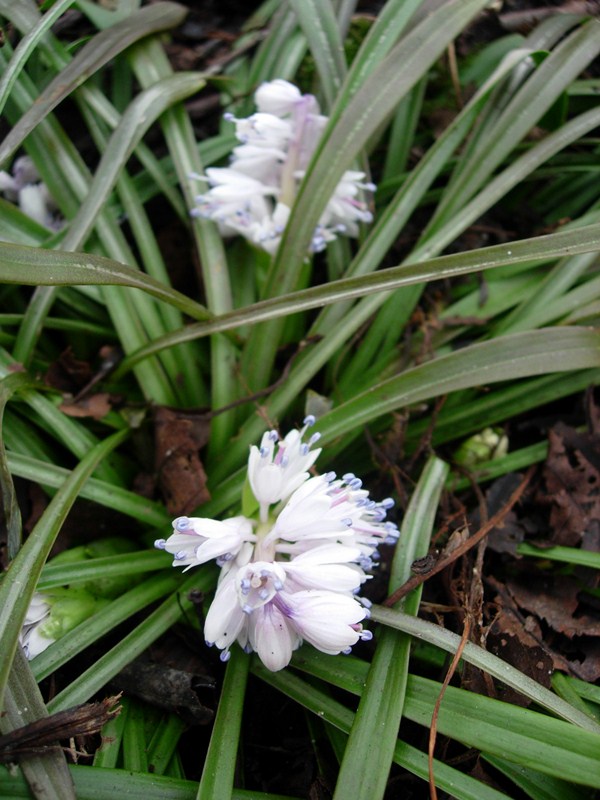
Sat, 02/11/2012 - 8:26amHylomecon vernalis (syn H japonica) is one of my woodland favorites. Although the flowers don't last long they are very welcome. The plant tolerates deep shade and fits perfect in my woodland. Seems that the former 2-3 species are lumped into one.
Pages