Lori, interesting that your Silene uniflora is much taller than the one that Philippe showed here--but he mentions a wide range, so no doubt it has a lot of forms.. in any case, lots of great stuff happening in your garden as usual! http://www.alsacephotos.fr/chitelet/site/actualite/actualite.htm
I see that the Dolomites has to be added to my 'places to see' list!
Lori, FYI...Ptarmigan Cirque was a bust...still 4 feet of snow in the forest! Around the parking lot, only Pulsatilla occidentalis and snow buttercup were in bloom. I head down to Waterton today...I think they are ahead of Kananaskis...we shall see!
The Osteo is cool--you could always try some seeds in a sunnier spot...
I've never been certain that seeds actually get a chance to ripen - maybe I just need to pay closer attention.
Ahh, non-ripening is a possibility too... if so, you might try cutting a couple flowers to go indoors to ripen, if they are being fertilised in the first place.. I had a Hymenoxys cutting from Southern Alberta a year or two back, which didn't root, but it made seeds :)
Thanks for the info, Todd. I think we'll head out to the Red Deer River valley this weekend... no snow there!
I'll give that a try if I remember, Cohan.
A few pretties for today... Edraianthus serbicus (with foliage of Satureja montana ssp. illyrica on the right); Scilla verna, peeking up through Campanula topaliana; Asyneuma limonifolium starting to bloom; another shot of Saxifraga xlongifolia:
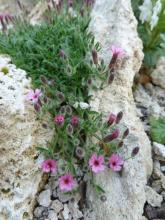
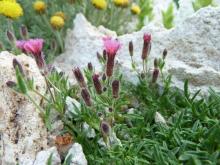
I grew this as Saponaria pumilio from the NARGS seedex... I'm hoping to find out if this is it or not, and if not, what is it? And it has been confirmed as Saponaria pumilio at the SRGC forum!
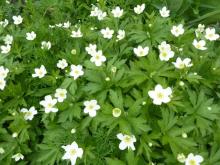
And from no-man's-land out along the sidewalk.... Anemone canadensis, beautiful but invasive:
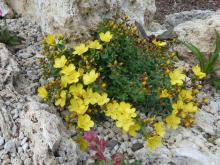
And perhaps it is time for an update on Hypericum avaricularifolium spp. uniflorum... nice plant! These were started from seed in 2010 ordered from Mojmir Pavelka; the info provided was: "2500m, Dedegol Dag, Turkey; small plant 5cm, pubescent glaucous leaves, golden yellow flowers, very good."
Your "other" garden is very nice and open for everybody I presume, Anne! And Lori, I hope your garden is open for an interested visitor as well if he gets the chance!
Some plants from my "garden". It is mostly native plants in a natural setting but some are planted and some have found the way themselves! Geranium pratense, Geranium sanguineum, Helianthemum nummularium, Leonurus cardiaca, Lotus corniculatus.
My "other" garden is open to all. It's amazing to see people on trails walk right by beautiful plants without looking at them. Perhaps that helps to preserve them. Frequently we see cast aside flowers that have been picked and there must be a reason that the oldest, biggest and best Eritrichium nanum are accessible only by the most powerful zoom lens. Waiting for the rain to clear so we can have at least a half day. Can't complain - the weather has been superb.
More beauties Anne - I guess that's a danger in an accessible place, but luckily, as you say, some of the plants are out of reach...
Trond, your garden is looking great--love the two colours of geranium ( so far, I only have many square metres of 'blue' himalayense, I don't like the colour...lol Orange Lotus is pretty.. the yellow is an occasional weed here-- though where it gets established it can be extensive...
You have nothing to say sorry for, Lori! Although you have showed the same plant before but it is worth looking at both twice ;)
Only one to show today - Galium verum the fragrance of which means summer to me! My torpid internet access in summer takes too long time to load pictures.
There are some great plants over the last few days. It is so frustrating that Silene acaulis won't flower here as it does in the wild - it's a lovely image in the Dolomites. Both this and Loiseleuria I saw in Iceland very many years ago, but I've not seen them in their natural habitat since.
Hypericum avaricularifolium is really nice - reminds me a little of H. athoum with its rounded leaves. And I am very taken by Trond's Galium verum; this genus and its relatives have a certain charm about them.
Here the campanulas are starting to do their stuff and two on the sand bed look particularly good; C x wockei 'Puck' and C. hercegovina 'Nana'. (I could imagine putting a whole bed to campanulas after reading Graham Nicholl's book!).
A few other nice later flowering genera; Origanum 'Kent Beauty' (I think introduced by the superb Washfield Nursery run by Elizabeth Strangman, and famed for hellebores and woodland gems); and Teucrium ackermanii; Azorella trifurcata - a simple emerald mat in contrast to the colour around.
Finally, a combination of Yucca whipplei and Aloe aristata. The former has grown rather more vigorously than I imagined when I planted the Aloe next to it! However, the interesting point is how hardy the latter is having survived -10°C in the open garden. The last picture holds fond memories of visiting Joe Elliott's famous alpine nursery in the Cotswalds some 30 years ago; it is one of the few plants I have kept going since then!
You have nothing to say sorry for, Lori! Although you have showed the same plant before but it is worth looking at both twice ;)
Only one to show today - Galium verum the fragrance of which means summer to me! My torpid internet access in summer takes too long time to load pictures.
I'm intrigued with your yellow Galium.. here the white G boreale is everywhere, masses of it in roadsides and all over my property! Here it is (self sown wild plants) growing next to the site of my rock garden-to-be; there was a spruce tree here until a year or so back, stump is still there; the Allium was probably planted by my mother years back.. I was wavering whether to totally dig up this spot for planting, but the Allium/Gallium combination is so nice, I'm leaving it, just trying to limit grass and dandelions now.. Anemone cylindrica is on the other side and will build fast too.. the other day I added (behind these plants) some seedlings of Achillea sibiricum camschaticum (green, glabrous leaves, should flower pink), Anthriscus ex Ravenswing, and Diervilla lonicera.. this is one of the areas I am experimenting with not exactly cultivating, just removing some weeds and excess of any particular wild plants, keeping trees out and digging just enough to plant a few things... Nearby, at another edge of the rock garden work(probably not an area where they can stay), Anemone cylindrica with Vicia americana. both very very common here
Really nice things, Tim! Beautiful Yucca-- I much prefer narrow leaf types; The Tanacetum is wonderful too! I have seedlings of Azorella from wild seed, sown last year, just came up a couple of weeks ago!
Just beautiful, Anne! Trond, I'm echoing the other comments on how nice Galium vernum looks... and the fragrance sounds wonderful. Does it spread rapidly or is it fairly contained? I'm enjoying the photos, Tim! Do you know the species of the Tanacetum? I have seen a similar one in a garden here (from which I hope to beg a piece!) - not sure it is the same though.
Cohan, you may want to watch out for the Galium boreale around the beds you will be establishing... it's very spready, as you may already know. (It's another of the things I knew better about but still planted, since someone bought it for me.... sigh.) The onion seems to be chives... pretty as well as tasty!
A few things here... Scutellaria nana var. sapphirina, which I left where it was after our discussion a while ago about whether it was likely to be a bother or not with its spreading habit... its OK so far...
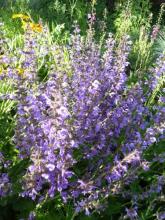
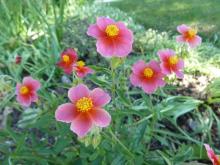
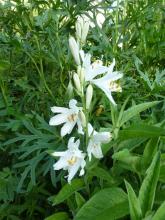
And in the perennial beds... Salvia sp. (I think I figured out what this was once but what? Edit: Salvia pratensis); Helianthemum 'Ben Ledi'; Paradisea liliastrum;
Lori, I should have said - the Tanacetum is densum amani. It has very soft textured foliage and never seems to flower! I have grown another species from seed, T. praeteritum, and this is almost identical in foliage except that the whole plant is more rigid; this however I have lost.
Lori--love the Phedimus (Phemeranthus sediformis)! this is the one that was T okanoganense (sp?) ? Great colour on Helianthemum! I've planted a couple of Geum/Potentilla cultivars that have some nice slightly uncommon orange/pink shades..
Galium boreale is definitely spready, though not hard to pull out, and since its native to pretty much every square foot of my property (maybe not wet shade in the natural woods), I'm not worrying about it...lol Like Mertensia paniculata and some others --leave a spot unmowed and it will be there! It is chives, presumably planted by my mother or aunt, though we have several square metres or more of it in other spots, so theoretically it could seed itself, though this is far from the other plantings...
Mark and Cohan, thank you for the correction on Phemeranthus (Talinum) sediformis... I should have checked the name but winged it instead. :) Yes, it was previously T. okanoganense.
Tim, that campanula (C. x wockei) is stunning... mind you, I am a push-over for campanulas anyway! I've never even heard of the hybrid - must keep an eye out for it! Thanks for the name of the Tanacetum.
A few more... Helianthemum oelandicum ssp. alpestre; Lilium philadephicum in the garden... also starting to bloom in the foothills roadsides here; Aster alpinus popping up in a not very alpine-looking setting out in Palliser's Triangle amongst the Saponaria ocymoides (my next weed to tackle due to its overly vigorous seeding).
Oh my, Lori, that Salvia juriscii! What is that "furry" appendage coming from each flower? Is it a modified petal, or something like some penstemons have (I am thinking like P. palmerihttp://nargs.org/nargswiki/show_image.php?id=1060) or ... what?
Neat acantholimon, and I will never tire of the cardancellus. Nice peachy-orange color on the Lilium philadelphicum, too.
Rick, here are close-ups of the flowers of Salvia juriscii... mug shots, so to speak (but please excuse the dirty nails - I've been digging like a terrier all day up until it got too dark. :-[):
According to Betsy Clebsch (The New Book of Salvias, which I picked up in spring and haven't even sat down to read yet), the "flowers appear in whorls that are closely spaced and turned upside down"... ?? I've read that elsewhere also. I'll have to go out and look closely to see how that comes about. A twist in the pedicel, I suppose? It doesn't appear to be the staminode, as in penstemons, but a very hairy petal instead. I admit I really don't get it!
How are things on the lily front, Rick? The martagons will be wonderful this year (a couple are chest-high!) - probably due the fact that we missed out on the week of snow that usually flattens them, plus the rainy spring. The other side of the coin from the rainy spring is that some of my lilies show botrytis, something I have never, ever seen before! I didn't even know what it was - Todd Boland identified it when he visited!
Lori, the correction was not mine, I knew there was a name change but wasn't paying attention either...lol-- I had to watch for the same thing a few minutes ago posting about Rosularia/Prometheum!
I'm really liking Onosma more every time I see them... (and I liked them the first time I saw them!) The Helianthemums are sparking my interest too.. I think I'd looked at them on some list or other, but hadn't seen much to suggest real hardiness..
Of course Carduncellus is sweet--so flat! Do they elongate the flower stem in seed as many others do? just thinking about it since I just barely caught my Taraxacum faeroense's first seed head! I'd been watching, and the spent flower was still prostrate and seeds unripe last I'd looked, must have skipped a day or two and -there it was, ready to blow away, and it had rained earlier, must not have been open yet!
That salvia thing really has me baffled, Lori. Thanks for the additional pics and info.
The Lilies are keeping me very busy. I am a meticulous note taker, and that takes up an enormous amount of time but is so valuable. So far I have logged 54 hand pollinations, although many are wide crosses and probably won't take. But the pollen and flowers are available, so why not try? You never know. Each pollination requires two visits to the flower, as well as written documentation, labeling and pollen gathering, so it is time consuming. There are little tin foil squares on stigmas everywhere!
Lilium martagon 'Amelita'. Awaiting pollination, and after hand pollinating:
Anyway, yes, I have loads of Lilium spp. pics I've been trying to keep up with sorting, not to mention numerous first time blooms of my previous crosses' progeny. Martagons are nearly done flowering here, although those with L. tsingtauense blood in them are still going a bit longer.
Carduncellus... Do they elongate the flower stem in seed as many others do?
No, C. pinnatus stays flat as a pancake. I have been collecting and sending seeds to the seedexes from it, though there was a discussion over at the SRGC forum that suggested that the seed of this species or possibly of a closely-related one was not generally fertile for some reason. On that note, I did try germinating fresh seed with no success. I had in mind to cross pollinate the different plants, but as of this spring, the one out in the front yard is gone... so much for that then. :(
Nice martagon, Rick. What characteristics are you selecting for or trying to impart?
Carduncellus... Do they elongate the flower stem in seed as many others do?
No, C. pinnatus stays flat as a pancake. I have been collecting and sending seeds to the seedexes from it, though there was a discussion over at the SRGC forum that suggested that the seed of this species or possibly of a closely-related one was not generally fertile for some reason. On that note, I did try germinating fresh seed with no success. I had in mind to cross pollinate the different plants, but as of this spring, the one out in the front yard is gone... so much for that then. :(
I think I remember that discussion about the fertility... odd...
Naw, I just do it for fun, mostly. But the one thing that I am really trying for is transferring the ruffly foliage of L. tsingtauense into the martagon genes. And one would think anything crossed with L. majoense would be interesting. Despite the copious pollen production, it hasn't been a very willing partner....
A worthy goal - that foliage is very attractive. L. majoense is gorgeous too.
A few things today... Telesonix jamesii var. heucherifolium; first bloom starting on Chaenactis alpina, bought this spring; Ajuga lupulina (seeds from Pavelka: "4500m, Shaluli Shan, Sichuan, China; mat-forming, purple-red bracts, 10-15cm, screes, stoney slopes; very showy; 2008 seed"); Spiraea decumbens:
Dianthus petraeus ssp. noeanus is a very nice tight bun; more Asyneuma limonifolium:
Lori, by the end of this summer, you'll have shown up photographs of somewhere around 60% of all rock garden plants currently in the hobby. Astounding how well you're growing the HUGE variety of desirable plants.
Lori, tht Chaenactis alpina looks scrumptious. Just imagine what it will be like if it gets bigger! I'll bet that Ajuga lupulina is long lasting in color, too. And the Asyneuma limonifolium is particularly floriferous. Are they always that way?
Peter, the conditions here seem to be quite good for growing alpines... we humans (well, me, especially ;D) may gripe about the wretched climate, etc., but alpines and perennials (those tolerant of drier conditions) do seem to like it! But if only the local experts would show us what they are growing, it would instantly be made clear that I am only dabbling in rock gardening!!! I am utterly astounded when I am so fortunate as to visit those gardens and see the incredible varieties of species and the superbly-grown plants. Thank you so much for the kind words, nevertheless! In the world of rock gardening, there are so many interesting species to grow, it seems the possibilities are almost endless.
Rick, yes, I expect the coloured bracts on Ajuga lupulina, which preceded the flowers, will remain showy long after the blooms are gone, too. I really like Asyneuma limonifolium but I can't tell you much about it. It bloomed marvellously last year too, in the year after it was grown from seed. The species is said to like limestone substrates, and it does seems to like growing in the tufa garden particularly. Some others that I planted in a much less calcareous crevice garden are much smaller and less floriferous.
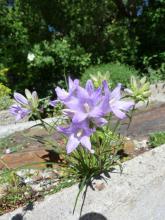
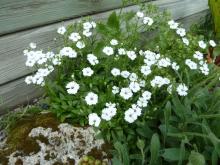
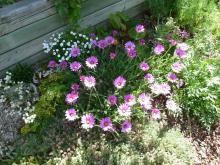
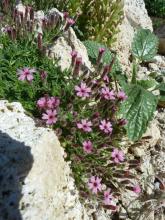
Gypsophila silenoides (x2); Silene alpestris; update on the amazingly hardy Osteospermum barberiae var. compactum 'Purple Mountain':
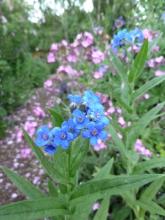
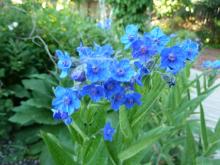
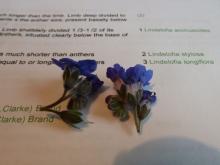
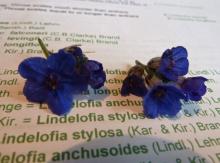
Lindelofia anchusoides (left) and Lindelofia longiflora (right) (same arrangement in the close-ups). And, yes, I thought they were the same too at first glance but they are actually different in some flower details...
A few things... Ajuga lupulina update; Stachys discolor, a Caucasus native (x2); Campanula barbata - these "biennials" are now 6 years old - probably safe to say it is a perennial strain!; Saponaria suendermanii:
Apart from campanulas most of the alpines in our garden are coming to the end of their flowering. However, going out to look at the sand bed in struck me how good foliage is in many of these plants, and important in the garden for much longer than the flowers we love so much. So a few (quite a few!) examples:
All these are on a relatively small bed in our front garden! (Apologies for showing so many but I just wanted to show the wonderful variety, even out of flower - something not often stressed to those gardeners outside the alpine world).
Trond, I'm echoing the other comments on how nice Galium vernum looks... and the fragrance sounds wonderful. Does it spread rapidly or is it fairly contained?
Lori, sorry I haven't answered yet but I am on holiday - when I write this I am in Los Rocques, Venezuela. Have visited the tepuy Roraima and will show pictures later. A lot of rock plants but not suited for gardens in cold climate!
The Galium verum spreads when given a free root run but can grow in cracks as well and behave more reasonable. Regarding the fragrance - it is not like lilies but for me - it is summer. I suppose the odor is more like cumarin.
Apologies for showing so many but I just wanted to show the wonderful variety, even out of flower - something not often stressed to those gardeners outside the alpine world).
Apologies, Tim?? No need! :o Thank you for posting and enlivening things! Good heavens, I wish more people would jump in and show us what's happening in their gardens, in flower or not! There is so much to appreciate all through the season! There are so many beautiful foliages in your garden... The Teucrium is especially fine... and the Ewartia... and, well, I could pretty well list every one of them! Are people amazed to find that you can grow Aciphylla there? Does Petrophytum bloom for you? I've had a gnarled little plant for some time that has yet to bloom.
Trond, no problem. Thanks for the response on the galium. We look forward to some pictures from your travels!
Lori, sorry I haven't answered yet but I am on holiday - when I write this I am in Los Rocques, Venezuela. Have visited the tepuy Roraima and will show pictures later. A lot of rock plants but not suited for gardens in cold climate!
The Galium verum spreads when given a free root run but can grow in cracks as well and behave more reasonable. Regarding the fragrance - it is not like lilies but for me - it is summer. I suppose the odor is more like cumarin.
Roraima!!! wow, can't wait to see--I've seen some programs and articles, but not enough focus on the plants for me.....
Tim--lots of fantastic textures and colours in the foliage, for sure! I agree for me, I prefer plants that look as good out of flower...
I am so remiss in not joining in with the fun; I enjoy this topic perhaps more than any other; so many great plants posted, but I now have so little time to participate here... my only chance is over the weekend, sorry about the infrequency of my visits here. Too many great plants have been posted here for me to comment all that I want, but I will add this hasty response:
@Lori: glad you showed Gillenia trifoliata (now, Porteranthus). It is a wonderful native plant, capable of building into a impressive cloud of bilateral white flowers in a "bush" 5' wide by 3-1/2' tall. This year a woodchuck (groundhog) has decimated all the large clumps I have so that not a single flower was seen. Everyone should grow this great wildflower (hopefully no groundhogs in your area), looks great even after the flowers go by, with the red calyces of the spent blooms also attractive, over elegant 3-part deep green foliage. Also, regarding Chaenactis, it is a fascinating small genus, one of my favorites, should be grown more often.
@Tim: loved the series on little silver plants; so glad to see Ewartia again, a genus almost never encountered, only three species. I grew two species years ago when I lived in Seattle, Washington. The Teucrium musimonum "speaks to me", I really like these dwarf Teucriums. And with Lupinus albifrons, I often wonder why it is that we ignore so many great western American lupine species, there are so many worthwhile species!
Ok, it's past midnight, I'll regret staying up so late when I have to get up at 5:30 Am tomorrow morning. Please know that I'm lurking, reading the messages, but rarely can I respond on weekdays due to me schedule and long commute.
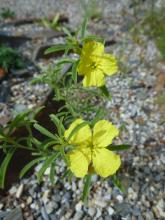
Calylophus serrulatus, a little plant from seed a couple of years ago:
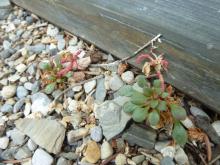
Calyptridium umbellatum, now in seed:
I grew Senecio polyodon ssp. polyodon long ago for a few years (before it was crowded out) and always suspected it to be overwintering, rather than reseeding. Now I finally have proof of overwintering. I started seeds of Senecio polyodon last year. (NB. The subspecies polyodon seemed to be larger flowered.) Plants in the open crevice garden, and in the border surrounded by other plants, have wintered over. A couple of plants in the border but not surrounded by other plants died out... so I'm not entirely sure of the rhyme or reason there - maybe it needs a little protection in heavy soil but not in better drainage? Another amazingly hardy South African plant...

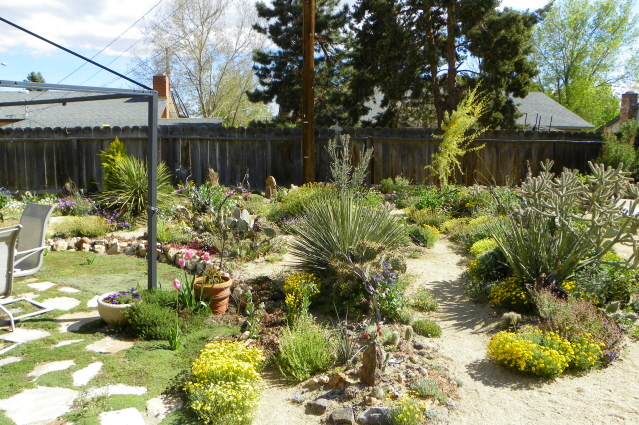

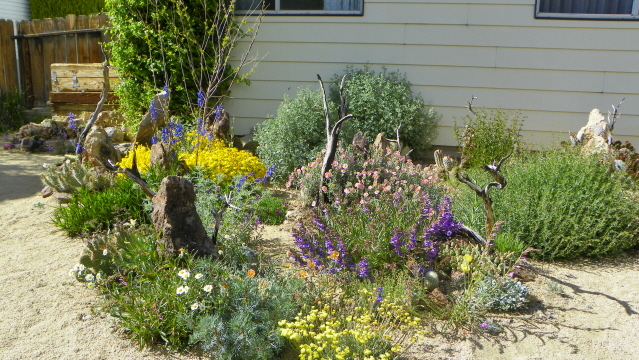

Comments
Lori S. (not verified)
Re: What do you see on your garden walks?
Tue, 06/28/2011 - 8:45pmMinuartia erythrosepala; Dracocephalum heterophyllum; Dianthus sp.; Anthemis marschalliana; Lychnis ajanencis(?):
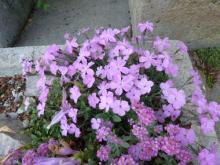
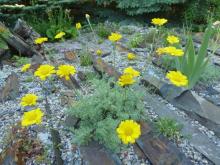
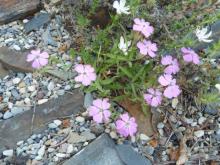
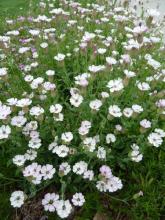
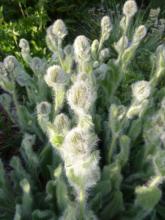
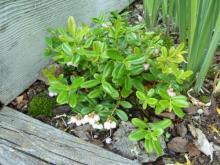
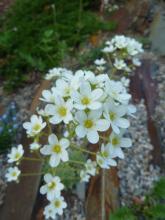
Silene uniflora; Gypsophila repens (or something like it); buds of Hieracium villosum; Vaccinium vitis-idaea 'Wabasca'; Saxifraga longifolia hybrid

cohan (not verified)
Re: What do you see on your garden walks?
Tue, 06/28/2011 - 8:59pmLori, interesting that your Silene uniflora is much taller than the one that Philippe showed here--but he mentions a wide range, so no doubt it has a lot of forms.. in any case, lots of great stuff happening in your garden as usual!
http://www.alsacephotos.fr/chitelet/site/actualite/actualite.htm
Lori S. (not verified)
Re: What do you see on your garden walks?
Tue, 06/28/2011 - 9:21pmIt certainly is a nice Silene uniflora on the site you linked... very tight foliage!
I've never been certain that seeds actually get a chance to ripen - maybe I just need to pay closer attention.
Anne Spiegel
Re: What do you see on your garden walks?
Wed, 06/29/2011 - 1:05amHere in my "other" garden, the Dolomites, every day brings new flowers. Just a few from yesterday.
Anne Spiegel
Re: What do you see on your garden walks?
Wed, 06/29/2011 - 1:08amAnd a few more. Off for another day of hiking.
Todd Boland
Re: What do you see on your garden walks?
Wed, 06/29/2011 - 8:02amI see that the Dolomites has to be added to my 'places to see' list!
Lori, FYI...Ptarmigan Cirque was a bust...still 4 feet of snow in the forest! Around the parking lot, only Pulsatilla occidentalis and snow buttercup were in bloom. I head down to Waterton today...I think they are ahead of Kananaskis...we shall see!
cohan (not verified)
Re: What do you see on your garden walks?
Wed, 06/29/2011 - 1:24pmAhh, non-ripening is a possibility too... if so, you might try cutting a couple flowers to go indoors to ripen, if they are being fertilised in the first place.. I had a Hymenoxys cutting from Southern Alberta a year or two back, which didn't root, but it made seeds :)
Lori S. (not verified)
Re: What do you see on your garden walks?
Wed, 06/29/2011 - 7:28pmSplendid photos, Anne!
Thanks for the info, Todd. I think we'll head out to the Red Deer River valley this weekend... no snow there!
I'll give that a try if I remember, Cohan.
A few pretties for today...
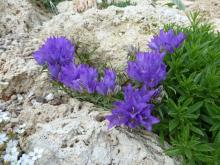
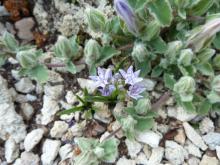
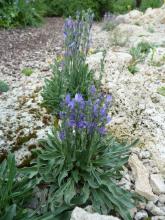
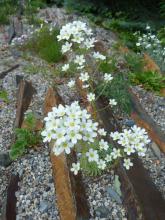
Edraianthus serbicus (with foliage of Satureja montana ssp. illyrica on the right); Scilla verna, peeking up through Campanula topaliana; Asyneuma limonifolium starting to bloom; another shot of Saxifraga xlongifolia:
I grew this as Saponaria pumilio from the NARGS seedex... I'm hoping to find out if this is it or not, and if not, what is it? And it has been confirmed as Saponaria pumilio at the SRGC forum!
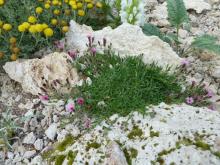
And from no-man's-land out along the sidewalk.... Anemone canadensis, beautiful but invasive:
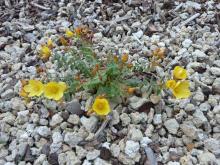
And perhaps it is time for an update on Hypericum avaricularifolium spp. uniflorum... nice plant! These were started from seed in 2010 ordered from Mojmir Pavelka; the info provided was: "2500m, Dedegol Dag, Turkey; small plant 5cm, pubescent glaucous leaves, golden yellow flowers, very good."
Trond Hoy
Re: What do you see on your garden walks?
Thu, 06/30/2011 - 1:49amYour "other" garden is very nice and open for everybody I presume, Anne!
And Lori, I hope your garden is open for an interested visitor as well if he gets the chance!
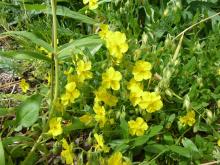
Some plants from my "garden". It is mostly native plants in a natural setting but some are planted and some have found the way themselves!
Geranium pratense, Geranium sanguineum, Helianthemum nummularium, Leonurus cardiaca, Lotus corniculatus.
Anne Spiegel
Re: What do you see on your garden walks?
Thu, 06/30/2011 - 2:44amMy "other" garden is open to all. It's amazing to see people on trails walk right by beautiful plants without looking at them. Perhaps that helps to preserve them.
Frequently we see cast aside flowers that have been picked and there must be a reason that the oldest, biggest and best Eritrichium nanum are accessible only by the most powerful zoom lens. Waiting for the rain to clear so we can have at least a half day. Can't complain - the weather has been superb.
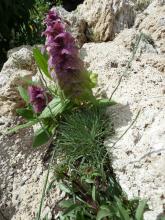
Dryas octopetala
Doronicum
Valeriana sp.
Anne Spiegel
Re: What do you see on your garden walks?
Thu, 06/30/2011 - 2:47amAnd a few more .......
Loiseleuria procumbens
Geum reptans
Papaver rhaeticum
Primula minima
Pulsatilla vernalis
Gentiana acaulis
Eritrichium nanum
Cliff Booker
Re: What do you see on your garden walks?
Thu, 06/30/2011 - 5:29amSuperb images Anne ... can't wait to experience these gems in person in a few days time. Have a wonderful time while it lasts.
cohan (not verified)
Re: What do you see on your garden walks?
Thu, 06/30/2011 - 1:44pmMore beauties Anne - I guess that's a danger in an accessible place, but luckily, as you say, some of the plants are out of reach...
Trond, your garden is looking great--love the two colours of geranium ( so far, I only have many square metres of 'blue' himalayense, I don't like the colour...lol Orange Lotus is pretty.. the yellow is an occasional weed here-- though where it gets established it can be extensive...
Lori S. (not verified)
Re: What do you see on your garden walks?
Fri, 07/01/2011 - 4:04pmAnd more Hypericum aviculariifolium ssp. uniflorum (sorry!):
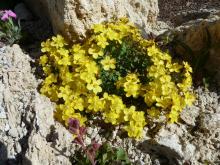
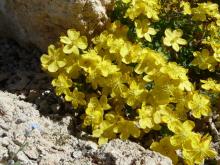
Sedum pilosum; Bolanthus cherlerioides; Arenaria grandiflora (x2):
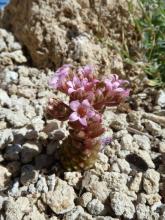
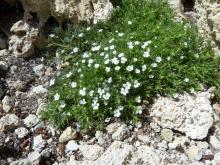
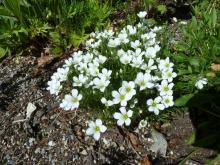
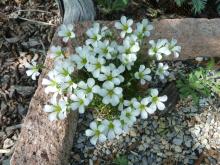
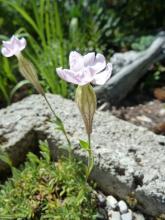
Silene argaea:
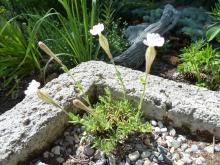
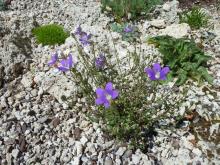
Campanula hawkinsiana:
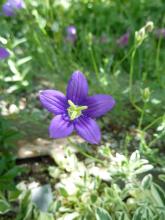
... all from seed last year or previously.
Trond Hoy
Re: What do you see on your garden walks?
Fri, 07/01/2011 - 11:50pmYou have nothing to say sorry for, Lori! Although you have showed the same plant before but it is worth looking at both twice ;)
Only one to show today - Galium verum the fragrance of which means summer to me!
My torpid internet access in summer takes too long time to load pictures.
Tim Ingram (not verified)
Re: What do you see on your garden walks?
Sat, 07/02/2011 - 2:20amThere are some great plants over the last few days. It is so frustrating that Silene acaulis won't flower here as it does in the wild - it's a lovely image in the Dolomites. Both this and Loiseleuria I saw in Iceland very many years ago, but I've not seen them in their natural habitat since.
Hypericum avaricularifolium is really nice - reminds me a little of H. athoum with its rounded leaves. And I am very taken by Trond's Galium verum; this genus and its relatives have a certain charm about them.
Here the campanulas are starting to do their stuff and two on the sand bed look particularly good; C x wockei 'Puck' and C. hercegovina 'Nana'. (I could imagine putting a whole bed to campanulas after reading Graham Nicholl's book!).
A few other nice later flowering genera; Origanum 'Kent Beauty' (I think introduced by the superb Washfield Nursery run by Elizabeth Strangman, and famed for hellebores and woodland gems); and Teucrium ackermanii; Azorella trifurcata - a simple emerald mat in contrast to the colour around.
Finally, a combination of Yucca whipplei and Aloe aristata. The former has grown rather more vigorously than I imagined when I planted the Aloe next to it! However, the interesting point is how hardy the latter is having survived -10°C in the open garden. The last picture holds fond memories of visiting Joe Elliott's famous alpine nursery in the Cotswalds some 30 years ago; it is one of the few plants I have kept going since then!
cohan (not verified)
Re: What do you see on your garden walks?
Sat, 07/02/2011 - 11:34pmI'm intrigued with your yellow Galium.. here the white G boreale is everywhere, masses of it in roadsides and all over my property!
Here it is (self sown wild plants) growing next to the site of my rock garden-to-be; there was a spruce tree here until a year or so back, stump is still there; the Allium was probably planted by my mother years back.. I was wavering whether to totally dig up this spot for planting, but the Allium/Gallium combination is so nice, I'm leaving it, just trying to limit grass and dandelions now.. Anemone cylindrica is on the other side and will build fast too.. the other day I added (behind these plants) some seedlings of Achillea sibiricum camschaticum (green, glabrous leaves, should flower pink), Anthriscus ex Ravenswing, and Diervilla lonicera.. this is one of the areas I am experimenting with not exactly cultivating, just removing some weeds and excess of any particular wild plants, keeping trees out and digging just enough to plant a few things...
Nearby, at another edge of the rock garden work(probably not an area where they can stay), Anemone cylindrica with Vicia americana. both very very common here
cohan (not verified)
Re: What do you see on your garden walks?
Sat, 07/02/2011 - 11:55pmReally nice things, Tim!
Beautiful Yucca-- I much prefer narrow leaf types;
The Tanacetum is wonderful too!
I have seedlings of Azorella from wild seed, sown last year, just came up a couple of weeks ago!
Lori S. (not verified)
Re: What do you see on your garden walks?
Sun, 07/03/2011 - 7:06pmJust beautiful, Anne!
Trond, I'm echoing the other comments on how nice Galium vernum looks... and the fragrance sounds wonderful. Does it spread rapidly or is it fairly contained?
I'm enjoying the photos, Tim! Do you know the species of the Tanacetum? I have seen a similar one in a garden here (from which I hope to beg a piece!) - not sure it is the same though.
Cohan, you may want to watch out for the Galium boreale around the beds you will be establishing... it's very spready, as you may already know. (It's another of the things I knew better about but still planted, since someone bought it for me.... sigh.) The onion seems to be chives... pretty as well as tasty!
A few things here...
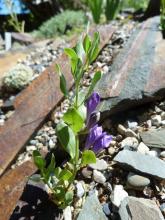
Scutellaria nana var. sapphirina, which I left where it was after our discussion a while ago about whether it was likely to be a bother or not with its spreading habit... its OK so far...
Edraianthus dalmaticus:
Phedimus(Talinum) sediforme: (spelling: Phemeranthus sediformis)And in the perennial beds... Salvia sp. (I think I figured out what this was once but what? Edit: Salvia pratensis); Helianthemum 'Ben Ledi'; Paradisea liliastrum;
Tim Ingram (not verified)
Re: What do you see on your garden walks?
Mon, 07/04/2011 - 1:23amLori, I should have said - the Tanacetum is densum amani. It has very soft textured foliage and never seems to flower! I have grown another species from seed, T. praeteritum, and this is almost identical in foliage except that the whole plant is more rigid; this however I have lost.
cohan (not verified)
Re: What do you see on your garden walks?
Mon, 07/04/2011 - 11:55amLori--love the Phedimus (Phemeranthus sediformis)! this is the one that was T okanoganense (sp?) ?
Great colour on Helianthemum! I've planted a couple of Geum/Potentilla cultivars that have some nice slightly uncommon orange/pink shades..
Galium boreale is definitely spready, though not hard to pull out, and since its native to pretty much every square foot of my property (maybe not wet shade in the natural woods), I'm not worrying about it...lol Like Mertensia paniculata and some others --leave a spot unmowed and it will be there! It is chives, presumably planted by my mother or aunt, though we have several square metres or more of it in other spots, so theoretically it could seed itself, though this is far from the other plantings...
Lori S. (not verified)
Re: What do you see on your garden walks?
Mon, 07/04/2011 - 1:11pmMark and Cohan, thank you for the correction on Phemeranthus (Talinum) sediformis... I should have checked the name but winged it instead. :) Yes, it was previously T. okanoganense.
Lori S. (not verified)
Re: What do you see on your garden walks?
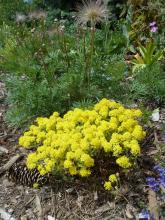
Mon, 07/04/2011 - 3:09pmOnosma euboica (x2); Carduncellus pinnatus; Salvia juriscii (I remembered the name, Stephanie!! ;D); Alyssum tortuosum??
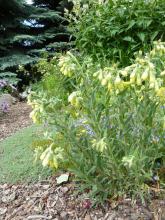
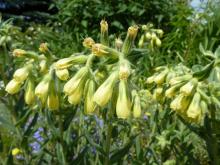
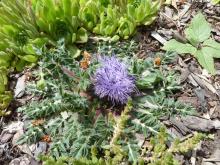
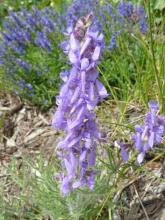
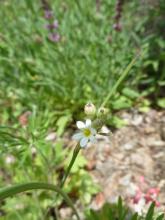
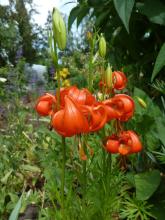
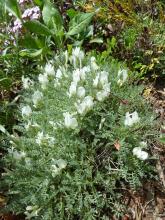
A not-very-noticeable little native plant, Sisyrinchium septentrionalis; Lilium pumilum; Astragalus angustifolius;
Interesting zig-zag flower stems on Acantholimon kotschyi ssp. laxispicatum (with Ajuga lupulina in the background):
Lori S. (not verified)
Re: What do you see on your garden walks?
Mon, 07/04/2011 - 3:20pmTim, that campanula (C. x wockei) is stunning... mind you, I am a push-over for campanulas anyway! I've never even heard of the hybrid - must keep an eye out for it! Thanks for the name of the Tanacetum.
A few more...
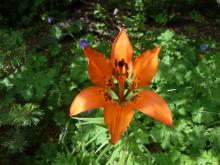
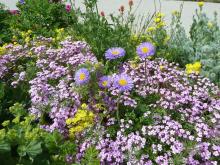
Helianthemum oelandicum ssp. alpestre; Lilium philadephicum in the garden... also starting to bloom in the foothills roadsides here; Aster alpinus popping up in a not very alpine-looking setting out in Palliser's Triangle amongst the Saponaria ocymoides (my next weed to tackle due to its overly vigorous seeding).
Richard T. Rodich
Re: What do you see on your garden walks?
Mon, 07/04/2011 - 8:34pmOh my, Lori, that Salvia juriscii! What is that "furry" appendage coming from each flower? Is it a modified petal, or something like some penstemons have (I am thinking like P. palmeri http://nargs.org/nargswiki/show_image.php?id=1060) or ... what?
Neat acantholimon, and I will never tire of the cardancellus. Nice peachy-orange color on the Lilium philadelphicum, too.
Lori S. (not verified)
Re: What do you see on your garden walks?
Mon, 07/04/2011 - 9:18pmRick, here are close-ups of the flowers of Salvia juriscii... mug shots, so to speak (but please excuse the dirty nails - I've been digging like a terrier all day up until it got too dark. :-[):
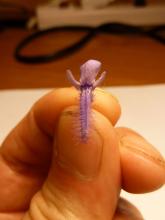
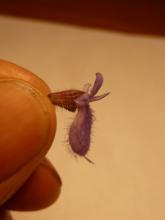
According to Betsy Clebsch (The New Book of Salvias, which I picked up in spring and haven't even sat down to read yet), the "flowers appear in whorls that are closely spaced and turned upside down"... ?? I've read that elsewhere also. I'll have to go out and look closely to see how that comes about. A twist in the pedicel, I suppose? It doesn't appear to be the staminode, as in penstemons, but a very hairy petal instead. I admit I really don't get it!
How are things on the lily front, Rick? The martagons will be wonderful this year (a couple are chest-high!) - probably due the fact that we missed out on the week of snow that usually flattens them, plus the rainy spring. The other side of the coin from the rainy spring is that some of my lilies show botrytis, something I have never, ever seen before! I didn't even know what it was - Todd Boland identified it when he visited!
cohan (not verified)
Re: What do you see on your garden walks?
Mon, 07/04/2011 - 11:11pmLori, the correction was not mine, I knew there was a name change but wasn't paying attention either...lol-- I had to watch for the same thing a few minutes ago posting about Rosularia/Prometheum!
I'm really liking Onosma more every time I see them... (and I liked them the first time I saw them!)
The Helianthemums are sparking my interest too.. I think I'd looked at them on some list or other, but hadn't seen much to suggest real hardiness..
Of course Carduncellus is sweet--so flat! Do they elongate the flower stem in seed as many others do? just thinking about it since I just barely caught my Taraxacum faeroense's first seed head! I'd been watching, and the spent flower was still prostrate and seeds unripe last I'd looked, must have skipped a day or two and -there it was, ready to blow away, and it had rained earlier, must not have been open yet!
Richard T. Rodich
Re: What do you see on your garden walks?
Tue, 07/05/2011 - 7:38pmThat salvia thing really has me baffled, Lori. Thanks for the additional pics and info.
The Lilies are keeping me very busy. I am a meticulous note taker, and that takes up an enormous amount of time but is so valuable. So far I have logged 54 hand pollinations, although many are wide crosses and probably won't take. But the pollen and flowers are available, so why not try? You never know. Each pollination requires two visits to the flower, as well as written documentation, labeling and pollen gathering, so it is time consuming. There are little tin foil squares on stigmas everywhere!
Lilium martagon 'Amelita'. Awaiting pollination, and after hand pollinating:
Anyway, yes, I have loads of Lilium spp. pics I've been trying to keep up with sorting, not to mention numerous first time blooms of my previous crosses' progeny. Martagons are nearly done flowering here, although those with L. tsingtauense blood in them are still going a bit longer.
Lori S. (not verified)
Re: What do you see on your garden walks?
Tue, 07/05/2011 - 9:05pmNo, C. pinnatus stays flat as a pancake. I have been collecting and sending seeds to the seedexes from it, though there was a discussion over at the SRGC forum that suggested that the seed of this species or possibly of a closely-related one was not generally fertile for some reason. On that note, I did try germinating fresh seed with no success. I had in mind to cross pollinate the different plants, but as of this spring, the one out in the front yard is gone... so much for that then. :(
Nice martagon, Rick. What characteristics are you selecting for or trying to impart?
cohan (not verified)
Re: What do you see on your garden walks?
Tue, 07/05/2011 - 11:43pmI think I remember that discussion about the fertility... odd...
Richard T. Rodich
Re: What do you see on your garden walks?
Wed, 07/06/2011 - 7:29pmNaw, I just do it for fun, mostly. But the one thing that I am really trying for is transferring the ruffly foliage of L. tsingtauense into the martagon genes. And one would think anything crossed with L. majoense would be interesting. Despite the copious pollen production, it hasn't been a very willing partner....
Lori S. (not verified)
Re: What do you see on your garden walks?
Fri, 07/08/2011 - 2:53pmA worthy goal - that foliage is very attractive. L. majoense is gorgeous too.
A few things today...
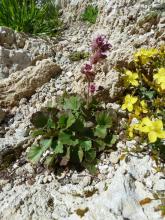
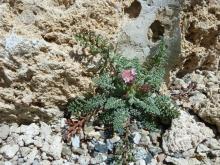
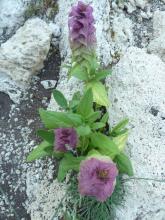
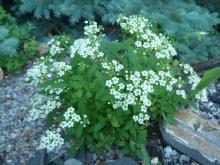
Telesonix jamesii var. heucherifolium; first bloom starting on Chaenactis alpina, bought this spring; Ajuga lupulina (seeds from Pavelka: "4500m, Shaluli Shan, Sichuan, China; mat-forming, purple-red bracts, 10-15cm, screes, stoney slopes; very showy; 2008 seed"); Spiraea decumbens:
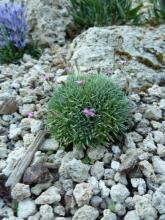
Dianthus petraeus ssp. noeanus is a very nice tight bun; more Asyneuma limonifolium:
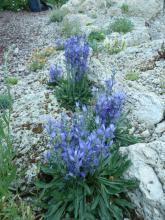
Elsewhere...
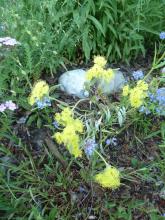
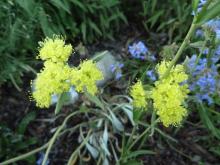
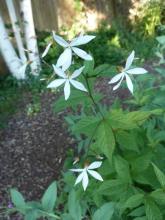
Eriogonum flavum (x2); Gillenia trifoliata:
Peter George
Re: What do you see on your garden walks?
Fri, 07/08/2011 - 5:38pmLori, by the end of this summer, you'll have shown up photographs of somewhere around 60% of all rock garden plants currently in the hobby. Astounding how well you're growing the HUGE variety of desirable plants.
Richard T. Rodich
Re: What do you see on your garden walks?
Fri, 07/08/2011 - 6:22pmLori, tht Chaenactis alpina looks scrumptious. Just imagine what it will be like if it gets bigger! I'll bet that Ajuga lupulina is long lasting in color, too. And the Asyneuma limonifolium is particularly floriferous. Are they always that way?
Lori S. (not verified)
Re: What do you see on your garden walks?
Fri, 07/08/2011 - 7:19pmPeter, the conditions here seem to be quite good for growing alpines... we humans (well, me, especially ;D) may gripe about the wretched climate, etc., but alpines and perennials (those tolerant of drier conditions) do seem to like it!
But if only the local experts would show us what they are growing, it would instantly be made clear that I am only dabbling in rock gardening!!! I am utterly astounded when I am so fortunate as to visit those gardens and see the incredible varieties of species and the superbly-grown plants. Thank you so much for the kind words, nevertheless! In the world of rock gardening, there are so many interesting species to grow, it seems the possibilities are almost endless.
Rick, yes, I expect the coloured bracts on Ajuga lupulina, which preceded the flowers, will remain showy long after the blooms are gone, too. I really like Asyneuma limonifolium but I can't tell you much about it. It bloomed marvellously last year too, in the year after it was grown from seed. The species is said to like limestone substrates, and it does seems to like growing in the tufa garden particularly. Some others that I planted in a much less calcareous crevice garden are much smaller and less floriferous.
cohan (not verified)
Re: What do you see on your garden walks?
Sat, 07/09/2011 - 5:44pmI also like the Chaenactis.. I remember looking at something in this genus, maybe on Alplains list?
Lori S. (not verified)
Re: What do you see on your garden walks?
Sat, 07/09/2011 - 6:42pmHere are a couple more shots of Chaenactis alpina from today for those of us, like myself, to whom this plant is unfamiliar:
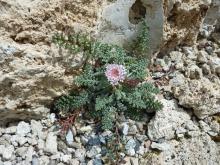
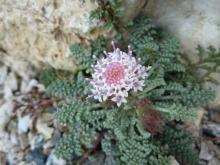
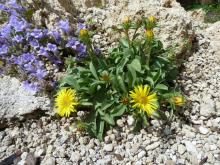
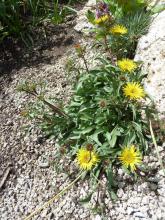
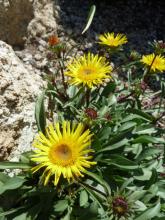
Scutellaria orientalis ssp. alpina (x2); Anthyllis vulneraria; promising buds on Inula acaulis ssp. caulescens (x2):
Lori S. (not verified)
Re: What do you see on your garden walks?
Sun, 07/10/2011 - 9:06pmGypsophila silenoides (x2); Silene alpestris; update on the amazingly hardy Osteospermum barberiae var. compactum 'Purple Mountain':
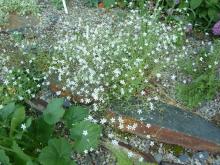
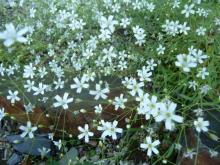
Lindelofia anchusoides (left) and Lindelofia longiflora (right) (same arrangement in the close-ups). And, yes, I thought they were the same too at first glance but they are actually different in some flower details...
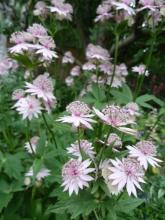
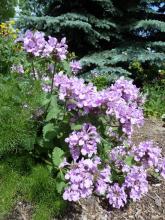
Astrantia major; Stachys macrantha:
Lori S. (not verified)
Re: What do you see on your garden walks?
Sun, 07/10/2011 - 9:16pmIt's summer! :D
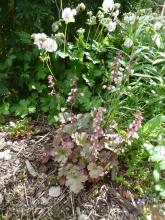
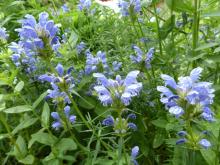
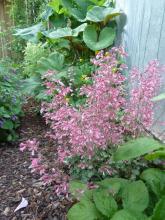
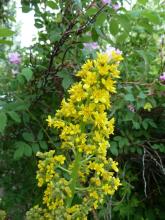
Heuchera 'Petite Ruby Frills'; Dracocephalum ruyschiana; Heuchera 'Canyon Duet'; Ligularia macrophylla:
Verbascum eriophorum (x2); Verbascum x phoeniceum:
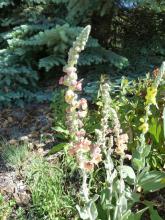
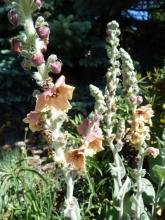
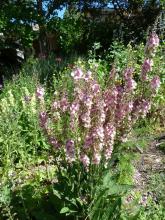
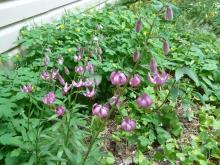
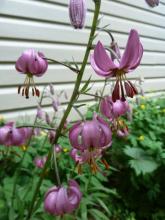
Fuzzy buds... now opening on Lilium martagon...
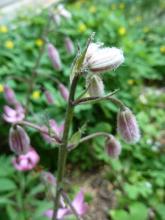
Lori S. (not verified)
Re: What do you see on your garden walks?
Fri, 07/15/2011 - 8:17amA few things...
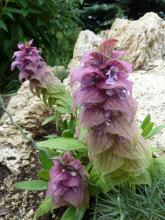
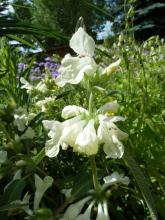
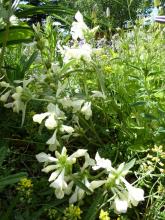
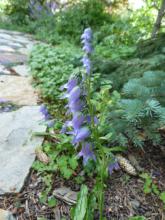
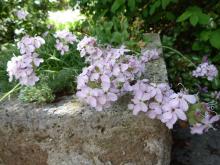
Ajuga lupulina update; Stachys discolor, a Caucasus native (x2); Campanula barbata - these "biennials" are now 6 years old - probably safe to say it is a perennial strain!; Saponaria suendermanii:
Tim Ingram (not verified)
Re: What do you see on your garden walks?
Sun, 07/17/2011 - 4:06amApart from campanulas most of the alpines in our garden are coming to the end of their flowering. However, going out to look at the sand bed in struck me how good foliage is in many of these plants, and important in the garden for much longer than the flowers we love so much. So a few (quite a few!) examples:
Arenaria tetraquetra
Raoulia australis
Ewartia planchonii
Stachys citrina
Helichrysum milfordiae
Teucrium musimonum
Tim Ingram (not verified)
Re: What do you see on your garden walks?
Sun, 07/17/2011 - 4:12amLupinus albifrons collinus
Astragalus angustifolius
Centaurea cineraria (gymnocarpa)
Leucanthemum hosmariense
Salvia cyanescens
Anthemis marschalliana
Erodium celtibericum
Aquilegia scopulorum
Tim Ingram (not verified)
Re: What do you see on your garden walks?
Sun, 07/17/2011 - 4:19amAlyssum strbryni
Callianthemum anemonoides
Dryas octopetala 'Minor'
Petrophyton hendersonii
Androsace muscoidea
Aciphylla aurea
Verbascum dumulosum
All these are on a relatively small bed in our front garden! (Apologies for showing so many but I just wanted to show the wonderful variety, even out of flower - something not often stressed to those gardeners outside the alpine world).
Trond Hoy
Re: What do you see on your garden walks?
Sun, 07/17/2011 - 5:32amLori, sorry I haven't answered yet but I am on holiday - when I write this I am in Los Rocques, Venezuela. Have visited the tepuy Roraima and will show pictures later. A lot of rock plants but not suited for gardens in cold climate!
The Galium verum spreads when given a free root run but can grow in cracks as well and behave more reasonable. Regarding the fragrance - it is not like lilies but for me - it is summer. I suppose the odor is more like cumarin.
Lori S. (not verified)
Re: What do you see on your garden walks?
Sun, 07/17/2011 - 8:43amApologies, Tim?? No need! :o Thank you for posting and enlivening things! Good heavens, I wish more people would jump in and show us what's happening in their gardens, in flower or not! There is so much to appreciate all through the season!
There are so many beautiful foliages in your garden... The Teucrium is especially fine... and the Ewartia... and, well, I could pretty well list every one of them! Are people amazed to find that you can grow Aciphylla there? Does Petrophytum bloom for you? I've had a gnarled little plant for some time that has yet to bloom.
Trond, no problem. Thanks for the response on the galium. We look forward to some pictures from your travels!
Lori S. (not verified)
Re: What do you see on your garden walks?
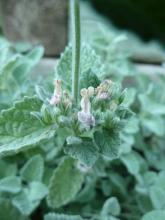
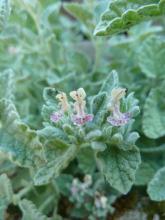
Sun, 07/17/2011 - 11:08amNepeta phyllochlamys:
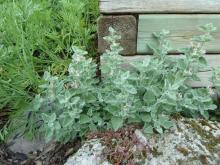
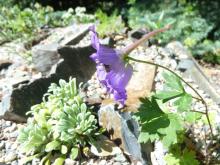
First flower on Delphinum beesianum, from seed last year - a huge flower for the tiny plant!

Cyananthus macrocalyx, also first flowering on last year's seed-grown plant:
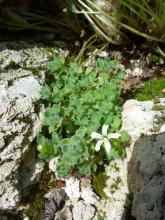
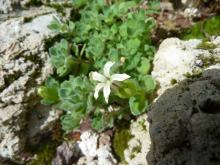
Bolanthus cherlerioides, as above:
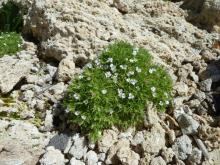
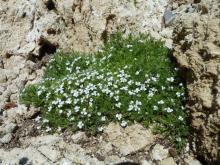
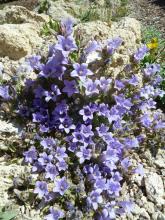
And a repeat of Campanula topaliana, just because I'm enjoying it so much!
Lori S. (not verified)
Re: What do you see on your garden walks?
Sun, 07/17/2011 - 11:16amWorth repeating, I think... Saponaria pumilio:
Inula acaulis ssp. caulescens:
cohan (not verified)
Re: What do you see on your garden walks?
Sun, 07/17/2011 - 6:14pmRoraima!!! wow, can't wait to see--I've seen some programs and articles, but not enough focus on the plants for me.....
Tim--lots of fantastic textures and colours in the foliage, for sure! I agree for me, I prefer plants that look as good out of flower...
Mark McDonough
Re: What do you see on your garden walks?
Sun, 07/17/2011 - 9:06pmHello folks,
I am so remiss in not joining in with the fun; I enjoy this topic perhaps more than any other; so many great plants posted, but I now have so little time to participate here... my only chance is over the weekend, sorry about the infrequency of my visits here. Too many great plants have been posted here for me to comment all that I want, but I will add this hasty response:
@Lori: glad you showed Gillenia trifoliata (now, Porteranthus). It is a wonderful native plant, capable of building into a impressive cloud of bilateral white flowers in a "bush" 5' wide by 3-1/2' tall. This year a woodchuck (groundhog) has decimated all the large clumps I have so that not a single flower was seen. Everyone should grow this great wildflower (hopefully no groundhogs in your area), looks great even after the flowers go by, with the red calyces of the spent blooms also attractive, over elegant 3-part deep green foliage. Also, regarding Chaenactis, it is a fascinating small genus, one of my favorites, should be grown more often.
@Tim: loved the series on little silver plants; so glad to see Ewartia again, a genus almost never encountered, only three species. I grew two species years ago when I lived in Seattle, Washington. The Teucrium musimonum "speaks to me", I really like these dwarf Teucriums. And with Lupinus albifrons, I often wonder why it is that we ignore so many great western American lupine species, there are so many worthwhile species!
Ok, it's past midnight, I'll regret staying up so late when I have to get up at 5:30 Am tomorrow morning. Please know that I'm lurking, reading the messages, but rarely can I respond on weekdays due to me schedule and long commute.
Lori S. (not verified)
Re: What do you see on your garden walks?
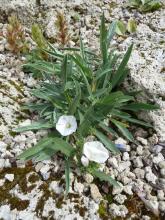
Thu, 07/21/2011 - 11:12amConvolvulus lineatus var. angustifolius:
Calylophus serrulatus, a little plant from seed a couple of years ago:
Calyptridium umbellatum, now in seed:
I grew Senecio polyodon ssp. polyodon long ago for a few years (before it was crowded out) and always suspected it to be overwintering, rather than reseeding. Now I finally have proof of overwintering. I started seeds of Senecio polyodon last year. (NB. The subspecies polyodon seemed to be larger flowered.) Plants in the open crevice garden, and in the border surrounded by other plants, have wintered over. A couple of plants in the border but not surrounded by other plants died out... so I'm not entirely sure of the rhyme or reason there - maybe it needs a little protection in heavy soil but not in better drainage?
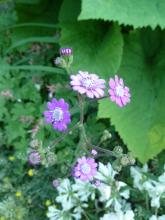
Another amazingly hardy South African plant...
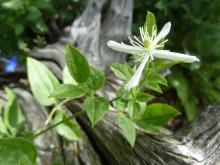
First bloom on Clematis mandshurica:
Pages