Mark, your H. niger seem still to be in good shape! Mine are at their final stage. But others, among them several H. orientalis seedlings, are coming in full stride now.
I would have liked to be able to stay home these days enjoying the garden. With no freezing temperatures for the last three weeks, even at night, plants develop fast. The maximum yesterday was 13C and the night temperature 10C. Alas, tomorrow we head for the mountains and snow for a week!
Today's Image of the Day highlights an excellent dwarf Tulipa species, T. vvedenskyi, worth growing just for the fantastic squiggly serpentine silver foliage, but the flowers are red hot as well. It is shown here growing on one of Phil Pearson's high-fire clay pots (Phil is proprietor of Grand Ridge Nursery in Issaquah, Washington), this pot still intact and unbroken after being exposed outside for 25 years. This Tulipa was planted out in the garden a few years ago, always appearing each spring although some years it doesn't flower.
Curiously, last May 2009, I spotted a bright red flower about 100' downhill and away from my solitary planting of T. vvedenskyii, and to my surprise, it looks like a vvedenskyi hybrid seedling :o
Very cool! I ha some seedlings germinated last season of these. I hope they are cold hardy enough.
For our American inquisitive minds, regarding the pronunciation of the "vv" in the epithet, if the slavic language from which it comes is like Slovenian (also a slavic language), I can offer this morsal: when a "v" is followed by a consonant (and there is seemingly no vowel in the syllable to pronounce) then the "v" is pronounced "oo" as in moon.
Very cool! I ha some seedlings germinated last season of these. I hope they are cold hardy enough.
For our American inquisitive minds, regarding the pronunciation of the "vv" in the epithet, if the slavic language from which it comes is like Slovenian (also a slavic language), I can offer this morsal: when a "v" is followed by a consonant (and there is seemingly no vowel in the syllable to pronounce) then the "v" is pronounced "oo" as in moon.
Rick, so how would you phoeneticize "Vvendeskyi". I tried looking at some web pages on Russian alphabet to English equivalencies, assuming that A.I. Vvedenskii, contributing author to Flora of the USSR, is indeed Russian (for which this Tulipa is named), but found it too confusing.
Um . . . it's pronounce just like the original name would be, with an "i" on the end. (How's that for a cop out.) Actually, it is one of the few steadfast rules in botanical latin - if the botanical latin is a latinized version of a name of a person or place, then the pronunciation of said name is preserved.
But I would think the "vv" would be oo - w... The second "v" would be a "w" in American English.
Does anyone know anyone of Russian descent? When I first saw this spelled, I thought is was a 'w', not two 'v's. I have the species, purchased from Ruksans....no sign of it yet.
Mark, that niger is wonderful...mine never turns pink.
Um . . . it's pronounce just like the original name would be, with an "i" on the end. (How's that for a cop out.) Actually, it is one of the few steadfast rules in botanical latin - if the botanical latin is a latinized version of a name of a person or place, then the pronunciation of said name is preserved.
But I would think the "vv" would be oo - w... The second "v" would be a "w" in American English.
That was the part I don't know about, how to begin pronouncing Mr. Vvedenskii's name; so based on what you suggest, it would be pronounced oo-wed-den'-ski ? Thanks for the "vv" or vee-vee tip :)
Mark, that niger is wonderful...mine never turns pink.
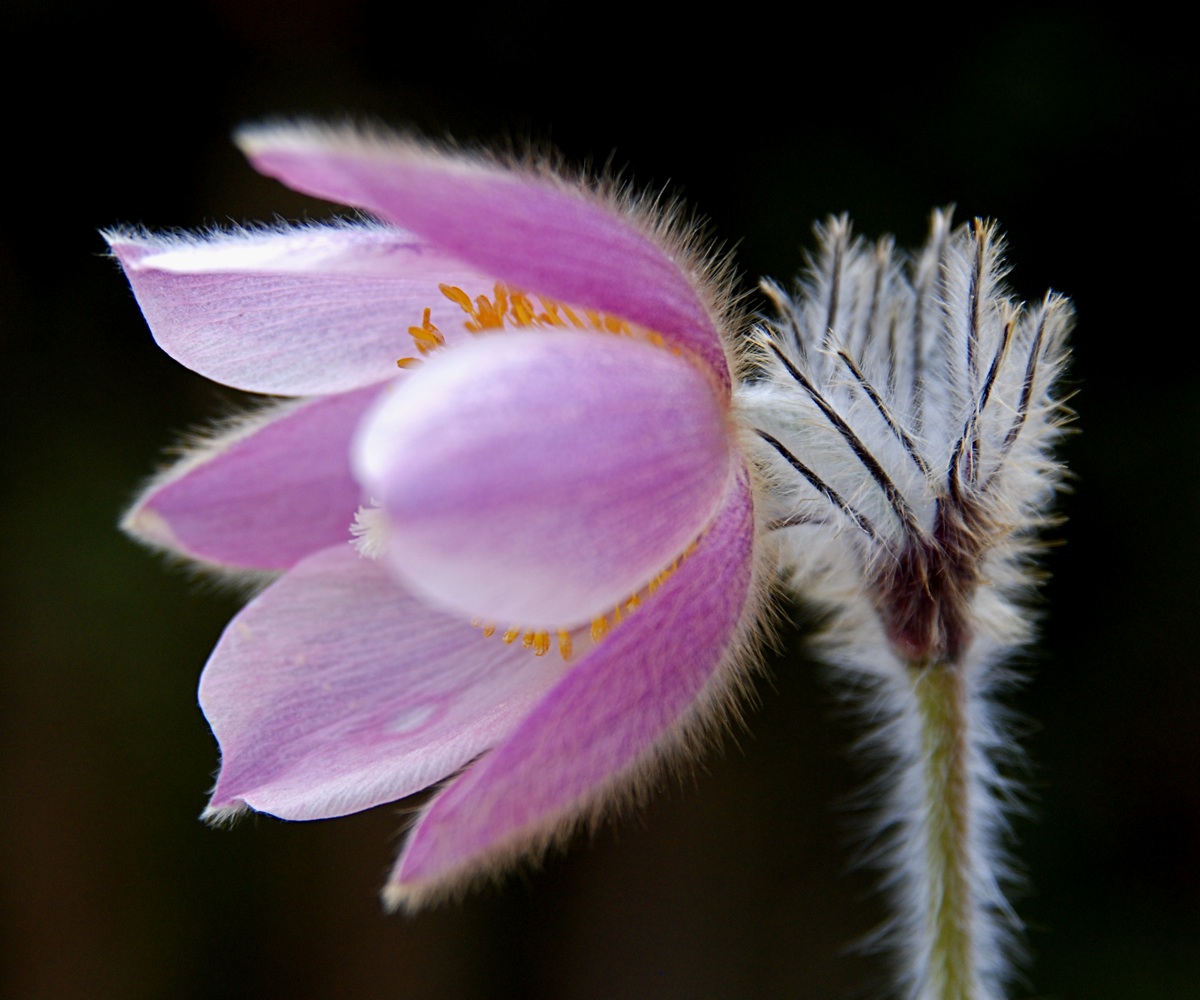
Just took a quick stroll in the garden with umbrella in the pouring wind-driven rain, and the Helleborus niger is darker pink still... will try and get a final pic. I typically get a lot of seed from this plant, I'm happy to share seed, although not sure if the pink coloration will hold true in seedlings or not.
I'd like to try some fresh seed, Mark. Hopefully, one of us will remember when the time comes . . .
I do have a fellow employee, Lena, who is a Ukrainian immigrant. (That's pronounced Lee'-a-nah, from Olena, and not Scandinavian.) Of course, she speaks fluent Russian too. Tomorrow I think my shift will overlap with hers and I'll ask. I am constantly asking here language related questions. There are so many similar words in Slovenian, Russian and Ukrainian, but most have a slightly different slant to the meaning. Very interesting, at least to me.
Nice tulips, Mark. I have not dared to try this one and that's not because of the name! (Aren't the es pronounced ye by the way?) Few tulip species like my wet climate and I don't like to grow in pots.
Regarding the red niger, isn't the red color a sign of it been pollinated and age? Many Ranunculaceae have this trait.
Regarding the red niger, isn't the red color a sign of it been pollinated and age? Many Ranunculaceae have this trait.
True enough Trond, but while it always takes on a pink color at late anthesis, never has it shown such deep color as this year. Here's one more photo of my Helleborus niger, taken in the pouring rain and gale force winds yesterday... sorry it's a bit out of focus (the plant would not sit still).
You are right, Mark! The color is extraordinary. Looks more like a lenten rose in color. I have seen similar color change in some windflower (Anemone nemorosa) here. Some years they achieve deep red flowers (or what you will call the color) other years not so. If I move them often the color fails to develop altogether!
Mine might turn a slight pink but that one is stunning!
Checked out the bulb frame at the Botanical garden today....Scilla miczenkoana in full bloom. Mine outdoors is nearly open too....maybe by early next week it will be open along with some crocus if we get the 4 days of 8-10 C they are forecasting.
Mine might turn a slight pink but that one is stunning!
Checked out the bulb frame at the Botanical garden today....Scilla miczenkoana in full bloom. Mine outdoors is nearly open too....maybe by early next week it will be open along with some crocus if we get the 4 days of 8-10 C they are forecasting.
That's a beautiful Scilla, good winning proportion of flower and scape to the short spreading foliage. I'll have to be on the lookout for that one. I'm a sucker for that milky blue color too :o
A daily-double, the final fling on Crocus malyi 'Sveti Roc' and the first bloom on the tiny dwarf tulip, Tulipa bifloriformis... even the crocus blooms are bigger, but it such a sweet little thing isn't it? This Tulipa species, and the rather similar T. turkestanica, are confusing... but typically the dark-anthered ones are attributed to T. bifloriformis. It's a good doer, and can easily be raised from seed, scratched in around the mother plant, seedlings flowering in 4 years.
I think I have some plants of that tulip - if they are still alive. Tulip species almost never live long by me except some T. sylvatica. I have never observed seedlings either. But I have to try that crocus, Mark!
I think I have some plants of that tulip - if they are still alive. Tulip species almost never live long by me except some T. sylvatica. I have never observed seedlings either. But I have to try that crocus, Mark!
Crocus malyi make loads of seed, which germinates like grass when sown outside. Happy to send seed later this summer when ripe.
A beautiful Sebaea thomasii that won the Farrer Medal (for best plant in the show) at Cleveland national Alpine Garden Society Show in northern England yesterday (3rd April). This was exhibitor; Tom Green's first Farrer Medal at any show.
CLEVELAND SHOW 2010
TOM GREEN - FARRER MEDAL WINNER SEBAEA THOMASII - FARRER MEDAL WINNING EXHIBIT VIEW OF ONE THE COLOURFUL SHOW BENCHES
Maybe its sour grapes but I find these UK shows 'over the top'...spectacular plants but too primped and coddled. Lets see how well that Sebaea would do outside!
No doubt the plants shown are spectacular specimens, but these types of high-end plant competitions don't resonate with most North American rock gardeners as they don't have similar opportunity for plant shows, they don't really exist in the fashion as they do in the UK. Local NARGS Chapters might have "plant shows", but these are very casual affairs, more for show-and-tell than a true competition. I will also generalize that most North American rock gardeners are primarily outside gardeners, preferring to see what survives the open ground than coddling plants in greenhouses.
That said, I will still oggle (for hours) the delectable views of immaculately grown domes of Dionysia and other tasty treats that I see in the SRCG and UK plant show reports. In fact, in your last photo, I spy Hepatica 'Millstream Merlin' winning 3rd place. Since this was one of Linc Foster's best Hepatica hybrids, I would love to try growing it outdoors in my garden just about 120 miles northeast of the Millstream garden in Connecticut, so surely it should fair well here. I would like the chance to photograph it in a garden setting, with leaves intact, not decorated with a sphagnum collar.
Maybe its sour grapes but I find these UK shows 'over the top'...spectacular plants but too primped and coddled. Lets see how well that Sebaea would do outside!
Oh, Rick, as you wrote that the chances are that any UK exhibitor reading it would choke on their coffee! ;D ;D
Yes, it is true that a lot of the plants seen at alpine and rock garden club shows in the UK are bigger and blousier than any of their kind you will see in the wild.... and this in spite of much muttering a mong the judges about plants needing to be "in character" ... what a joke... the truth is no -one would be given a prize for a plant that truly reflected that species grown in nature: wind-blown, chewed by insects and grazing animals, one-sided from exposure.... no, a truly "natural" plant would win nothing! But:it must be remembered that all these plants are native to some country, somewhere, where they certainly do grow in natural conditions ! The constraints of keeping them alive at all in the false conditions of cultivation (even if under glass because there is no way the plant could survive outdoors conditions in a country alien to its origin) often mean that it is a real triumph to keep the plant alive at all, let alone grow it to the magnificently robust proportions of the average show winner! Yes, the shows are mostly about "theatre" and often times the big show winners are grown under glass (though in the UK, that is a sensible move for many plants.... if only for the survival of the rain soaked gardener!) but the sight of a show hall bursting with the glamour and colour of these spectacular exhibits is something to cheer the dullest day and saddest of hearts......and is a great day out to meet friends. Be generous, cut us poor Brits some slack! ;)
Don't get me wrong...the UK growers are obviously passionate about their alpines and you growers can grow them to perfection to say the least. Still, to see them in the wild looking that good (they rarely do) or better still in a garden (even more rarely) seems more awe-inspiring, at least to my eyes.
Meanwhile, you Brits are on to something.....I think we growers in Newfoundland need to grow under glass as well....we get just as much if not more rain than the UK! Ah, so many drylanders I'd like to grow. I have to be content with growing some of these in the alpine house at work...maybe I should build an alpine house in my back yard!
It is nice to stir the tea leaves occasionally and see what brews! I would be amazed if anyone in the U.K. can grow Dionysias or Androsaces to this show standard without resorting to cover from our heavy and regular precipitation? Most of the keen growers don't need or use heat (an occasional spell in a fridge is a more likely scenario for most of these plants) and the best exhibits usually spend as much time without any form of protection as they do under glass. I am not really partial to cut flowers at alpine events, but these tiny flower arrangements still attract my camera lens at every show. I agree with Todd that it is magnificent to see a beautiful alpine plant growing in it's natural habitat in a magical mountain setting, but surely growing a plant in a pot is little different to growing it in a garden - they are both created habitats and of equal merit? The tea is still brewing ... just awaiting another stir ...?
It is nice to stir the tea leaves occasionally and see what brews! I would be amazed if anyone in the U.K. can grow Dionysias or Androsaces to this show standard without resorting to cover from our heavy and regular precipitation? Most of the keen growers don't need or use heat (an occasional spell in a fridge is a more likely scenario for most of these plants) and the best exhibits usually spend as much time without any form of protection as they do under glass. I am not really partial to cut flowers at alpine events, but these tiny flower arrangements still attract my camera lens at every show. I agree with Todd that it is magnificent to see a beautiful alpine plant growing in it's natural habitat in a magical mountain setting, but surely growing a plant in a pot is little different to growing it in a garden - they are both created habitats and of equal merit? The tea is still brewing ... just awaiting another stir ...?
As a tea lover (only strong English or Irish tea, or selected varietal green teas please), I'll stir the tea leaves a bit. There was an interesting discussion and series of photos on the SRGC "Hepatica" thread, with the focus almost entirely on flowers, and the fact that most often when displayed at plant shows in the UK the leaves are cut off, whereas in Japanese plant shows, they always have the leaves on. I asked to see the leaves, and in some of them the leaves are beautiful indeed, like mottled leather. One could argue endlessly about evergreen-leaved plants, like Asarum or Hepatica, whether to cut off the old leaves or not... so I'm not going there.
Instead, I will talk about a UK plant show "norm" of cutting off all leaves of certain plants, like some of the western American Allium such as A. falcifolium, leaving behind a wholly unnatural lollipop effect. Now, it is true that some allium species tend to have foliage "going over" as the plants flower... that is how they grow and flower in nature. It is also true, that if one were to look at plant photos as they occur in nature (CalPhotos is a good source), viewing western American Allium, sometimes the leaves are completely toasted by flowering time, other times they are beginning to dry, or the leaves can be in perfectly good shape... so they run the gamut of possibility. The trick for people who grow such plants (this is where the skill factor comes in), is to give sufficient moisture in spring to maintain the foliage while the plants flower and not have the foliage die back too soon.
I upload a photo of Allium falcifolium (on the left) which has foliage still green at flowering, overshadowed by Allium platycaule at center stage, with dramatic falcate leaves... just starting to show dry tips. To cut off the bold falcate leaves of A. platycaule just to enter it in a plant show (knowing that any sign of foliage "going over" will mark down the plant's possibility of winning) destroys the true persona of that plant. Years ago I had a round of email communication with a well known SRGC member about this procedure, relative to A. falcifolium, yet I still find this unnatural technique used in the UK Plant Show photo galleries.
I take the UK shows for what they are: plants grown to perfection. No one claims they emulate the growth of the plant in nature. But I too, take more "pride" in seeing them in nature, rather than a garden or show. Yet then, why is it that I try to grow so many of them?
Well, I do have an answer to that: though it is curiosity that often gets me started, for the most part I grow to learn.
And I see Marks point about display with natural foliage, be it live or dead. Personally, I like the dried foliage of Iris reichenbachii that persists with the green leaves, giving a base of gnarly, curled, gray artistry.
I would very much like to visit an English plant show, we have nothing like that in Norway. I would never participate in such a show, just to look at the plants! But you have to take the plants at the show for what they are: Products of skilled artists. And why not? Others compete with cutted flowers and manipulated leaves, stalks fruits etc.
I never remove leaves from the plants in the garden except when they are completely dead and don't lie down to rot! And for the balance: Here's my picture for today, one with the tiniest flowers and completely wild-grown!
Back from a truly whirlwind 11 day trip from Denver to California and back...with many, many impressions and fabulous experiences. I shall rejoin the forum with a picture I took last Wednesday at Quarryhill Botanical Garden in Sonoma, California (a fabulous place specializing only in plants of East Asia): they were growing this wonderful Dysosma there (I think it was D. versipelle but it could be D. pleiantha--I forgot to check the label!): it was growing in a trough which let one really get under the foliage--a shot not easily replicated in most gardens! I've tried growing this in Denver, but didn't have quite the right spot for it, and it has shrunk to nothing. We shall content ourselves with Podophyllum emodi (much less flashy, but pretty cool nonetheless) and tough as nails here. There are compensations for you all who live in wooded, shady, dank places....grrrrrrrr.
Back from a truly whirlwind 11 day trip from Denver to California and back...with many, many impressions and fabulous experiences. I shall rejoin the forum with a picture I took last Wednesday at Quarryhill Botanical Garden in Sonoma, California (a fabulous place specializing only in plants of East Asia): they were growing this wonderful Dysosma there (I think it was D. versipelle but it could be D. pleiantha--I forgot to check the label!): it was growing in a trough which let one really get under the foliage--a shot not easily replicated in most gardens! I've tried growing this in Denver, but didn't have quite the right spot for it, and it has shrunk to nothing. We shall content ourselves with Podophyllum emodi (much less flashy, but pretty cool nonetheless) and tough as nails here. There are compensations for you all who live in wooded, shady, dank places....grrrrrrrr.
Well, my wooded, shady, dank place is infested with snails and slugs! All my Dysosmas and relatives (have tried quite a few) are slug-snacks. They are always devoured by the slimy vermins.
Back from a truly whirlwind 11 day trip from Denver to California and back...with many, many impressions and fabulous experiences. I shall rejoin the forum with a picture I took last Wednesday at Quarryhill Botanical Garden in Sonoma, California (a fabulous place specializing only in plants of East Asia): they were growing this wonderful Dysosma there (I think it was D. versipelle but it could be D. pleiantha--I forgot to check the label!): it was growing in a trough which let one really get under the foliage--a shot not easily replicated in most gardens! I've tried growing this in Denver, but didn't have quite the right spot for it, and it has shrunk to nothing. We shall content ourselves with Podophyllum emodi (much less flashy, but pretty cool nonetheless) and tough as nails here. There are compensations for you all who live in wooded, shady, dank places....grrrrrrrr.
Oooh, nice Dysosma... this genus is getting lots of attention these days; seems to be a hot item on the SRGC pages. Don't know much about them myself, but they seem like a fascinating lot and are surely worth trying. I got one from Darrell Probst... after seeing your pics from California, I went looking for it again, and sure enough it just emerged. The name given on Darrell's label is: Podophyllum versipelle ssp. boreale Clone C CPC 27-4.01.4. In his greenhouse he's got lots of these things with big dangly flowers and lucious umbrella leaves, where he plays around dabbing pollen.
To see what this one looks like when mature, here are some links I found, including where to purchase it:
Mild and drizzly today, better light conditions to take a photo of Tulipa polychroma, probably my favorite dwarf tulip species, one of the very best for the rock garden. What's not to like here, refined smooth silvery leaves, pristine white yellow-eyed flowers with a tantalizingly sweet fragrance, on branched stems about 3" tall. When the flowers close, the backs are a pastel greenish-gray color with a hint of lavender. The flower in the center is an anomalous 8-petalled one, so is the semi-closed flower on the right.
I too have known and grown and loved Tulipa polychroma, which looks an awful lot like Tulipa biflora which bloomed a few weeks ago at Denver Botanic Gardens...You will simply have to take my word for this, since the only picture I have of the plant has its flower closed (see below).
I'm not sure I would rate these compact cousins of Tulipa turkestanica above the myriad ruby red and luminous lavender Tulipa humilis that are opening up all over my garden: I think I would rate these as my very favorites, although they are threatening to become potential pests by self sowing.
I would rate Tulipa saxatilis, T. bakeri and their kin very high as well...
And what about the scarlet glories: T. wilsoniana, T. vvedevenskyi, T. maximowiczii, T. linifolia, and all the other red rabble...surely these rate highly, Mark! For me, the ever expanding masses of tulips at Denver Botanic Gardens and in my own gardens are a major highlight of the gardening year. I hope one day I can add the modest, nodding Tulipa heteropetala I found high in both the Altai and Tian Shan to the list one day. This very primitive species hints that tulips are perhaps not so very far from lilies and fritillaries genetically.
(the first picture is T. biflora, the second T. heteropetala taken above treeline near Almaty)
I too have known and grown and loved Tulipa polychroma, which looks an awful lot like Tulipa biflora which bloomed a few weeks ago at Denver Botanic Gardens...You will simply have to take my word for this, since the only picture I have of the plant has its flower closed (see below).
I'm not sure I would rate these compact cousins of Tulipa turkestanica above the myriad ruby red and luminous lavender Tulipa humilis that are opening up all over my garden: I think I would rate these as my very favorites, although they are threatening to become potential pests by self sowing.
I would rate Tulipa saxatilis, T. bakeri and their kin very high as well...
And what about the scarlet glories: T. wilsoniana, T. vvedevenskyi, T. maximowiczii, T. linifolia, and all the other red rabble...surely these rate highly, Mark! For me, the ever expanding masses of tulips at Denver Botanic Gardens and in my own gardens are a major highlight of the gardening year. I hope one day I can add the modest, nodding Tulipa heteropetala I found high in both the Altai and Tian Shan to the list one day. This very primitive species hints that tulips are perhaps not so very far from lilies and fritillaries genetically.
(the first picture is T. biflora, the second T. heteropetala taken above treeline near Almaty)
Well, it is always dangerous to admit one's favorite species in a genus; sure to omit other people's favorites ;D If I had to recommend a rock garden sized tulip on scent alone, it would easily be T. polychroma.
The issue of Tulipa polychroma versus T. biflora is an interesting one. It seems that the species (T. polychroma) as it occurs in Palestine, with only two flowers and deeper color outside of petals, and undulate leaf margins, has been separated off as T. biflora, with the long established T. polychroma from Iran and neighboring areas retaining the species name of T. polychroma. There's been interesting discussion and photos on SRGC that help illustrate this. Then as a separate issue, is the whole Tulipa turkestanica/bifloriformis group, which takes on another dimension. I include a recent link where Janis Ruksans posts a series of photos showing the enigmatic turkestanica/bifloriformis group... I think this is another area in need of a serious taxonomic revision.
PS: You've been away for a while, but I hope you caught my mention of Tulipa vvedenskyii , with photographs of this species growing in one of Phil Pearson's fabulous high-fire clay pots, in this Image of The Day link: http://nargs.org/smf/index.php?topic=24.msg1231#msg1231
Well the day after my last post was Lena's last day at work and I never hooked up with her. Didn't even get to say good bye. But we also have a cashier, Helena, who is from Byelo Rus. She said the "vv" is not pronounced as I surmised, and that it most likely is "v" pronounced very heavily. Envision the Spanish "rr" as oppose to the "r", or the "č" as opposed to the "ć" in some slavic languages.
In language discussions with Lena, she had always stressed how differently people speak in various regions, even within the small area of the Ukraine. Even within the little country of Slovenia, it was easy for me to pick out the different spoken language rhythms. I am thinking that unless we can pinpoint the region of Vvedensky's origin and a speaker there, we would never really know the true pronunciation. Good thing Botanical Latin is an unspoken language...
Hmmm. Looks as though no one has posted for today. I shall do a twofer: I mentioned I recently came back from a whirlwind tour of the West, and one of the many highlights was meeting John Weiser, who gardens in Sparks, Nevada and contributes a lot to Alpine-L: his garden is really smashingly good featuring mostly xeric plants and many, many local endemics from the eastern face of the Sierra--a region of tremendous biodiversity. A treasure trove with outstanding garden design. I am appending pix of two of the many gems in his garden that have been discussed endlessly on Alpine-L of late (maybe we can lure some of that crew over here...) and a picture of John, the gardener himself. He not only took off from work to be at the garden when we showed up last Friday, he fed us lunch! It's fun to meet people in Snail Space (the reality equivalent of snail mail) when you've only known them in cyberspace... The buttercup is generally called the sagebrush buttercup and occurs by the tens of trillions across the Great Basin and other steppe regions from California to the Rockies (we're talking about nearly 1 million square miles here...). The Viola has almost as big a range--stopping its eastward trek at the Wasatch front instead of Colorado. This was the first time I'd seen the latter up close and personal. To paraphrase Browning: "Oh to be everywhere (not just England) now that spring is here!"
What an exquisite viola and the buttercup is no slouch! We are not quite that far along in Newfoundland...the crocus are currently at their peak.
Tulipa polychroma is a delightful species....we have them in the bulb frame at MUNBG...might be open in the next couple of days but then the frame does provide some extra warmth.
What an exquisite viola and the buttercup is no slouch! We are not quite that far along in Newfoundland...the crocus are currently at their peak.
When I lived in the Seattle area of Washington, to escape the gloom of cloudy rainy days, I liked nothing better than to drive due east to the "dry side" of Washington, heading to the Columbia River Gorge. While the landscape appears barren except for endless miles of sagebrush, get out and look closely and there were all kinds of choice plants, and the memorable pairing of sagebrush buttercup and the "Sagebrush Violet" V. trinervata (V. beckwithii v. trinervata) were among my favorite. Funny, the appearance of Ranunculus glaberrimus always seemed incongruous to me, hardly looking like the xeric plant that I know it to be, whereas Viola trinervata has classic adaptations to xeric landscape, dissected leaves clothed in fine pubescence.
One of my favorite plants common to spring snowmelt areas of the otherwise dry Wenatchee Mountains in Washington State, is Fritillaria pudica. It was a common sight in vernally wet areas, sometimes found growing and flowering emersed in a couple inches of running water... areas that would be bone dry a few weeks hence. This charming frit has a wide distribution in western USA and Canada (see map link below).
About 7 years ago, I bought some rice-grain bulbs from Jane McGary, as the bargain basement price of 10 for $1. When they arrived, there were easily twice as many tiny bulbs. All were planted out, and year after year they reliably sprouted, like little blades of grass, slowly but surely bulking up and showing wider linear green leaves. After 5 years a first couple blooms appeared, with the last two years putting on a fine display, the nodding yellow thimbles in good contrast to bright red lily beetles that favor this particular frit species more than others ;D I scratch in the seed around the mother plants, and lots more seedlings are started on their long 6-8 year journey to maturity.
Two photos taken recently, the plant still in bloom (2 weeks earlier than normal this year).
Both me and my slugs like frits. The slugs have won. The only frit they let be is F. meleagris. The first will flower in a couple of weeks.
The genus Primula seem to be slug resistant. I have several cultivars. However nothing beats Cowslip (Primula veris, or Marianøklebånd). When the woods and fields near my cabin bloom with cowslip it is almost summer! I have two or three plants here too. Almost forgot! Had to add these wood anemones (Anemone nemorosa) I picked yesterday.
That Frit. pudica is huge! We have them in the BG and they are just tiny creatures. First ones opened last Friday but ours get only 4" tall.
Todd, I measured my plants today, they are 8"-10" tall. Close-up photos without anything giving a sense of scale can be misleading. That said, your plants do look much smaller.
I have tried F. pudica along with other frits - and if I am lucky I can just see the tip of the leaf emerging before the slugs eat it all - all the way down to the bottom of the stem so I end up with a hole in the soil instead. It's depressing. I would love to grow frits.
I have tried F. pudica along with other frits - and if I am lucky I can just see the tip of the leaf emerging before the slugs eat it all - all the way down to the bottom of the stem so I end up with a hole in the soil instead. It's depressing. I would love to grow frits.
Trond, I feel your pain, when I lived and gardened in the Pacific Northwest, Seattle Washington area, the slugs were like "major wildlife" and it became a constant war to fight slugs. For areas where one grew the small precious treasures (let's say, like Fritillaria pudica), I would keep a ring of metaldehyde slug bait (thick gray goopy liquid) around that area. Since the slugs can still travel up to a meter after ingesting the poison, the ring needs to be at least 1 meter away from choice plants. So, I keep a ring of metaldehyde slug bait around the entire rock garden area, with frequent additional applications of the bait. Of course the other thing I did, was refocus my efforts on plants that were not as attractive to slugs, so for example, I stopped growing dwarf campanula species as slugs of all species would commit suicide missions to get at a tasty campanula morsel :o But things like Rhododendron species grew fantastically there, species I could not even begin to consider back in New England, so it opened up a whole new world of plants to explore in that area.
Back to the frits, I do have to do a daily check on them and pick off lily beetle (they especially love F. pudica), and if left for a week without checking, that little grove of F. pudica can be literally destroyed.
Flowering now and putting on a display more impressive than imagined, is a rare variegated form of Epimedium sempervirens. It doesn't have a cultivar name yet, it is just referenced as E. sempervirens "Variegated #1". This form was purchased in Japan by Darrell Probst in 1997, who says it "cost a small fortune".
What a stunner it is, even more compelling than my photos which fail to adequately capture the intensity and nuance of color of the brilliant new foliage embracing creamy white flowers, all hovering above dark leathery winter-evergreen leaves. To quote Darrell, the variegation of new foliage is supposed to turn "a swirling collage of white, pink, and light green" which last well into summer.
I'm posting this as the Image of the Day, but will follow up in the Woodlander - Epimedium 2010 thread with additional images.
Trond, I feel your pain, when I lived and gardened in the Pacific Northwest, Seattle Washington area, the slugs were like "major wildlife" and it became a constant war to fight slugs. For areas where one grew the small precious treasures (let's say, like Fritillaria pudica), I would keep a ring of metaldehyde slug bait (thick gray goopy liquid) around that area. Since the slugs can still travel up to a meter after ingesting the poison, the ring needs to be at least 1 meter away from choice plants. So, I keep a ring of metaldehyde slug bait around the entire rock garden area, with frequent additional applications of the bait. Of course the other thing I did, was refocus my efforts on plants that were not as attractive to slugs, so for example, I stopped growing dwarf campanula species as slugs of all species would commit suicide missions to get at a tasty campanula morsel :o But things like Rhododendron species grew fantastically there, species I could not even begin to consider back in New England, so it opened up a whole new world of plants to explore in that area.
Back to the frits, I do have to do a daily check on them and pick off lily beetle (they especially love F. pudica), and if left for a week without checking, that little grove of F. pudica can be literally destroyed.
I have for the time being given up frits and other slug foods as it is impractical to use poison where I had possibilities to grow them. Though when I have time I think of building a new rock garden of some sort of raised bed. On the other hand many of the typical rock garden plants do not tolerate the climate here.
I do grow rhodos, have some hundred plants I think, both species and cultivars; and many from seed. The lily beetle is here too but not a serious problem at home for me yet but at my cabin at the southeast coast it is a problem. Of course you are right! You have to exploit the possibilities where you live, it's a wealth of plants out there to be grown.
Here is a little cushion Phlox that grows at 8500' on dry windy summits. It grows as a dense, tight, prickley, domed mat. 1-1.5 inches(2.5-4cm) tall, and 8-12 inches(20-30cm) across. The flowers are all snow white in it's parent population. The flowers measure 3/8 inch across(1cm). I belive it to be Phlox covillei (syn Phlox condensata)
What an amazing barrenwort, Mark- stunning! The old foliage is in incredibly good shape. (I think I have reached the conclusion that even the evergreen ones are not actually evergreen here.)

Comments
Trond Hoy
Re: Image of the day
Fri, 03/26/2010 - 11:16amMark, your H. niger seem still to be in good shape! Mine are at their final stage. But others, among them several H. orientalis seedlings, are coming in full stride now.
I would have liked to be able to stay home these days enjoying the garden. With no freezing temperatures for the last three weeks, even at night, plants develop fast. The maximum yesterday was 13C and the night temperature 10C. Alas, tomorrow we head for the mountains and snow for a week!
Mark McDonough
Re: Image of the day
Tue, 03/30/2010 - 7:14amToday's Image of the Day highlights an excellent dwarf Tulipa species, T. vvedenskyi, worth growing just for the fantastic squiggly serpentine silver foliage, but the flowers are red hot as well. It is shown here growing on one of Phil Pearson's high-fire clay pots (Phil is proprietor of Grand Ridge Nursery in Issaquah, Washington), this pot still intact and unbroken after being exposed outside for 25 years. This Tulipa was planted out in the garden a few years ago, always appearing each spring although some years it doesn't flower.
Curiously, last May 2009, I spotted a bright red flower about 100' downhill and away from my solitary planting of T. vvedenskyii, and to my surprise, it looks like a vvedenskyi hybrid seedling :o
Richard T. Rodich
Re: Image of the day
Tue, 03/30/2010 - 8:36amVery cool! I ha some seedlings germinated last season of these. I hope they are cold hardy enough.
For our American inquisitive minds, regarding the pronunciation of the "vv" in the epithet, if the slavic language from which it comes is like Slovenian (also a slavic language), I can offer this morsal: when a "v" is followed by a consonant (and there is seemingly no vowel in the syllable to pronounce) then the "v" is pronounced "oo" as in moon.
Mark McDonough
Re: Image of the day
Tue, 03/30/2010 - 9:28amRick, so how would you phoeneticize "Vvendeskyi". I tried looking at some web pages on Russian alphabet to English equivalencies, assuming that A.I. Vvedenskii, contributing author to Flora of the USSR, is indeed Russian (for which this Tulipa is named), but found it too confusing.
Richard T. Rodich
Re: Image of the day
Tue, 03/30/2010 - 9:58amUm . . . it's pronounce just like the original name would be, with an "i" on the end. (How's that for a cop out.) Actually, it is one of the few steadfast rules in botanical latin - if the botanical latin is a latinized version of a name of a person or place, then the pronunciation of said name is preserved.
But I would think the "vv" would be
oo - w...
The second "v" would be a "w" in American English.
Todd Boland
Re: Image of the day
Tue, 03/30/2010 - 10:27amDoes anyone know anyone of Russian descent? When I first saw this spelled, I thought is was a 'w', not two 'v's. I have the species, purchased from Ruksans....no sign of it yet.
Mark, that niger is wonderful...mine never turns pink.
Mark McDonough
Re: Image of the day
Tue, 03/30/2010 - 10:54amThat was the part I don't know about, how to begin pronouncing Mr. Vvedenskii's name; so based on what you suggest, it would be pronounced
oo-wed-den'-ski ? Thanks for the "vv" or vee-vee tip :)
Mark McDonough
Re: Image of the day
Tue, 03/30/2010 - 10:58amJust took a quick stroll in the garden with umbrella in the pouring wind-driven rain, and the Helleborus niger is darker pink still... will try and get a final pic. I typically get a lot of seed from this plant, I'm happy to share seed, although not sure if the pink coloration will hold true in seedlings or not.
Richard T. Rodich
Re: Image of the day
Tue, 03/30/2010 - 10:45pmI'd like to try some fresh seed, Mark. Hopefully, one of us will remember when the time comes . . .
I do have a fellow employee, Lena, who is a Ukrainian immigrant. (That's pronounced Lee'-a-nah, from Olena, and not Scandinavian.) Of course, she speaks fluent Russian too. Tomorrow I think my shift will overlap with hers and I'll ask. I am constantly asking here language related questions. There are so many similar words in Slovenian, Russian and Ukrainian, but most have a slightly different slant to the meaning. Very interesting, at least to me.
Trond Hoy
Re: Image of the day
Tue, 03/30/2010 - 11:52pmNice tulips, Mark. I have not dared to try this one and that's not because of the name! (Aren't the es pronounced ye by the way?) Few tulip species like my wet climate and I don't like to grow in pots.
Regarding the red niger, isn't the red color a sign of it been pollinated and age? Many Ranunculaceae have this trait.
Mark McDonough
Re: Image of the day
Wed, 03/31/2010 - 6:37amTrue enough Trond, but while it always takes on a pink color at late anthesis, never has it shown such deep color as this year. Here's one more photo of my Helleborus niger, taken in the pouring rain and gale force winds yesterday... sorry it's a bit out of focus (the plant would not sit still).
Trond Hoy
Re: Image of the day
Wed, 03/31/2010 - 11:22pmYou are right, Mark! The color is extraordinary. Looks more like a lenten rose in color. I have seen similar color change in some windflower (Anemone nemorosa) here. Some years they achieve deep red flowers (or what you will call the color) other years not so. If I move them often the color fails to develop altogether!
Todd Boland
Re: Image of the day
Thu, 04/01/2010 - 4:48pmMine might turn a slight pink but that one is stunning!
Checked out the bulb frame at the Botanical garden today....Scilla miczenkoana in full bloom. Mine outdoors is nearly open too....maybe by early next week it will be open along with some crocus if we get the 4 days of 8-10 C they are forecasting.
Richard T. Rodich
Re: Image of the day
Thu, 04/01/2010 - 7:26pmA simple Scilla sibirica looking especially dapper. March has been so unseasonably warm and dry here . . .
Mark McDonough
Re: Image of the day
Fri, 04/02/2010 - 4:46pmThat's a beautiful Scilla, good winning proportion of flower and scape to the short spreading foliage. I'll have to be on the lookout for that one. I'm a sucker for that milky blue color too :o
Mark McDonough
Re: Image of the day
Fri, 04/02/2010 - 7:26pmA daily-double, the final fling on Crocus malyi 'Sveti Roc' and the first bloom on the tiny dwarf tulip, Tulipa bifloriformis... even the crocus blooms are bigger, but it such a sweet little thing isn't it? This Tulipa species, and the rather similar T. turkestanica, are confusing... but typically the dark-anthered ones are attributed to T. bifloriformis. It's a good doer, and can easily be raised from seed, scratched in around the mother plant, seedlings flowering in 4 years.
Trond Hoy
Re: Image of the day
Fri, 04/02/2010 - 11:00pmI think I have some plants of that tulip - if they are still alive. Tulip species almost never live long by me except some T. sylvatica. I have never observed seedlings either.
But I have to try that crocus, Mark!
Mark McDonough
Re: Image of the day
Sat, 04/03/2010 - 6:05amCrocus malyi make loads of seed, which germinates like grass when sown outside. Happy to send seed later this summer when ripe.
Trond Hoy
Re: Image of the day
Sat, 04/03/2010 - 11:05pmThanks, Mark. I thought of buying corms from Janis Ruksans, but seed is better! You usually get more plants.
Cliff Booker
Re: Image of the day
Sat, 04/03/2010 - 11:41pmA beautiful Sebaea thomasii that won the Farrer Medal (for best plant in the show) at Cleveland national Alpine Garden Society Show in northern England yesterday (3rd April). This was exhibitor; Tom Green's first Farrer Medal at any show.
CLEVELAND SHOW 2010
TOM GREEN - FARRER MEDAL WINNER
SEBAEA THOMASII - FARRER MEDAL WINNING EXHIBIT
VIEW OF ONE THE COLOURFUL SHOW BENCHES
Todd Boland
Re: Image of the day
Sun, 04/04/2010 - 8:10amMaybe its sour grapes but I find these UK shows 'over the top'...spectacular plants but too primped and coddled. Lets see how well that Sebaea would do outside!
Mark McDonough
Re: Image of the day
Sun, 04/04/2010 - 8:54amNo doubt the plants shown are spectacular specimens, but these types of high-end plant competitions don't resonate with most North American rock gardeners as they don't have similar opportunity for plant shows, they don't really exist in the fashion as they do in the UK. Local NARGS Chapters might have "plant shows", but these are very casual affairs, more for show-and-tell than a true competition. I will also generalize that most North American rock gardeners are primarily outside gardeners, preferring to see what survives the open ground than coddling plants in greenhouses.
That said, I will still oggle (for hours) the delectable views of immaculately grown domes of Dionysia and other tasty treats that I see in the SRCG and UK plant show reports. In fact, in your last photo, I spy Hepatica 'Millstream Merlin' winning 3rd place. Since this was one of Linc Foster's best Hepatica hybrids, I would love to try growing it outdoors in my garden just about 120 miles northeast of the Millstream garden in Connecticut, so surely it should fair well here. I would like the chance to photograph it in a garden setting, with leaves intact, not decorated with a sphagnum collar.
Margaret Young
Re: Image of the day
Sun, 04/04/2010 - 10:26amOh, Rick, as you wrote that the chances are that any UK exhibitor reading it would choke on their coffee! ;D ;D
Yes, it is true that a lot of the plants seen at alpine and rock garden club shows in the UK are bigger and blousier than any of their kind you will see in the wild.... and this in spite of much muttering a mong the judges about plants needing to be "in character" ... what a joke... the truth is no -one would be given a prize for a plant that truly reflected that species grown in nature: wind-blown, chewed by insects and grazing animals, one-sided from exposure.... no, a truly "natural" plant would win nothing!
But:it must be remembered that all these plants are native to some country, somewhere, where they certainly do grow in natural conditions !
The constraints of keeping them alive at all in the false conditions of cultivation (even if under glass because there is no way the plant could survive outdoors conditions in a country alien to its origin) often mean that it is a real triumph to keep the plant alive at all, let alone grow it to the magnificently robust proportions of the average show winner!
Yes, the shows are mostly about "theatre" and often times the big show winners are grown under glass (though in the UK, that is a sensible move for many plants.... if only for the survival of the rain soaked gardener!) but the sight of a show hall bursting with the glamour and colour of these spectacular exhibits is something to cheer the dullest day and saddest of hearts......and is a great day out to meet friends.
Be generous, cut us poor Brits some slack! ;)
Todd Boland
Re: Image of the day
Sun, 04/04/2010 - 12:40pmDon't get me wrong...the UK growers are obviously passionate about their alpines and you growers can grow them to perfection to say the least. Still, to see them in the wild looking that good (they rarely do) or better still in a garden (even more rarely) seems more awe-inspiring, at least to my eyes.
Meanwhile, you Brits are on to something.....I think we growers in Newfoundland need to grow under glass as well....we get just as much if not more rain than the UK! Ah, so many drylanders I'd like to grow. I have to be content with growing some of these in the alpine house at work...maybe I should build an alpine house in my back yard!
Cliff Booker
Re: Image of the day
Sun, 04/04/2010 - 1:43pmIt is nice to stir the tea leaves occasionally and see what brews! I would be amazed if anyone in the U.K. can grow Dionysias or Androsaces to this show standard without resorting to cover from our heavy and regular precipitation? Most of the keen growers don't need or use heat (an occasional spell in a fridge is a more likely scenario for most of these plants) and the best exhibits usually spend as much time without any form of protection as they do under glass. I am not really partial to cut flowers at alpine events, but these tiny flower arrangements still attract my camera lens at every show. I agree with Todd that it is magnificent to see a beautiful alpine plant growing in it's natural habitat in a magical mountain setting, but surely growing a plant in a pot is little different to growing it in a garden - they are both created habitats and of equal merit?
The tea is still brewing ... just awaiting another stir ...?
Mark McDonough
Re: Image of the day
Sun, 04/04/2010 - 5:44pmAs a tea lover (only strong English or Irish tea, or selected varietal green teas please), I'll stir the tea leaves a bit. There was an interesting discussion and series of photos on the SRGC "Hepatica" thread, with the focus almost entirely on flowers, and the fact that most often when displayed at plant shows in the UK the leaves are cut off, whereas in Japanese plant shows, they always have the leaves on. I asked to see the leaves, and in some of them the leaves are beautiful indeed, like mottled leather. One could argue endlessly about evergreen-leaved plants, like Asarum or Hepatica, whether to cut off the old leaves or not... so I'm not going there.
Instead, I will talk about a UK plant show "norm" of cutting off all leaves of certain plants, like some of the western American Allium such as A. falcifolium, leaving behind a wholly unnatural lollipop effect. Now, it is true that some allium species tend to have foliage "going over" as the plants flower... that is how they grow and flower in nature. It is also true, that if one were to look at plant photos as they occur in nature (CalPhotos is a good source), viewing western American Allium, sometimes the leaves are completely toasted by flowering time, other times they are beginning to dry, or the leaves can be in perfectly good shape... so they run the gamut of possibility. The trick for people who grow such plants (this is where the skill factor comes in), is to give sufficient moisture in spring to maintain the foliage while the plants flower and not have the foliage die back too soon.
I upload a photo of Allium falcifolium (on the left) which has foliage still green at flowering, overshadowed by Allium platycaule at center stage, with dramatic falcate leaves... just starting to show dry tips. To cut off the bold falcate leaves of A. platycaule just to enter it in a plant show (knowing that any sign of foliage "going over" will mark down the plant's possibility of winning) destroys the true persona of that plant. Years ago I had a round of email communication with a well known SRGC member about this procedure, relative to A. falcifolium, yet I still find this unnatural technique used in the UK Plant Show photo galleries.
Richard T. Rodich
Re: Image of the day
Sun, 04/04/2010 - 10:01pmI take the UK shows for what they are: plants grown to perfection. No one claims they emulate the growth of the plant in nature. But I too, take more "pride" in seeing them in nature, rather than a garden or show. Yet then, why is it that I try to grow so many of them?
Well, I do have an answer to that: though it is curiosity that often gets me started, for the most part I grow to learn.
And I see Marks point about display with natural foliage, be it live or dead. Personally, I like the dried foliage of Iris reichenbachii that persists with the green leaves, giving a base of gnarly, curled, gray artistry.
Trond Hoy
Re: Image of the day
Sun, 04/04/2010 - 10:59pmI would very much like to visit an English plant show, we have nothing like that in Norway. I would never participate in such a show, just to look at the plants! But you have to take the plants at the show for what they are: Products of skilled artists. And why not? Others compete with cutted flowers and manipulated leaves, stalks fruits etc.
I never remove leaves from the plants in the garden except when they are completely dead and don't lie down to rot!
And for the balance: Here's my picture for today, one with the tiniest flowers and completely wild-grown!
Panayoti Kelaidis
Re: Image of the day
Sun, 04/04/2010 - 11:29pmBack from a truly whirlwind 11 day trip from Denver to California and back...with many, many impressions and fabulous experiences. I shall rejoin the forum with a picture I took last Wednesday at Quarryhill Botanical Garden in Sonoma, California (a fabulous place specializing only in plants of East Asia): they were growing this wonderful Dysosma there (I think it was D. versipelle but it could be D. pleiantha--I forgot to check the label!): it was growing in a trough which let one really get under the foliage--a shot not easily replicated in most gardens! I've tried growing this in Denver, but didn't have quite the right spot for it, and it has shrunk to nothing. We shall content ourselves with Podophyllum emodi (much less flashy, but pretty cool nonetheless) and tough as nails here. There are compensations for you all who live in wooded, shady, dank places....grrrrrrrr.
Trond Hoy
Re: Image of the day
Sun, 04/04/2010 - 11:47pmWell, my wooded, shady, dank place is infested with snails and slugs! All my Dysosmas and relatives (have tried quite a few) are slug-snacks. They are always devoured by the slimy vermins.
Mark McDonough
Re: Image of the day
Tue, 04/06/2010 - 5:03amOooh, nice Dysosma... this genus is getting lots of attention these days; seems to be a hot item on the SRGC pages. Don't know much about them myself, but they seem like a fascinating lot and are surely worth trying. I got one from Darrell Probst... after seeing your pics from California, I went looking for it again, and sure enough it just emerged. The name given on Darrell's label is: Podophyllum versipelle ssp. boreale Clone C CPC 27-4.01.4. In his greenhouse he's got lots of these things with big dangly flowers and lucious umbrella leaves, where he plays around dabbing pollen.
To see what this one looks like when mature, here are some links I found, including where to purchase it:
Posted on SRGC by John Humphries:
Podophyllum versipelle ssp boreale
http://www.srgc.org.uk/discus/messages/283/12155.jpg
...close-up
http://www.srgc.org.uk/discus/messages/283/12156.jpg
This plant is available on Barry Yinger's Asiatica site (original plant from Darrell Probst)
http://www.asiaticanursery.com/index.cfm/fuseaction/plants.viewCategory/...
Mark McDonough
Re: Image of the day
Tue, 04/06/2010 - 11:10amMild and drizzly today, better light conditions to take a photo of Tulipa polychroma, probably my favorite dwarf tulip species, one of the very best for the rock garden. What's not to like here, refined smooth silvery leaves, pristine white yellow-eyed flowers with a tantalizingly sweet fragrance, on branched stems about 3" tall. When the flowers close, the backs are a pastel greenish-gray color with a hint of lavender. The flower in the center is an anomalous 8-petalled one, so is the semi-closed flower on the right.
Panayoti Kelaidis
Re: Image of the day
Tue, 04/06/2010 - 7:18pmI too have known and grown and loved Tulipa polychroma, which looks an awful lot like Tulipa biflora which bloomed a few weeks ago at Denver Botanic Gardens...You will simply have to take my word for this, since the only picture I have of the plant has its flower closed (see below).
I'm not sure I would rate these compact cousins of Tulipa turkestanica above the myriad ruby red and luminous lavender Tulipa humilis that are opening up all over my garden: I think I would rate these as my very favorites, although they are threatening to become potential pests by self sowing.
I would rate Tulipa saxatilis, T. bakeri and their kin very high as well...
And what about the scarlet glories: T. wilsoniana, T. vvedevenskyi, T. maximowiczii, T. linifolia, and all the other red rabble...surely these rate highly, Mark! For me, the ever expanding masses of tulips at Denver Botanic Gardens and in my own gardens are a major highlight of the gardening year. I hope one day I can add the modest, nodding Tulipa heteropetala I found high in both the Altai and Tian Shan to the list one day. This very primitive species hints that tulips are perhaps not so very far from lilies and fritillaries genetically.
(the first picture is T. biflora, the second T. heteropetala taken above treeline near Almaty)
Mark McDonough
Re: Image of the day
Tue, 04/06/2010 - 8:14pmWell, it is always dangerous to admit one's favorite species in a genus; sure to omit other people's favorites ;D If I had to recommend a rock garden sized tulip on scent alone, it would easily be T. polychroma.
The issue of Tulipa polychroma versus T. biflora is an interesting one. It seems that the species (T. polychroma) as it occurs in Palestine, with only two flowers and deeper color outside of petals, and undulate leaf margins, has been separated off as T. biflora, with the long established T. polychroma from Iran and neighboring areas retaining the species name of T. polychroma. There's been interesting discussion and photos on SRGC that help illustrate this. Then as a separate issue, is the whole Tulipa turkestanica/bifloriformis group, which takes on another dimension. I include a recent link where Janis Ruksans posts a series of photos showing the enigmatic turkestanica/bifloriformis group... I think this is another area in need of a serious taxonomic revision.
=======
From Oron Peri: Tulipa are in bloom at the moment in the Negev desert, Israel;
T. biflora, February 19, 2010,, common at the higher elevations from 800-1000m
http://www.srgc.org.uk/smf/index.php?topic=4955.msg137323#msg137323
Inquiry by me (Mark McD.) regarding the fact T. biflora does not show in the Wildflowers of Israel site:
http://www.srgc.org.uk/smf/index.php?topic=4955.msg137333#msg137333
(plus, scroll down to see some T. polychroma pics taken in 2006; and read through the thread)
Then check out Janis Ruksans regarding the Tulipa "turkestanica/bifloriformis group".
http://www.srgc.org.uk/smf/index.php?topic=4955.msg146836#msg146836
PS: You've been away for a while, but I hope you caught my mention of Tulipa vvedenskyii , with photographs of this species growing in one of Phil Pearson's fabulous high-fire clay pots, in this Image of The Day link:
http://nargs.org/smf/index.php?topic=24.msg1231#msg1231
Ohhh, if only it were all black and white ;D
Richard T. Rodich
Re: Image of the day
Tue, 04/06/2010 - 9:21pmWell the day after my last post was Lena's last day at work and I never hooked up with her. Didn't even get to say good bye. But we also have a cashier, Helena, who is from Byelo Rus. She said the "vv" is not pronounced as I surmised, and that it most likely is "v" pronounced very heavily. Envision the Spanish "rr" as oppose to the "r", or the "č" as opposed to the "ć" in some slavic languages.
In language discussions with Lena, she had always stressed how differently people speak in various regions, even within the small area of the Ukraine. Even within the little country of Slovenia, it was easy for me to pick out the different spoken language rhythms. I am thinking that unless we can pinpoint the region of Vvedensky's origin and a speaker there, we would never really know the true pronunciation. Good thing Botanical Latin is an unspoken language...
Panayoti Kelaidis
Re: Image of the day
Wed, 04/07/2010 - 7:27amHmmm. Looks as though no one has posted for today. I shall do a twofer: I mentioned I recently came back from a whirlwind tour of the West, and one of the many highlights was meeting John Weiser, who gardens in Sparks, Nevada and contributes a lot to Alpine-L: his garden is really smashingly good featuring mostly xeric plants and many, many local endemics from the eastern face of the Sierra--a region of tremendous biodiversity. A treasure trove with outstanding garden design. I am appending pix of two of the many gems in his garden that have been discussed endlessly on Alpine-L of late (maybe we can lure some of that crew over here...) and a picture of John, the gardener himself. He not only took off from work to be at the garden when we showed up last Friday, he fed us lunch! It's fun to meet people in Snail Space (the reality equivalent of snail mail) when you've only known them in cyberspace... The buttercup is generally called the sagebrush buttercup and occurs by the tens of trillions across the Great Basin and other steppe regions from California to the Rockies (we're talking about nearly 1 million square miles here...). The Viola has almost as big a range--stopping its eastward trek at the Wasatch front instead of Colorado. This was the first time I'd seen the latter up close and personal. To paraphrase Browning: "Oh to be everywhere (not just England) now that spring is here!"
Todd Boland
Re: Image of the day
Thu, 04/08/2010 - 7:38amWhat an exquisite viola and the buttercup is no slouch! We are not quite that far along in Newfoundland...the crocus are currently at their peak.
Tulipa polychroma is a delightful species....we have them in the bulb frame at MUNBG...might be open in the next couple of days but then the frame does provide some extra warmth.
Mark McDonough
Re: Image of the day
Fri, 04/09/2010 - 7:24amWhen I lived in the Seattle area of Washington, to escape the gloom of cloudy rainy days, I liked nothing better than to drive due east to the "dry side" of Washington, heading to the Columbia River Gorge. While the landscape appears barren except for endless miles of sagebrush, get out and look closely and there were all kinds of choice plants, and the memorable pairing of sagebrush buttercup and the "Sagebrush Violet" V. trinervata (V. beckwithii v. trinervata) were among my favorite. Funny, the appearance of Ranunculus glaberrimus always seemed incongruous to me, hardly looking like the xeric plant that I know it to be, whereas Viola trinervata has classic adaptations to xeric landscape, dissected leaves clothed in fine pubescence.
Photos of Sagebrush Violet (V. trinervata)
http://www.bentler.us/eastern-washington/plants/violet/sagebrush-violet....
http://farm1.static.flickr.com/225/451207717_2b97ebe996.jpg
http://students.washington.edu/vsoza/images/Violatrinervata4.06.jpg
Lots of views of Viola beckwithii
http://calphotos.berkeley.edu/cgi/img_query?where-genre=Plant&where-taxo...
http://www.flickr.com/search/?q=%22Viola+beckwithii%22
Image of the BONAP range map for V. beckwithii, interestingly it shows the species in Idaho as well.
Mark McDonough
Re: Image of the day
Fri, 04/09/2010 - 10:12amImage of the day: Fritillaria pudica
One of my favorite plants common to spring snowmelt areas of the otherwise dry Wenatchee Mountains in Washington State, is Fritillaria pudica. It was a common sight in vernally wet areas, sometimes found growing and flowering emersed in a couple inches of running water... areas that would be bone dry a few weeks hence. This charming frit has a wide distribution in western USA and Canada (see map link below).
About 7 years ago, I bought some rice-grain bulbs from Jane McGary, as the bargain basement price of 10 for $1. When they arrived, there were easily twice as many tiny bulbs. All were planted out, and year after year they reliably sprouted, like little blades of grass, slowly but surely bulking up and showing wider linear green leaves. After 5 years a first couple blooms appeared, with the last two years putting on a fine display, the nodding yellow thimbles in good contrast to bright red lily beetles that favor this particular frit species more than others ;D I scratch in the seed around the mother plants, and lots more seedlings are started on their long 6-8 year journey to maturity.
Two photos taken recently, the plant still in bloom (2 weeks earlier than normal this year).
Distribution Map and data:
http://plants.usda.gov/java/profile?symbol=FRPU2
Trond Hoy
Re: Image of the day
Sat, 04/10/2010 - 2:27pmBoth me and my slugs like frits. The slugs have won. The only frit they let be is F. meleagris. The first will flower in a couple of weeks.
The genus Primula seem to be slug resistant. I have several cultivars. However nothing beats Cowslip (Primula veris, or Marianøklebånd). When the woods and fields near my cabin bloom with cowslip it is almost summer! I have two or three plants here too.
Almost forgot! Had to add these wood anemones (Anemone nemorosa) I picked yesterday.
Todd Boland
Re: Image of the day
Sun, 04/11/2010 - 8:17amMy wood anemone are not even sprouted yet! I seem to be starting to lag! Our crocus are still going strong and the first Chionodoxa are open today.
That Frit. pudica is huge! We have them in the BG and they are just tiny creatures. First ones opened last Friday but ours get only 4" tall.
Todd Boland
Re: Image of the day
Mon, 04/12/2010 - 4:31pmHere is the pot of pudica blooming in our alpine house....they must me mini selections.
Mark McDonough
Re: Image of the day
Mon, 04/12/2010 - 8:17pmTodd, I measured my plants today, they are 8"-10" tall. Close-up photos without anything giving a sense of scale can be misleading. That said, your plants do look much smaller.
Trond Hoy
Re: Image of the day
Mon, 04/12/2010 - 11:27pmI have tried F. pudica along with other frits - and if I am lucky I can just see the tip of the leaf emerging before the slugs eat it all - all the way down to the bottom of the stem so I end up with a hole in the soil instead. It's depressing. I would love to grow frits.
Mark McDonough
Re: Image of the day
Tue, 04/13/2010 - 4:31amTrond, I feel your pain, when I lived and gardened in the Pacific Northwest, Seattle Washington area, the slugs were like "major wildlife" and it became a constant war to fight slugs. For areas where one grew the small precious treasures (let's say, like Fritillaria pudica), I would keep a ring of metaldehyde slug bait (thick gray goopy liquid) around that area. Since the slugs can still travel up to a meter after ingesting the poison, the ring needs to be at least 1 meter away from choice plants. So, I keep a ring of metaldehyde slug bait around the entire rock garden area, with frequent additional applications of the bait. Of course the other thing I did, was refocus my efforts on plants that were not as attractive to slugs, so for example, I stopped growing dwarf campanula species as slugs of all species would commit suicide missions to get at a tasty campanula morsel :o But things like Rhododendron species grew fantastically there, species I could not even begin to consider back in New England, so it opened up a whole new world of plants to explore in that area.
Back to the frits, I do have to do a daily check on them and pick off lily beetle (they especially love F. pudica), and if left for a week without checking, that little grove of F. pudica can be literally destroyed.
Todd Boland
Re: Image of the day
Tue, 04/13/2010 - 4:33amMark, the F. pudica in the alpine house are only 4-5 inches, so significantly smaller than yours.
Mark McDonough
Re: Image of the day
Tue, 04/13/2010 - 4:50amFlowering now and putting on a display more impressive than imagined, is a rare variegated form of Epimedium sempervirens. It doesn't have a cultivar name yet, it is just referenced as E. sempervirens "Variegated #1". This form was purchased in Japan by Darrell Probst in 1997, who says it "cost a small fortune".
What a stunner it is, even more compelling than my photos which fail to adequately capture the intensity and nuance of color of the brilliant new foliage embracing creamy white flowers, all hovering above dark leathery winter-evergreen leaves. To quote Darrell, the variegation of new foliage is supposed to turn "a swirling collage of white, pink, and light green" which last well into summer.
I'm posting this as the Image of the Day, but will follow up in the Woodlander - Epimedium 2010 thread with additional images.
Trond Hoy
Re: Image of the day
Tue, 04/13/2010 - 12:13pmI have for the time being given up frits and other slug foods as it is impractical to use poison where I had possibilities to grow them. Though when I have time I think of building a new rock garden of some sort of raised bed. On the other hand many of the typical rock garden plants do not tolerate the climate here.
I do grow rhodos, have some hundred plants I think, both species and cultivars; and many from seed.
The lily beetle is here too but not a serious problem at home for me yet but at my cabin at the southeast coast it is a problem.
Of course you are right! You have to exploit the possibilities where you live, it's a wealth of plants out there to be grown.
John P. Weiser
Re: Image of the day
Wed, 04/14/2010 - 9:01pmHere is a little cushion Phlox that grows at 8500' on dry windy summits. It grows as a dense, tight, prickley, domed mat. 1-1.5 inches(2.5-4cm) tall, and 8-12 inches(20-30cm) across. The flowers are all snow white in it's parent population. The flowers measure 3/8 inch across(1cm).
I belive it to be Phlox covillei (syn Phlox condensata)
Lori S. (not verified)
Re: Image of the day
Wed, 04/14/2010 - 9:22pmA beauty, John - great to see plants in the wild!
What an amazing barrenwort, Mark- stunning! The old foliage is in incredibly good shape. (I think I have reached the conclusion that even the evergreen ones are not actually evergreen here.)
Pages