
Forums:
I found this lovely, compact species growing in widely-scattered colonies in the Uinta Mountains, Uintah County, Utah, blooming on May 21, 2009. I was in the area of Brush Creek Canyon Overlook at an elevation of between 8,400 and 8,700 feet in large, open meadows ringed by aspen groves. I don't know if it is, indeed, an Oxytropis but it is definitely in Fabaceae. Can you help me put a name to my photos?
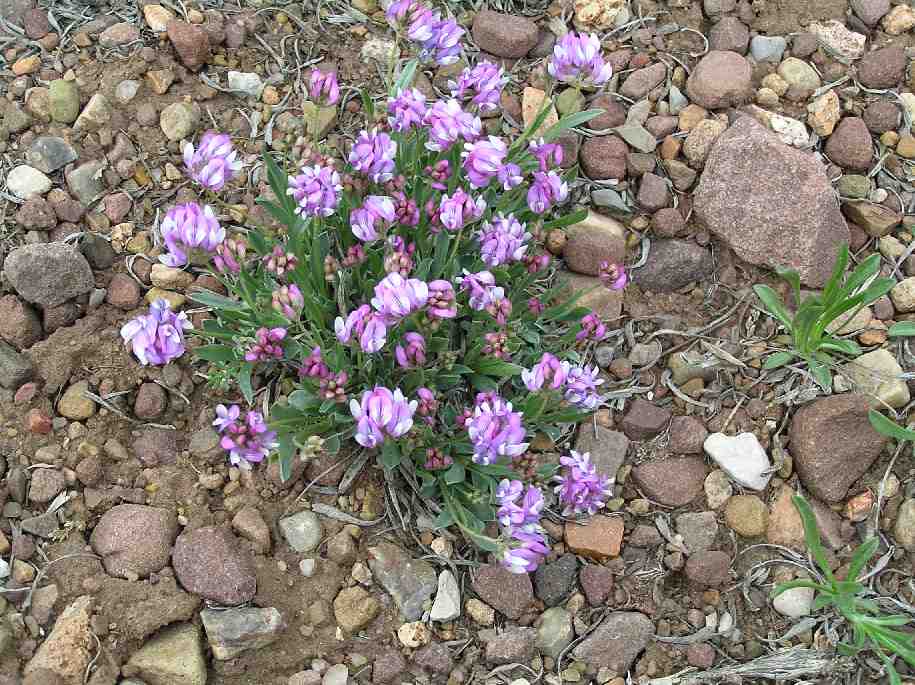
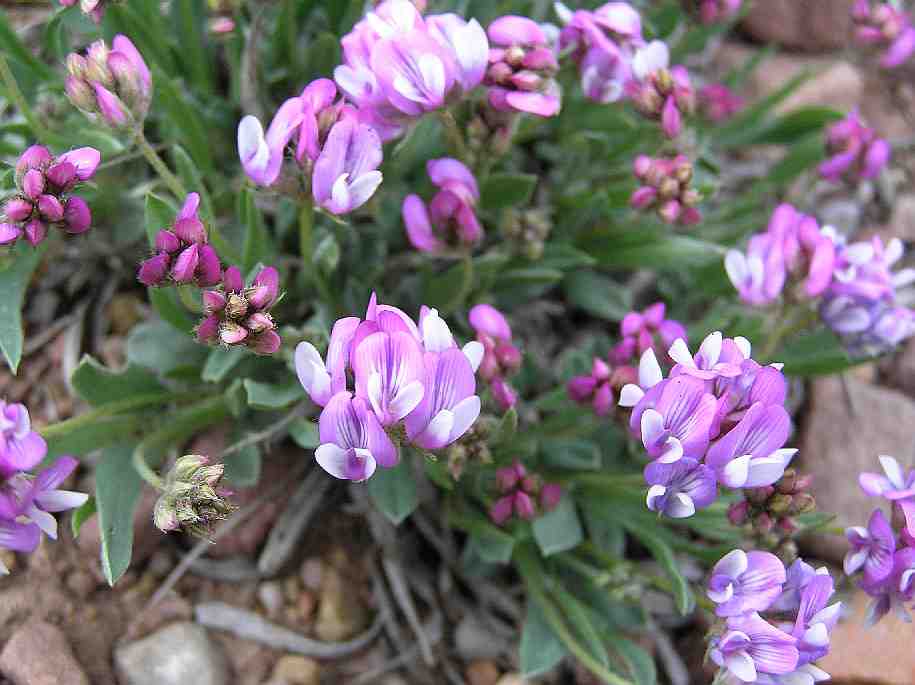
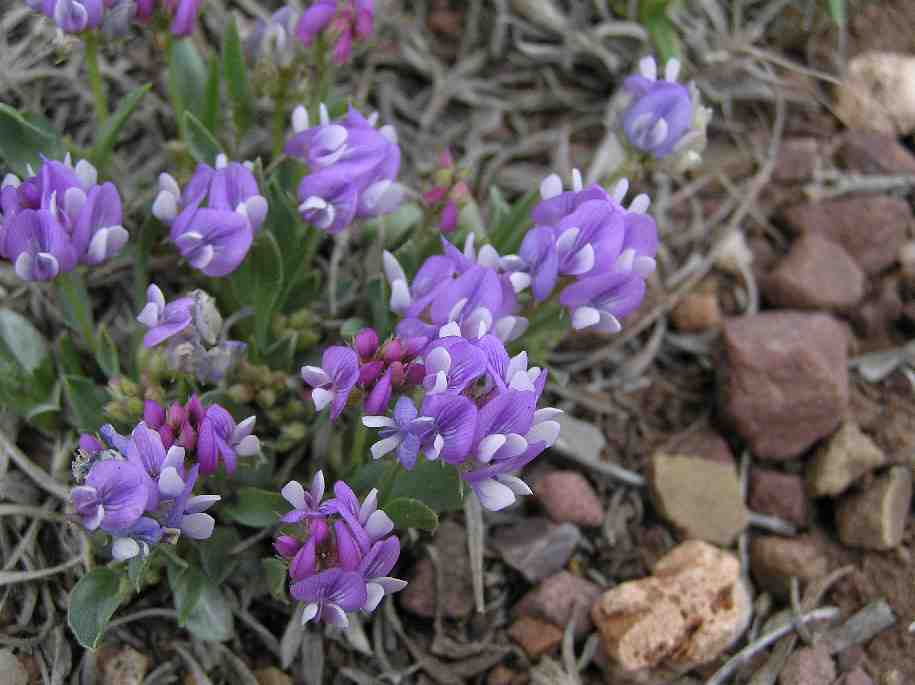
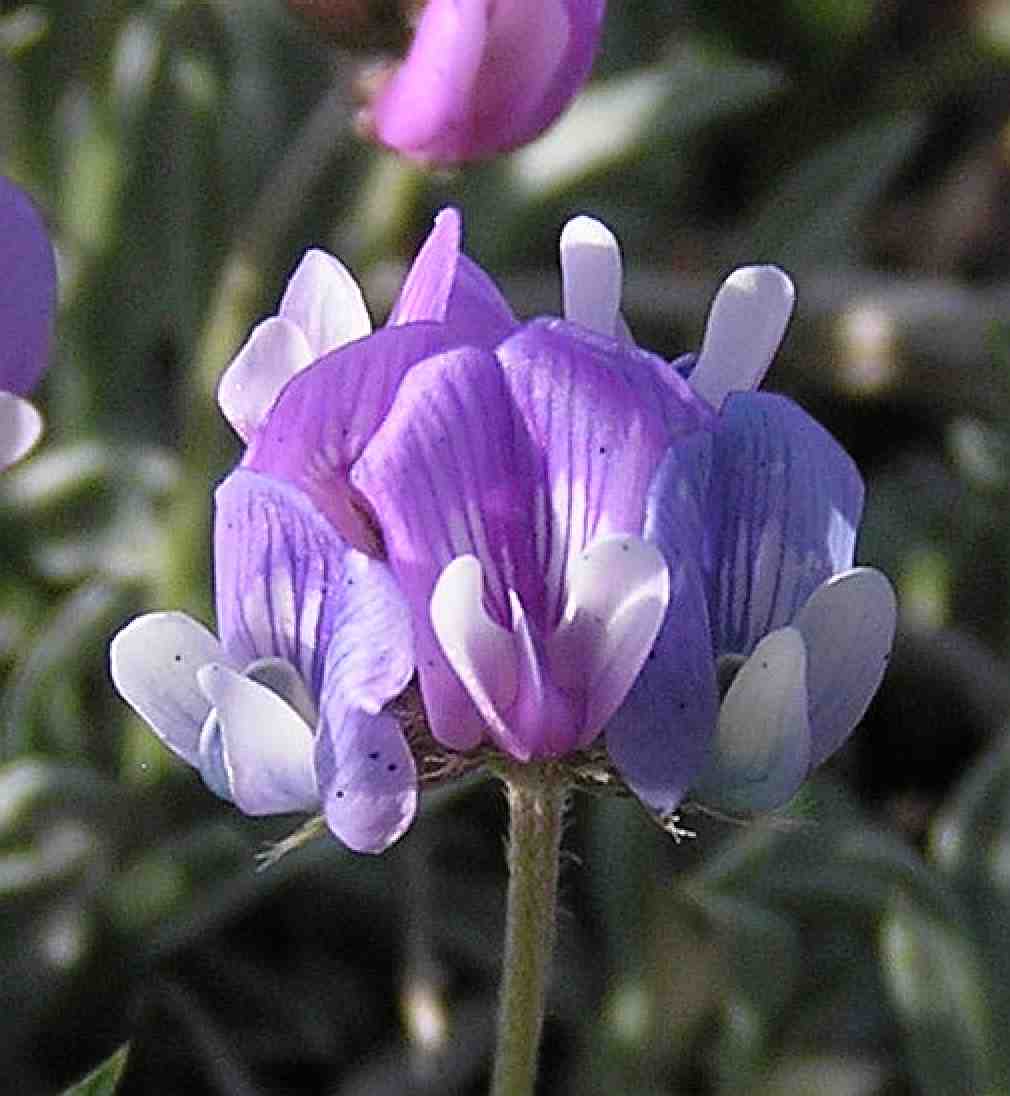
Comments
Mark McDonough
Re: Utah Oxytropis?
Mon, 01/21/2013 - 5:23amHi Jane,
Sorry but I don't have an ID suggestion, just wanted to say what a lovely plant it is; I'm going to sit back to see if anyone else knows its name.
Gordon Tingley
Re: Utah Oxytropis?
Mon, 01/21/2013 - 7:05amMight it be Astragalus lentiginosus? Just a guess on my part, check this- http://intermountainbiota.org/portal/taxa/index.php?taxon=4111&taxauthid...
Anne Spiegel
Re: Utah Oxytropis?
Mon, 01/21/2013 - 7:45amJane, from your pictures, not an oxytropis. Astragalus and Trifolium are candidates.
Hendrix (not verified)
Re: Utah Oxytropis?
Mon, 01/21/2013 - 9:29amCould it be Astragalus spatulatus? Here's a link to a herbarium specimen
http://herbarium.uvu.edu/virtual/search.asp?p=6&s=form&n=&o=Family,G.Gen...
This specimen was collected in the same general area I was in when I photographed this plant.
Mark McDonough
Re: Utah Oxytropis?
Mon, 01/21/2013 - 10:07amJane, I think you got it, I agree it looks like Astragalus spathulatus. Here are some image links:
http://www.easterncoloradowildflowers.com/Astragalus_spatulatus.htm
http://pdpratt.blogspot.com/2009/06/cypress-hills.html
http://www.em.ca/garden/native/nat_astragalus_spatulatus.html
Trond Hoy
Re: Utah Oxytropis?
Mon, 01/21/2013 - 12:14pmIt is a pretty plant, anyway!
John P. Weiser
Re: Utah Oxytropis?
Mon, 01/21/2013 - 12:51pmVery nice and such a prolific bloomer!! Would be well worth growing.
Richard T. Rodich
Re: Utah Oxytropis?
Mon, 01/21/2013 - 8:19pmAre there particular characteristics that point to one genus or the other, or disqualify oxytropis in this case?
John P. Weiser
Re: Utah Oxytropis?
Mon, 01/21/2013 - 9:52pmIn flower one of the easier to see differences is that in Oxytropis, the keel tip is beaked. In other words notched and not smoothly curved. They may have just the sightest notch or break in the curve in some species. In others species a more pronounced deeper cleft is displayed, so that it seems to have a distinct lobe protruding from the edge of the keel tip.
I hope I described this well.
Lori S. (not verified)
Re: Utah Oxytropis?
Tue, 01/22/2013 - 5:29amExamples... (and please correct me if I'm wrong):


Beaked keel on Oxytropis viscida and Oxytropis megalantha:
Rounded keel on Astragalus angustifolius:

NB. To expose the keel for a clear look, pull apart the two side petals that enclose it.
John P. Weiser
Re: Utah Oxytropis?
Tue, 01/22/2013 - 6:37amExcellent examples Lori. The beaks are very well defined in your shots. Just be aware that they can be more subtle in some species. I hope this next example is large enough to view.
Richard T. Rodich
Re: Utah Oxytropis?
Tue, 01/22/2013 - 6:20pmVery cool. 8) Thanks so much!
Anything else?
Lori S. (not verified)
Re: Utah Oxytropis?
Tue, 01/22/2013 - 7:37pmGood thing the ones I've looked at happened to be well defined ones!
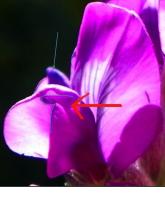
I'd like to know what to watch out for on the more subtle ones. On the one you show, I'm not entirely clear on where the beak or notch is (versus the two petals that flank the keel), so I hope you don't mind that I have copied and annotated your photo (below) to ask my question... Is the notch/beak the bit outlined in blue (immediately left of the red arrow)? (Or is the structure the blue arrow is touching?)
John P. Weiser
Re: Utah Oxytropis?
Tue, 01/22/2013 - 8:40pmLori
You are correct with the first outlined section. The red Arrow is pointing directly at the notch along the keel edge. It is not a sharp V shaped notch, I would describe it more as a slight in curving of the keel edge (An interuption to arc, so to speak) which then flares out slightly again, creating a lobe (or Beak) at the tip of the Keel.
By the way I have this ID-ed as Oxytropis borealis. Possibly (var. australis?) which is the variety found in the Sierra Nevada Range.
Mark McDonough
Re: Utah Oxytropis?
Wed, 01/23/2013 - 8:02amThis is all very interesting. John, I thought that Oxytropis borealis had pinnately compound leaves, the subject plant has simple leaves as far as I can tell. I find this whole lot, Astagalus and Oxytropis bewildering. :)
Lori S. (not verified)
Re: Utah Oxytropis?
Wed, 01/23/2013 - 8:24amI think the conversation is getting mixed up between "the plant in question" (Jane's) and the plant in the photo added by John to show flower characteristics of Oxytropis?
Mark McDonough
Re: Utah Oxytropis?
Wed, 01/23/2013 - 8:26amGot it, was following the thread close enough. Thanks.
Anne Spiegel
Re: Utah Oxytropis?
Wed, 01/23/2013 - 8:24pmJust to add to the topic. This is a picture of Astragalus spatulatus - a white form - which has been living quite happily in a trough in my garden. It has been blooming reliably every year for many years. The very definition of a great astragalus, coming from the west and settling happily in the northeast!
Anne Spiegel
Re: Utah Oxytropis?
Wed, 01/23/2013 - 8:26pmWhat happened to the picture? I'll try again.
Richard T. Rodich
Re: Utah Oxytropis?
Wed, 01/23/2013 - 10:21pmA beautiful specimen, Anne.
By the way, you can always edit a previous post by clicking on "Modify".
Anne Spiegel
Re: Utah Oxytropis?
Thu, 01/24/2013 - 3:55amThanks so much, Rick. The computer and I have such an uneasy relationship!
John P. Weiser
Re: Utah Oxytropis?
Thu, 01/24/2013 - 5:41amI've never come across a white flowered individual before very nice!
Anne Spiegel
Re: Utah Oxytropis?
Thu, 01/24/2013 - 6:43amAnd sooo long-lasting. I think if you look long enough you will find a white form of almost any plant. I've seen a white form
of Oxytropis podocarpa above Boreas Pass years ago. May I just use this space to say how much I'm enjoying your articles in the Quarterly. I hope there will be more.