
Forums:
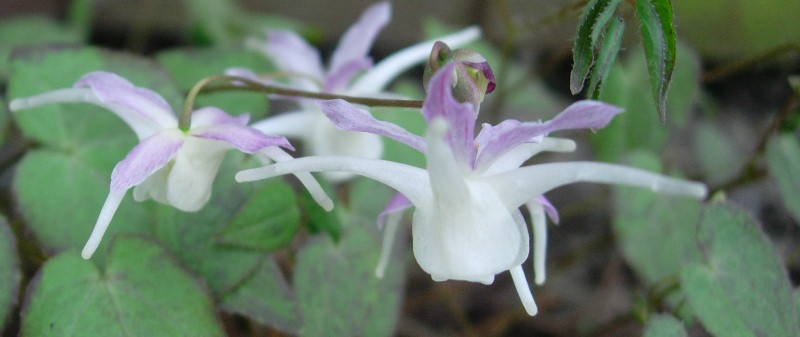
The first Epi's are in flower here :D :D :D
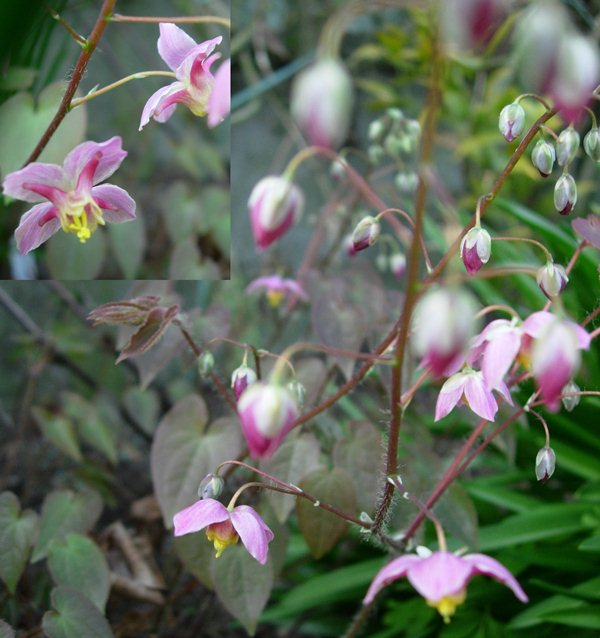
E. x versicolor 'Cherry Tart'
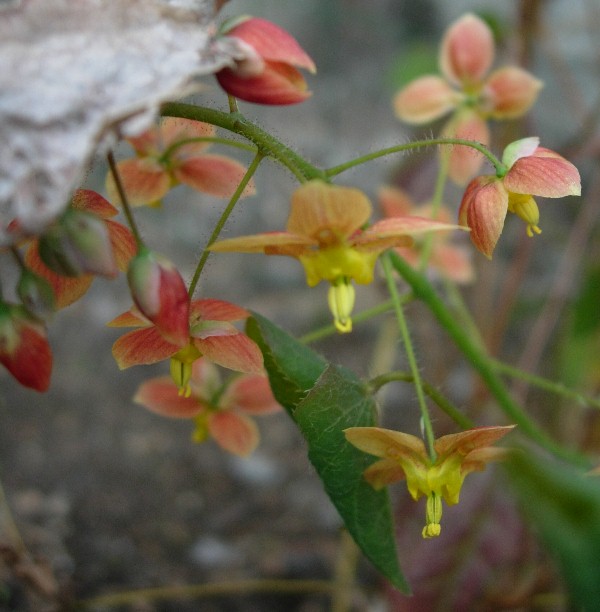
E. x warleyense (I suspect this is E. x warleyense 'Orangekönigin', like the one on the next pic...but I'm not sure, so until I'm sure I'll keep it named as the pure hybrid)
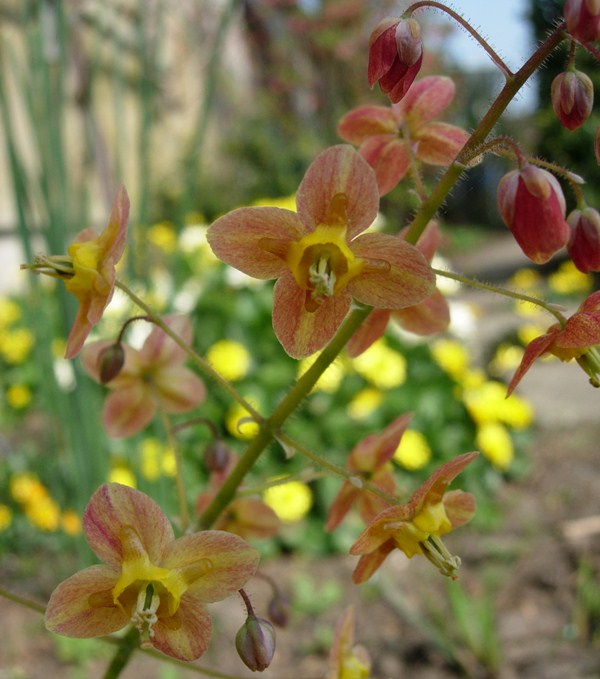
E. x warleyense 'Orangekönigin'
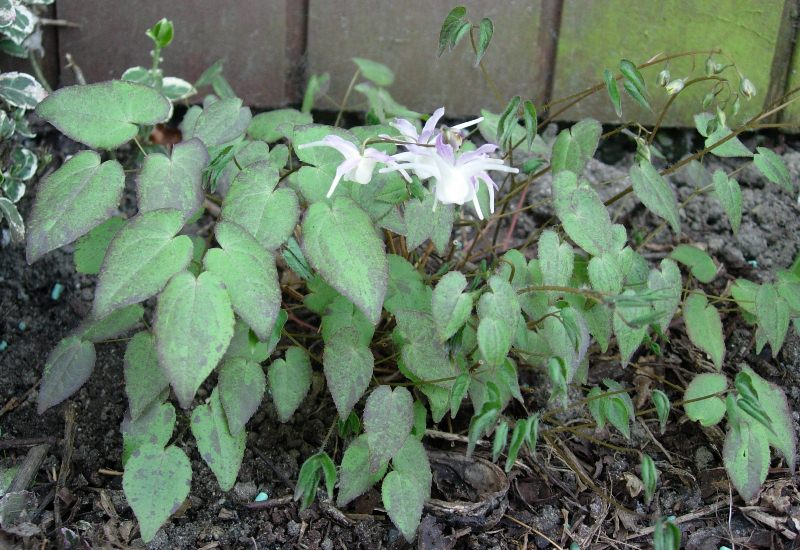
and a very young plant of E. x youngianum 'Freckles' Cc. 950080 (2 last pics)
Comments
Mark McDonough
Re: Epimedium 2011
Sun, 05/22/2011 - 9:58amWim, I answered under a different topic, follow this link:
http://nargs.org/smf/index.php?topic=593.msg9083#msg9083
Mark McDonough
Re: Epimedium 2011
Sun, 05/22/2011 - 10:19amThanks Rick :)
One Epimedium that I believe should be more widely grown, is a relative newcomer on the horticultural scene, is E. elongatum, found at 9,000'-12,000' in Sichuan Province, China. The only source I know for this species is Garden Vision Epimediums (it was listed again in the 2011 catalog: $45). Besides being very hardy (suggested to be at least USDA Zone 4) is that it flowers very late, starting here early June, when most other epimediums are long done flowering. It is a low grower, wider than tall, with an attractive shield of small crimp-edged leaflets, new foliage light bronze-toned, and airy upright stems and large spidery bright yellow flowers from June-July. Here's a photo taken yesterday, with a couple stems just starting to rise from the foliage mound.
I haven't shown photos of the flowers previously, here are three photos showing the blooms; they look better in real life:
Mark McDonough
Re: Epimedium 2011
Sat, 05/28/2011 - 8:05amOne of the best and neatest of the yellow-flowered species is E. ilicifolium. After being in a spot too dry to its liking the last several years, I finally dug it up last autumn, split it into two, and replanted in a more moist spot. The foliage is particularly striking, narrow and long, and as its names suggests, prickly edged like a holly. But what I like about it is its very low compact habit, and light yet luminous yellow flowers, these too on stems that splay sideways rather than gaining any height. The foliage is evergreen, and it looked great here all year. I plan on using this species in hybridization efforts, although virtually no progress on such efforts this year, the demands of "onboarding" and ramping up to a new job with lots of traveling and/or long daily commute forced me to give up such efforts temporarily.
Lori S. (not verified)
Re: Epimedium 2011
Sat, 05/28/2011 - 8:16amTerrific plants, Mark! I wish they were all more available!
The flowers on E. ilicifolium remind me of what used to be called a "mobile". :)
Trond Hoy
Re: Epimedium 2011
Sat, 05/28/2011 - 1:21pmDo you never run out of extraordinary plants to show, Mark?
Mark McDonough
Re: Epimedium 2011
Sat, 05/28/2011 - 6:18pmNope, not as long as I grow Epimedium hybrids by the hundreds, if not thousands. ;D
Today I started planting a new Epimedium bed. It is an area approximately 30' long x 7' wide, with a path down the middle of the long length. Into the top layer of soil, I mixed in a 6" layer of decomposed pink bark mulch, the eppies love it.
The seedlings going in were sown in flats last summer, the flats sitting out in an open shaded location exposed to the elements, and keep moist. Wire screening was placed on top of each flat to keep chipmunks and squirrels from digging and eating the seed. Left to the elements all winter, most flats show lots of germination.
Epimedium 'Purple Prince' x OP (open pollinated) is demonstrated here. I knock out the flats when moderately moist/dry, the soil is gently crumbled to release the seedlings, they are easy to feather apart. I hold each seedling by its leaf.
I plant the seedlings in row, spaced closely at only about 3-4" apart, where they can stay for 2 years growing in together vbut still easily separated. In the second year, many will bloom, and I will be able to start culling through the better or worse sorts. Differing blocks of varieties are separated by about 6" distance. After planting, I spread a layer of pine back mulch, and then my favorite part, hand watering.
View of a portion of the new bed, showing a 15' length, with little "points of green" ;)
For some interest, I also planted out a few larger 2 or 3-year hybrid plants, just for some immediate color and interest. Two views of Epimedium membranaceum x brevicornu. This is interesting, because it demonstrates an aspect of hybrids that people don't always pay attention to. In this case, the plant looks just like E. membranaceum, with flurries of large yellow spider flowers, but in the second photo showing a close up of the flower panicles, notice the dense hairy fluff on the stems and pedicels, a strong characteristic of E. brevicornu, which it almost always imparts on its progeny.
Last year I found a hybrid seedling under E. brachyrrhizum, this seedling (left) certainly has a lovely second flush of colorful foliage. On the right is a seedling I just noticed today, probably a 2-year plant which was growing amongst E. fangii, no doubt a E. brevicornu x membranaceum hybrid with small white flowers and a yellow cup and spurs; I have dozens of similar such hybrids appearing because both membranaceum and brevicornu are planted right next to each other, and overhanging my patch of E. fangii.
gerrit (not verified)
Re: Epimedium 2011
Sun, 05/29/2011 - 2:00amI totally agree, what you said about Epimedium illicifolium,Mark. It is no love at first sight, when you see it for the first time, but this one is one of the best the genus Epimedium can offer us, in my opinion. A slow grower in my garden, that's a pity. One of the last in the season. I put it on an embankment, in order to see the horizontally growing branches.
I post a picture from about a month ago.
gerrit (not verified)
Re: Epimedium 2011
Sun, 05/29/2011 - 2:46amFunny to see the rows of your seedlings Mark. Isn't there a risk of damage by birds, chipmunks,and others looking for food?
Mark McDonough
Re: Epimedium 2011
Sun, 05/29/2011 - 5:09amThe risk of any planting in my garden is from squirrels incessantly digging holes in the garden; in the fall they bury a million acorns in every part of the garden and the rest of the year they dig a billion holes looking for them. Some days in spring when I go out, it looks like a war zone in miniature, with hundreds upon hundreds of small "craters" from squirrel digging; this drives me absolutely batty! I do trap and relocate squirrels, but chipmunks and squirrels are like gas... similar to a gas that expands to find equilibrium with the density of air, so too will these varmints spread into the landscape, no matter how much trapping is done.
Of course, the acorns germinate, and there isn't a day that I don't pull ten or more sprouting oak trees, including from potted plants and flats unless protected with a wire cover.
Once the seedlings are a year old they are well enough established that they survive the infernal squirrel diggings (such as in this view with 1-2 year seedling plants), when seedlings are newly planted they do run the risk of being uprooted as a collateral casualty of squirrel digging, but not as food.
PS: good idea about putting your E. ilicifolium up on an embankment to see the plant form better; I need to situate a couple epimediums that could also benefit from better visibility.
Trond Hoy
Re: Epimedium 2011
Sun, 05/29/2011 - 9:05amSeems we have all our own war to fight, Mark!
Your planting is even more regular than I manage to do in my kitchengarden, very impressive ;D
gerrit (not verified)
Re: Epimedium 2011
Sun, 05/29/2011 - 9:38amI enjoyed your story of those miserable neighbours in your war zone-garden.
Some Eppies look better on an embankment indeed. Especially all those Epimediums from the x omeiense group. Not only Epimedium ilicifolium (with one l indeed).
Mark, you mentioned E.wushanense 'Spiny leaved Foprms'. In the catalogue of GVN it is listed for a 125$. Does it bloom at yours now? And please when it does post a picture. It is the only wushanense-form at GVN. I wondered why, because here in Europe we can order easily all E.wushanense species. including the 'Spiny leaved Form', which is a Darell Probst introduction.
I didn't buy this one for 12 euro (15$) and I regret.
Mark McDonough
Re: Epimedium 2011
Sun, 05/29/2011 - 7:19pmI didn't take many photos of E. wushanense "Spiny-leaved forms" this year, and the ones I did take, didn't come out well. I don't have it situated well; unlike normal E. wushanense with upright flower stems, the spiny-leaved form that Darrell selected is low growing and the flowers are produced on nearly horizontal stems that tend to be hidden under the leaves. The plant is another one that would benefit from being planted high up on a mound or embankment to see the flowers better. The photo I show is poor, because the creamy white flowers with yellow centers invariably come out overexposed when using my cheap entry-level Nikon camera. I'm going to move and divide it shortly... currently it is planted on the backside of a sloped garden bed, now getting swamped by an enlarging clump of Jeffersonia diphylla.
Mark McDonough
Re: Epimedium 2011
Sun, 08/14/2011 - 6:59pmEpimedium season is not yet over, as long as you grow E. membranaceum, one of the few everblooming species. With sufficient moisture this summer, this species, and it's hybrids, just keep on going!
Mark McDonough
Re: Epimedium 2011
Sun, 08/14/2011 - 7:14pmOut of numerous hybrid seedlings, only a few show prolonged summertime colorful foliage. This one is the most pronounced, with strong red leaf coloring since spring.
Lori S. (not verified)
Re: Epimedium 2011
Sun, 08/14/2011 - 8:33pmHow regrettable... to have plants swamped by overlarge Jeffersonia diphylla... ;D ;)
I must go searching for E. membranaceum - the repeat bloom looks wonderful!
Thanks for finding time in your busy schedule to post these mouth-watering plants, Mark!
Trond Hoy
Re: Epimedium 2011
Mon, 08/15/2011 - 12:36amI am never that lucky to have plants swamped by species I actually love to grow!
I hope it is possible to get E. membranaceum here too :)
Mark McDonough
Re: Epimedium 2011
Sun, 09/11/2011 - 7:14pmStill thinking about Epimedium, there are literally hundreds of self-sown seedlings springing up here and there, and everywhere. Usually I dig them up, row them out in flats, and label them to include under what Epimedium they were found. I didn't do that this year, no time, but the seedlings will be fine until next spring, but I will need to pot them up and move them to keep my named forms clearly identified. I should probably weed them out, but I don't have the heart, I have enough room to grow on these cute seedlings for years to come (photo on left shows a couple seedlings). The middle and right-hand photo show E. youngianum 'Liliputian' in the front, with various other hybrid Epimediums; a nice hybrid E. sempervirens on the right in the middle photo, these photos taken to show the incredible plant size difference available in Epimedium.
Late this afternoon, with the afternoon sun back-lighting a hybrid Epimedium that has shown bright red leaves all summer long (both photos), growing below Magnolia sieboldii (Korean form) grown from seed. In the right photo, there is a Magnolia seedling that I came across today... can't be M. sieboldii as my young trees only bloomed for the first time this year, unless it is a late-germinating seed after 4 yrs; more likely it's a seedling from a nearby Magnolia... oh, such weeds to have ;)
I know I keep showing E. membranaceum (photo on the left), but it just keeps on going and flowering into autumn, there will be waves of blooms. Hybrids from it will do the same thing. I still have lots and lots of Epimedium seedlings to row out from my great "year-of-unemployment-2010-hybridize-Epimediums-like-crazy" year, where I sowed nearly 50 flats of hybrid seed. The photo on the right shows seedlings planted out late this afternoon (while battling a fresh brood of small but zippy & ravenous mosquitoes), left row#1 is E. membranaceum (open pollinated seed), row#2 is hand pollinated seedlings from a selected E. membranaceum x brevicornu cross x hand crosses, row#3 is E. x 'Lemon Zest' (open pollinated), and row#4 is E. x setosum - various hand crosses.
Richard T. Rodich
Re: Epimedium 2011
Sun, 09/11/2011 - 8:24pmRegarding the red leafed hybrid, Mark: is that the second flush of leaves, or are all the leaves red at a younger age?
Mark McDonough
Re: Epimedium 2011
Sun, 09/11/2011 - 8:36pmIt was a second flush (although the first flush was red too). It's fairly unique, because the red color in the 2nd flush lasted all summer, it never faded to green as most others do.
Richard T. Rodich
Re: Epimedium 2011
Sun, 09/11/2011 - 9:09pmVery cool, Mark. I have always found the second flush anomalies very intriguing in plants. What would make them so different from any other new growth?
Mark McDonough
Re: Epimedium 2011
Sat, 10/01/2011 - 1:54pmHere it is October 1st, and E. membranaceum and its hybrids are still flowering. On the left is a self-sown hybrid of Epimedium membranaceum, about 6' (2 m) from the mother plant, which tells me that the ants, who are attracted to the starchy elaiosome on the seeds, can carry them away some distance away. This one has been throwing spray after spray of flowers all summer, and still has more buds coming. On the right is one I've showed previously, a hybrid that I selected for it's all-summer red foliage, which still looks as bright as ever. It'll be evaluated to see if this characteristic is retained in further years.
WimB (not verified)
Re: Epimedium 2011
Sun, 10/02/2011 - 12:04amVery nice, Mark,
I love that intense red coloration of the leaves.
Mark McDonough
Re: Epimedium 2011
Sat, 12/17/2011 - 7:36pmHere it is just a week before Christmas, the ground is frozen for an inch or so, the ground is bare and nothing in bloom, but as I walk around the wintery garden, Epimediums continue to delight the eye with autumn/winter color. Epimediums are plants that give so many seasons of color and interest, the evergreen to semi-evergreen ones especially so.
E. x warleyense stays green when in shade, but colors strongly both in spring and in autumn. This large patch is growing in full sun, the mass of tatty dried sticks surrounding the plant are remains of Alliums, but the Epimedium stands out amongst the drab surroundings. It also flowers prolifically in full sun, but much less so in shady conditions.
Epimedium diphyllum 'Variegatum' (above, right)is always neat and attractive, with white-spotted leaves on a smallish upright plant, but the autumn color is among the brightest of all. While not an evergreen species, the foliage on many "diphyllums" tends to persist into winter.
Two views of Epimedium x setosum (diphyllum x sempervirens). I have come to regard this Epimedium as one of the best of all, charming in every aspect. It grows as a slow pancake, my old plant now a circle 16" across but just a few inches tall. I like the fall/winter appearance, a low brace of overlapping bronze leaves.
Epimedium sempervirens is true to its name, one of the evergreen species, quite often remaining in good leaf form throughout our New England winters. Some stay green all winter, others color up brilliantly. This one is E. sempervirens 'Secret Arrow' (on the left), probably the best for late season color.
Above (on the right) is a hybrid seedling that shows strong E. sempervirens influence, coloring up now with Christmas green and red tones, but it eventually turns a striking near black color. I'm watching this one, the flowers have pure white sepals and yellow petals. Here's what it looks like in flower:
http://nargs.org/smf/index.php?action=dlattach;topic=630.0;attach=15847;...
An Epimedium winter view on the left below. It should be noted that I have already sheared off the leaves and stems of the purely deciduous species, leaving just the evergreen and semi-evergreen ones to enjoy their late color. On the right is E. leptorrhizum, a low spreading species that I must relocate to a more suitable spot, where it can spread as it wants to. It colors up very late with rich red coloration. The dried leaves are that of Iris minutoaurea.
Many evergreen species just stay a nice healthy green during winter. The familiar species E. pinnatum ssp. colchicum is one such species which makes a wide carpet of perfectly evergreen leaves in New England, but I particularly like the Darrell Probst selection known as 'Thunderbolt' where the leaves get a deep mahogany coloration (eventually almost black) yet with the strong green venation. My plant is now a yard across.
Mark McDonough
Re: Epimedium 2011
Sat, 12/17/2011 - 8:04pmMore Epimedium "evergreeners", all photos taken on December 17, 2011.
Epimedium ilicifolium is one of the finest species, also low and slow growing, reliably evergreen in New England. In the photo on the right is a division of E. ilicifolium, and behind it a hybrid of E. grandiflorum 'Dark Beauty' with mocha spring foliage, but this particular hybrid seedling with dark red foliage in late autumn that ages to near black-red leaves.
On the left (below) is E. x youngianum 'Otome' on the left, one of the most interesting of the so-called "youngianums"... I think this one is a hybrid that obviously has some sempervirens blood in it. The leaves are wonderful year round, are glossy and deeply textured. On the right in the same photo is E. diphyllum "Large Leaf Form" which exhibits some worthwhile color. In the photo on the right is Epimedium brachyrrhizum, certainly among the top 10 of all Epimedium. The foliage is reliably evergreen, the plant is tight and hummocks up nicely, the leaves are lustrous and textured. In spring, it is a sight to behold when in flower.
On the left-hand photo below is a view showing evergreen E. pubigerum, probably the most reliably evergreen species in New England. I consider it a favorite species, I grow 4 forms of it. Flanking E. pubigerum on the left is E. grandiflorum f. flavescens 'La Rocaille', which needs to have the dead leaves sheared off, and E. x youngianum 'Capella' flanking on the right (also needing a haircut soon). The photo on the right (below) is Epimedium wushanense "Spiny-leaved form", also reliably evergreen and always just green.
On the left (below) is E. x versicolor 'Versicolor', which is among the most striking "eppie" for autumn/winter foliage color, just a deep smouldering coppery red color. It is a semi-evergreen plant, so if weather and limited snow cover allow, I'll cut the foliage off mid winter, otherwise the haircut comes in early spring. The photo on the right (below) is Epimedium x 'Domino' in the center (among other epimediums), which attempts to stay evergreen... notice the lower first flush of foliage and upper flush of larger foliage, all a plain green in winter, though it does show mottled leaf color in spring.
Last is Epimedium stellulatum... brilliant hot mottled foliage colors in spring, in winter a dark brooding suffusion of black over green, another slow and low well-behaved species.
Trond Hoy
Re: Epimedium 2011
Sun, 12/18/2011 - 4:04amEvergreens and especially colouring ones are always welcome in the garden, Mark!
I am still looking for sources and have found one or two ;) I hope to increase my stock in years to come. . . .
Richard T. Rodich
Re: Epimedium 2011
Sun, 12/18/2011 - 5:17pmWhat an amazing Epimedium encyclopedia you are building here, Mark!
This last installment is especially eye-opening with characteristics seldom shown or talked much about. Thank you so much! (Not to mention the beautiful photos and plants themselves.)
gerrit (not verified)
Re: Epimedium 2011
Thu, 12/22/2011 - 5:11amI'll show pictures from the Epimediums in my garden with their fall foliage.
Since we have mild temperatures (between 5 and 10 degrees C) here in the Netherlands at the shore of the North Sea the colours are slowly changing. And the plant remain in a good shape.
First the leaves of the grandiflorums who are particular showy. Soon they will need a 'haircut' as Mark said.
More to come.
E. gr. 'Mount Kitadake'
E. gr. 'Queen Esta'
E. gr. 'Lilafee'
E. gr. flavescens 'La Rocaille'
E. gr. 'White Queen'
gerrit (not verified)
Re: Epimedium 2011
Thu, 12/22/2011 - 5:42amI'll try to post here pictures of my Epimediums, the same as in New England in Mark's garden, just to compare.
Epimedium stellulatum 'Long leaf form'.
E. x setosum, a charming small plant suitable for Rock gardens.
E. ilicifolium, one of my favorites, a very slow growing plant with very nice foliage.
E. x versicolor 'Versicolor. Just fine for its foliage, in spring and summer.
Mark McDonough
Re: Epimedium 2011
Thu, 12/22/2011 - 6:06amHello Gerrit, isn't it nice to have small evergreen plant species in the garden, where they can be enjoyed in the winter landscape (particularly if it stays free of snow). Sounds like your autumn season has been like ours, abnormally mild (today it will be 54 F, 12 C), and the Epimediums have been in no rush to color up, and what color has appeared is lasting a very long time.
Glad you too like E. x setosum, a real charmer. Even though it has small flowers, they are held daintily above the foliage; I have earmarked this species for hybridization for it's low habit, densely clothed overlapping leaves, near evergreen habit, and fine fall/winter foliage color.
I must get the "long leaf form" on E. stellulatum, really nice spiny foliage, and the spring show of mottled leaves and hazy mass of white flowers make this another first class "eppie". That form is available here. I'm most attracted to species that slowly clump, rather than the spreaders, so E. stellulatum fits in perfectly, making a fine slow-growing low mass of evergreen leaves.
My "grandiflorums" all need their haircut now, we did have a few nights with temperatures well below freezing, down to 12 F (-11 C).
Did you collect and sow any eppie seed this year? That's the fun part, seeing what sort of hybrids one gets :D
Mark McDonough
Re: Epimedium 2011
Thu, 12/22/2011 - 6:19amThanks Rick! More and more, I've come to the realization that photographing plants "off-season" (when they're not flowering) is important too. With Epimediums specifically, what I've seen all over the place, is a tendency to only show closeups of the little flowers (check out any nursery offering for Epimedium, only closeups), but these plants are such great garden plants and foliage plants at all seasons, I like to highlight that aspect of the genus. Same is true of other plants in the "off season", I find it educational to follow the topics about seed germination, and early transition of seedling plants to garden, or plants in their winter resting mode.
Richard T. Rodich
Re: Epimedium 2011
Thu, 12/22/2011 - 9:51amIt is smart of you, Gerrit, to show how the same plant might differ in different climates. Thanks. Especially if one in unfamiliar with a plant, we tend to expect the same growth patterns where ever it is grown, when if fact, that is often not the case.
gerrit (not verified)
Re: Epimedium 2011
Thu, 12/22/2011 - 10:21amWell Mark, you mentioned this, but it's rather painful to me, because of the failure. Let me tell: My aim was, to create new dwarf hybrids with my 'champion' E. davidii 'Dwarf Form' as my first parent. Well, in spring this year the davidii was very flowerful. So I pollinated by hand various second parents such as E. brachyrrhizum, E.ogisui, E.'William Stearn' and others. When the seeds came down spontaineously, I gathered them and sowed immediately. But unfortunately no germination. What went wrong. Maybe my plants are not mature enough? (3 years). Nevertheless, I don't give up, next year new chances.
gerrit (not verified)
Re: Epimedium 2011
Thu, 12/22/2011 - 10:36amComparing the 4 plants Mark and I are sharing, I must say Rick, I see no difference. Except E. stellulatum, but mine is a variety of the form, stellulatum 'Long leaf form. What I see is, Mark's plants are touched by the frost. But thanks for calling me 'smart', doesn't happen very often ;D
Richard T. Rodich
Re: Epimedium 2011
Thu, 12/22/2011 - 10:55amShowing that plants look the "same" in different climates has value, too.
Anyone who:
--- wants to learn
--- wants to share knowledge or experience
--- wants to share knowledge or experience and learn
is smart in my book.
That is pretty much everyone here! ;D
Mark McDonough
Re: Epimedium 2011
Thu, 12/22/2011 - 10:58amGerrit, nothing has gone wrong yet; like many ephemeral seed species, the seed is sown right after it is ready, typically late spring for Epimedium, but no seed will germinate until the following spring. So, keep your seed pots and leave them exposed to winter weather, and when it warms up in spring you should get germination. Previously I asked Darrell Probst if there is any way to hasten seed germination in Epimedium, as he has a huge greenhouse and grows many eppies inside (many so that he could hybridize them), he said nothing works to speed up germination, you pretty much need to wait until they germinate the following spring.
So far as Epimedium 'William Stearn', I'm not familiar with it, but see it is a hybrid available in Europe... found a couple links. Do you know what Chinese species might be among the parents?
http://www.flickr.com/photos/lapommangels/6053574716/
https://www.edrom-nurseries.co.uk/shop/pc/Epimedium-William-Stearn-20p95...
gerrit (not verified)
Re: Epimedium 2011
Thu, 12/22/2011 - 11:46amMore eppies to come now. With, in my eyes, very attractive winterfoliage. I agree totally what Mark wrote: Epimediums are such versatile plants for the garden. Which genus has similar foliage as Epimedium. Each species has different leaves. And the Chinese species are not deciduous.
Epimedium 'Kaguyahime'.
E. acuminatum 'Night Mistress'. Evergreen glossy leaves on this superb plant with wunderful flowers.
E. 'Akane"
E. fire dragon. Fine winterleaves. Turning into bronze.
E. ilicifolium and the following three with spinny leaves, which remember us to the lineage of Mahony.
E. spine tingler. slow growing with beautiful tiny yellow flowers. Horizontally growing, so put it on an
embankement.
E. x wushanense 'Caramel'. With spinny foliage too. Very special choclate flowers.
Epimedioum 'Black Sea. A European species, vigorous, a spreader, with dark winterfoliage.
Epimedium davidii 'Dwarf Form'. This is my 'champion'. Blooming all autumn untill now as you see. No particular fine winterleaves.
gerrit (not verified)
Re: Epimedium 2011
Thu, 12/22/2011 - 12:13pmEpimedium 'William Stearn' is a cross between E.membranaceum and omeiense. This is a link to the VRV-forum, where Wim and myself participated last year an where you see in answer 42 my new acquisation,the wonderful William t. Stearn. Look at the colour and the spinny leaves. Really a plant to hybridize with. If you like, I'll get you some seeds (if tolerated by law).
http://www.vrvforum.be/forum/index.php?topic=346.msg10315#msg10315
That was the happy part, and now the sad one. I threw away all of my seedpods, not aware of the neccesary overwintering of eppie-seeds. @#*&$!%.
Mark McDonough
Re: Epimedium 2011
Thu, 12/22/2011 - 7:36pmGerrit, sorry to hear the sad part about the seeds. :(
You certainly have some very fine Chinese evergreen species and cultivars. I finally got 'Fire Dragon' in 2011, and the foliage has turned impressively dark red-purple now, although mine is still a small plant.
Thanks for the information on Epimedium 'William Stearn', I really must get E. omeiense, seems to lead to so many wonderful hybrids. Your photo on the VRV Forum shows off 'William Stearn' well:
http://www.vrvforum.be/forum/index.php?PHPSESSID=afbjh5oh714d2o3esl3ps30...
Regarding Epimedium 'Black Sea' is actually regarded as a hybrid; E. pinnatum ssp. colchicum and E. pubigerum. While characterized as a spreader, it increases relatively slowly, more of a slowly spreading clumper.
By the way, what can you tell us about Epimedium x omeiense 'Pale Fire Siblings' that I see on VRV Forum? It's a beautiful plant.
http://www.vrvforum.be/forum/index.php?action=dlattach;topic=346.0;attac...
Lastly, here's a new one to my collection, Epimedium elachyphyllum, only introduced a few years ago by Darrell Probst. It's a very small species only growing 6" (15 cm) and producing small simple leaves. It has tiny white and yellow flowers, which I have not seen yet. Appears to be an evergreen species. It is from N. Guizhou province, China.
gerrit (not verified)
Re: Epimedium 2011
Fri, 12/23/2011 - 4:35amEpimedium x omeiense 'Pale Fire Siblings' is a cross between acuminatum x fangii. About E. fangii writes Garden Vision Epimediums in their catalogue: Darell Probst found this species " on the ridge of cliffs, i.e. two sides of that ridge were vertical abysses".
That's why I think all members of the x omeiense family tend to grow down with the flowers underneath.
Look at my pictures of: Myriad Years, Akane,(flowers above leaves) Stormcloud and Pale Fire Siblings.
http://www.vrvforum.be/forum/index.php?topic=346.75
Mark McDonough
Re: Epimedium 2011
Fri, 12/23/2011 - 7:36amThanks Gerrit, I find it so interesting to see crosses between known species, to learn what sorts of qualities may be imparted to siblings. I do grow E. fangii (obtained from Garden Vision Epimediums), I really like it for the growth characteristic, low growing, substantial 3-part leathery oval leafs, make it immediately recognizable. It is not very showy in flower, doesn't produce many flowers. It's a spreader, so this coming spring I'll probably have to move it to avoid the shoots intertwining with other plants. Could be useful in a hybridization program for its foliar aspects.
gerrit (not verified)
Re: Epimedium 2011
Fri, 12/23/2011 - 10:33amhttp://www.hethoutenhuis.eu/index.php/p2/z5/e/169/0/0/1116/53
Is this the same plant as in your collection? Epimedium elachyphyllum?
Mark McDonough
Re: Epimedium 2011
Fri, 12/23/2011 - 5:36pmCould be... I have not seen flowers on my young plant yet. The photo on that link is for E. elachyphyllum 'Paper Dolls'; not sure what's different about that named form, and when I research the name, it only seems to trace back to www.hethoutenhuis.eu site, so it must be a form named by that nursery.
Tim Ingram (not verified)
Re: Epimedium 2011
Sun, 12/25/2011 - 2:54amWhat glorious photos of epimediums! I especially like Mark's picture taken in young woodland. A friend many years ago was developing a woodland planting under coppiced hazel (Kent is renowned for coppice and it carries a wonderful understory of anemone, celandine and bluebells in spring). As far as I know 'William Stearn' was raised by Robin White at Blackthorn Nursery, and I remember Robin showing it to me in a polytunnel completely full of epimediums some years ago. Quite a sight.
Good wishes for Christmas and 2012!
Mark McDonough
Re: Epimedium 2011
Sun, 12/25/2011 - 7:23pmI took many Epimedium photos in spring 2011 that I never had the chance to assimilate. Now in the winter months, I can reflect on some epimedium species and hybrids from the past season, as well as, recap some of the "developments" this past season. I have already expressed my admiration for Epimedium x setosum (E. diphyllum x E. sempervirens), shown here in its recent fall/winter garb: http://nargs.org/smf/index.php?topic=630.msg13377#msg13377
Here are a few photos of this tiny-flowered charmer in early May 2011, from it's initial amber-leaf emergence:
One to two weeks later, the plant plumps up into a low forest of trim vertically-held leaflets like little shields, and clouds of little white flowers above.
In keeping with small flowered types, the next two photos are of a small mounding hybrid with amber spring leaves and nice leaf speckling. I think there are definite hybridization possibilities with small flowered types. The speckling comes from either E. x youngianum 'Liliputian", but amplified in this hybrid, or from E. x youngianum 'Freckles', but with more regular speckling and fewer mottled patches.
Trond Hoy
Re: Epimedium 2011
Mon, 12/26/2011 - 11:35amI agree, Mark. Although flowers are a plus, this genus have so many species with beautiful leaves of many kinds.
gerrit (not verified)
Re: Epimedium 2011
Tue, 12/27/2011 - 1:53pmTim, what you wrote is right. This Epimedium was created as a hybrid between E.membranaceum and x omeiense, at Blackthorn Nursery, by the renowned plantsman Robin White. The name he gave was a tribute to William Stearn, the author of "The genus Epimedium". The nursery has been closed now and Mr. White is a gardener in is own garden.
2 pictures taken in spring. My new acquisition of this beautiful plant with its proud name, Epimedium 'William Stearn"
Mark McDonough
Re: Epimedium 2011
Tue, 12/27/2011 - 7:30pmEpimedium 'William Stearn' is certainly worthy of its name, a most handsome of Epimedium, with such rich color flowers that are well presented and clear of the foliage. It is clear when observing this cultivar, it has inherited E. membranaceum genes, a species that displays its flowers proudly along long arching stems well above the foliage. I have put this fine cultivar on my watch-list in hope that it arrives in USA nurseries. Gerrit, does this cultivar also have a long season of bloom and rebloom? My personal experience with E. membranaceum hybrids is the progeny inherits some degree of the unique everblooming characteristic of that species, often blooming into August when most "eppies" are done by the end of May.
On the other hand, I'm often left disappointed with some of the named cultivars of Chinese evergreen species, like Epimedium 'Kaguyahime'. The foliage is beautifully mottled in spring, but the foliage soon surpasses the flowers which hides and diminishes the display. Here's a photo taken in 2010, early enough in the season that the flowers are just starting to open and are visible but within a week they are largely obscured by foliage. A primary hybridization goal for me is to get the flowers above the foliage.
I've shown the following hybrid before from a side angle, here it is from an overhead viewpoint; an E. membranaceum x brevicornu hybrid.
http://nargs.org/smf/index.php?topic=630.msg9257#msg9257
This one shows a stronger resemblance to E. membranaceum, except with the telltale fuzzy stems and pedicels attributed to E. brevicornu. But one can also see, this is a more compact plant with shorter, more in-proportion stems with lots of big yellow flowers... an improved characteristic. It bloomed well into summer, as most E. membranaceum hybrids do.
Epimedium brevicornu continues to be one of the best all-around species, making such perfect rounded clumps of mottled foliage and a haze of little white and yellow flowers. It is most fertile and hybridizes readily.
I have numerous hybrids between E. brevicornu and E. membranaceum; until a recent plant relocation in 2011 I had these two species growing so closely together that their stems intertwined, accounting for many hybrid seedlings. This is one of the better hybrid seedlings; just keeps on blooming well into August with a flurry of little white and yellow flowers, the flowers about 3x larger than E. brevicornu, but still very small flowers when compared to E. membranaceum.
I've shown the following two yellow-flowered hybrids before, but here shown from a different vantage point and new emphasis. On the left is a hybrid between E. davidii EMR x (probably) E. brevicornu, with very small chunky flowers of yellow and pinkish sepals... rather floriferous, and behind it on the right is an E. davidii EMR hybrid, appearing much like the parent, but much more floriferous and making a good show.
A season 2011 closeup of E. davidii "Woolong Select", a dwarf form that Darrell Probst introduced that is small enough for a trough, but with large boxy bright yellow flowers; the flowers keep on coming long into the season with lots of rebloom. I target this one as a stud.
Perhaps incongruous to this current line of Epimedium thought, but previously I struggled to get a good photo of the E. grandiflorum 'Cranberry Sparkle', not a hybrid, but an alpine selection of E. grandiflorum with the darkest red-purple flower color of any grandiflorum. It is probably too leafy or shy of bloom to be first class, but its very late emergence in spring (thus extending the season a bit) and the ultra-dark flower color, suggest unique qualities for use in a hybridization program.
Trond Hoy
Re: Epimedium 2011
Wed, 12/28/2011 - 12:34amMark, if you ever get more seeds than you have space to grow, I can offer some space here ;D
Tim Ingram (not verified)
Re: Epimedium 2011
Wed, 12/28/2011 - 4:53amI am really encouraged to try harder with epimediums. I have found them quite slow to establish and wonder whether this is because they resent being divided into too small a pieces? Our climate is also relatively summer dry, but having said this a number of species like wushanense have grown well. With such a variety Mark you must have the prospect of some really exciting hybrids arising in the garden! I like the dwarf form of davidii very much - will be very interesting to see its potential in hybridising with other epis.
gerrit (not verified)
Re: Epimedium 2011
Wed, 12/28/2011 - 11:55amMy first experience with this hybrid is an extended blooming period indeed. Just like his parent membanaceum. But I must be careful. My young plant was planted in May in a very fertile bed with deep leaflitter just like many other new acquisitions. So perhaps my plant rewarded me with new stems. The other new plants did not flower, so I'm hopeful.
Pages