Since I am east of most of you my day starts before yours. I take the opportunity to post first today too! Couldn't resist it. This is a piece of my front garden in the shade of huge shrubs.
One more of my 30+ species flowering by now. Name unknown! Not a small rock plant butit's what flower here now.
Trond, a beautiful salmon orange Rhodie. Many (most) of the yellow and orange flowered rhodies are not hardy in Northeastern USA, and after living in the much milder Pacific Northwest for a few years where Rhododendrons reign supreme in every color and species imaginable, I have not tried to "push the envelope" with them here in my dry, sunny, winter-wind-exposed hillside garden that served quick death to many that I tried when I first moved here 22 years ago, so I enjoy them photographically instead.
Beautiful Rick! Mine are just starting to bud. We have had unseasonably cold weather...the warmest we have been is 60 F and most days struggle to reach the mid 40's! The daffodils are lasting for weeks! Heck, the trees are just starting to break!
Wow, nice columbine, and the first photo is terrific... love the strict perpendicular geometry of the flower on this one. Now, the trick on these babies is to keep the seedlings from mixing/hybridizing/degenerating into an Aquilegia gene pool swamp, although I have seen gardens where their particular columbine gene-pool-swamp is at least an attractive one ;D
Speaking of the aquilegia gene pool swamp: Todd, does this (from your seed) look like what Aquilegia kuhistanica is supposed to be? There is so little info on the web about it.
Very nice columbines! I have a columbine gene pool swamp! Can't manage to keep them separated. And the slugs don't like these plants so they seed and grow everywhere! A lot of colors but the red/yellow colors from species like formosa and canadense have a tendency to disappear.
Who doesn't love blue, and you can't get much bluer than this. Corydalis flexuosa is well known in cultivation, often under a variety of cultivar names, but also known for its reluctance to persist more than a couple years in the garden. Shown here is an unnamed clone growing in the miraculous garden of Jan Sacks and Marty Schafer, a form that shows strong constitution and floriferousness. In the second photo, Iris gracilipes 'Cobblewood Charm' is visible, one of Darrell Probst's selections.
Rick, that A. kuhistanica is a great blue however, mine is dark wine, almost black. In reality, it is now considered a variety of vulgaris.
Todd, my Aquilegia vulgaris var. kuhistanicais a very dark wine color. No blue in it at all. The pic shows true color on my screen, but apparently not yours.
Rick, that A. kuhistanica is a great blue however, mine is dark wine, almost black. In reality, it is now considered a variety of vulgaris.
Todd, my Aquilegia vulgaris var. kuhistanicais a very dark wine color. No blue in it at all. The pic shows true color on my screen, but apparently not yours.
Flower color looks purple to me, not a dark wine color (and I know about dark wine colors ;D).
Cortusa is one of those genera that stretch from one end of Eurasia to the other, and look awfully similar throughout. Most of those I have grown (matthioli, pekinensis for instance) really do look almost identical. I saw Cortusa broteroi in the Tian Shan last summer, and it too seemed indistinguishable. I dide grow one--was it turkestanica?--also from Central Asia that was a monster almost 30" tall...it did not persist...
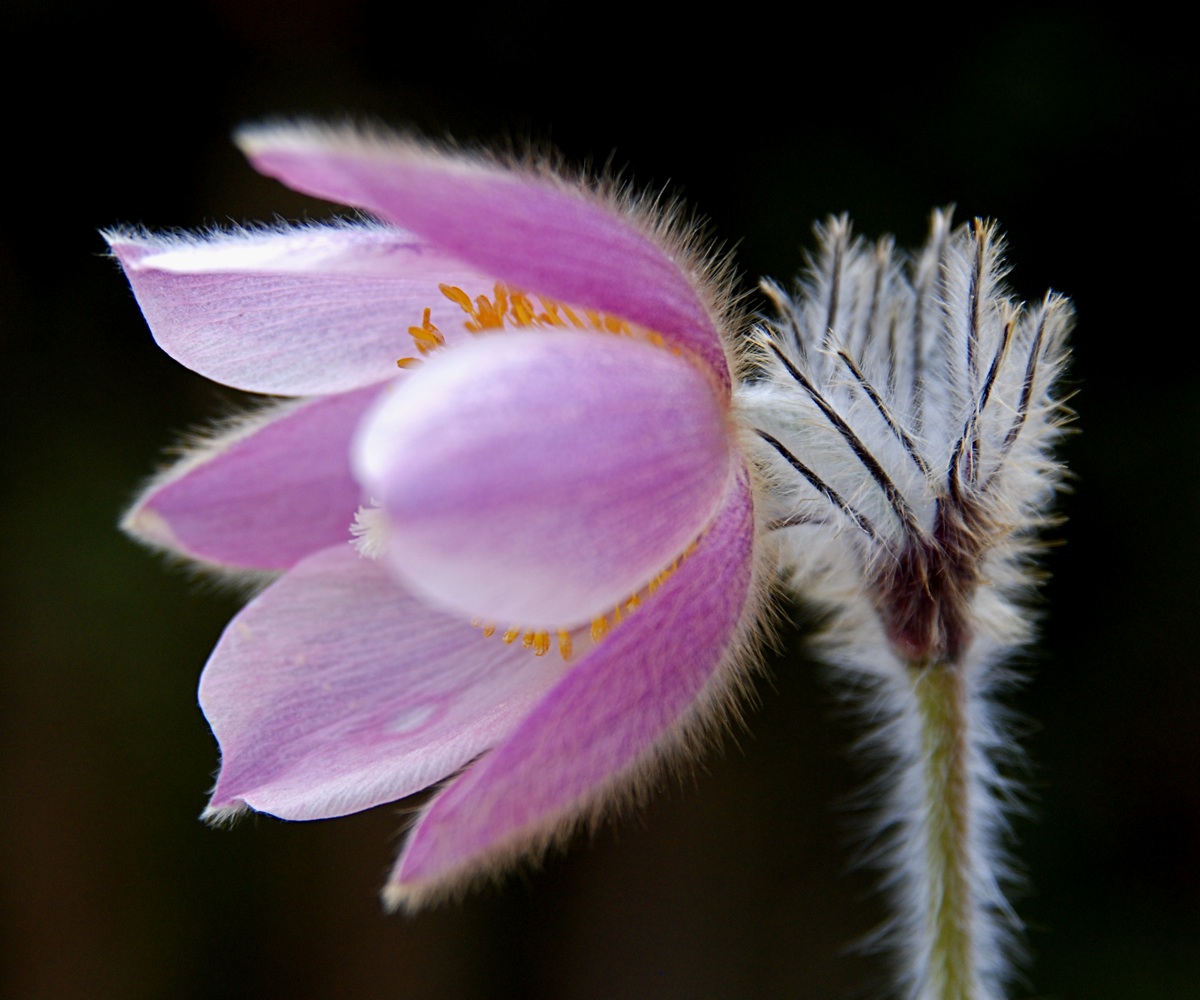
No new images for two days? I shall propose Anemone narcissiflora, which I have never been able to grow until the last year or so when I got a husky plant from Seneca Perennials: I am thrilled it has found it acceptable to grow and bloom for me.
No new images for two days? I shall propose Anemone narcissiflora, which I have never been able to grow until the last year or so when I got a husky plant from Seneca Perennials: I am thrilled it has found it acceptable to grow and bloom for me.
Actually, yesterday had two plants for "Image of the day"... my photo of a unnamed floriferous form of Corydalis flexuosa taken in Jan Sacks and Marty Schafer's garden, and Todd's Rhododendron 'Carmen', one that I used to grow decades ago when I was smitten with the blood red single or few-flowered red-bell types of dwarf Rhodendendron of sanguineum and forrestii ilk. There's always room for more ;D
I have a couple of Corydalis flexuosa cultivars but none have come to flower yet. The Rh. 'Carmen' was pretty little(?) shrub, I haven't that one! Once I had several very floriferous Anemone narcissiflora plants grown from seed but I had planted them by a rhodo which grew very big in a few years. Before I understood the danger the anemones were gone! Now I grow them at my mountain cabin where they do well. I have often seen large patches of A. narcissiflora in the mountains of Switzerland and Austria.
I shall propose Anemone narcissiflora, which I have never been able to grow until the last year or so when I got a husky plant from Seneca Perennials: I am thrilled it has found it acceptable to grow and bloom for me.
The flowers seem worth the wait, very beautiful with the outside of the petals tinged purple. :D
Polemonium boreale ssp. boreale (syn. Polelmonium boreale var. villosissimun) Here is a little fuzzy Jacobs Ladder I acquired last year. I love its foliage, stature, and flowers. I hope It decides it likes our dry climate. I have it planted in part shade were it gets morning through mid day sun and late afternoon shade. It gets a good drenching twice a week from drip irrigation. I find it's native to Alaska and northern Canada.(syn. Polelmonium boreale var. villosissimun)
Any more information you have on it would be appreciated.
Everyone must be out in the garden: I took a lot of pictures today, and must download them tonight since I am going to Atlanta for a week...I will be attending meetings, so you will probably not be hearing much from me: but I thought I should do one last "photo of the day" before checking out.
I dipped into my files and found these pictures of Iris ruthenica I took about a month ago: I am very fond of this plant. I have grown a number of forms, but failed to propagate them and eventually they vanished. I managed to get several clones again that are doing very well...I shall not repeat my mistake: they do divide easily in the spring if you keep them moist and shaded for a while.
I saw this wonderful little blue gem last June in Kazakhstan where it grew by the milliion for acres in extent. It blew my mind: both the clones below resemble what I saw in Central Asia. I once grew one with e much smaller blue flower..Must remember to collect seed!
Lovely ruthenica...mine will bloom in late June. I have Anemone fasciculata...either a synonym for narcissiflora or at least a close relative. Mine is budding for the first time...perhaps 2 weeks from blooming.
I have not dared to try Polemonium boreale in my garden although it grows wild in Norway. But it is restricted to the extreme north and on the arctic islands of Svalbard. There it grows in dry but nutrient rich environments. http://svalbardflora.net/index.php?id=234
I have an intention to expand my iris collection. The pictures you sow here do not lessen that!
I have tried several species in the genus Podophyllum (incl Dysosma) but slugs often destroy the plants as soon as they emerge from the soil. This one has survived however. I am not sure of the name but it can be P. aurantiocaule.
NO! Full of toxins! An extract is used for medicine in the west, mainly for the treatment of warts and it is used in homeopathic practice and traditionally in eastern medicine for various conditions but it is most certainly not edible.
Image of the day: Allium crenulatum 'Olympic Sunset'
This nice deep-color form of Allium crenulatum is in full flower (thanks Jerry). I notice that the number of bulbs has doubled since I received bulbs several years ago, so must divide and replant after flowering. I'm growing it in a sand-grit mix, in a raised position in full sun.
To compare with more common pale forms, the second photo shows a form that opens white, then becoming pink-tinged, the drying fading flowers becoming reddish-pink. It is also has much fewer flowered heads compared to the 'Olympic Sunset' form.
NO! Full of toxins! An extract is used for medicine in the west, mainly for the treatment of warts and it is used in homeopathic practice and traditionally in eastern medicine for various conditions but it is most certainly not edible.
Thanks, I knew the plant was toxic but often you can eat the fruit of toxic plants. Take yew, if you don't chew the "stone" (better spit it out), you can eat the red arillus but it is rather insipid.
Descriptions of taste seem to range from "sweet" to "insipid". At any rate, anecodotal though the evidence may be, ingestion seems not to cause immediate fatality, at any rate. ;)
I know there's already an image for today, but what the heck, here's another: Omphalodes lojkae
Descriptions of taste seem to range from "sweet" to "insipid". At any rate, anecodotal though the evidence may be, ingestion seems not to cause immediate fatality, at any rate. ;)
I know there's already an image for today, but what the heck, here's another: Omphalodes lojkae
But apparently the question of the day is, can I add the Omphalodes to my salad without dying?
Other gardens here have had Meconopsis in bloom for days but my first M. betonicifolia (or a cultivar - hard to say..) opened today. (I am disregarding M. cambrica.)
Image of the day, from the garden of Peter George in central Massachusetts, Aquilegia barnebyi
I thought the color combination of this delightful columbine would "columbine" well with Trond's gorgeous Meconopsis. The smallish basal foliage on this columbine is a nice bluish-gray color.
My Aquilegia barnebyi is blooming as well. I was delighted to find that the Colorado Highway department had planted a large planter in Glenwood Canyon rest stop (not far from its native range) with this rare plant: an example of very witty and unusually clever landscaping. Since this is a borderline rare species, the effort was all the more laudable.
I knew Rupert Barneby, and visited him on many occasions at New York Botanical Garden where he curated a vast area in their amazing herbarium. It is almost inconceivable that one man could do as much as he did in his lifetime: just curating the herbarium there (or the section he oversaw) would take an ordinary mortal several lifetimes. Everything he touched was impeccable. Somehow he found time to travel every corner of the West and beyond, finding untold new species of plants. And then write his towering monographs on Astragalus, Lupinus and ultimately the Neotropical Cassias and much much more. At NYBG he was regarded as something of a God, mentoring many of the great botanists there (and often writing for them the Latin descriptions of new species they discovered)
I treasure the slim biography published by New York Botanical Gardens about him just after he passed away at a ripe age (mid nineties I think): he was publishing and curating right up to the day he died). Douglas Crase (a MacArthur Genius grantee) who wrote that book also wrote a truly magnificent book called "Both" about Rupert and his longtime partner in botany, horticulture and life, namely Dwight Ripley. It is an amazing tour de force (Both the book and the people it captures).
Dwight was also a genius (although not so manifestly productive) and one of the greatest rock gardeners of the 20th Century. He was also an artist (possibly a significant one) and clearly one of the principal philanthropists of artists in postwar New York, helping foster--maybe even instigate--the artistic renaissance that occurred in that city at that time. The book was on remainder for very cheap last year: I bought a bunch of them to share...and now I am down to my last copy. Better check Alibris again and see if there are a few more copies out there!
This was actually taken a few days ago in my garden. I grew it from seed as Eriogonum umbellatum ssp porteri. It was already in my garden from seed I collected myself in Utah and this one is not as tight but variability certainly exists in the plant world as well as the human one. It's just a great picture of why everyone should try and grow as many eriogonums as possible because they have so many changes during the season. It flowered in mid-May (typical yellow) and has been changing colors ever since. This one has the added bonus of winter foliage color changes - green to very dark green to bronze to mahogany to almost black.
Mark McD: Anne, I have re-uploaded both your images to get them into the logical order you intended. This is followed with some tips on how to load multiple images.
First of all, let me just say that Eriogonum umbellatum ssp porteri is awesome! And showing the color change that occurs with many Eriogonum, as with this example, is a classic illustration of one of the more charming features of our native buckwheats too seldom seen photographically.
Now a tip on uploading multiple photos in support of a forum message post. First, I find it best to save off a copy of your digital images that you intend on uploading, each copy resized as appropriate and renamed with the plant name and context. When posting a message on the NARGS Forum, in the lower left corner of the text message screen click on the "Additional Options" link... it expands to show more options. One of the options is the "Attach" field, with a "Browse" button just to the right of it. Let's say you want to upload two photos, then click on the "(more attachments)" link to the right of the "Browse" button, then a second photo attachment row appears. You can repeat the "(more attachments)" repeatedly to get up to 10 photo attachments per message. For each row you've added, there is a separate "Browse" button to find and attach the specific additional photos.
I have included a screen capture showing the process of uploading your two Eriogonum photos, made easier to know which photo to attach first by virtue of the photo names. You can also Modify your own messages, to change which photos were uploaded, or add a photo that was forgotten to be uploaded. To do this, in the upper right of your very own text message, there is a "Modify" option in the upper right side of your message, click on that, then click on "Additional Options", then there is a list of photos *already* attached with that message... you can uncheck them to detach the photo(s) from your message, and then use the Attach option to either add more photos or to change the sequence of photos. In my example below, I have unchecked the generically named 005.jpg, then chose to upload both of the intended photos in the desired sequence or order.
Dear Ann, Mark had to walk me through that business too..
I have grown several forms of Eriogonum umbellatum var. porteri (including from the type locality on top the Uintas): your's is a tad flashier than any of mine...I took a picture recently, but where to find it?
I love the before and after shots! Eriogonum umbellatum var. aureum is only now in full bloom for me in my xeriscape: you are ahead of us a week or so at least...
Thanks, Mark. This is going to take some study and practice. Panayoti, one population of Eriog. umb. ssp porteri is from the Uintahs and that is tighter than the one shown. We are easily 2-3 weeks ahead in the garden. The winter was a disaster and May was more like July, pushing everything amazingly
NO! Full of toxins! An extract is used for medicine in the west, mainly for the treatment of warts and it is used in homeopathic practice and traditionally in eastern medicine for various conditions but it is most certainly not edible.
Thanks, I knew the plant was toxic but often you can eat the fruit of toxic plants. Take yew, if you don't chew the "stone" (better spit it out), you can eat the red arillus but it is rather insipid.
There seem to be North Americans who eat the fruit, according to Lori's comments.... my advice from a friend who was researching Chinese herbal medicines was to avoid ingestion of all parts, including the fruits, and PFAF seem to broadly concur...http://www.pfaf.org/database/plants.php?Podophyllum+peltatum
There are, I'm sure people who can eat anything and survive.... I'm not sure I'm game to try that strategy!
Image of the day, 06-13-2010, Cypripedium kentuckiense
I wish this was in my garden, but it is not, it is in the garden of North American native plant specialist George Newman, in southern New Hampshire, only about 30 minutes north of my house. He grows an astounding array of native plants, mostly in very naturalistic wild-looking habitats, and this fine cyp has made a long time home in a couple places in his large wooded property.
some pictures of some random plants in the garden on June 13 2010 Mimulus sp. another not sure species Heterotheca jonesii shrubby Penstemon i am not sure of the species
A little Haplopappus lyallii, in a trough. (Well, on the other hand, I suppose it's not so different in size from those I see in the mountains here... in fact, rather larger than most.)

Comments
Trond Hoy
Re: Image of the day
Fri, 05/21/2010 - 8:30amOne more of my 30+ species flowering by now. Name unknown!
Not a small rock plant butit's what flower here now.
Trond Hoy
Re: Image of the day
Sat, 05/22/2010 - 4:12amSince I am east of most of you my day starts before yours. I take the opportunity to post first today too! Couldn't resist it.
This is a piece of my front garden in the shade of huge shrubs.
Trond Hoy
Re: Image of the day
Sat, 05/22/2010 - 4:15amIf you look you will of course notice the leaf of a dandelion in front! (I have lots of them.)
Mark McDonough
Re: Image of the day
Sat, 05/22/2010 - 7:04amTrond, a beautiful salmon orange Rhodie. Many (most) of the yellow and orange flowered rhodies are not hardy in Northeastern USA, and after living in the much milder Pacific Northwest for a few years where Rhododendrons reign supreme in every color and species imaginable, I have not tried to "push the envelope" with them here in my dry, sunny, winter-wind-exposed hillside garden that served quick death to many that I tried when I first moved here 22 years ago, so I enjoy them photographically instead.
Todd Boland
Re: Image of the day
Sun, 05/23/2010 - 4:16pmThat rhodie is wonderful! Don't see orange ones much.
Todd Boland
Re: Image of the day
Sun, 05/23/2010 - 4:47pmI'm way behind the rest of you. My Primula pedemontana is just opened.
Richard T. Rodich
Re: Image of the day
Tue, 05/25/2010 - 10:16pmAquilegia formosa from seed wild collected near Cordova, Alaska.
Todd Boland
Re: Image of the day
Wed, 05/26/2010 - 3:05amBeautiful Rick! Mine are just starting to bud. We have had unseasonably cold weather...the warmest we have been is 60 F and most days struggle to reach the mid 40's! The daffodils are lasting for weeks! Heck, the trees are just starting to break!
Mark McDonough
Re: Image of the day
Wed, 05/26/2010 - 5:20amWow, nice columbine, and the first photo is terrific... love the strict perpendicular geometry of the flower on this one. Now, the trick on these babies is to keep the seedlings from mixing/hybridizing/degenerating into an Aquilegia gene pool swamp, although I have seen gardens where their particular columbine gene-pool-swamp is at least an attractive one ;D
Richard T. Rodich
Re: Image of the day
Wed, 05/26/2010 - 6:36amSpeaking of the aquilegia gene pool swamp: Todd, does this (from your seed) look like what Aquilegia kuhistanica is supposed to be? There is so little info on the web about it.
Trond Hoy
Re: Image of the day
Wed, 05/26/2010 - 2:24pmVery nice columbines! I have a columbine gene pool swamp! Can't manage to keep them separated. And the slugs don't like these plants so they seed and grow everywhere! A lot of colors but the red/yellow colors from species like formosa and canadense have a tendency to disappear.
Mark McDonough
Re: Image of the day
Thu, 05/27/2010 - 4:51amImage of the day: Corydalis flexuosa
Who doesn't love blue, and you can't get much bluer than this. Corydalis flexuosa is well known in cultivation, often under a variety of cultivar names, but also known for its reluctance to persist more than a couple years in the garden. Shown here is an unnamed clone growing in the miraculous garden of Jan Sacks and Marty Schafer, a form that shows strong constitution and floriferousness. In the second photo, Iris gracilipes 'Cobblewood Charm' is visible, one of Darrell Probst's selections.
Todd Boland
Re: Image of the day
Thu, 05/27/2010 - 4:45pmI can't grow C. flexuosus to save my soul..tried too many times to count.
Rick, that A. kuhistanica is a great blue however, mine is dark wine, almost black. In reality, it is now considered a variety of vulgaris.
Here is a rhododendron small enough for any rockery...it is a hybrid between R. sanguineum and R. forrestii called 'Carmen'
Richard T. Rodich
Re: Image of the day
Thu, 05/27/2010 - 8:42pmTodd, my Aquilegia vulgaris var. kuhistanica is a very dark wine color. No blue in it at all. The pic shows true color on my screen, but apparently not yours.
Mark McDonough
Re: Image of the day
Thu, 05/27/2010 - 8:59pmFlower color looks purple to me, not a dark wine color (and I know about dark wine colors ;D).
Panayoti Kelaidis
Re: Image of the day
Fri, 05/28/2010 - 9:40pmCortusa is one of those genera that stretch from one end of Eurasia to the other, and look awfully similar throughout. Most of those I have grown (matthioli, pekinensis for instance) really do look almost identical. I saw Cortusa broteroi in the Tian Shan last summer, and it too seemed indistinguishable. I dide grow one--was it turkestanica?--also from Central Asia that was a monster almost 30" tall...it did not persist...
No new images for two days? I shall propose Anemone narcissiflora, which I have never been able to grow until the last year or so when I got a husky plant from Seneca Perennials: I am thrilled it has found it acceptable to grow and bloom for me.
Mark McDonough
Re: Image of the day
Fri, 05/28/2010 - 9:52pmActually, yesterday had two plants for "Image of the day"... my photo of a unnamed floriferous form of Corydalis flexuosa taken in Jan Sacks and Marty Schafer's garden, and Todd's Rhododendron 'Carmen', one that I used to grow decades ago when I was smitten with the blood red single or few-flowered red-bell types of dwarf Rhodendendron of sanguineum and forrestii ilk. There's always room for more ;D
Trond Hoy
Re: Image of the day
Sat, 05/29/2010 - 1:05amI have a couple of Corydalis flexuosa cultivars but none have come to flower yet.
The Rh. 'Carmen' was pretty little(?) shrub, I haven't that one!
Once I had several very floriferous Anemone narcissiflora plants grown from seed but I had planted them by a rhodo which grew very big in a few years. Before I understood the danger the anemones were gone! Now I grow them at my mountain cabin where they do well.
I have often seen large patches of A. narcissiflora in the mountains of Switzerland and Austria.
Mark McDonough
Re: Image of the day
Sat, 05/29/2010 - 6:37amThe flowers seem worth the wait, very beautiful with the outside of the petals tinged purple. :D
John P. Weiser
Re: Image of the day
Sat, 05/29/2010 - 6:52pmPolemonium boreale ssp. boreale (syn. Polelmonium boreale var. villosissimun) Here is a little fuzzy Jacobs Ladder I acquired last year. I love its foliage, stature, and flowers. I hope It decides it likes our dry climate. I have it planted in part shade were it gets morning through mid day sun and late afternoon shade. It gets a good drenching twice a week from drip irrigation.
I find it's native to Alaska and northern Canada.(syn. Polelmonium boreale var. villosissimun)
Any more information you have on it would be appreciated.
Panayoti Kelaidis
Re: Image of the day
Sun, 05/30/2010 - 2:12pmAmazing polemonium, John. I'm not familiar with it. But judging from its range, it's obviously a tour de force that you are growing it. Bravo!
John P. Weiser
Re: Image of the day
Sun, 05/30/2010 - 2:31pmPK
Time will tell if it hangs around or not. Got my fingers crossed.
Panayoti Kelaidis
Re: Image of the day
Sun, 05/30/2010 - 9:15pmEveryone must be out in the garden: I took a lot of pictures today, and must download them tonight since I am going to Atlanta for a week...I will be attending meetings, so you will probably not be hearing much from me: but I thought I should do one last "photo of the day" before checking out.
I dipped into my files and found these pictures of Iris ruthenica I took about a month ago: I am very fond of this plant. I have grown a number of forms, but failed to propagate them and eventually they vanished. I managed to get several clones again that are doing very well...I shall not repeat my mistake: they do divide easily in the spring if you keep them moist and shaded for a while.
I saw this wonderful little blue gem last June in Kazakhstan where it grew by the milliion for acres in extent. It blew my mind: both the clones below resemble what I saw in Central Asia. I once grew one with e much smaller blue flower..Must remember to collect seed!
Todd Boland
Re: Image of the day
Mon, 05/31/2010 - 3:10pmLovely ruthenica...mine will bloom in late June. I have Anemone fasciculata...either a synonym for narcissiflora or at least a close relative. Mine is budding for the first time...perhaps 2 weeks from blooming.
Trond Hoy
Re: Image of the day
Tue, 06/01/2010 - 1:00amI have not dared to try Polemonium boreale in my garden although it grows wild in Norway. But it is restricted to the extreme north and on the arctic islands of Svalbard. There it grows in dry but nutrient rich environments. http://svalbardflora.net/index.php?id=234
I have an intention to expand my iris collection. The pictures you sow here do not lessen that!
Trond Hoy
Re: Image of the day
Tue, 06/01/2010 - 2:00pmNobody has posted any image of the day so I do!
I have tried several species in the genus Podophyllum (incl Dysosma) but slugs often destroy the plants as soon as they emerge from the soil. This one has survived however. I am not sure of the name but it can be P. aurantiocaule.
Can you eat the fruit of mayapple?
Margaret Young
Re: Image of the day
Wed, 06/02/2010 - 5:04amNO! Full of toxins!
An extract is used for medicine in the west, mainly for the treatment of warts and it is used in homeopathic practice and traditionally in eastern medicine for various conditions but it is most certainly not edible.
Mark McDonough
Re: Image of the day
Wed, 06/02/2010 - 8:14amImage of the day: Allium crenulatum 'Olympic Sunset'
This nice deep-color form of Allium crenulatum is in full flower (thanks Jerry). I notice that the number of bulbs has doubled since I received bulbs several years ago, so must divide and replant after flowering. I'm growing it in a sand-grit mix, in a raised position in full sun.
To compare with more common pale forms, the second photo shows a form that opens white, then becoming pink-tinged, the drying fading flowers becoming reddish-pink. It is also has much fewer flowered heads compared to the 'Olympic Sunset' form.
Trond Hoy
Re: Image of the day
Wed, 06/02/2010 - 1:34pmThanks, I knew the plant was toxic but often you can eat the fruit of toxic plants. Take yew, if you don't chew the "stone" (better spit it out), you can eat the red arillus but it is rather insipid.
Lori S. (not verified)
Re: Image of the day
Wed, 06/02/2010 - 8:22pmThere is quite a bit of discussion about the edibility of P.peltatum fruit on various North American sites... e.g. http://www.wildwoodsurvival.com/survival/food/edibleplants/mayapple/inde...
http://foragingpictures.com/plants/May-apple/
Descriptions of taste seem to range from "sweet" to "insipid". At any rate, anecodotal though the evidence may be, ingestion seems not to cause immediate fatality, at any rate. ;)
I know there's already an image for today, but what the heck, here's another:
Omphalodes lojkae
Mark McDonough
Re: Image of the day
Wed, 06/02/2010 - 8:41pmBut apparently the question of the day is, can I add the Omphalodes to my salad without dying?
Lori S. (not verified)
Re: Image of the day
Wed, 06/02/2010 - 8:59pmNot mine, please! It's hardly big enough to make an appetizer! :D
Trond Hoy
Re: Image of the day
Thu, 06/03/2010 - 12:43amDoes it stay small or does it expand like Omphalodes verna?
Lori S. (not verified)
Re: Image of the day
Thu, 06/03/2010 - 5:21amIt seems to stay quite small, from what I've seen and read of it.
http://www.wrightmanalpines.com/details.asp?PRODUCT_ID=O003
http://www.backyardgardener.com/mttahoma/tahoma2.html
Trond Hoy
Re: Image of the day
Thu, 06/03/2010 - 6:45amOther gardens here have had Meconopsis in bloom for days but my first M. betonicifolia (or a cultivar - hard to say..) opened today. (I am disregarding M. cambrica.)
Todd Boland
Re: Image of the day
Thu, 06/03/2010 - 5:03pmSpectacular Trond! The ones at our BG are showing buds but will be several weeks from blooming.
Mark McDonough
Re: Image of the day
Sun, 06/06/2010 - 9:15amImage of the day, from the garden of Peter George in central Massachusetts, Aquilegia barnebyi
I thought the color combination of this delightful columbine would "columbine" well with Trond's gorgeous Meconopsis. The smallish basal foliage on this columbine is a nice bluish-gray color.
USDA Map:
http://www.plants.usda.gov/java/profile?symbol=AQBA
Calphotos:
http://calphotos.berkeley.edu/cgi/img_query?stat=BROWSE&query_src=photos...
Panayoti Kelaidis
Re: Image of the day
Mon, 06/07/2010 - 3:05amMy Aquilegia barnebyi is blooming as well. I was delighted to find that the Colorado Highway department had planted a large planter in Glenwood Canyon rest stop (not far from its native range) with this rare plant: an example of very witty and unusually clever landscaping. Since this is a borderline rare species, the effort was all the more laudable.
I knew Rupert Barneby, and visited him on many occasions at New York Botanical Garden where he curated a vast area in their amazing herbarium. It is almost inconceivable that one man could do as much as he did in his lifetime: just curating the herbarium there (or the section he oversaw) would take an ordinary mortal several lifetimes. Everything he touched was impeccable. Somehow he found time to travel every corner of the West and beyond, finding untold new species of plants. And then write his towering monographs on Astragalus, Lupinus and ultimately the Neotropical Cassias and much much more. At NYBG he was regarded as something of a God, mentoring many of the great botanists there (and often writing for them the Latin descriptions of new species they discovered)
I treasure the slim biography published by New York Botanical Gardens about him just after he passed away at a ripe age (mid nineties I think): he was publishing and curating right up to the day he died). Douglas Crase (a MacArthur Genius grantee) who wrote that book also wrote a truly magnificent book called "Both" about Rupert and his longtime partner in botany, horticulture and life, namely Dwight Ripley. It is an amazing tour de force (Both the book and the people it captures).
Dwight was also a genius (although not so manifestly productive) and one of the greatest rock gardeners of the 20th Century. He was also an artist (possibly a significant one) and clearly one of the principal philanthropists of artists in postwar New York, helping foster--maybe even instigate--the artistic renaissance that occurred in that city at that time. The book was on remainder for very cheap last year: I bought a bunch of them to share...and now I am down to my last copy. Better check Alibris again and see if there are a few more copies out there!
Todd Boland
Re: Image of the day
Mon, 06/07/2010 - 3:42pmMy A. barnebyi is about 2 weeks from blooming. It is one of my favs.
After 3 years my Anemonastrum narcissiflorum (purchased as Anemone fasiculata) has bloomed. One cluster open and another to come.
Anne Spiegel
Re: Image of the day
Tue, 06/08/2010 - 8:44amThis was actually taken a few days ago in my garden. I grew it from seed as Eriogonum umbellatum ssp porteri. It was already in my garden from seed I collected myself in Utah and this one is not as tight but variability certainly exists in the plant world as well as the human one. It's just a great picture of why everyone should try and grow as many eriogonums as possible because they have so many changes during the season. It flowered in mid-May (typical yellow) and has been changing colors ever since. This one has the added bonus of winter foliage color changes - green to very dark green to bronze to mahogany to almost black.
Mark McD: Anne, I have re-uploaded both your images to get them into the logical order you intended. This is followed with some tips on how to load multiple images.
Mark McDonough
Re: Image of the day
Tue, 06/08/2010 - 7:43pmFirst of all, let me just say that Eriogonum umbellatum ssp porteri is awesome! And showing the color change that occurs with many Eriogonum, as with this example, is a classic illustration of one of the more charming features of our native buckwheats too seldom seen photographically.
Now a tip on uploading multiple photos in support of a forum message post. First, I find it best to save off a copy of your digital images that you intend on uploading, each copy resized as appropriate and renamed with the plant name and context. When posting a message on the NARGS Forum, in the lower left corner of the text message screen click on the "Additional Options" link... it expands to show more options. One of the options is the "Attach" field, with a "Browse" button just to the right of it. Let's say you want to upload two photos, then click on the "(more attachments)" link to the right of the "Browse" button, then a second photo attachment row appears. You can repeat the "(more attachments)" repeatedly to get up to 10 photo attachments per message. For each row you've added, there is a separate "Browse" button to find and attach the specific additional photos.
I have included a screen capture showing the process of uploading your two Eriogonum photos, made easier to know which photo to attach first by virtue of the photo names. You can also Modify your own messages, to change which photos were uploaded, or add a photo that was forgotten to be uploaded. To do this, in the upper right of your very own text message, there is a "Modify" option in the upper right side of your message, click on that, then click on "Additional Options", then there is a list of photos *already* attached with that message... you can uncheck them to detach the photo(s) from your message, and then use the Attach option to either add more photos or to change the sequence of photos. In my example below, I have unchecked the generically named 005.jpg, then chose to upload both of the intended photos in the desired sequence or order.
I hope this helps :D
Panayoti Kelaidis
Re: Image of the day
Wed, 06/09/2010 - 2:45amDear Ann,
Mark had to walk me through that business too..
I have grown several forms of Eriogonum umbellatum var. porteri (including from the type locality on top the Uintas): your's is a tad flashier than any of mine...I took a picture recently, but where to find it?
I love the before and after shots! Eriogonum umbellatum var. aureum is only now in full bloom for me in my xeriscape: you are ahead of us a week or so at least...
Anne Spiegel
Re: Image of the day
Fri, 06/11/2010 - 1:30pmThanks, Mark. This is going to take some study and practice.
Panayoti, one population of Eriog. umb. ssp porteri is from the Uintahs and that is tighter than the one shown. We are easily 2-3 weeks ahead in the garden. The winter was a disaster and May was more like July, pushing everything amazingly
Margaret Young
Re: Image of the day
Fri, 06/11/2010 - 3:47pmThere seem to be North Americans who eat the fruit, according to Lori's comments.... my advice from a friend who was researching Chinese herbal medicines was to avoid ingestion of all parts, including the fruits, and PFAF seem to broadly concur...http://www.pfaf.org/database/plants.php?Podophyllum+peltatum
There are, I'm sure people who can eat anything and survive.... I'm not sure I'm game to try that strategy!
Mark McDonough
Re: Image of the day
Sat, 06/12/2010 - 8:45pmImage of the day, 06-13-2010, Cypripedium kentuckiense
I wish this was in my garden, but it is not, it is in the garden of North American native plant specialist George Newman, in southern New Hampshire, only about 30 minutes north of my house. He grows an astounding array of native plants, mostly in very naturalistic wild-looking habitats, and this fine cyp has made a long time home in a couple places in his large wooded property.
Hatchett (not verified)
Re: Image of the day
Sun, 06/13/2010 - 5:33pmsome pictures of some random plants in the garden on June 13 2010


Mimulus sp.
another not sure species
Heterotheca jonesii
shrubby Penstemon i am not sure of the species
Lori S. (not verified)
Re: Image of the day
Mon, 06/14/2010 - 8:17pmGo away for a few days and everything just bursts into bloom!
Geranium farreri:
Lori S. (not verified)
Re: Image of the day
Mon, 06/14/2010 - 8:50pmSome locally-native plants, Castilleja miniata and Penstemon confertus, along with Antennaria dioica 'Rosea'(?):
Lori S. (not verified)
Re: Image of the day
Wed, 06/16/2010 - 9:18pmA little Haplopappus lyallii, in a trough. (Well, on the other hand, I suppose it's not so different in size from those I see in the mountains here... in fact, rather larger than most.)
Trond Hoy
Re: Image of the day
Thu, 06/17/2010 - 8:57amMy "wild" garden along the road with winged broom, columbines, greater periwinkle and other plants.
Pages