
Forums:
A few pretty things I saw on my way home this evening through the park...
It looks like there will be a good berry crop along the river uplands... saskatoonberry, Amelanchier alnifolia:

The gold of buffalobean (Thermopsis rhombifolia) has taken center stage from Pulsatilla patens, though the purple seedheads of the latter remain very showy: 


Allium textile is starting to bloom:
Musineon divaricata was an interesting find.... (I must get off the bike and look around more often! :) )

Lithospermum incisum, smaller than in my garden (where they are not giants by any means):
Comments
Lori S. (not verified)
Re: Some Prairie Wildflowers
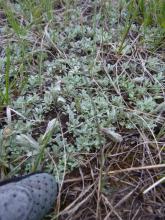
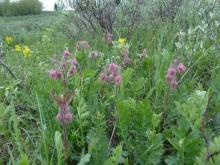
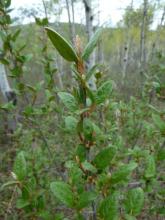
Thu, 06/02/2011 - 10:10pmA tiny Antennaria (with my gloved finger for scale); Geum triflorum; Buffaloberry, Shepherdia canadensis:
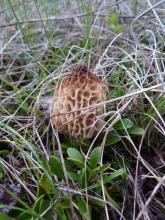
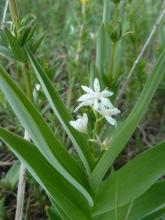
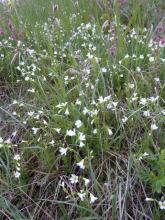
Morel; star-flowered solomon's seal, Maianthemum stellatum; mouse-eared chickweed, Cerastium arvense:
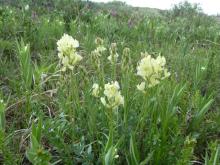
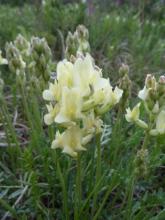
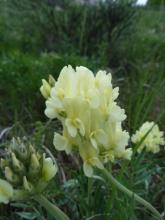
Oxytropis sericeus:
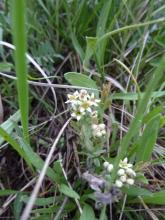
Bastard toadflax, Comandra umbellata:
Lori S. (not verified)
Re: Some Prairie Wildflowers
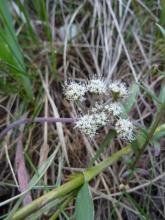
Thu, 06/02/2011 - 10:15pmAnother very interesting find (sorry for the poor photos)... Cymopterus acaulis:
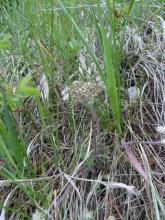
Geranium viscosissimum:
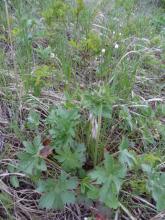
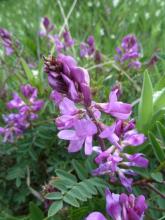
And the brilliant fuchsia (the colour, not the plant, Trond ;)) of Hedysarum boreale:

Richard T. Rodich
Re: Some Prairie Wildflowers
Thu, 06/02/2011 - 11:36pmA nice peek into your native lowland flora, Lori. Miainthemum is strictly a forest plant here.
I once bought Thermopsis rhombifolia. It almost immediately died upon transplanting into the garden, or so I though. The following year it resurfaced in 3 separate places, one to two feet from the original place of planting (which, by the way, still showed no life). That was enough of an omen for me, and it was eradicated. Anyone else have this problem in their garden, and is the plant normally stoloniferous in the wild?
Stephen Barstow
Re: Some Prairie Wildflowers
Fri, 06/03/2011 - 1:11amGreat pictures as usual, Lori!! I'm a bit confused here Hedysarum in flower at the same time as Amelanchier? The Hedysarums I grow are late summer flowerers here. Is boreale much earlier? I've tried this one several times, but for some reason it never gets through the winters here.
If you ever see seed on the Cymopterus or Allium textile (it's never been correct the times I've tried it) I would love to swap, beg, beg...!!
Another question, I germinated one of the Shepherdias and it grows incredibly slowly - still less than 10 cm after 3 years. Do they have special requirements?
S.
Tim Ingram (not verified)
Re: Some Prairie Wildflowers
Fri, 06/03/2011 - 5:15amAs an umbel nut it is nice to see the Musineon and Cymopterus. That mass of Pulsatilla patens must be glorious in flower - I always think of them as special individual plants in the garden, though in some favoured gardens I have seen Pulsatillas seeding generously. It is particularly nice to see the Lithospermum as I have been trying to grow it not very successfully. Quite a number of other choice borages have done well in the sand bed, but this has lingered and probably needs more robust soil.
Lori S. (not verified)
Re: Some Prairie Wildflowers
Fri, 06/03/2011 - 8:22amMaianthemum stellatum grows both in the open grasslands and in the forest here, and as it is stoloniferous, tends to form big colonies. (I have it in the garden - it may have come in in the soil of a saskatoonberry bush? - the stolons are fairly easy to pull out to control it. Yes, Thermopsis rhombifolia does spread around and is probably not for the very well-tended garden either!
Yes, Hedysarum boreale is early blooming, while H. alpinum and H. sulphurescens are much later. Allium textile is common and it should not be too hard to find seeds... I've never even noticed Cymopterus before!
Well, I find it hard to guess what Sheperdia might prefer... they are common prairie and forest edge shrubs, growing in horrible alkaline clay soil with little water and harsh conditions... ? We have one in the front yard that I would have to say has also been very slow growing, so perhaps that's just their nature?
Lori S. (not verified)
Re: Some Prairie Wildflowers
Fri, 06/03/2011 - 4:33pmHere they were in bloom, Tim:
http://nargs.org/smf/index.php?topic=67.msg8443#msg8443
cohan (not verified)
Re: Some Prairie Wildflowers
Fri, 06/03/2011 - 9:27pmInteresting to see some familiar plants, and some I have to travel to see, or not at all (the umbellifers are very interesting)! Amelanchier rarely grows in fully exposed spots here, though it is very very common in open woods and edges of woods.. Ditto for Shepherdia canadensis--probably hard to find more than a square metre without it on my acreage (apart from mowed areas, and even then there could be seedlings).. it can be seen in exposed roadsides, but much more common in open woods--or even quite shady spots, but I suspect the woods sometimes fill in around them.... I have no idea how fast they grow, since they are all wild plants.. I could certainly give you some more seed (canadensis) to try, Stephen.... they grow in wet, dry, sunny and shady places here.. I don't know how acidic or not our soil is, though, for example, every inch of snow in winter is covered in spruce needles after a wind....most plants that grow here will grow in any soil from clayey loam to spruce duff to leaf litter on concrete, even my woodash pile....lol...
We were just in the mountains on Tues, and Hedysarum boreale were just emerging around Abraham Lake, no flowers, but shockingly, a few blooms were seen just below treeline at the Columbia Icefield-- feels like a different subspecies up there, haven't read up on it.. Oxytropis sericea was flowering around Abraham Lake (montane zone), though not as far along as yours..
Rick, here too Maianthemum stellatum grows in the open and in shaded spots--looking so different you'd never know it was the same plant! Forms much larger denser stands of smaller more glaucous plants in the open... remind me to show comparative photos, sometime...
No Thermopsis here, unfortunately...
Stephen Barstow
Re: Some Prairie Wildflowers
Fri, 06/03/2011 - 11:53pmYes, please to the Shepherdia, Cohan (the various Rubus spp you sent are now germinating, but still no Osmorhiza)!
Good to hear that the Maianthemum stellatum is easily controlled - mine is in flower now and has spread quickly and I was getting a bit worried...
Trond Hoy
Re: Some Prairie Wildflowers
Sat, 06/04/2011 - 4:18amWell, Lori, I have learnt much of these pages! You can never be sure if a plantname means the plant or the colour in English ;D
Very intereating to see the flora of the prairie, Lori. Most of which is unfamiliar :o
However I do grow Maianthemum stellatum but it is different from the one you show, Lori. (If you find seed later??? ;))
I have tried Thermopsis too but it didn't survive. Not sure it was this species though. Here it could roam free :o
Maianthemum bifolium is everywhere in Norway.It is one of the commonest plants I think.
cohan (not verified)
Re: Some Prairie Wildflowers
Sat, 06/04/2011 - 10:31amStephen, good news on the Rubus! I was worried about them, knowing some Rubus are hard to germinate, and the amount of seed was small..
Trond, here is a view of (wild) Maianthemum stellatum in a damp shady location.. in the sun, they look exactly like those Lori has shown... I'd like to try moving some pieces from one location the other, and/or growing them side by side to see if all the difference is from habitat or not, they are so different!
Flowers not open, but they look typical...
No bifolium here, M trifolium should be flowering in wet wooded areas (haven't been out there) and M canadense are just about to start flowering here.. super common, they are all over my 'lawn' hate to mow them, and will go around nice patches, but can't leave them in as many places as they are (the grass and poplar shoots etc will grow too much!)
Lori S. (not verified)
Re: Some Prairie Wildflowers
Sat, 06/04/2011 - 10:46amWell, mine are currently in an area where they were the groundcover under a saskatoonberry - now removed (as it was overly shaded and very prone to rust)... In that area, I only controlled them to keep them out of the path. The stolons are a few inches below the surface (but not down to China, at least!) and strong enough that they can be pulled/dug out relatively easily, so as far as invasive things go, it is not the worst! I'd prefer it stayed in its own spot though! ;) Depending on what becomes of that area, I'm not sure I'll keep it.
I dunno... I'm not seeing great differences in the appearance of Maianthemum (Smilacena) stellatum from sun to shade here (other than a bit of difference in "tightness" of the foliage along the stem and how upright the plant is), or even as compared to your photo, Cohan... ? What are you seeing as the big difference?
cohan (not verified)
Re: Some Prairie Wildflowers
Sat, 06/04/2011 - 11:05amThe foliage looks very different to me, Lori-- the plant in shade is taller (haven't measured but a wild guess--a difference of maybe 40cm compared to 30 if not more ), foliage on the shade plant is very open, leaves spaced out, flat, dark green, and plant arches overall; the plants in sun are shorter, very densely leafed with no spaces, leaves are very glaucous and folded upwards on each side of the mid vein, overall a stiff, erect plant compared to a soft droopy one...
Lori S. (not verified)
Re: Some Prairie Wildflowers
Sun, 06/05/2011 - 8:43amOkay, so we are seeing the same differences (but just describing the magnitude differently ;D)... just wondered what I was missing. Thanks!
cohan (not verified)
Re: Some Prairie Wildflowers
Sun, 06/05/2011 - 11:42amLol..all about perspective, I suppose ;) (or lack thereof?)
I think the thing for me is that I was used to the shade form, growing up, since that occurs on the farm, and I was not wandering around roadsides in the area in those days (except very close by) so I was completely unfamiliar with the sunny form and it looked like a different plant altogether (as soon as I looked it up I knew, of course; most images around in fact are of the sunny form).. Whereas, if you always knew both as the same species, you'd just think of them that way...
Lori S. (not verified)
Re: Some Prairie Wildflowers
Fri, 06/10/2011 - 7:04pmA few others...
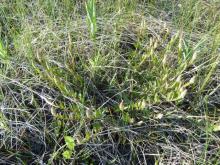
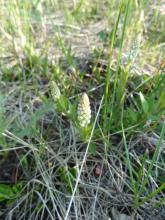
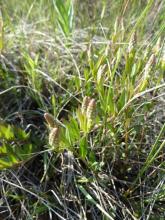
Seneca snakeroot, Polygala senega with flowers not quite opened - a new one for me:
I found one Penstemon nitidus in that area, and a few Eriogonum flavum:
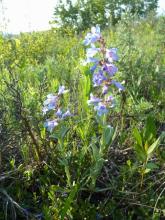
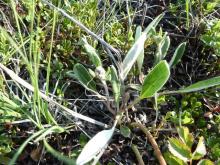
More Hedysarum boreale:
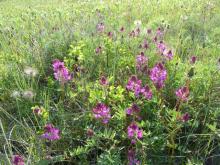
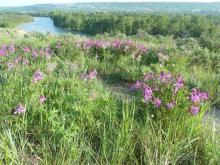
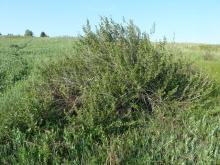
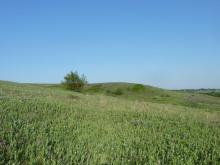
Views, with a large buffaloberry (Shepherdia canadensis) in first photo:
Lori S. (not verified)
Re: Some Prairie Wildflowers
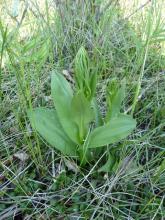
Fri, 06/10/2011 - 7:20pmThis looked interesting... I think it's bracted bog orchid, Coeloglossum viride - must check back in a few days:
There are colourful tracts of astragalus and oxytropis all over now...
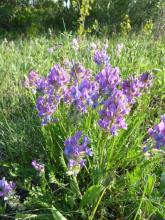
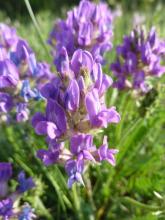
Oxytropis viscida; the close-up shows the minute yellowish glands that make it sticky:
cohan (not verified)
Re: Some Prairie Wildflowers
Fri, 06/10/2011 - 9:05pmVery interesting--we just don't have these plant communities, even in open areas in ditches etc; I really need to try this year to find some interesting prairie plant communities without going super far, I do want to try the Battle River area...
I did find the Polygala last year in some local roadsides, it was new to me, too, but none of those bright peas (Oxy monticola, which is lovely, but not bright, and some I haven't id'd, maybe Astrag with inconspicuous flrs, then the tall Hedys and Astrag).. I'd be thrilled if I ran into an Eriogonum around here...lol, I've only seen it in Drumheller area.. Neat to see the H boreale in grass, since I only know it from foothills/mountains, and its been in barer places...
If you happen to pass through there at the right time for seed of any of the Erio, Hedysarum b and the Oxytropis viscida, I'd be very interested!
Trond Hoy
Re: Some Prairie Wildflowers
Sat, 06/11/2011 - 2:43amI am hooked, Lori! I have a soft spot for any pea plant. Both Oxytropis viscida and Hedysarum boreale are beautiful!
Lori S. (not verified)
Re: Some Prairie Wildflowers
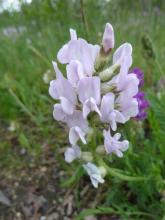
Thu, 06/16/2011 - 9:42pmToday in the park... I think these are all colour variations of Oxytropis viscida... (If they are not, please tell me!)
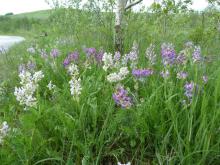
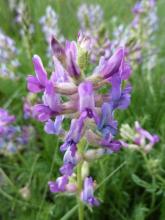
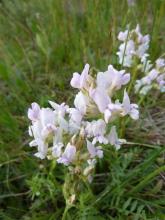
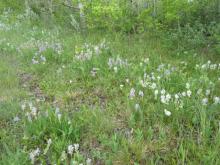
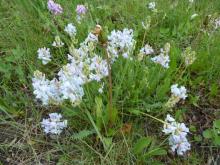
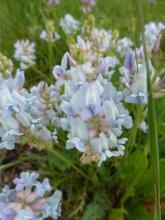
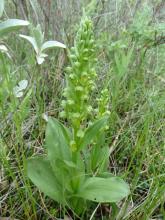
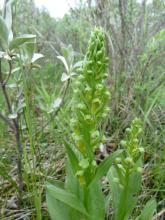
Heres's an update on the single bracted bog orchid (Coeloglossum viride) I saw - not too showy, which I expect is the only way an orchid can survive in a popular park!
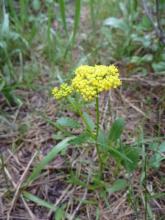
Heart-leaved alexander, Zizia aptera:
Lori S. (not verified)
Re: Some Prairie Wildflowers
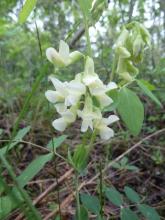
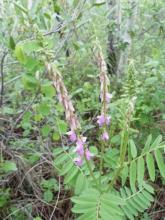
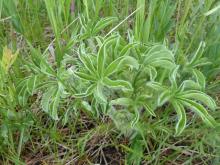
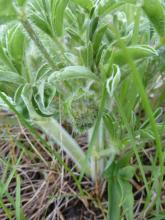
Thu, 06/16/2011 - 9:56pmLathyrus ochroleucus; Hedysarum alpinum... and a cute furry little lupin whose ID puzzles me right now:
cohan (not verified)
Re: Some Prairie Wildflowers
Fri, 06/17/2011 - 12:39amWe have tons of those subtle bog orchids! Though yours seems to have wider, more rounded leaves than those here...
I'm surprised to see Hedysarum alpinum so early, though maybe I remember the timing incorrectly...
I haven't been able to get out botanising-beyond the acreage and short walks on the farm- a)its been raining every day all month b) I decided if I'm to have any hope of progress in the garden I have to stay home more...lol.. but its hard not to get out there when I can see things are coming into bloom .... Maybe I should not garden..... oh yeah, and c)have to mow every 5 minutes try to to keep from being overgrown...
Stephen Barstow
Re: Some Prairie Wildflowers
Fri, 06/17/2011 - 1:41amLori: Great pictures as usual. I posted a couple of pictures of two colour forms of the Coeloglossum viride (Frog Orchid in the UK) from the top of a local mountain last year! Yours is a much more vigorous plant :)
http://www.srgc.org.uk/smf/index.php?topic=5723.msg160195#msg160195
Zizia aptera: I planted this last autumn, but it didn't make it :'( I've grown Zizia aurea for a number of years...
Anonymous (not verified)
Re: Some Prairie Wildflowers
Mon, 01/16/2012 - 1:47amStephen, Prairie Moon Nursery offers seed of this species. James
http://www.prairiemoon.com/seeds/wildflowers-forbs/allium-textile-textil...
Mark McDonough
Re: Some Prairie Wildflowers
Mon, 01/16/2012 - 5:22amJudging from the 2 photos of their seed offering, it is misidentified and definitely not Allium textile. Their photos are showing a form of Allium canadense.
Here are some photo links that show what Allium textile looks like:
http://commons.wikimedia.org/wiki/File:Allium_textile_(2).jpg
http://www.wildflower.org/plants/result.php?id_plant=ALTE
http://www.minnesotawildflowers.info/udata/r9ndp23q/pd/allium-textile-2.jpg
Lori S. (not verified)
Re: Some Prairie Wildflowers
Mon, 05/21/2012 - 8:24pmPenstemon nitidus, and Phlox hoodii, clinging to an eroded clay bank, in the river valley:
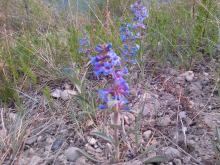
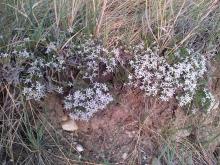
(Excuse the Blackberry photos... actually better than some with my regular camera!!)
Lori S. (not verified)
Needed some exercise today so
Wed, 07/24/2013 - 9:24pmNeeded some exercise today so I took a bike ride through Bowmont Park. I enjoy seeing it all through my bike-riding season and today was no exception.
Lovely stands of Monarda fistulosa, Campanula rotundifolia, Gaillardia aristata, Solidago rigida (or so I thought, offhand? Please correct me if I'm wrong):
And, along the paved trail, skeleton-weed,Lygodesmia juncea:
And, while I was out there, I also pulled a garbage bag-full of goatsbeard, Tragopogon sp., having been inspired by a local gentleman whom I often see out doing this. Great idea, I thought! Every year, there seems to be more and more weeds, goatsbeard being a very prominent and increasingly common one. I only wish the other weeds were as easy to pull as Tragopogon, though. (It being a biennial, I suppose it is not strictly necessary to pull the plants - collecting and disposing of the seeds would suffice - but it is pretty satisfying to yank these things out! ;-)
On a negative note, I saw a small patch of Campanula rapunculoides along the bike path - I've never noticed it before this year. I didn't have digging tools with me but I did break off the flowering stems and put them in the trash - at least it won't get to set seed this year. :-(
Richard T. Rodich
Regarding the Soidago rigida,
Thu, 07/25/2013 - 9:07amRegarding the Solidago rigida, the inflorescense form seems to be quite diverse across the continent, but the leaves seem always to be the same, smooth and glaucous. Yes?
Monarda fistulosa is my favorite garden size monarda. The light lavender color is the perfect hue, and not in your face like M. didyma.
Goatsbeard seems to be a rather benign invasive here. I see it in disturbed areas, mostly, but seldom in a good prairie.