Trond, I like this topic very much, an excellent subject that is an intrinsic interest of mine, about how plants "go over" after flowering, some plants do this with eloquence, others do it miserably. I have much to say on this topic, so I'm flagging it as something I need to respond to. I will be back ;)
I always leave these standing for a very long time... Allium giganteum.
Good one Lori, many Allium, particularly of Allium section melanocrommyum (the "big ball" onions) have particularly aesthetic dried seed heads. I like how if they are picked early enough, they still retain some of the floral color; note the purplish color of the pedicels in your dried seed heads. I like leaving these skeletal remains in the garden, until they start breaking down, as a reminder of their past splendor.
I picked some allium seedheads years ago and they still have some charm in a vase.
This one is not to grow in the rockery but still handsome of this time of the year, Clematis tangutica. it is climbing in a rowan (Sorbus aucuparia) and a Himalayan cedar, Cedrus deodara.
Clematis tangutica is indeed an attractive thing... I still see the odd flower on the escapes along the bike path. Its hardiness is quite amazing too (which gives it great potential for invasiveness, unfortunately) - I see it in the lower mountains in Kananaskis, say to about 1700m elevation roughly, in some areas. Wow, I envy your Himalayan cedar!
I like the way the flowers age on Persicaria polymorpha - the colour reminds me a bit of dock (Rumex):
I like the way the flowers age on Persicaria polymorpha - the colour reminds me a bit of dock (Rumex):
Are you sure you envy my cedar? It gets even bigger than the Persicaria! If it is not invasive, maybe I should try some day. Then it can compete with the other giants here.
I really like plants that "go over" in style. I already have a topic on Scutellaria incana, I'm but posting a couple updated photos here. This year the plant had a dozen or more multibranched stems which were fantastic in flower, (see http://nargs.org/smf/index.php?topic=88.0) but in the seed stage, it is equally as attractive, love those pinkish-red seed "boxes".
I have some scutellarias but they never stay with such a pride!
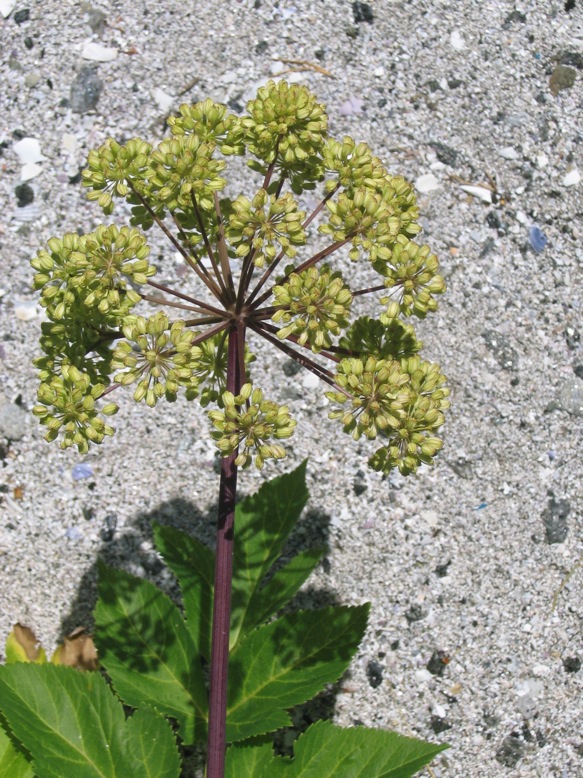
This Aralia species from Himalaya (Chadwell seeds) displays the berries and the thrushes find them as soon as the berries get ripe.
Wow Trond, that's an awesome Aralia!!! I love how the fruits are arranged, and their color is pleasing too. So, it's a "sp" and not identified yet? Way back when I used to subscribe to Chadwell seed shares, but embarrassed to admit I succeeded with very few in the long run. How large growing is your Aralia?
The species had not been identified when I got the seeds. Now I have (as usual) not any labels so I have no collection number either. The plants (I have two - the other is lighter in color) grow to about 4ft. They clump up slowly.
Here's the other one. You can see almost all the plant.
I guess I don't have a bird "problem" with Aralia continentalis (or A. cordata).
I guess I've been missing out by not growing any of these Aralia, cool plants, lots of colorful berries. Rick, that's quite a berry bounty on your Aralia, a sultry color scheme, I like it.
I guess I don't have a bird "problem" with Aralia continentalis (or A. cordata).
No you have not! The blackbird is the worst. They also dig in my rock garden picking stones and plants and tossing them all over the place. The last days I have been visited by the Bohemian Waxwing (Bombycilla garrulus) too. They are greadyguts.
We have the Cedar waxwing here (Bombycilla cedrorum). I think their favorite fruit of all is from the Amelanchier spp. (Juneberries, Service berries Indian plums or Saskatoons). Greedyguts is a perfect name for them. After a few days of them eating in my Amelanchier 'Autumn Brilliance' tree, I swear they have gotten fat.
Mark, mine and Trond's aralias are herbaceous. A. continentalis has dull colored berries, and A. cordata var. sachalinensis has shiny berries. (And I assume the entire species cordata, but I have only grown this variety.) I think all the hardy woody aralias for the north are thorny.
Aralia cordata var. sachalinensis at half its mature height. A. continentalis grows even larger.
As Rick says, the plants I showed are herbaceous. Here are two pics of my aralia tree, Aralia elata. It is very late flowering but the warmest years it manages to produce berries like the other aralias do. The stem and twigs are covered by spines but not as thorny as roses. Now the tree is about 6m high.
Oh my, those beautifully sleek wild creatures - cedar and bohemian waxwings - described as "greedyguts"... ?!? One would think it was them experiencing an epidemic of obesity, rather than we Homo sapiens! ;D ;D
Oh my, those beautifully sleek wild creatures - cedar and bohemian waxwings - described as "greedyguts"... ?!? One would think it was them experiencing an epidemic of obesity, rather than we Homo sapiens! ;D ;D
Well, I have never seen an obese waxwing but I have seen'em drunk! They eat fermented rowan berries and can't fly afterwards. What's more, they (and the blackbirds) steal all my berries.


Comments
Lori S. (not verified)
Re: Senescent with dignity!
Mon, 07/12/2010 - 1:07pmAhhh, senescence with dignity... something we can all hope for! ;D
Lori S. (not verified)
Re: Senescent with dignity!
Mon, 07/12/2010 - 1:36pmI always have kind of a soft spot for tragopogon for some reason. Does T. porrifolium - the purple one - occur where you are, Trond?
Trond Hoy
Re: Senescent with dignity!
Mon, 07/12/2010 - 2:07pmNot wild but in gardens. It is not commonly grown though.
Mark McDonough
Re: Senescent with dignity!
Sat, 07/17/2010 - 8:57pmTrond, I like this topic very much, an excellent subject that is an intrinsic interest of mine, about how plants "go over" after flowering, some plants do this with eloquence, others do it miserably. I have much to say on this topic, so I'm flagging it as something I need to respond to. I will be back ;)
Lori S. (not verified)
Re: Senescent with dignity!
Fri, 08/06/2010 - 1:34pmI always leave these standing for a very long time... Allium giganteum.
Mark McDonough
Re: Senescent with dignity!
Sun, 08/08/2010 - 7:04pmGood one Lori, many Allium, particularly of Allium section melanocrommyum (the "big ball" onions) have particularly aesthetic dried seed heads. I like how if they are picked early enough, they still retain some of the floral color; note the purplish color of the pedicels in your dried seed heads. I like leaving these skeletal remains in the garden, until they start breaking down, as a reminder of their past splendor.
Trond Hoy
Re: Senescent with dignity!
Thu, 09/09/2010 - 4:24amI picked some allium seedheads years ago and they still have some charm in a vase.
This one is not to grow in the rockery but still handsome of this time of the year, Clematis tangutica.
it is climbing in a rowan (Sorbus aucuparia) and a Himalayan cedar, Cedrus deodara.
Lori S. (not verified)
Re: Senescent with dignity!
Thu, 09/09/2010 - 9:38pmClematis tangutica is indeed an attractive thing... I still see the odd flower on the escapes along the bike path. Its hardiness is quite amazing too (which gives it great potential for invasiveness, unfortunately) - I see it in the lower mountains in Kananaskis, say to about 1700m elevation roughly, in some areas.
Wow, I envy your Himalayan cedar!
I like the way the flowers age on Persicaria polymorpha - the colour reminds me a bit of dock (Rumex):
Trond Hoy
Re: Senescent with dignity!
Sun, 09/12/2010 - 12:03amI have not dared to plant any Persicaria in my garden. I am afraid they will take over completely!
Lori S. (not verified)
Re: Senescent with dignity!
Sun, 09/12/2010 - 8:38amI've never seen any evidence of, or read of any indication, that Persicaria polymorpha is invasive. It certainly does get huge though!
Trond Hoy
Re: Senescent with dignity!
Sun, 09/12/2010 - 8:53amAre you sure you envy my cedar? It gets even bigger than the Persicaria!
If it is not invasive, maybe I should try some day. Then it can compete with the other giants here.
Richard T. Rodich
Re: Senescent with dignity!
Sun, 09/12/2010 - 4:41pmI also grew Persicaria polymorpha, and liked it very much. It was not invasive, but just grew to large for where it was growing.
Mark McDonough
Re: Senescent with dignity!
Fri, 10/01/2010 - 9:39amI really like plants that "go over" in style. I already have a topic on Scutellaria incana, I'm but posting a couple updated photos here. This year the plant had a dozen or more multibranched stems which were fantastic in flower,
(see http://nargs.org/smf/index.php?topic=88.0)
but in the seed stage, it is equally as attractive, love those pinkish-red seed "boxes".
Trond Hoy
Re: Senescent with dignity!
Tue, 10/19/2010 - 10:32amI have some scutellarias but they never stay with such a pride!
This Aralia species from Himalaya (Chadwell seeds) displays the berries and the thrushes find them as soon as the berries get ripe.
Mark McDonough
Re: Senescent with dignity!
Tue, 10/19/2010 - 11:07amWow Trond, that's an awesome Aralia!!! I love how the fruits are arranged, and their color is pleasing too. So, it's a "sp" and not identified yet? Way back when I used to subscribe to Chadwell seed shares, but embarrassed to admit I succeeded with very few in the long run. How large growing is your Aralia?
Trond Hoy
Re: Senescent with dignity!
Tue, 10/19/2010 - 11:33amThe species had not been identified when I got the seeds. Now I have (as usual) not any labels so I have no collection number either. The plants (I have two - the other is lighter in color) grow to about 4ft. They clump up slowly.
Here's the other one. You can see almost all the plant.
Richard T. Rodich
Re: Senescent with dignity!
Tue, 10/19/2010 - 11:59amI guess I don't have a bird "problem" with Aralia continentalis (or A. cordata).
Mark McDonough
Re: Senescent with dignity!
Tue, 10/19/2010 - 12:22pmI guess I've been missing out by not growing any of these Aralia, cool plants, lots of colorful berries. Rick, that's quite a berry bounty on your Aralia, a sultry color scheme, I like it.
Trond Hoy
Re: Senescent with dignity!
Tue, 10/19/2010 - 12:33pmNo you have not! The blackbird is the worst. They also dig in my rock garden picking stones and plants and tossing them all over the place. The last days I have been visited by the Bohemian Waxwing (Bombycilla garrulus) too. They are greadyguts.
Richard T. Rodich
Re: Senescent with dignity!
Tue, 10/19/2010 - 10:45pmWe have the Cedar waxwing here (Bombycilla cedrorum). I think their favorite fruit of all is from the Amelanchier spp. (Juneberries, Service berries Indian plums or Saskatoons). Greedyguts is a perfect name for them. After a few days of them eating in my Amelanchier 'Autumn Brilliance' tree, I swear they have gotten fat.
Mark, mine and Trond's aralias are herbaceous. A. continentalis has dull colored berries, and A. cordata var. sachalinensis has shiny berries. (And I assume the entire species cordata, but I have only grown this variety.) I think all the hardy woody aralias for the north are thorny.
Aralia cordata var. sachalinensis at half its mature height. A. continentalis grows even larger.
Trond Hoy
Re: Senescent with dignity!
Wed, 10/20/2010 - 11:12amAs Rick says, the plants I showed are herbaceous. Here are two pics of my aralia tree, Aralia elata. It is very late flowering but the warmest years it manages to produce berries like the other aralias do. The stem and twigs are covered by spines but not as thorny as roses. Now the tree is about 6m high.
Lori S. (not verified)
Re: Senescent with dignity!
Wed, 10/20/2010 - 9:25pmOh my, those beautifully sleek wild creatures - cedar and bohemian waxwings - described as "greedyguts"... ?!? One would think it was them experiencing an epidemic of obesity, rather than we Homo sapiens! ;D ;D
Trond Hoy
Re: Senescent with dignity!
Wed, 10/20/2010 - 11:36pmWell, I have never seen an obese waxwing but I have seen'em drunk! They eat fermented rowan berries and can't fly afterwards. What's more, they (and the blackbirds) steal all my berries.