
Forums:
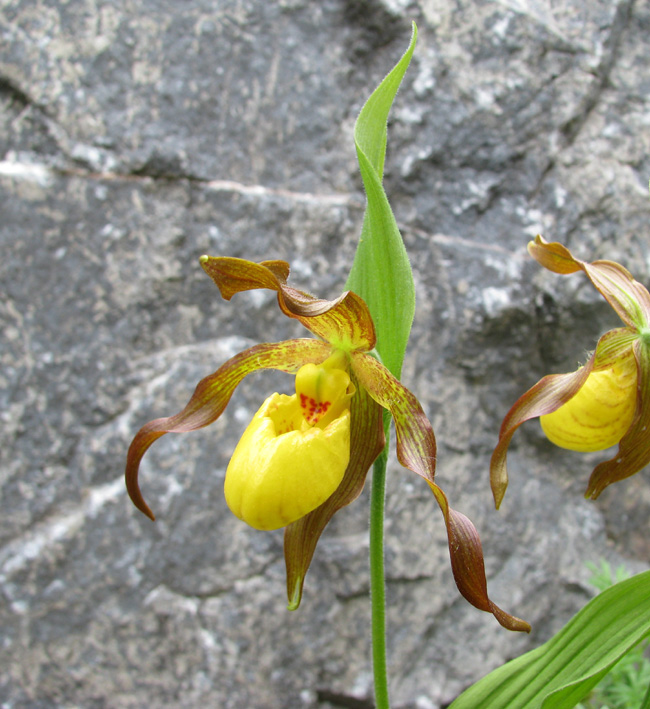
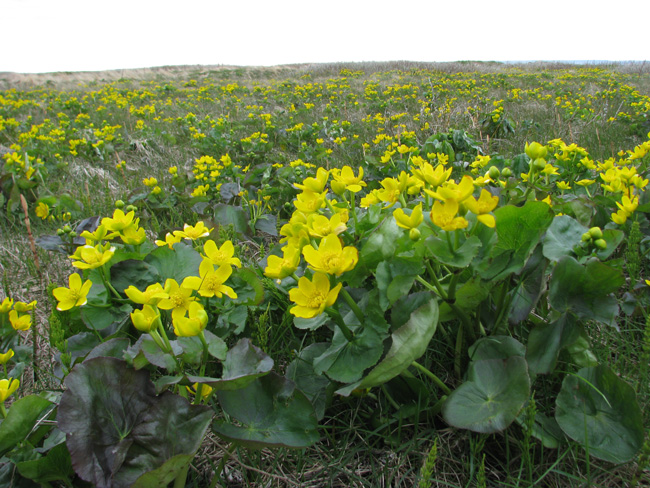
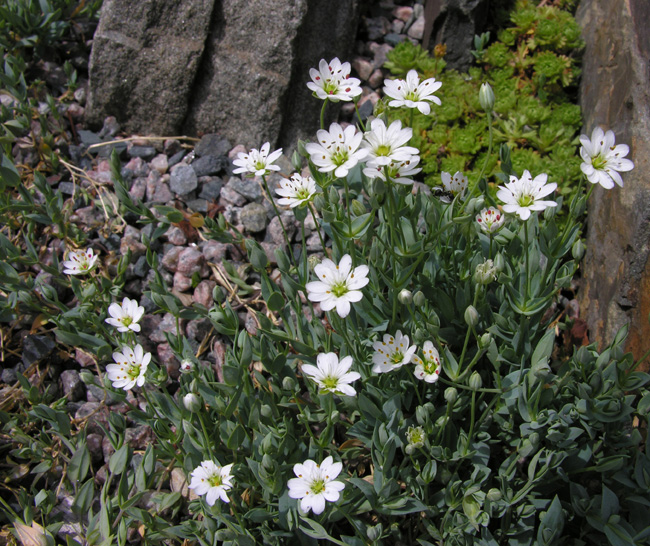
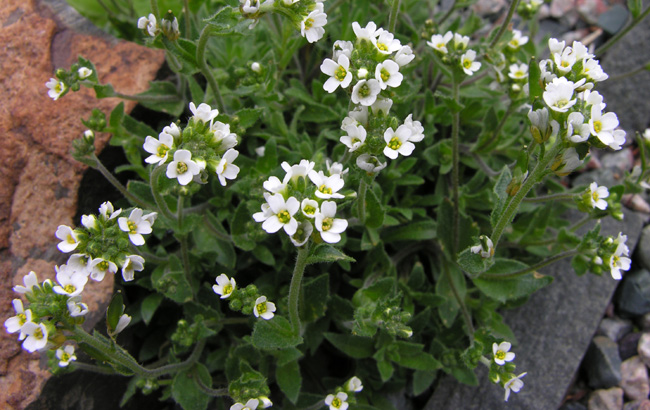
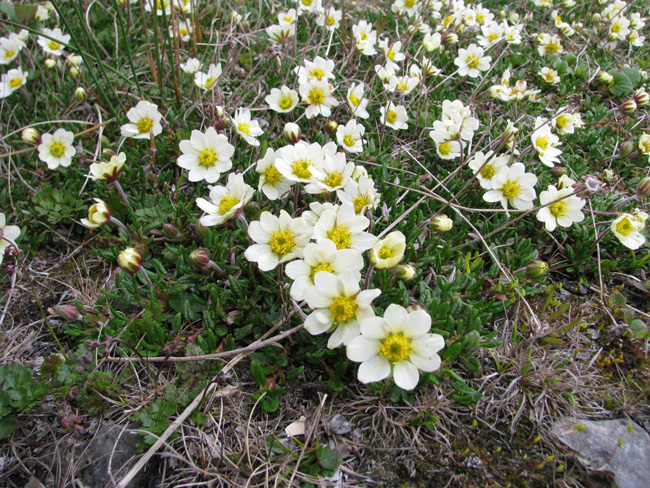
Last week I was on a plant collection trip for our BG. We botanized the upper half of the Great Northern Pininsula. The rock here is limestone and has a wonderful array of native arctic-alpines. We had wind, rain and even snow on the trip! (we also had some sun!) They are much colder than St. John's and there were only a handful of plants in bloom. The willows were mostly passed and even the Saxifraga oppositifolia were finished. The first yellow lady's-slippers where just starting. Soon there will be thousands of them!
Comments
Todd Boland
Re: Early native alpines in Newfoundland
Sun, 06/27/2010 - 1:52pmSome more
Todd Boland
Re: Early native alpines in Newfoundland
Sun, 06/27/2010 - 1:54pmeven more
Todd Boland
Re: Early native alpines in Newfoundland
Sun, 06/27/2010 - 2:00pmLast set. I have to do work on the serpentine barrens of western Newfoundland for 18 days in August...they have lots of neat plants but I expect I will be too late in the season for blooms.
Richard T. Rodich
Re: Early native alpines in Newfoundland
Sun, 06/27/2010 - 5:37pmI always love your pics of wild Newfoundland! Few of us really know what it is like.
The prostrate white spruce is really something. I can hardly believe it still has a full center; with all that snow I would have expected major branch breakage over the many, many, many years. (I am thinking it is about 80 years old.) Has it been propagated under that name(Tuckamore), or is it the name given to that particular specimen? Not that I would want to try it here. I am sure it wouldn't like or hot MN summers.
Primula mistassinica looks pretty much the same here in northern Minnesota (not alba) except that your pic shows more robust plants. Even Olga Lakela (author of A Flora of Northeastern Minnesota) writes that flowers are 2-7 per umbel. I think the most I've seen is five.
In the back of my mind, I've always been a bit turned of by the structure of crevice gardens that most use, like at your BG. They seem so artificial and contrived with the stone slabs put on end. But looking at some of those wild Newfoundland pics, like the Arenaria and Draba, I'd swear they were taken at a man-made crevice garden like yours. My eyes are opened wide!
Great pics, all of them!
Todd Boland
Re: Early native alpines in Newfoundland
Mon, 06/28/2010 - 2:50pmRick, we call all stunted conifers 'tuckamore'...essentially a local name which means the same as 'krumholtz' in Europe.
Lori S. (not verified)
Re: Early native alpines in Newfoundland
Mon, 06/28/2010 - 7:17pmLooks like a fascinating trip, Todd - interesting to see some of "our" alpine species occurring at sea level.
Hmm, "tuckamore" - do you know anything about the origins of the word? I suspect there's a neat story behind it!
On that note, I was interested to read long ago in Ben Gadd's Handbook of the Rockies (in which the answer to dang near everything can be found!) that the word "kruppelholz" is more applicable to the dwarfing of trees that we see here near treeline* due to environmental conditions (elevation, wind), as apparently the word "krumholz", sensu stricto, implies genetic dwarfing. Who knew?!? :o
*Actually, I've often noted that the conditions in Calgary (dry, windy, lousy soil) lead to a particular sort of kruppelholz that is particularly prominent on the neglected trees on city property... not near so picturesque as that in the mountains, though! ;D
Panayoti Kelaidis
Re: Early native alpines in Newfoundland
Tue, 06/29/2010 - 11:04pmGee, Todd: all those flowers look to be proliferating so much that you should probably thin some of them out so they don't become weedy. Especially those pesky yellow ladyslippers: we could use more down here!
Todd Boland
Re: Early native alpines in Newfoundland
Wed, 06/30/2010 - 3:02amTuckamore comes from Tucking Moor. British used the word 'tuck' as meaning 'to grab, snag or pull'. 'Moor', of course, is barrens. So slurring the words, as we Newfoundlanders do, we come up with tuckamore, the 'barrens that snag'. Walking through them, I can understand the meaning! Generally tuckamore forest are windswept to one side and reach 2-5 m but the image I showed was the extreme where the trees become low mounds.
Richard T. Rodich
Re: Early native alpines in Newfoundland
Wed, 06/30/2010 - 7:18pmAnd again an apropos response. Thanks, Todd!
Lori S. (not verified)
Re: Early native alpines in Newfoundland
Wed, 06/30/2010 - 8:08pmAh, I knew there would be a really interesting explanation! Thanks for describing the derivation of the word... as well as giving us a glimpse of what is a remote destination for many of us (have always wanted to visit but have never managed it!)
Trond Hoy
Re: Early native alpines in Newfoundland
Fri, 07/02/2010 - 1:47pmWe don't say krumholtz in all Europe! It is a German word (from Switzerland maybe). Actually we don't have a similar word in Norwegian (not that I know of) but use different adjectives to describe the trees or bushes.
Very nice pictures Todd! Some plants I recognize from here, others are new to me. Do you eat the cloudberry? Here it is a very popular berry and often used for jam.
Margaret Young
Re: Early native alpines in Newfoundland
Fri, 07/02/2010 - 2:40pmOh, dear, you had to mention that just when I'm feeling hungry..... ;) Cloudberry jam is WONDERFUL!! Just don't have enough friends coming backwards and forwards from Scandanavia to bring it here! I must try and find an internet source ...... :D
M
Trond Hoy
Re: Early native alpines in Newfoundland
Fri, 07/02/2010 - 10:26pmYou can come and pick for yourself! August is fine.
Margaret Young
Re: Early native alpines in Newfoundland
Sat, 07/03/2010 - 3:23amThat sounds like a great idea for when I get my private jet!
On a more realistic note: if I were to travel to collect the berries, would I be allowed to carry them back to the UK, I wonder ? Not something I have previously considered.... must check the import regulations for fresh fruit :-\
Todd Boland
Re: Early native alpines in Newfoundland
Sat, 07/03/2010 - 4:58amYes Trond, we eat cloudberries by the gallons...we call them bakeapples! Another interesting story behind that name! Personally, I don't care for the flavour but many Newfoundlanders love them.
Mark McDonough
Re: Early native alpines in Newfoundland
Sun, 07/04/2010 - 8:34pmLiked learning about "tuckamore" derivation... interesting.
Oh, you people "in the know", you all seem to know what "cloudberry" is... so I'm looking through the previously posted photos, trying to guess which is "cloudberry", you see, the actual correlation to the plant genus-species is not made, so I look up the probably edibles, both Vaccinium and Rubus, and it turns out to be Rubus chamaemorus. Maybe I should know this, but I don't.
So, for those who wonder what the hey Cloudberry is, here's a link:
http://en.wikipedia.org/wiki/Rubus_chamaemorus
Trond Hoy
Re: Early native alpines in Newfoundland
Sun, 07/04/2010 - 10:23pmSorry, Mark and others! Didn't think! I believed everybody knew what molte/cloudberry/ Rubus chamaemorus was!
Todd Boland
Re: Early native alpines in Newfoundland
Mon, 07/05/2010 - 6:01pmAhhh Trond, we northerners assume too much of the southerners!
Trond Hoy
Re: Early native alpines in Newfoundland
Tue, 07/06/2010 - 8:54amPS:
Mark, should you (or any other southerner not familiar with cloudberry) come this way I hereby invite you to taste cloudberry! Depending on season you may get only jam, but in the right season you shall have the proper berry! Warning: Somebody dislike it alltogether and somebody can't live without!
Trond Hoy
Re: Early native alpines in Newfoundland
Sun, 01/02/2011 - 7:54amMark, I have thought of you these days! We have had cloudberry jam, cloudberry cream etc every other day! Nam nam ;) ;D