Forums:
Trond Hoy and I joined 8 others for a rosulate viola tour from Bariloche to Chos Malal this month. I'll kick off the tour notes with a view of Cerro Catedral, with Viola sacculus, Oxalis erythrorhiza, and Ranunculus semiverticillatus.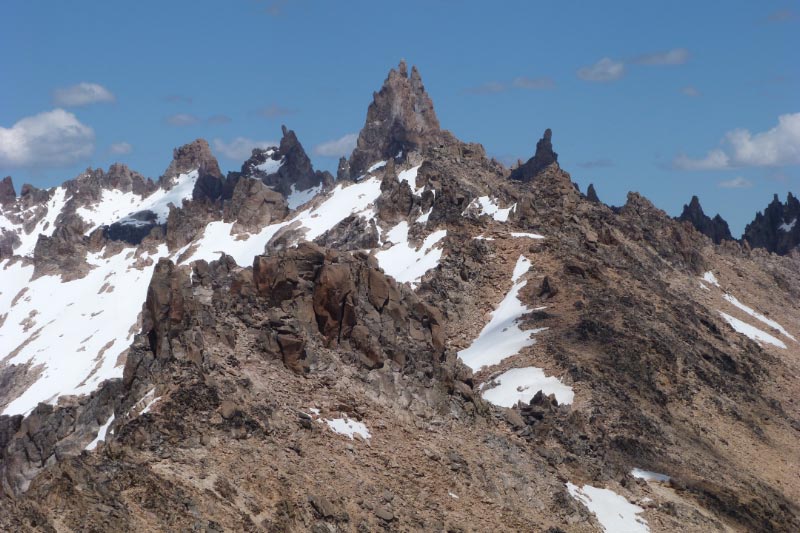
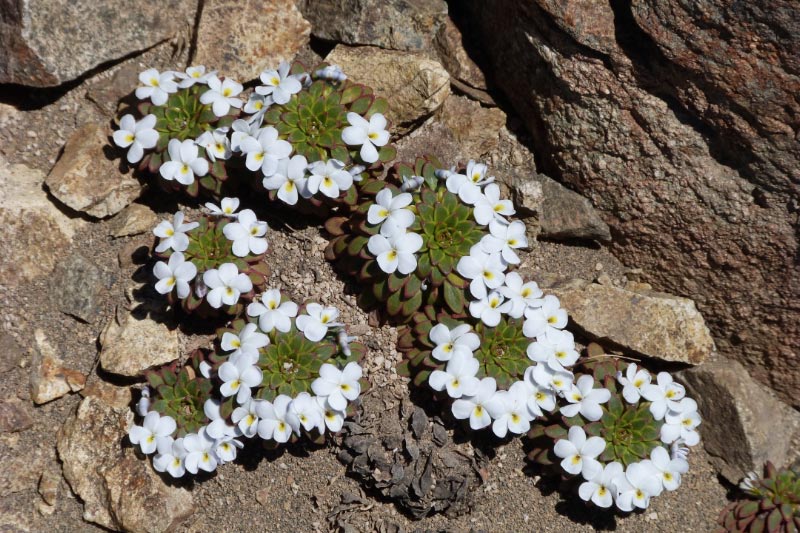
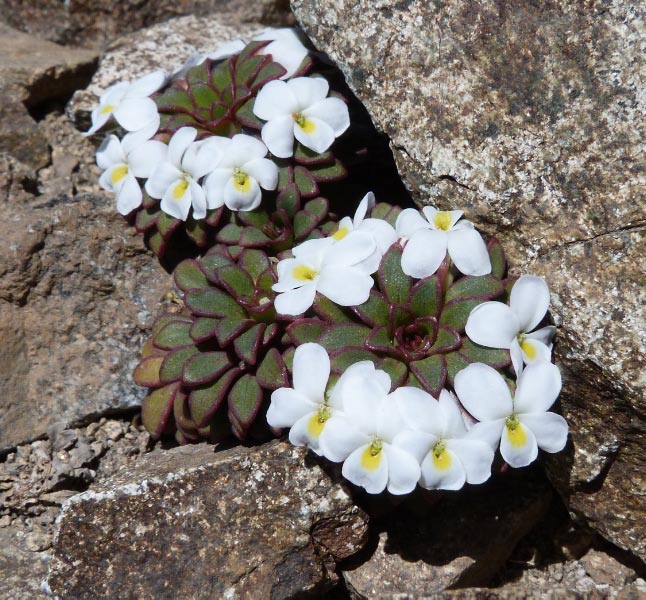
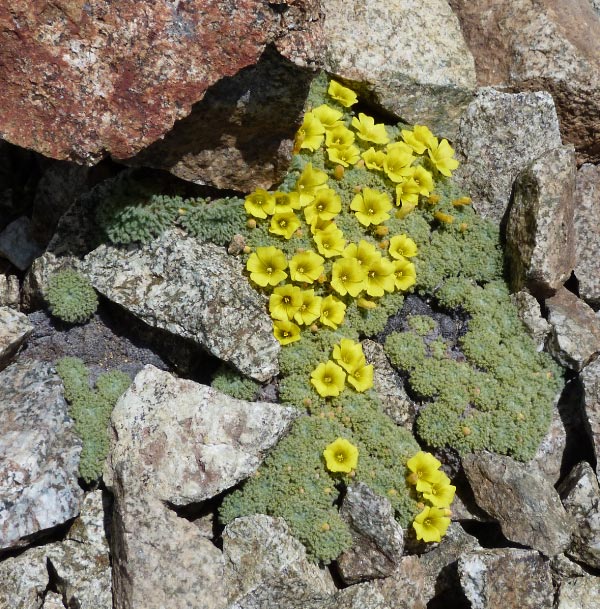
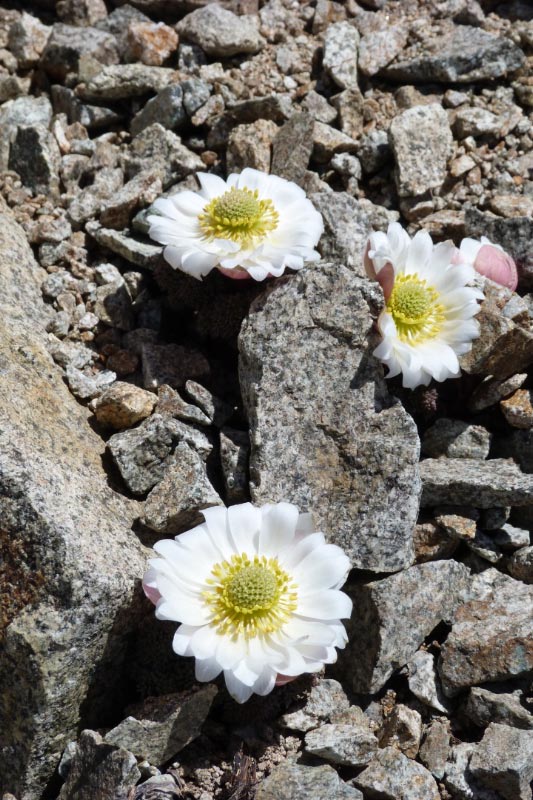
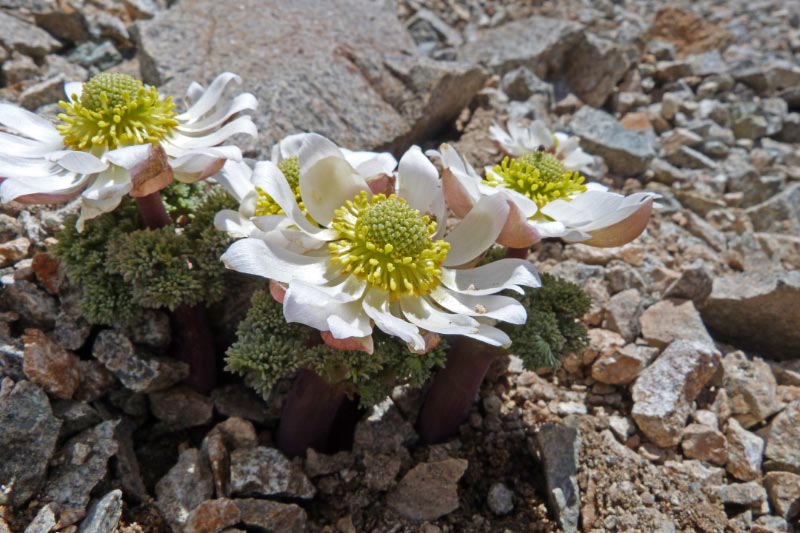


Trond Hoy and I joined 8 others for a rosulate viola tour from Bariloche to Chos Malal this month. I'll kick off the tour notes with a view of Cerro Catedral, with Viola sacculus, Oxalis erythrorhiza, and Ranunculus semiverticillatus.
Comments
Cliff Booker
What a start!!! Magnificent
Wed, 12/18/2013 - 1:00pmWhat a start!!! Magnificent. More please.
Saori (not verified)
Welcome back Claire! Wow,
Wed, 12/18/2013 - 3:55pmWelcome back Claire! Wow, these pictures are awesome! Looking forward to hearing about your trip.
P.S. We had a big party at your place while you were gone. I didn't know that Ron could limbo so well!
Mark McDonough
Fabulous pics Claire, can't
Wed, 12/18/2013 - 8:15pmFabulous pics Claire, can't wait to see more. Of all the amazing rosulate violets I've seen, I can say with some confidence that I adore Viola sacculus the most, such pristine flowery rosettes. And what's not to love about pulvinate Oxalis and ridiculously awesome ranunculi, In the Cerro Catedral mountain views, the rock looks particularly knarly and pointed.
Lori S. (not verified)
Stunning! Thanks for posting
Wed, 12/18/2013 - 8:59pmStunning! Thanks for posting, Claire. I'm looking forward to seeing more of this trip from you and Trond. It must have been a surprise to run into someone you "knew" in such an exotic place!
Claire Cockcroft
The second day's outing was
Thu, 12/19/2013 - 10:07amThe second day's outing was led by the incomparable Marcela Ferreyra to Pilcaniyeu. She started the plant hunt by finding Viola volcanica, a very tiny brown bun. Junellias and anathrophyllum provided "wow" factors, with gamocarpha and nastanthus looking very alien. Viola escondidaensis lived up to its epithet (escondido means hidden) by nestling in grasses and small shrubs.
deesen (not verified)
Brilliant. Many more please.
Thu, 12/19/2013 - 11:29amBrilliant. Many more please.
Trond Hoy
Hi Claire! Thanks for a nice
Thu, 12/19/2013 - 12:17pmHi Claire! Thanks for a nice tour! You were a comfortable companion on the trip.
I have just gotten some spare time after going to work Monday morning (arrived at home Sunday evening).
Regarding the Junellia, I am not sure of the species (we saw so many different of them that it got a bit difficult) but I think it possibly was J. minutifolia at that place.
Here are a few more:
On our way back from the day's excursion. An Azorella (monantha(?)) making a dense carpet. Nasanthus patagonicus and the bus.
We found several orchids. Here is Chloraea cylindrostachya. Hypochoeris incana.
Toole (not verified)
Boy oh boy.
Thu, 12/19/2013 - 12:44pmBoy oh boy.
Wonderful plants and superbly captured Claire and Trond.
South America is at the top of my bucket list that's for sure.
Thanks for posting.
Cheers Dave.
Trond Hoy
The pea family was
Thu, 12/19/2013 - 1:45pmThe pea family was represented by several genera (more later), here are a couple of Astragalus palenae(?) colour versions.
The genus Calceolaria was diverse and ubiquitous. Here is Calceolaria polyrhiza. (Some of the names may be wrong as it was a plethoria of similarlooking plants!)
Haplopappus prunelloides. Another Junellia, maybe Junellia succulentifolia(?).
Olsynium junceum with a hoverfly. Sisyrynchium macrocarpum
Claire Cockcroft
Hi, Trond! I'm glad to see
Fri, 12/20/2013 - 11:10amHi, Trond! I'm glad to see your posts!
Folks, if you want to have a tour with plenty of laughs, just spend 3 weeks with two very funny Norwegians (Trond and Oysten). They were always fast with the quips and very clever.
Oh, and the Ron that Saori mentioned is Ron Ratko, who usually takes care of my house and my two silly terriers while I'm away. He held a couple of seed packaging parties at my house while I was gone for the NARGS seed exchange (but no limbo, he assures me). Good work, everyone!
How's this for a Christmas tree? Chloraea cylindrostachya
Steve Newall (not verified)
Thank you both for the lovely
Fri, 12/20/2013 - 1:40pmThank you both for the lovely pictures . Much appreciated .
Will get there one day . Unfortunately the seasons clash for me but maybe one day when I'm semiretired and Mr.Toole has his bucket sorted ...
... and thanks for the warning Claire . If I see any laughing jandal clad Norwegians on a plant trip I'll down my beer , reach for my akvavit and prepare for the worst
Claire Cockcroft
The drive from Bariloche to
Sat, 12/21/2013 - 10:44amThe drive from Bariloche to San Martin de los Andes was marked by lots of volcanic ash from the 2010-2011 eruption of the Planchón-Peteroa volcano, over 100 miles northwest in Chile. As you can see, plants of Saxifraga magellanica and Viola volcanica are nearly buried.
Scenery, nevertheless, was beautiful and flowers were plentiful. Oxalis nahuelhuapiensis (named after the lake, Lago Nahuel Huapi), Calceolaria polyrhiza (?), Vicia nigricans, Mutisia spinosa, Chloraea magellanica and Chloraea alpina.
Trond Hoy
Here are some views along the
Sat, 12/21/2013 - 1:55pmHere are some views along the road. Two very common roadside weeds were the European Cytisus scoparius and Rosa rubiginosa. On higher ground we encountered woods of Nothofagus antarctica. Some trees were killed, probably of the ash.
View of the road. Most of the roads here were unpaved and narrow. Berberis montana, a common woodland species. Anemone multifida is very variable. Some have larger flowers.
Trond Hoy
Lathyrus magellanicus along
Sat, 12/21/2013 - 2:13pmLathyrus magellanicus along the road. We made several stops as the roadside was a plethora of colourful plants. Also the pretty shrub - small tree Embothrium coccineum was in flower along the road.
The first cactus we found in flower was this Austro
cedruscactus patagonicus(?) on a rocky outcropping. The ash covered slopes of the Viola vulcanica habitat.Viola vulcanica. The camouflage didn't work at its best in the new, grey ash. Oxalis adenophylla were everywhere and very variable - we found it even in dense shade.
Claire Cockcroft
I should mention that this
Sat, 12/21/2013 - 4:14pmI should mention that this tour was organized by Ger van den Beuken of the Netherlands. He and his wife, Mariet, are great traveling companions and Ger's knowledge of Patagonian violas is impressive. I couldn't have asked for a more caring couple as tour leads.
Trond, I think you meant Austrocactus -- a bit shorter than cedrus!
Trond Hoy
Cockcroft wrote:
Sun, 12/22/2013 - 12:06am[quote=Cockcroft]
Trond, I think you meant Austrocactus -- a bit shorter than cedrus!
[/quote]
Are you sure thanks
Richard T. Rodich
This is all such a Treat!
Sat, 12/21/2013 - 4:40pmThis is all such a Treat!
I willingly display my ignorance about rosulate violets: I assume they are evergreen?
If so, it would seem they are more vigorous than I would have expected, that they would grow all that foliage in just two or less growing seasons after the ash fall out in such a harsh climate.
Trond Hoy
RickR wrote:
Sun, 12/22/2013 - 12:26am[quote=RickR]
This is all such a Treat!
I willingly display my ignorance about rosulate violets: I assume they are evergreen?
If so, it would seem they are more vigorous than I would have expected, that they would grow all that foliage in just two or less growing seasons after the ash fall out in such a harsh climate.
[/quote]
Rick, I am afraid that I can't enlighten you much.
I assume some of them are deciduous (it was mentioned on the tour), and at least one is annual (you will see a picture later). At this altitude it is usually snow in the winter and some rain in the spring. Although we had sunny weather for 3 weeks the soil was still moist under the dry layer of ash and sand (or rock).
Viola sacculus
Richard T. Rodich
Fascinating, all of them!
Mon, 12/23/2013 - 4:41pmFascinating, all of them!
You really do have to watch where you step!
Trond Hoy
RickR wrote:
Mon, 12/23/2013 - 11:50pm[quote=RickR]
Fascinating, all of them!
You really do have to watch where you step!
[/quote]
Yes, some places you didn't see a single plant till you saw first one, and then one more and suddenly they were all over the place! (Sometimes even under your boots)